How to Print High-Volume Labels Without Losing Quality
8th Dec 2025
In the world of large-scale packaging, logistics, and manufacturing, label printing often happens in relentless cycles — thousands, sometimes millions of labels printed per month. For many businesses, increasing output speed is easy; maintaining consistent quality across those high-volume runs is the real challenge.
Whether you’re labeling shipping boxes, retail products, or compliance items, even a slight variation in clarity or adhesion can disrupt workflows, trigger reprints, or damage your brand’s professional image. To solve this, companies are turning to high-quality thermal label printers built for precision, durability, and speed.
At DuraFast Label Company, we’ve helped organizations across logistics, healthcare, and industrial manufacturing scale their label printing operations while keeping every print crisp and compliant. This guide explores how to balance speed with accuracy — from choosing the right equipment to fine-tuning workflows and ensuring consistent quality control.
Why Volume Can Erode Quality
Printing in high volumes exposes every weakness in your system. What seems negligible during short print runs — a slight misalignment, a faint line across the label, or inconsistent adhesive performance — can multiply into thousands of defective prints over time.
Common Quality Issues in Bulk Labeling
- Printhead Wear: Continuous heat cycles and ribbon friction degrade the printhead, leading to streaks or fading.
- Ribbon Wrinkling: Extended runs without adjustment can cause uneven transfer, smudging, or voids.
- Substrate Variation: Label rolls may vary slightly in thickness, altering tension and feed accuracy.
- Temperature Fluctuations: Long runs heat up printer components, affecting print density and ribbon bonding.
- Operator Fatigue: Manual oversight decreases during bulk production, leading to unnoticed misprints or misfeeds.
When multiplied across pallets or product batches, these micro-defects result in expensive waste and rework.
The Role of Industrial-Grade Printers
The key to scaling without compromising quality lies in your equipment. Industrial-grade thermal printers are designed to handle continuous printing with minimal maintenance and consistent accuracy.
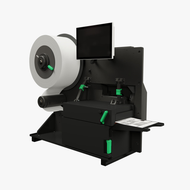
One example is the Toshiba DL1024-T 4” Duplex Linerless Thermal Shipping Label Printer. Its duplex capability allows for double-sided printing, dramatically reducing roll changes and media handling time. Linerless printing also eliminates waste liners — a major advantage for high-volume shipping operations.
These printers use precise heat management systems, adjustable tension controls, and intelligent sensors to maintain alignment across thousands of labels — ensuring identical output from start to finish.
Balancing Speed, Resolution, and Durability
High volume doesn’t just mean “fast.” It means sustainably fast without damaging printer components or compromising output quality.
Understanding Speed Ratings
Every printer lists an IPS (inches per second) speed rating. A higher IPS enables faster runs but may slightly reduce resolution if the printer isn’t built for heavy use. For sustained high-volume performance, choose models designed to maintain high resolution at higher speeds.
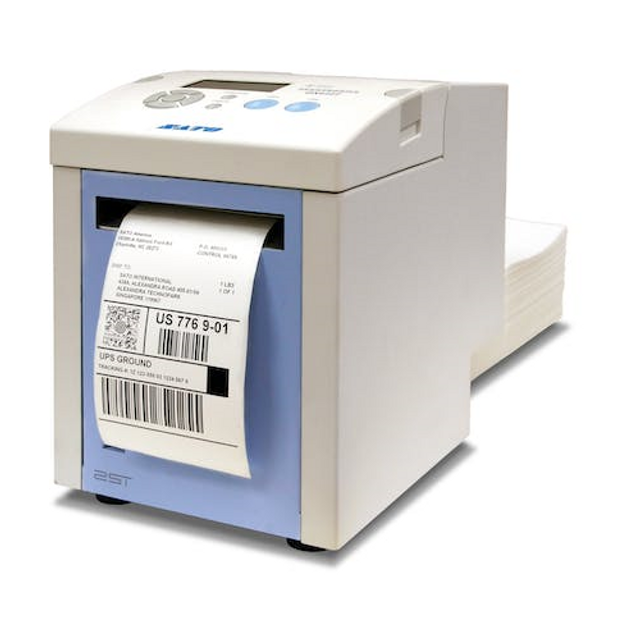
For instance, the SATO GY412 305 DPI Direct Thermal Label Printer combines industrial printing speed with a 305 dpi resolution — ideal for producing detailed text and scannable barcodes at scale.
Thermal Transfer vs. Direct Thermal
- Direct thermal printers are fast and economical for short-term labeling, but can fade under heat or sunlight.
- Thermal transfer printers use a ribbon for higher durability — perfect for long-term, high-volume needs.
For large-batch production, thermal transfer technology generally delivers better durability, ensuring barcodes and graphics remain legible throughout transport and handling.
The Importance of Media Selection
The quality of your media — label stock, ribbon, and adhesive — directly impacts print performance. Using inconsistent or incompatible media in high-volume runs causes feed issues, print degradation, or adhesive failure.
Label Materials
Paper labels work well for standard shipping and inventory needs, while synthetic labels (like polypropylene or polyester) provide superior resistance to heat, moisture, and abrasion. For high-speed printing, labels with uniform thickness reduce jams and misfeeds.
Ribbons and Adhesives
For thermal transfer printing, pair ribbons with label material properly:
- Wax ribbons for basic applications.
- Wax/resin ribbons for mixed-surface or medium-durability needs.
- Resin ribbons for extreme environments like automotive or chemical labeling.
Always test combinations before full production — an essential habit for high-volume reliability.
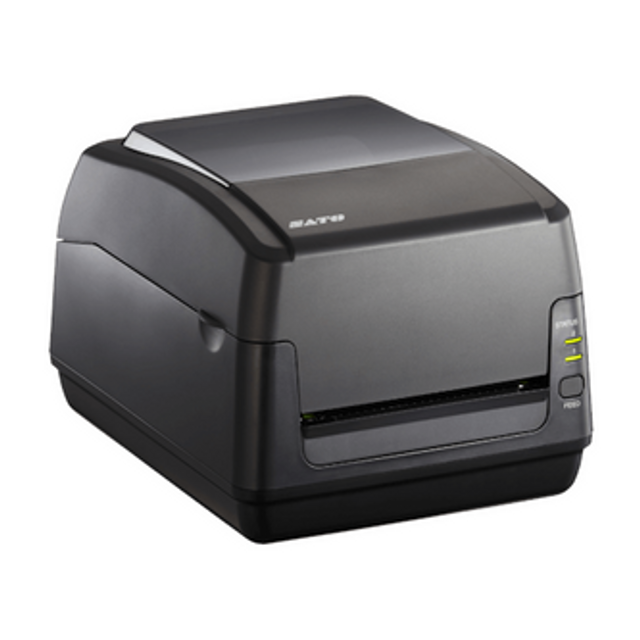
The SATO WD202-409NN-EX1.2 WS4 203 DPI Direct Thermal Label Printer supports a wide range of media, making it suitable for businesses that print both product and logistics labels across multiple environments.
Workflow Optimization for Continuous Output
Even with robust printers, production can still bottleneck due to workflow inefficiencies. Streamlining processes ensures maximum uptime and minimal reprints.
Pre-Run Testing and Calibration
Before running a new batch, print sample labels to check alignment, contrast, and adhesion. Fine-tune heat and tension settings before committing to long runs.
Automate Wherever Possible
Link your printers to label-design software and ERP systems for automatic data population. This eliminates manual entry errors and accelerates changeovers between SKUs.
Smart Maintenance Scheduling
Schedule maintenance between runs rather than during production. Keeping spare printheads, rollers, and ribbons on hand prevents downtime and helps maintain consistent quality.
Operator Training
Train operators to recognize early warning signs of print degradation — streaks, low contrast, or adhesive bleed. Small adjustments during operation can prevent large-scale waste later.
Linerless and Duplex Printing: Efficiency and Sustainability
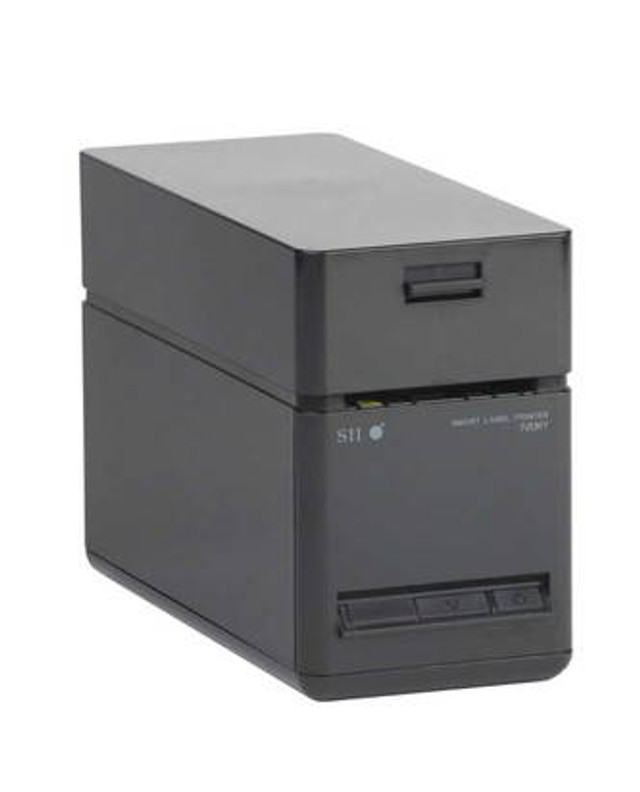
As print volumes increase, so does waste. Traditional labels include liners that must be discarded after printing. Linerless printers, like the Seiko SLP720RT-2 Linerless Label Printer, eliminate this issue by using continuous rolls.
The result?
- Less downtime between roll changes.
- Reduced waste disposal costs.
- Improved throughput for shipping and logistics operations.
For businesses printing thousands of shipping labels daily, linerless printing can save hours each week — while aligning with sustainability goals.
Duplex printing, meanwhile, allows for dual-sided information: barcodes on one side and compliance details on the other, cutting label usage by half in some cases. This is ideal for companies that manage international logistics or detailed product labeling requirements.
Monitoring and Quality Assurance
Maintaining quality across high-volume runs requires constant verification. Automated inspection systems and smart printers now make it easier than ever.
On-Printer Verification
Advanced printers use sensors to detect misprints, voids, or ribbon breaks automatically — halting output before thousands of faulty labels are produced.
Vision Inspection Systems
Integrating cameras or scanners into the line allows for real-time verification of barcode readability, color consistency, and text alignment.
Statistical Sampling
In addition to automation, periodic manual checks ensure system calibration remains correct. Pull random samples every few hundred labels and inspect for clarity, adhesion, and durability.
Data Logging and Traceability
Modern label management systems record print histories, helping identify where and when a fault occurred. This is invaluable for quality audits and compliance reporting.
Scaling Responsibly: Sustainability and Cost Control
High-volume production often raises sustainability concerns — particularly with liner waste, ribbon cores, and material use. Adopting eco-friendly practices can improve brand reputation and operational efficiency simultaneously.
Sustainable Materials
Switching to recyclable label materials and linerless solutions helps cut waste. Resin ribbons with extended roll lengths reduce changeovers and carbon footprint.
Predictive Maintenance to Reduce Waste
Smart printers can monitor printhead health, warning operators before issues cause print defects — ensuring less wasted material and more predictable output.
Bulk Supply Management
Partnering with suppliers like DuraFast Label Company for consumables ensures consistent quality and volume pricing. Having reliable material sources reduces variation and delays.
Technology’s Role in Quality Retention
Technology has become the backbone of modern labeling efficiency. AI-based calibration and IoT-connected devices help monitor, adjust, and optimize output in real time.
- Auto-Calibrating Sensors adjust tension and feed as roll sizes shrink.
- Heat Control Algorithms maintain printhead temperatures for even ink distribution.
- Networked Monitoring Tools allow production managers to oversee multiple printers remotely.
By combining industrial hardware with intelligent automation, manufacturers can achieve 24/7 uptime without quality degradation — the holy grail of modern label production.
When to Upgrade Your Label Printer
If your printer struggles to maintain clarity after long runs, overheats frequently, or needs constant recalibration, it may be time to upgrade. The best high-quality thermal label printers on the market today are designed to print hundreds of thousands of labels monthly with precision.
Signs it’s time to upgrade:
- Inconsistent print density.
- Frequent downtime for ribbon or roll changes.
- Label alignment drift during long runs.
- Printheads wearing faster than expected.
Investing in durable, high-volume printers not only boosts productivity but also ensures your labels continue to represent your brand at its best.
Quality That Scales
Printing thousands of labels daily doesn’t have to mean sacrificing clarity, durability, or brand presentation. By combining advanced equipment, the right materials, and a disciplined workflow, your business can produce consistent, professional results at industrial speed.
At DuraFast Label Company, we specialize in helping businesses like yours balance efficiency and excellence. From printer selection and maintenance guidance to supply chain management for labels, ribbons, and consumables — our expertise keeps your production line running smoothly.
If you’re looking for high-quality thermal label printers designed to handle bulk operations or need reliable thermal label printers for sale, explore DuraFast’s extensive range of industrial models and accessories.
Start your journey toward flawless, scalable label production today by contacting DuraFast Label Company. Our experts will help you find the ideal solution to meet your production goals — without ever compromising quality.