How To Optimize Your Process with Label Roll Wind Direction?
20th Jul 2026
Key Highlights
-
The label roll wind direction defines face orientation and the leading edge into the machine.
-
Inside-wound and outside-wound rolls affect how labels peel and feed.
-
Unwind positions determine whether the top, bottom, left, or right edge leads.
-
Incorrect wind direction can cause jams, sensor errors, and upside-down labels.
-
Always confirm face orientation, leading edge, core size, and roll diameter before ordering.
-
Use a wind direction chart and inspect a working roll to verify setup.
-
DuraFast Label Company helps you specify and supply the correct wind configuration for smooth production.
Production delays often come down to one overlooked detail: label roll wind direction. If labels are wound inside instead of outside, or the leading edge is wrong, applicators can jam or dispense labels incorrectly. Even a small orientation mistake can halt operations and waste inventory.
Many buyers carefully select label size and material but overlook unwind direction and leading edge. These details determine how the roll enters the applicator and how the label lands on the product.
This guide explains label roll wind direction clearly and practically. You will learn the difference between inside-wound and outside-wound rolls, how to read a wind direction chart, and how to order correctly the first time.
What Is Label Roll Wind Direction?
Label roll wind direction refers to how labels are oriented on the roll and which edge feeds into the applicator first. It determines whether the printed surface faces inward or outward and how the label presents itself during dispensing.
If the wind direction does not match the equipment setup, labels can feed backward, upside down, or not at all, disrupting the entire production run.
Need extra durability for harsh environments? Explore our laminated labels for added surface protection and longer-lasting performance.
What Is the Difference Between Inside-Wound and Outside-Wound Labels?
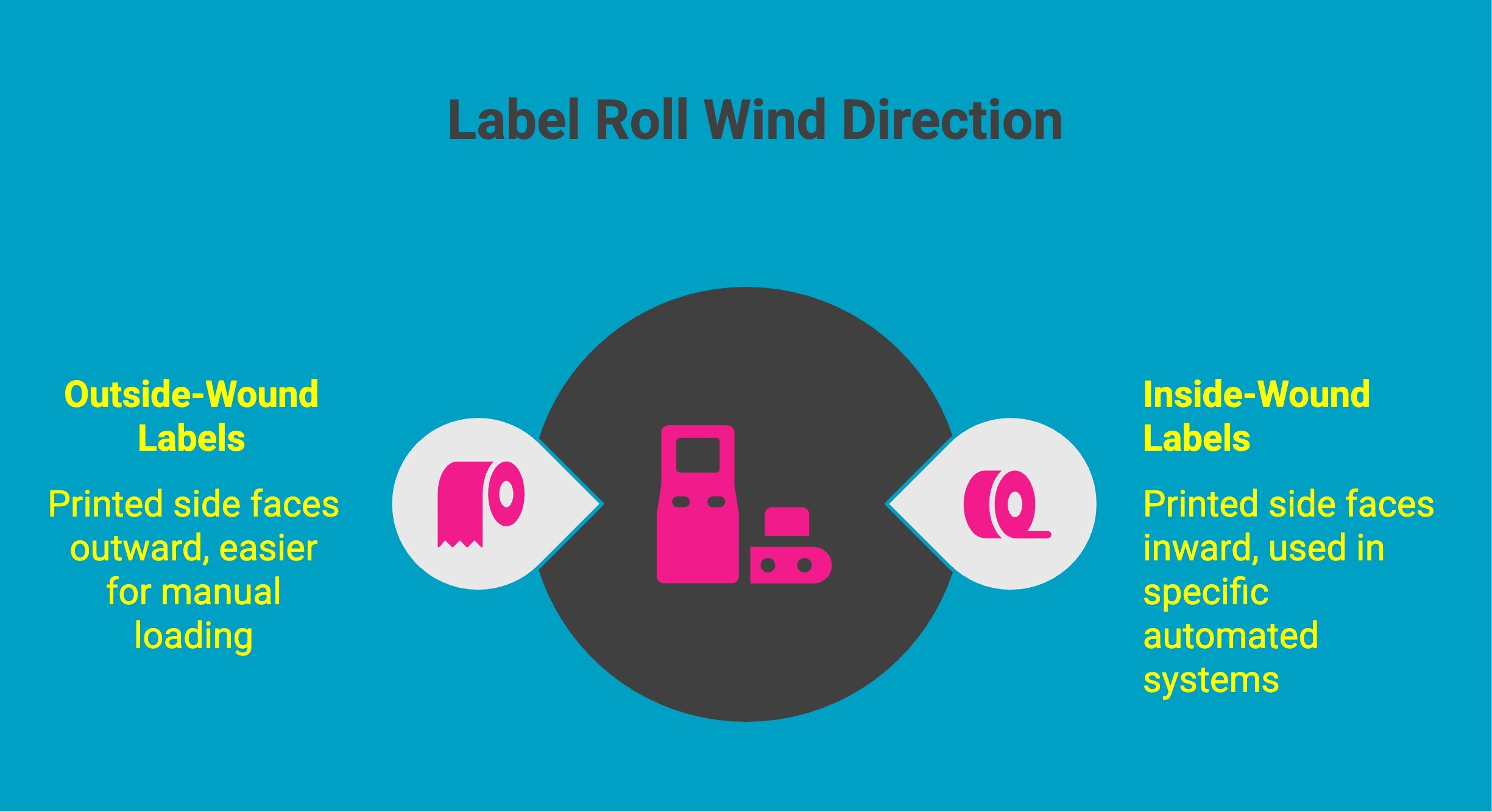
When specifying label roll wind direction, one of the most important distinctions is whether the roll is inside-wound or outside-wound. This determines which way the printed surface faces on the roll and how the label feeds into your applicator.
1. Inside-Wound (Face-In) Labels
Inside-wound labels have the printed side facing toward the core of the roll, so when the roll unwinds, the label surface curves inward. This configuration is required for certain automated labeling systems designed to pull and apply labels from an inside-feed orientation.
2. Outside-Wound (Face-Out) Labels
Outside-wound labels have the printed side facing outward, away from the core. The label artwork is visible on the outside of the roll.
Many applicators and manual dispensers use outside-wound rolls because they allow easier loading and visual verification during setup.
Why the Right Orientation Matters?
Ordering the wrong orientation can cause labels to apply backward, upside down, or fail to feed properly. Even if the roll fits your machine, the incorrect wind direction can disrupt your entire labeling process. Confirming face-in or face-out orientation ensures smooth application and prevents unnecessary downtime.
What Are the Different Types of Label Unwind Positions?
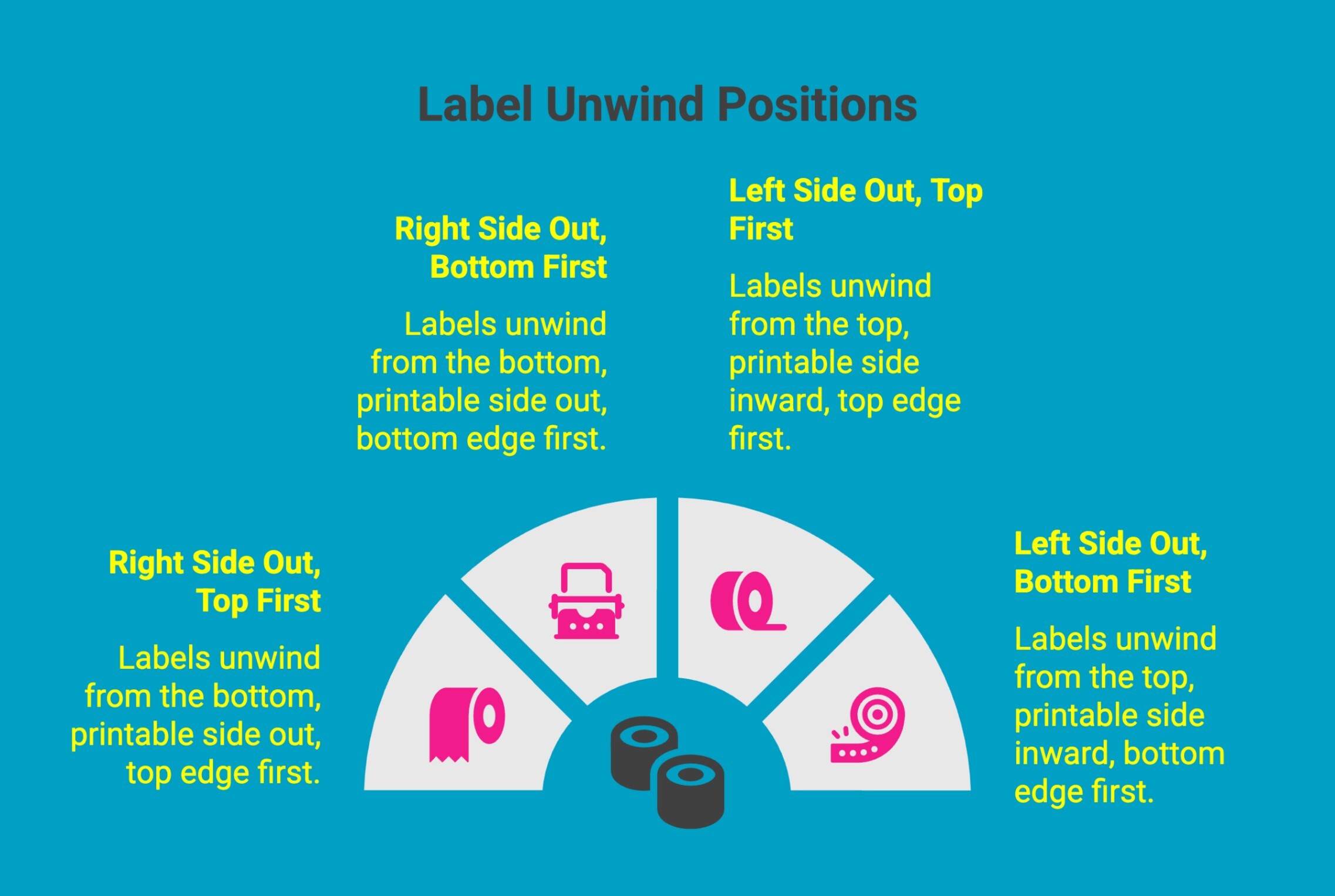
Label unwind positions refer to the direction a roll of labels feeds through a printer or applicator. Choosing the correct unwind position ensures smooth printing, proper alignment, and compatibility with your labeling equipment. Below are the most common types:
1. Right Side Out, Top First
In Position #1, the labels unwind from the bottom of the roll, the printable surface faces outward, and the top edge of the label enters the printer first. This means when the label prints, the text appears correctly oriented without rotation.
This is one of the most common unwind positions for desktop and industrial thermal printers because it matches the natural forward feed path of many machines. If your artwork prints upside down or reversed, the unwind direction is often incorrect.
2. Right Side Out, Bottom First
In Position #2, the roll still unwinds from the bottom, and the printable side faces outward, but the bottom edge of the label feeds first.
This configuration flips the orientation relative to Position #1. It’s often required when printers or applicators mount rolls in a different direction or when the application process needs the label rotated 180 degrees before applying to packaging.
3. Left Side Out, Top First
With Position #3, the roll unwinds from the top, and the printable surface faces inward toward the core. The top of the label feeds first.
Because the labels are wound differently, this setup is commonly used in automated label applicators where the roll is mounted above the feed path. The inward-facing print surface affects how the label peels off the liner and transfers onto the product.
4. Left Side Out, Bottom First
In Position #4, the roll unwinds from the top, the printable side faces inward, and the bottom of the label feeds first.
This configuration is typically used in specialized industrial setups where both roll mounting direction and application orientation require a specific feed sequence. It ensures labels apply correctly without twisting or mechanical adjustments.
Why Unwind Position Matters?
An incorrect unwind direction can cause:
-
Upside-down or reversed prints
-
Label sensor misreads (gap or black mark issues)
-
Poor peel performance in applicators
-
Production downtime
Always confirm the required unwind position for your printer or labeling machine before ordering custom roll labels. It prevents reorders, machine adjustments, and costly delays.
Working with network installations? Learn the right approach in our guide on how to label fiber optic cables for clear, long-lasting identification.
What Is a Label Wind Direction Chart and How Do You Read It?
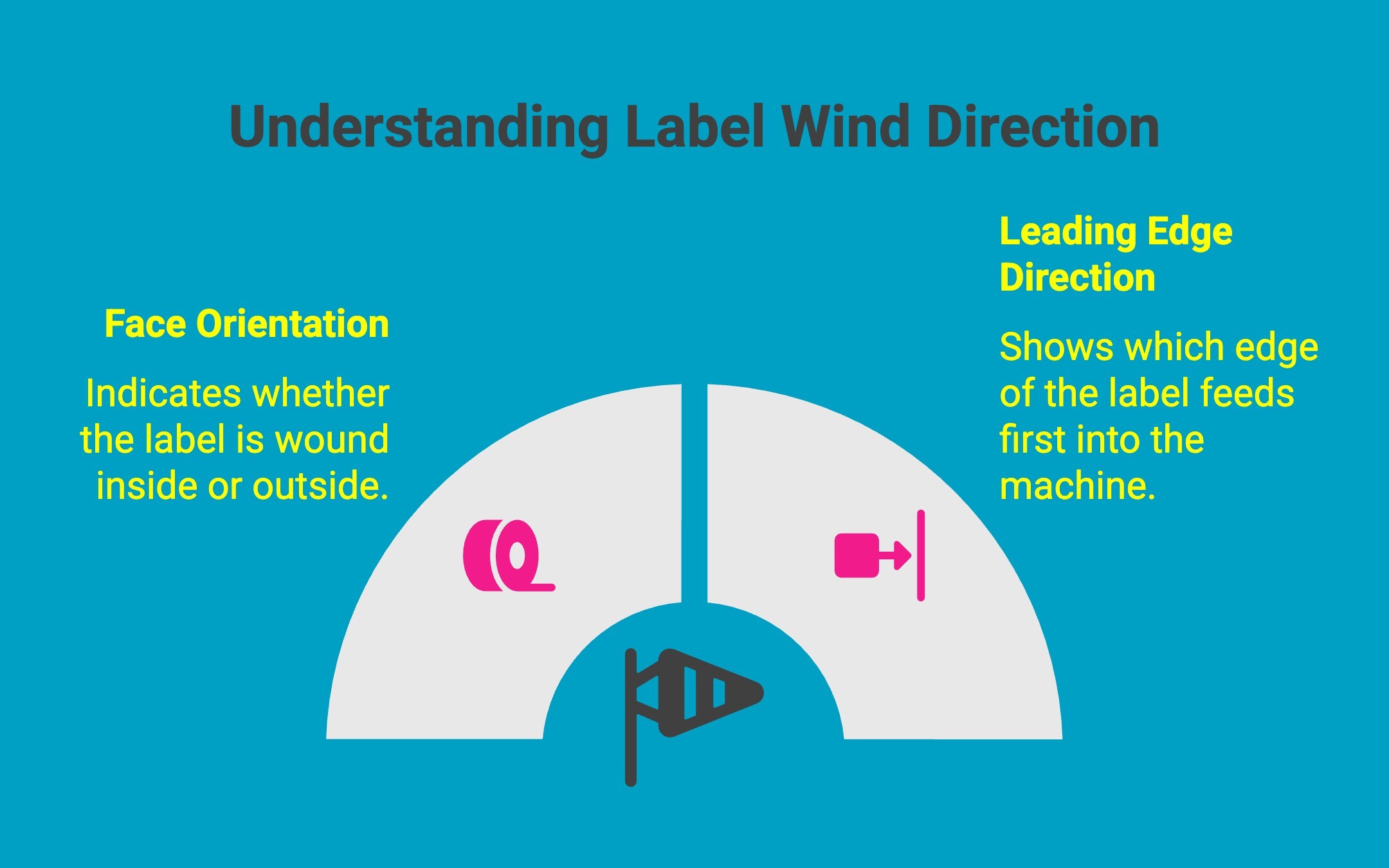
A label wind direction chart is a visual reference that shows exactly how a label is wound on a roll and which edge feeds first into the applicator. It combines two critical factors: face orientation and leading edge direction.
Most charts display a grid of small roll diagrams. Each position shows:
-
Whether the roll is inside-wound or outside-wound
-
Which edge leads into the machine
-
Left edge leading
-
Right edge leading
-
Top edge leading
-
Bottom edge leading
-
Each diagram is typically numbered so you can reference a specific configuration when ordering.
How to Read a Label Wind Direction Chart?
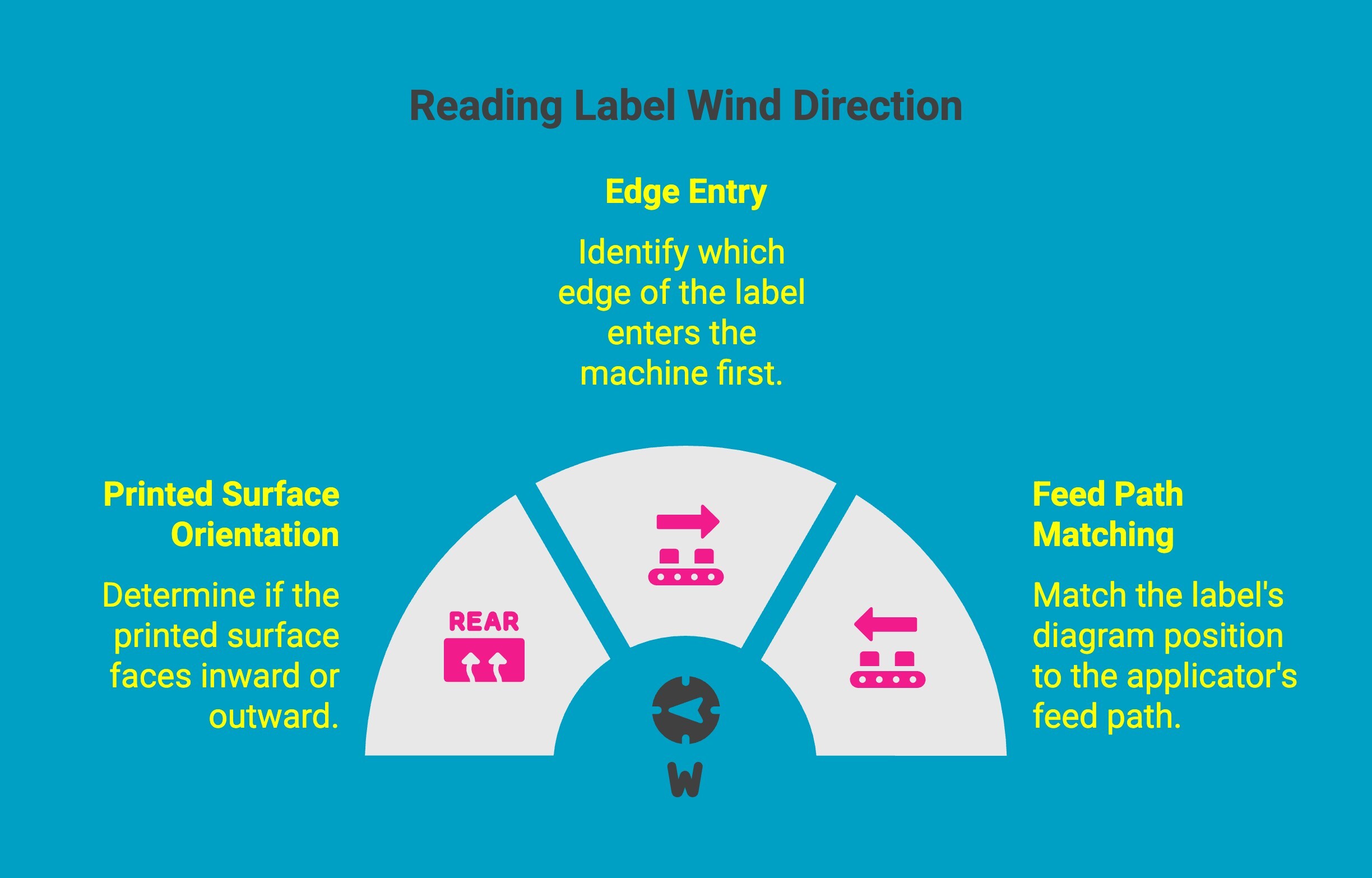
-
Identify whether the printed surface faces inward toward the core or outward away from it.
-
Determine which edge of the label enters the machine first.
-
Match that exact diagram position to your applicator’s feed path.
For example, Position 1 on a standard wind direction chart may show an outside-wound roll with the top edge leading. If your machine requires that setup, your order should reference Position 1 or clearly specify “outside-wound, top-edge leading.”
Using a wind direction chart removes guesswork and ensures your labels dispense in the correct orientation as soon as production starts.
How Do You Choose the Correct Label Winding Direction for Your Machine?
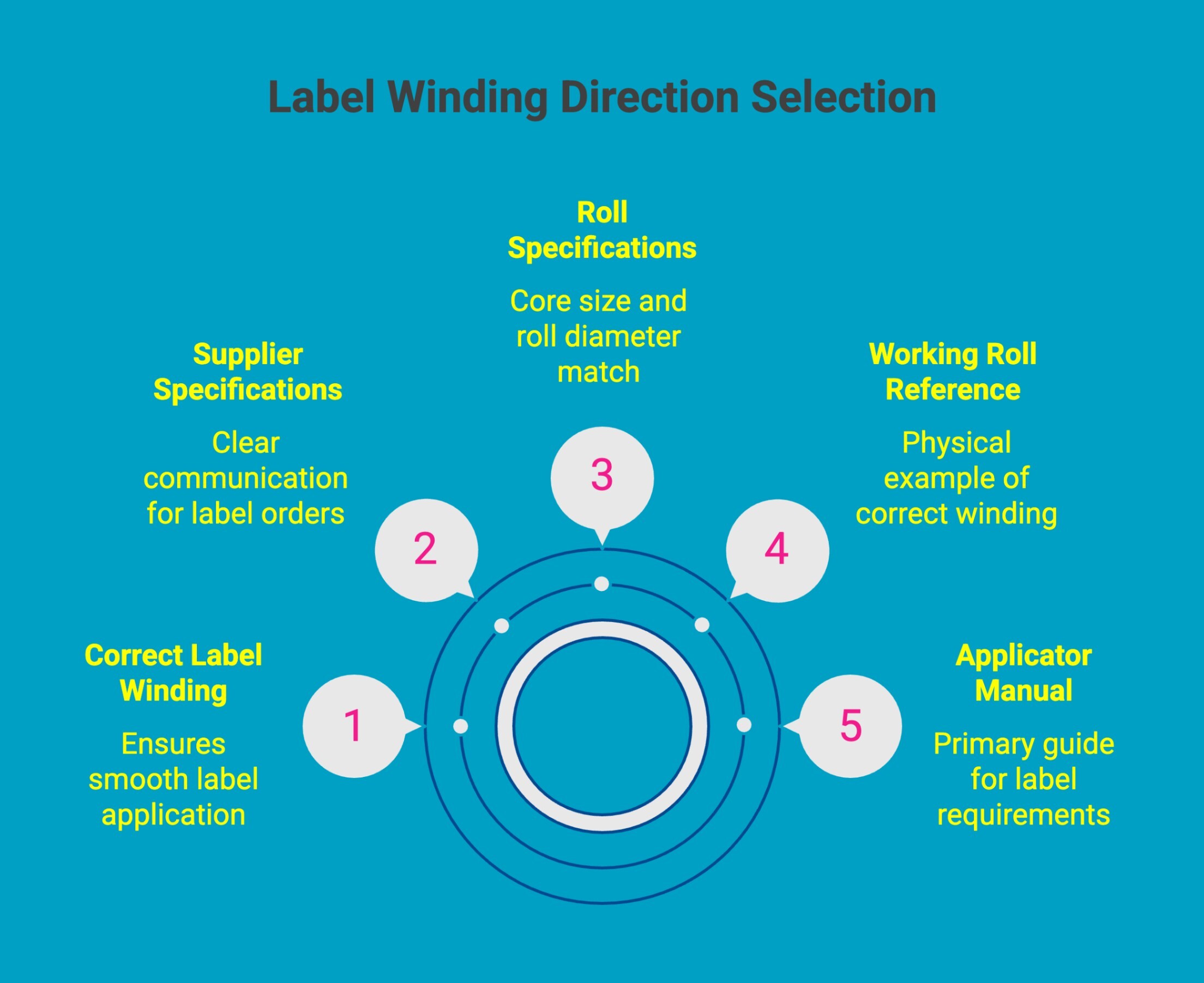
Selecting the correct label winding direction requires aligning the roll orientation with how your applicator feeds, peels, and applies each label. Both face orientation and leading edge direction must match your equipment setup.
1. Check Your Applicator Manual
Your first reference should always be the equipment manual. Most labeling machine manufacturers clearly specify whether labels must be inside-wound or outside-wound and which edge should lead into the applicator. Some manuals include a wind direction diagram for clarity. Following these specifications ensures compatibility and prevents costly ordering errors.
2. Inspect a Roll That Currently Runs Correctly
If no manual is available, or if the manual is unclear, inspect a roll that currently runs correctly in your machine and use it as your physical reference.
Remove the roll and check whether the printed surface faces inward or outward. Then identify the leading edge, which is the side of the label that enters the applicator first. This could be the top, bottom, left, or right edge of the design.
Even if the roll is wound correctly as inside or outside, the wrong leading edge can cause labels to apply sideways or upside down. Using a working roll as your benchmark helps you accurately replicate a proven setup.
4. Confirm Core Size and Roll Specifications
Wind direction must align with roll dimensions. Core diameter and maximum outer roll diameter need to match your applicator’s requirements. A roll with the correct winding direction may still fail if it does not physically fit or feed properly within the machine’s size constraints.
5. Provide Complete Specifications to Your Supplier
When placing an order, clearly specify face orientation, leading edge direction, core size, and maximum roll diameter. Clear communication eliminates assumptions during production and ensures your labels arrive ready to run without adjustments or downtime.
Working on panel builds or installations? Learn how to label cables properly to keep systems organized and compliant.
What Are the Common Mistakes When Ordering Wind Direction Labels and How Can You Avoid Them?
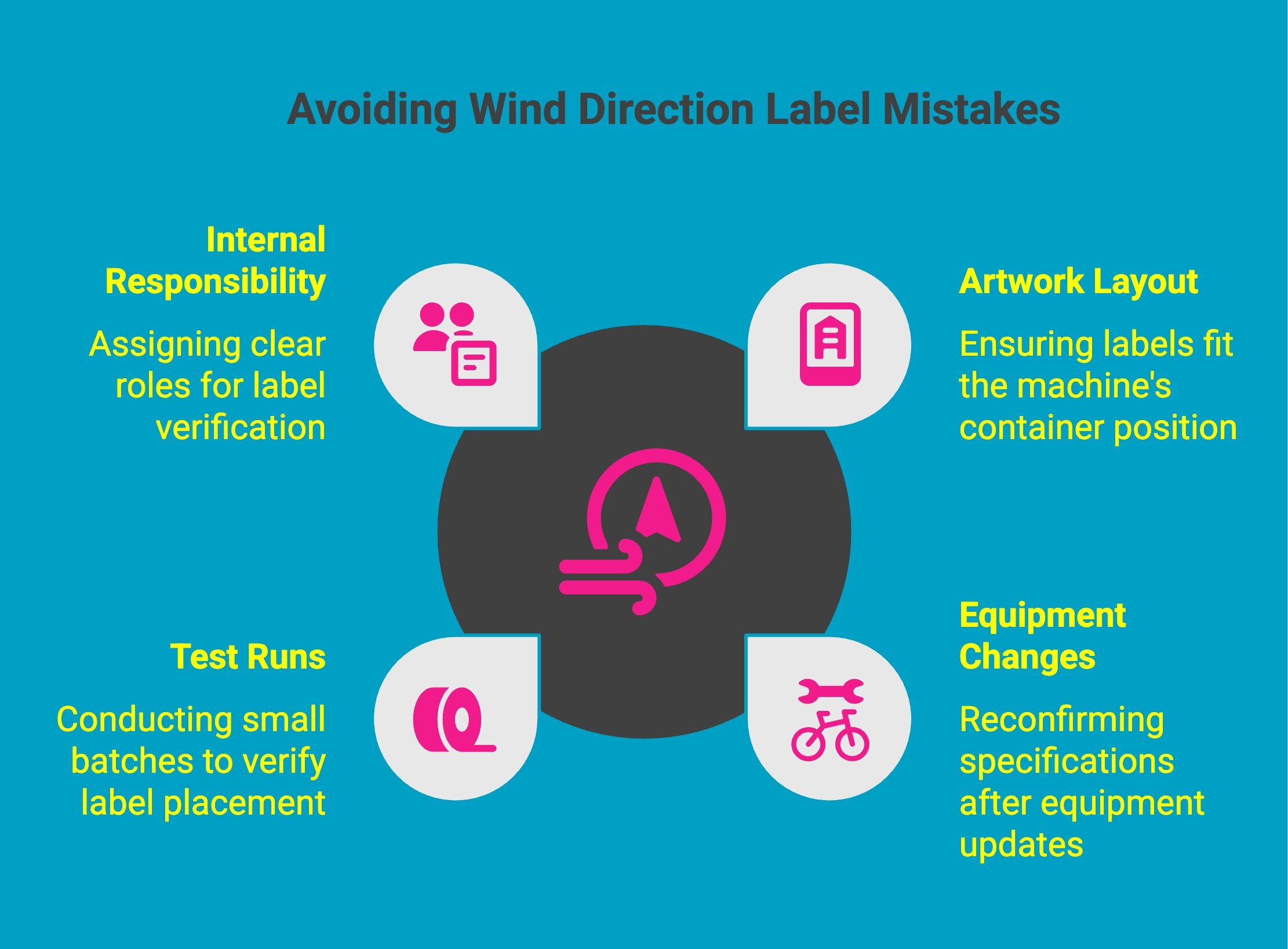
Even experienced buyers overlook important details when specifying label roll wind direction. These errors are preventable with the right verification steps.
1. Ordering Based on Artwork Layout Instead of Machine Setup
Design approval often focuses on how artwork appears on screen, not how the product sits in the applicator. Always confirm container position inside the machine before finalizing width × height and artwork rotation.
2. Reordering Old Specifications Without Rechecking Equipment Changes
Production setups change over time. A new applicator, adjusted mounting angle, or conveyor modification can alter wind direction requirements. Reconfirm specifications whenever equipment is updated, even if previous orders worked correctly.
3. Skipping a Test Run Before Full Production
Moving directly to a full production run without testing can lead to costly reprints. When changing orientation, size, or equipment, request a small batch or sample roll to verify proper feeding and placement.
4. Lack of Clear Internal Responsibility
Miscommunication between design, purchasing, and operations teams often causes orientation mistakes. Assign clear responsibility for verifying wind direction, core size, and roll diameter before placing the order to prevent production disruptions.
How Does Label Roll Wind Direction Affect Automated Labeling Machines?
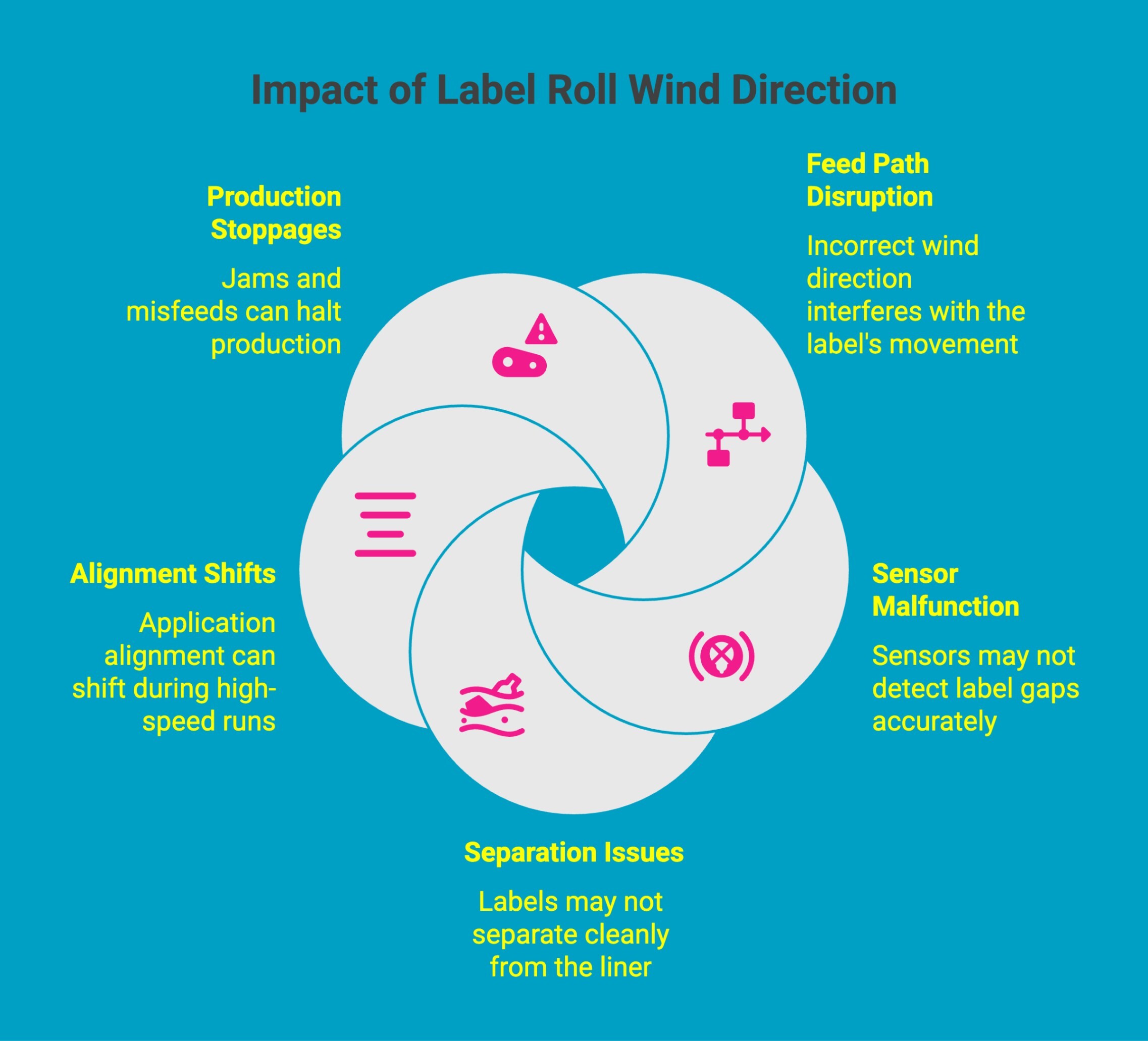
Automated labeling machines operate on a fixed feed path through rollers, sensors, and peel plates. Any deviation in wind direction disrupts this sequence.
Label roll wind direction plays a critical role in how efficiently automated labeling equipment performs. Even if your label size, material, and adhesive are correct, the wrong unwind orientation can interfere with the feed path and reduce placement accuracy.
In automated systems, labels travel through rollers, sensors, and peel plates in a fixed direction. When wind direction does not align with that path, several issues can occur:
-
Labels may feed backward or upside down
-
Sensors may fail to detect the label gap correctly
-
Labels may not separate cleanly from the liner
-
Application alignment can shift during high-speed runs
-
Production may stop due to jams or misfeeds
In print-and-apply systems, incorrect winding direction can also affect how variable data is printed. Barcodes, dates, or batch codes may be positioned incorrectly if the label does not enter the printer in the expected orientation.
Matching label roll wind direction with your machine’s feed path ensures smooth dispensing, accurate placement, and uninterrupted production performance.
Why Work with DuraFast Label Company for Your Labeling Solutions?
Looking for a Canadian supplier that can support your entire labeling workflow, not just sell you labels?
DuraFast Label Company supplies labels in any wind direction configuration, with specialists available to confirm your machine requirements before production.
Here is what sets us apart:
-
Wide range of blank labels, including thermal, inkjet, laser, and RFID.
-
An extensive selection of barcode printers and mobile label printers.
-
Large inventory of thermal ribbons, inks, and toner supplies.
-
Label applicators, rewinders, dispensers, and handling equipment.
-
Bulk pricing programs, including Labels by the Pallet, offer savings.
-
Fast shipping across Canada with dedicated customer support.
Contact DuraFast Label Company to confirm your wind direction specifications before placing your next order.
Final Words
Labeling should make your operations smoother, not more complicated. When your label size, material, printer setup, and application method all work together, production flows faster, and your products look more professional on the shelf.
Before placing your next order, review your specifications carefully, confirm your equipment requirements, and make sure every detail aligns with your workflow. A few extra minutes of planning today can prevent costly errors tomorrow.
When you approach labeling strategically, it becomes a competitive advantage, not just a packaging requirement.
Frequently Asked Questions
Are there industry standards for specifying label roll wind direction?
Yes. The label industry commonly uses a 1–4 unwind direction chart to define which edge of the label leads off the roll. However, numbering layouts can vary slightly between manufacturers, so confirming the unwind diagram before ordering is always recommended.
Which way do I put labels in the printer?
Labels should be loaded according to your printer’s feed path and required unwind direction. Always check your printer manual for top-of-form position, roll orientation, and whether inside or outside wound rolls are needed.
What is roll direction?
Roll direction, or wind direction, describes how labels are wound on a roll and which edge feeds first into a printer or applicator. It defines whether the labels are inside-wound or outside-wound and identifies the leading edge entering the machine.
How do I determine the correct wind direction for my label rolls?
Check your applicator or printer manual for the required unwind direction and leading edge. If unavailable, inspect a roll that runs correctly in your machine. Match the printed face orientation and leading edge to replicate that proven configuration.
Is there a chart or reference to help choose the right label wind direction?
Yes. A label wind direction chart shows diagrammed roll positions combining inside or outside winding with top, bottom, left, or right edge leading. Each position is numbered so you can match your applicator setup and order accurately.
How do label applicators or machines relate to the choice of wind direction?
Applicators are built for specific feed paths. The unwind direction and leading edge must match how the machine pulls labels from the roll. If they do not align, labels may apply sideways, upside down, or cause jams.
Are there industry standards for specifying label roll wind direction?
There is no single universal standard across all industries. Wind direction is typically specified using numbered chart positions or written descriptions such as “outside-wound, top-edge leading,” based on the applicator manufacturer’s requirements.