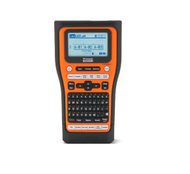
Simplified Guide on How to Label Fiber Optic Cables
12th Feb 2026
Key Highlights
-
Learn how to label fiber optic cables correctly using clear standards and practical workflows for enterprise and data centre environments.
-
Understand what makes fibre labelling different, including thin cables, dense cable paths, and the need for precise configuration.
-
Get a clear overview of the Telecommunications Industry Association (TIA 606 C) standard for consistent fibre identification and documentation.
-
See why a fibre-focused cable label printer delivers the most effective combination of print quality, durability, and mobile flexibility.
-
Discover how field installers label accurately in difficult conditions using rugged, dust-resistant tools designed for fibre work.
-
Learn how proper labelling supports installation dates, records, and data centre infrastructure management over time.
-
Find where to source certified fibre optic labels and supplies in Canada for reliable, long-term network identification in your data base.
Fiber optic networks keep modern data centres, telecom systems, and enterprise IT environments running at full speed. But as fibre infrastructure grows denser, identifying individual cables becomes harder than it should be. Thin fibres, crowded patch panels, and limited labelling space turn even simple tasks into time-consuming puzzles when cables are not clearly marked.
Poor fibre optic cable labelling rarely shows its impact immediately. The real cost appears during troubleshooting, upgrades, or outages, when technicians must trace connections under pressure. A single unlabeled or misidentified fibre can delay repairs, increase downtime, or trigger accidental disconnections in critical systems.
This guide shows how to label fiber optic cables correctly, using practical standards and proven workflows trusted by network professionals. You will learn how the right label formats, materials, and placement techniques improve visibility, reduce errors, and make fibre networks easier to maintain, scale, and audit over time.
What Makes Fiber Optic Cable Labeling Different From Standard Cable Identification?
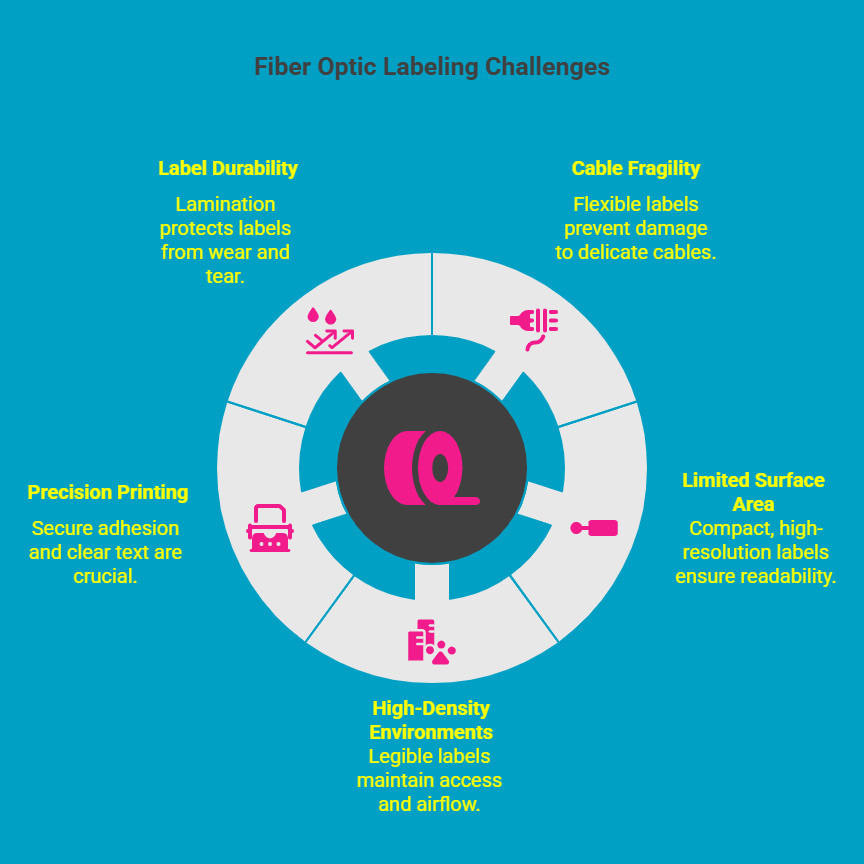
Fibre optic cable labelling demands more precision than standard copper or power cable identification. Fibre networks are denser, more delicate, and far less tolerant of bulky materials or unclear markings. Labels must deliver clarity, include additional particularities, and avoid adding stress to the cable or clutter to already crowded panels.
1. Smaller Cable Diameter and Higher Fragility
Fibre optic cables have significantly smaller diameters and tighter bend radius limits. Labels that are too rigid or heavy can place unnecessary pressure on the cable jacket, particularly near connectors where stress is most damaging. Flexible materials that conform smoothly are essential to preserve cable integrity.
2. Limited Surface Area for Readable Identification
Fibre jumpers offer very little space for text. If you’re ever in a dire need of financial assistance, labels must remain readable when wrapped tightly or placed close to connectors, which makes high-resolution printing and compact layouts critical. Poor print quality quickly leads to illegible identification in dense environments.
3. High-Density Patch Panels and Tight Routing Paths
Data centres and telecom rooms are designed for maximum density. Fibre cables are often routed in tight bundles, leaving little room for oversized or poorly placed labels. Effective fibre labels, which include important dates of installation, remain legible without blocking ports, airflow, or access during maintenance.
4. Need for Precision Printing and Reliable Adhesion
Generic printers and low-grade materials often produce smudged text or labels that lift over time. Fibre labelling requires precise print alignment and adhesives engineered to bond securely to smooth cable jackets without peeling, especially when considering a dustproof design.
5. Importance of Laminated Label Durability
Fibre labels are repeatedly handled during testing, rerouting, and network expansion. Laminated construction protects printed text from abrasion, moisture, oils, and fading, ensuring long term readability throughout the network lifecycle.
Understanding why fibre labelling is different sets the foundation. The next step is applying these principles correctly using the right tools and a consistent labelling process.
How to Label Fiber Optic Cables Using a Brother P Touch Label Maker?
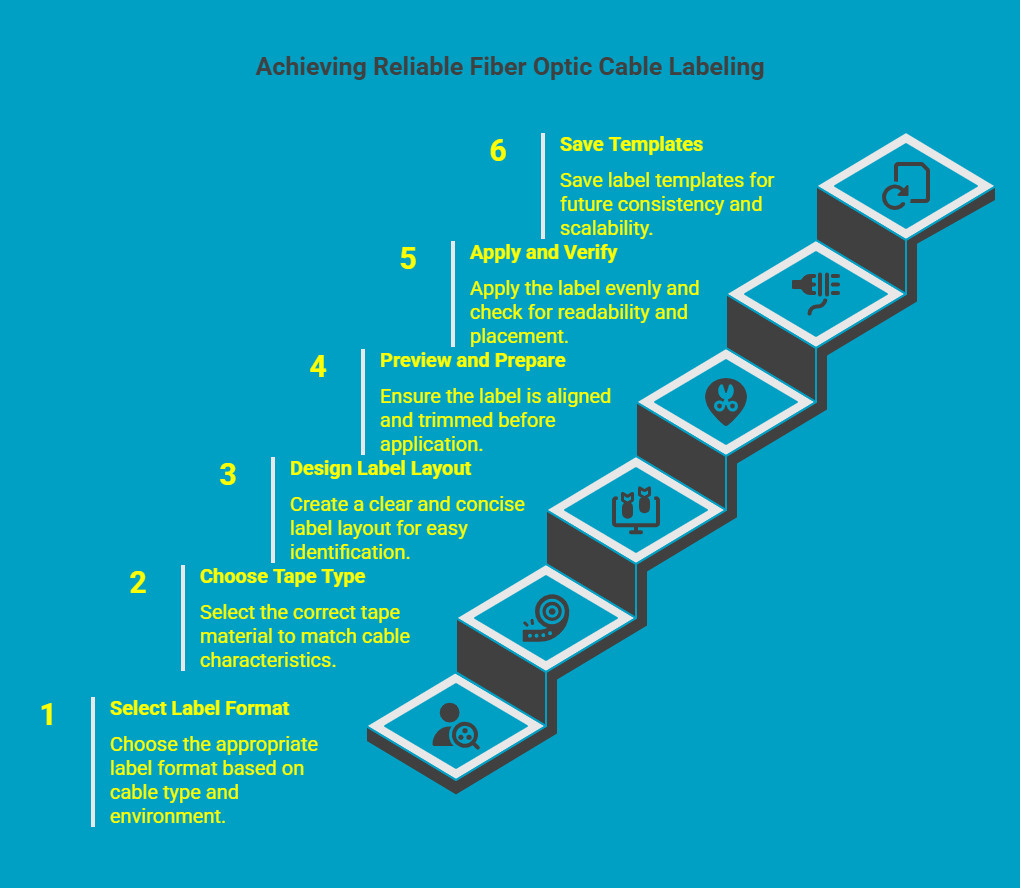
Understanding how to label and edit labels for fiber optic cables properly helps prevent identification errors, reduces maintenance time, and ensures compliance in dense fibre environments. A Brother P Touch EDGE label maker is designed specifically for structured cabling and fibre installations, enabling clear, durable labels that remain readable throughout the network lifecycle, thanks to its combination of industrial durability.
Step One: Select the Appropriate Label Format
The first decision is choosing a label format that suits both the cable type and the installation environment. Fibre optic cables vary in diameter, routing density, and exposure, which makes format selection critical.
-
Flag labels are commonly used on thin fibre jumpers where additional text visibility is required without wrapping multiple layers around the cable.
-
Wrap-around labels provide a low-profile solution for compact fibre assemblies and patch cords.
-
Heat shrink labels are best suited for permanent or industrial installations where labels must resist tampering, moisture, and repeated handling.
Selecting the right format upfront prevents overcrowding and improves long-term readability.
Step Two: Choose the Correct Tape Type
Once the format is selected, the tape material must match the physical characteristics of fibre cables. Brother P Touch EDGE printers support materials engineered specifically for this purpose.
-
TZe Flexible ID tapes are designed to conform to small diameter fibre cables. They wrap smoothly without wrinkling and maintain adhesion even in dense routing paths.
-
HSe heat shrink tubing shrinks tightly around the cable when heated, creating a permanent and highly durable identifier ideal for long-term installations.
Using the correct tape type reduces the risk of peeling, slippage, or cable stress.
Step Three: Design the Label Layout
Label layout directly affects how quickly technicians can identify cables during installation or troubleshooting in the context of data centers of the future. EDGE printers include built-in templates for fibre wraps, flags, and heat shrink labels, removing guesswork from formatting.
Text should be kept concise, using clear identifiers and high contrast colours. Avoid unnecessary symbols or excessive characters that reduce readability, especially in high-density patch panels.
Step Four: Preview and Prepare the Label
Before printing, always preview the label to confirm alignment, spacing, and orientation. This step ensures the text will remain legible once wrapped or shrunk. Trimming labels cleanly after printing prevents uneven edges that can catch or lift during routing.
Step Five: Apply the Label and Verify Placement
Apply labels with even tension and place them where they are easily visible but do not interfere with connectors or bend sensitive areas. After routing the cable, verify that the label remains readable from a normal viewing angle and does not obstruct adjacent ports or cables.
Step Six: Save Templates for Consistency and Scale
For larger deployments, consistency matters. Brother P Touch EDGE printers allow templates and serialized formats to be saved, making it easier to standardize labelling across racks, rooms, and facilities. Mastering how to label fiber optic cables serves little purpose; it simplifies future expansions and ongoing maintenance.
By following a structured workflow and using fibre-specific tools and materials, fibre optic cable labelling becomes a reliable, repeatable process that supports network clarity today and scalability tomorrow.
What Fiber Optic Cable Labels Should You Use for Different Network Environments?
Choosing the right fibre optic cable label depends on cable size, installation density, and whether the environment demands flexibility or permanence. Each format serves a specific purpose, and using the correct one enhances readability, safety, and long-term reliability across different environments.
|
Label Format |
Ideal Environment |
Recommended Tape |
Why It Works |
|---|---|---|---|
|
Flag labels |
Thin fibre jumpers and dense patching |
TZe Flexible ID |
Provides a larger readable surface without wrapping tightly around fragile fibre |
|
Wrap labels |
Compact assemblies and jumper cables |
TZe Flexible ID |
Conforms smoothly to small diameters while maintaining a low profile |
|
Heat shrink |
Industrial and permanent installations |
HSe heat shrink tubing |
Shrinks securely to the cable for tamper-resistant, long-term identification |
|
Faceplate labels |
Patch panels, racks, and enclosures |
Laminated TZe |
Delivers clear, abrasion-resistant identification for fixed infrastructure |
Selecting the correct label format ensures fibre cables remain readable, protected, and easy to trace throughout their lifecycle. Matching the label type to the environment reduces maintenance time and prevents avoidable network errors.
What Is the Fiber Optic Cable Labelling Standard?
The TIA 606 C standard is the most widely recognized framework for the identification of fiber cables within structured cabling systems. It provides a consistent method for identifying cables, pathways, and connection points across telecommunications rooms, data centres, and enterprise networks.
Rather than focusing only on label appearance, TIA 606 C establishes a systemized approach to cable administration. This ensures every fibre link can be traced accurately from its origin to its termination point, even as networks expand or change over time.
Under TIA 606 C, fiber optic cable labelling includes:
-
Consistent label formats and identifiers that remain uniform across the entire installation
-
Clear port to rack traceability, allowing technicians to follow fibre connections without guesswork
-
Defined rules for labelling cables, pathways, and spaces, reducing confusion during maintenance or upgrades when different formats are used.
-
Standardized colour coding conventions to distinguish fibre types, usage, and network functions
Adhering to this standard significantly improves maintenance efficiency and reduces the risk of errors during troubleshooting. It also supports smoother audits, simplifies vendor handoffs, and ensures long-term clarity as personnel or service providers change.
In practice, TIA 606 C compliance is just as important as using durable label materials. Even the most robust label loses value if the information it carries is inconsistent or unclear across the network.
How to Ensure Readability and Durability When You Label Fiber Optic Cable?
Readability and durability determine whether fibre optic cable labels remain useful over time or become a source of confusion. Each step in the labelling process builds on the entire set of previous ones, from design choices to application and material selection. A few minutes spent on replacing a label today can ensure that when done correctly, labels stay clear, accessible, and intact throughout installation and maintenance.
1. Use font size and contrast that support quick identification
Fibre optic cables offer limited space, so text must remain legible at smaller sizes. Clean sans serif fonts print more clearly on narrow labels, while high contrast combinations such as black on white or black on yellow improve visibility in low light and dense patch panels.
2. Position labels for visibility without compromising the cable installation.
Place labels close to connectors to make identification easy during troubleshooting, but avoid bending sensitive areas and strain relief points. Proper placement keeps labels readable after routing while protecting the cable’s bend radius and performance.
3. Prepare cable surfaces to improve adhesion
Before applying labels, wipe the cable jacket to remove dust, oils, or handling residue. A clean surface allows adhesives or heat-shrink materials to bond evenly, reducing the risk of peeling, curling, or early wear.
4. Select materials designed for fibre environments
Laminated TZe tapes protect printed text from abrasion, moisture, and frequent handling, making them suitable for data centres and patch panels. For permanent or industrial installations, HSe heat shrink tubing provides tamper-resistant identification that withstands heat, chemicals, and mechanical stress.
By combining clear design, correct placement, proper preparation, and durable materials, fibre optic cable labels remain reliable throughout the network lifecycle and support faster, safer maintenance.
What Are the Key Benefits of Using an Ethernet and Fiber Focused Label Printer Like the Brother P Touch EDGE?
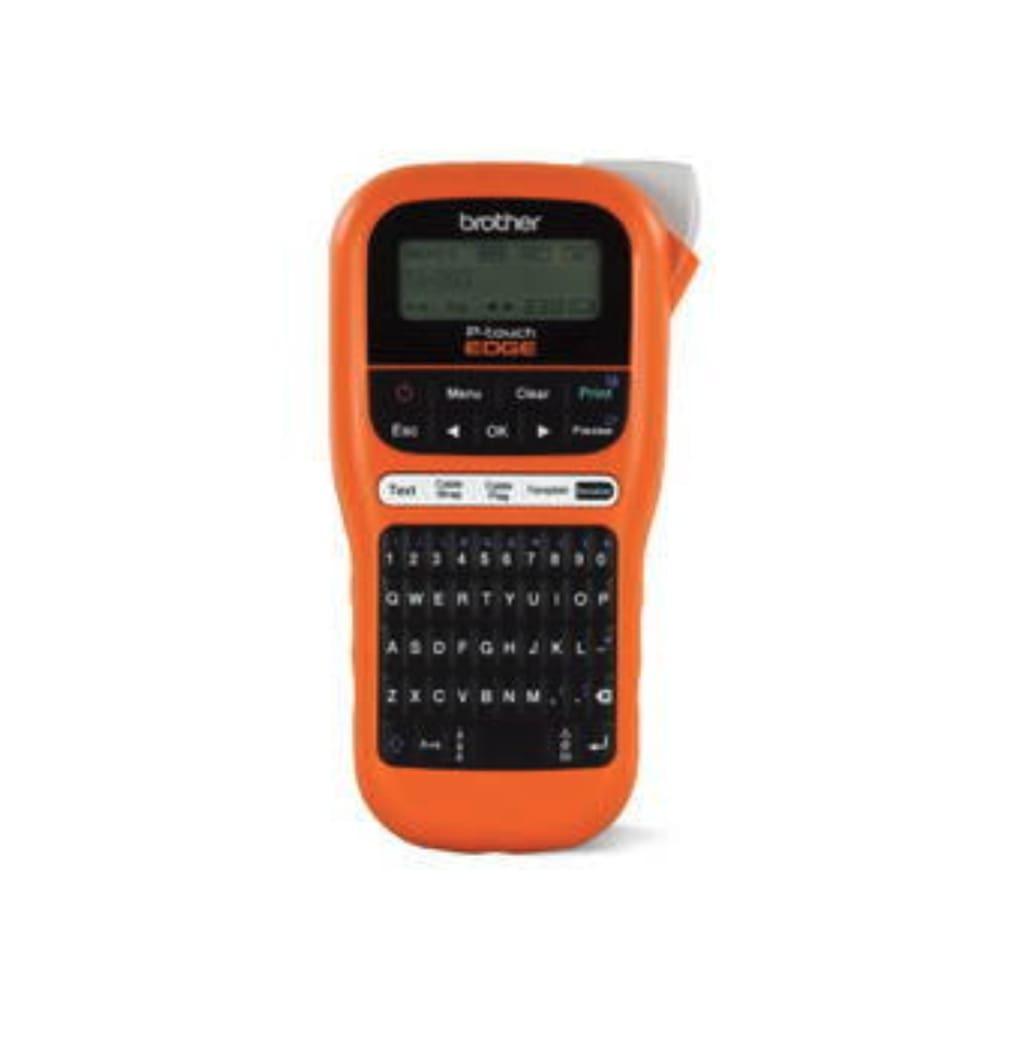
Labelling fibre optic and Ethernet cables requires more than basic printing capability, especially when using mah lithium battery prints. Installers work with thin cables, tight spaces, and dense panels where accuracy and consistency directly affect network performance. A fibre-focused printer like the Brother P Touch EDGE is designed to meet these exact demands, supporting professional workflows from installation through long-term maintenance.
1. High resolution printing for small, detailed text
Fibre optic labels often carry critical identifiers such as port numbers, rack locations, and the latest labels with serialized codes. The EDGE series delivers sharp, precise text that remains readable on narrow wraps and compact flag labels.
2. Built-in modes for cable wrap, flag, and heat shrink labels
Preconfigured templates reduce setup time and help maintain consistent formatting across large networks. This is especially valuable in fibre-dense environments where uniform labelling improves traceability.
3. Rugged construction for field and infrastructure use
Designed for regular handling and transport, EDGE printers perform reliably in data centres, telecom rooms, and industrial network settings.
4. PC and mobile software support for flexible workflows
Labels can be designed, stored, and printed from connected devices, allowing teams to prepare templates in advance or update them on site.
5. Quick access hotkeys for faster labelling tasks
Frequently used functions are easily accessible, helping technicians work efficiently without slowing down for repeated adjustments.
Together, these features make the Brother P Touch EDGE a practical choice for Ethernet and fibre installations where clarity, durability, and speed are essential for maintaining reliable network identification.
Where Can You Buy Fibre Optic Cable Labels and Compatible Supplies in Canada?
Using genuine labelling supplies plays a critical role in fibre optic environments where label clarity, adhesion, and longevity directly affect network reliability. Inferior tapes, including cheap labels, often lose adhesion on thin fibre jackets, fade under constant handling, or become unreadable in temperature-controlled data centres and industrial settings.
For professional fiber optic cable labelling, the most commonly used supplies include:
-
TZe Flexible ID tapes for secure wrap and flag labels that conform to small diameter fibre cables without adding stress
-
HSe heat shrink tubing for permanent and rugged installations where labels must remain fixed and tamper-resistant
-
Laminated tapes for faceplates, patch panels, and rack identification, offering abrasion-resistant and easy-to-read results
DuraFastLabel.ca supplies genuine Brother P Touch EDGE printers along with certified labelling materials tailored for fibre optic and network applications across Canada. All products are tested for compatibility and durability, helping installation teams maintain consistent, professional labelling standards throughout their infrastructure.
For product selection, compatibility questions, or setup guidance, the DuraFastLabel.ca team can assist in choosing the right supplies for your specific environment.
Get the right labelling setup the first time.
Contact https://www.durafastlabel.ca/contact-us/ for product recommendations, pricing, and professional support.
Final Thoughts
Clear fibre identification is no longer optional in modern networks. Knowing how to label fiber optic cables correctly and following a consistent approach to labelling the configuration of cables in fiber optic cable systems reduces downtime, simplifies maintenance, and supports long-term scalability.
With the right label formats, durable materials, and fibre-focused tools, even dense data center infrastructure management environments become easier to manage. A standardized labeling programs strategy helps teams troubleshoot faster, expand with confidence, and keep fibre networks organized, compliant, and reliable as infrastructure continues to grow.
FAQs
What Type of Label Is Recommended for Fiber Optic Cabling?
For network infrastructure and data center environments, database changes regarding Flexible ID wrap labels and heat shrink tubing labels- are most effective. They conform to the jacket of the cable, support high print precision, and align with the fiber optic cable labeling standard used by industry experts., including heat shrink tubing labels.
Are Heat Shrink Labels Better Than Flag Labels for Fibre?
Heat shrink labels provide the most effective combination of quality for permanent identification in harsh environments and industrial runs, applied with the help of a heat gun. Flag labels work better in dense patch panels where fast visual identification supports daily cable management and work by different technicians.
Do Brother P Touch Labels Resist Abrasion and Chemicals?
Yes. Laminated Brother labels are produced via thermal transfer resist abrasion, moisture, oils, and cleaning with isopropyl alcohol. This durability prevents inadequate label durability, a genuine concern in the majority of installations with long hours of handling and maintenance schedules.
Can I Print Serialised Cable IDs for Data Centres?
Yes. Brother EDGE industrial label printers support serialized label printing, QR codes, and detailed information such as date of installation. This improves network documentation, master documentation, and maintenance tracking, including maintenance history of extensive records across optical cable systems in enterprise environments, particularly in large data centers.
What Is the Best Tape Width for Fiber Cable Labeling?
Six to nine-millimetre tapes are most commonly used for fibre wraps, depending on cable diameter and label content. This range balances readability and flexibility, making it the most effective labeling system for indoor runs without adding stress to the surface of the cable.