Top-Rated Seiko SLP850 Labels: Enhance Your Print Quality
21st Aug 2026
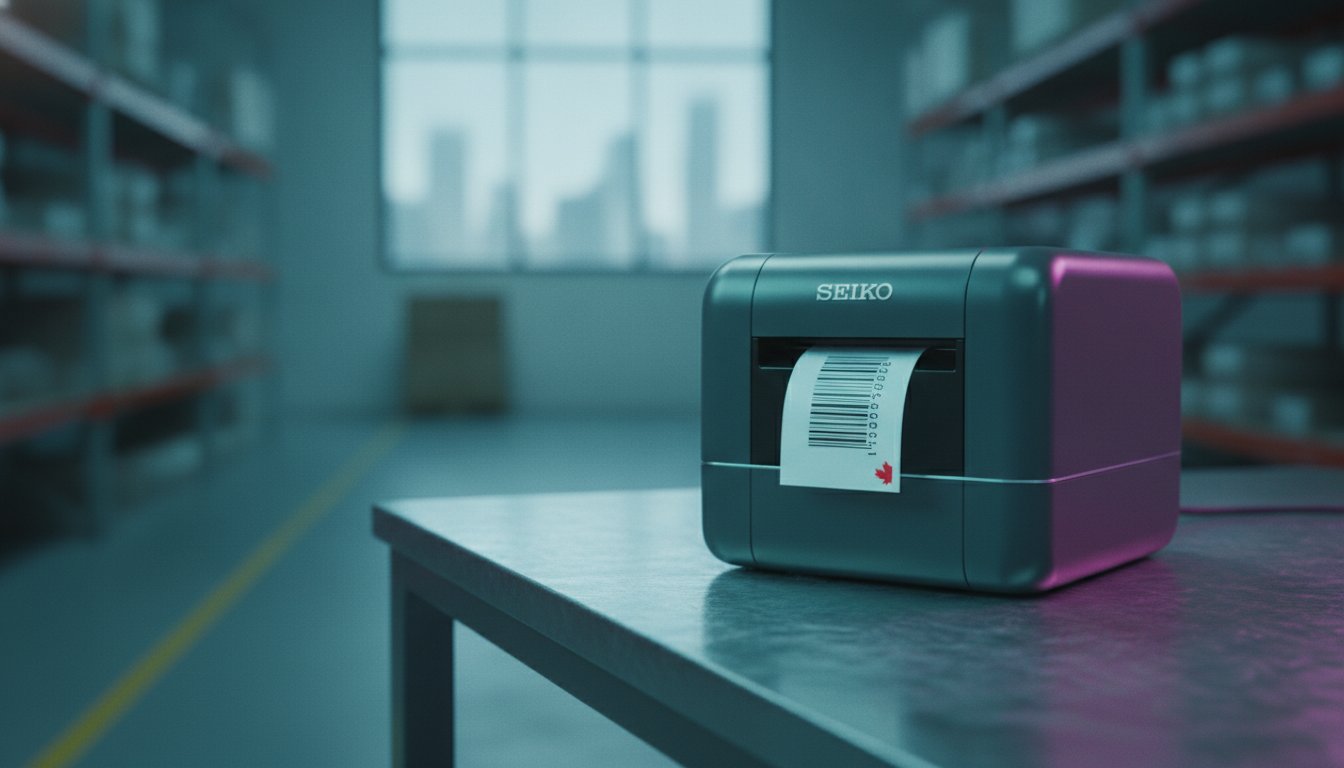
Is your high-performance printer only as good as the adhesive on the back of your labels? Most business owners realize that even the best hardware fails to deliver value if the media peels off in a cold warehouse or jams during a back-feed cycle. You've likely felt the frustration of wasted paper and unreadable barcodes that stall your distribution line. Selecting the correct Seiko SLP850 labels is about more than just finding a roll that fits; it's about matching specific direct thermal topcoats to your unique logistical environment.
We'll help you master the technical specifications and environmental requirements for these labels to optimize your 2-inch thermal printing operations. This guide examines the differences between linerless and die-cut media, compares adhesive performance in dusty settings, and shows you how to achieve 300 DPI barcode clarity while reducing operational downtime. By understanding these variables, you can ensure your marking and distribution processes remain both cost-effective and reliable. We'll provide the clarity needed to make informed decisions that protect your hardware and your bottom line.
Key Takeaways
- Learn how the 300 DPI resolution of the SLP850 series ensures crisp barcode clarity for high-precision tracking and inventory management.
- Discover how to match specific Seiko SLP850 labels to your unique environment to prevent adhesive failure caused by dust or frozen food condensation.
- Understand the operational benefits of linerless technology for reducing siliconized waste and improving efficiency in variable-length printing.
- Compare USB, Serial, and Bluetooth hardware configurations to determine which model best fits your facility's connectivity and mobility requirements.
- Realize significant logistical advantages by sourcing labels from a Canadian supplier to reduce lead times and eliminate unexpected import duties.
Understanding the Seiko SLP850 2-Inch Thermal Printer Ecosystem
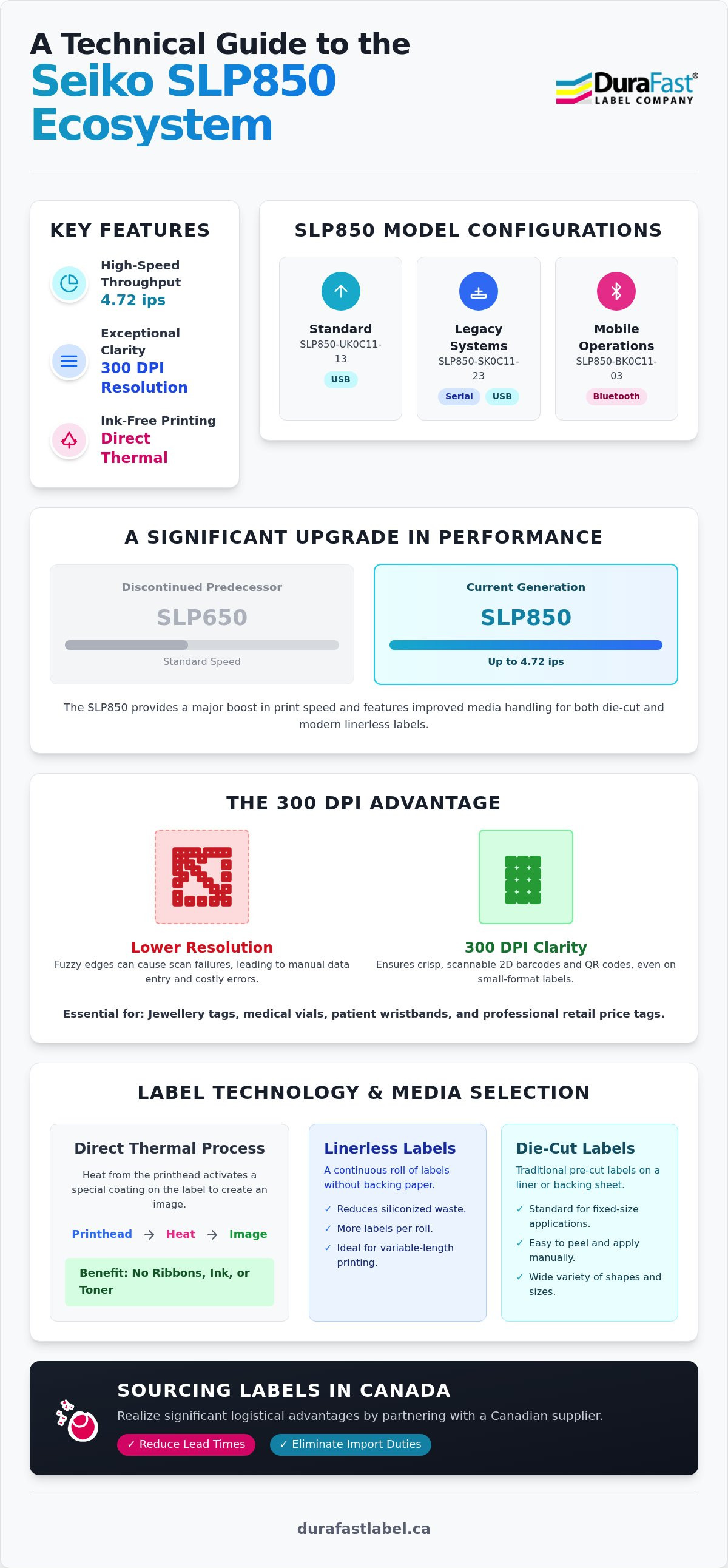
The SLP850 is the successor to the SLP650 series with enhanced throughput. This high-precision desktop solution is designed for businesses that require reliability in a compact form factor. By delivering 300 DPI resolution across a 2-inch print width, it bridges the gap between basic receipt printing and high-density industrial marking. Choosing the right Seiko SLP850 labels starts with understanding the hardware's specific capabilities and how it integrates into your existing workflow. This printer utilizes direct thermal printing technology, which eliminates the need for ribbons or ink, making it a highly efficient choice for fast-paced environments.
Hardware versatility is a hallmark of the Seiko SLP850 printers. The series is divided into three primary configurations to suit various operational needs. The SLP850-UK0C11-13 is the standard USB model, ideal for fixed workstations. For facilities requiring integration with legacy systems, the SLP850-SK0C11-23 provides a Serial port alongside USB. Finally, the SLP850-BK0C11-03 features Bluetooth connectivity, allowing staff to print labels directly from tablets or mobile devices. This 2-inch form factor is particularly effective in healthcare for patient wristbands and in retail for shelf-edge labelling, where space is at a premium but data density remains critical.
Key Differentiators from the SLP650 Series
The main difference between the new SLP850 and the discontinued SLP650 is the significant boost in operational speed. The SLP850 reaches print speeds of up to 4.72 inches per second (ips), which is roughly 120mm per second. This allows you to process high-volume batches without the bottlenecks common in older desktop models. Additionally, the internal mechanics have been redesigned for improved media handling. The printer now supports both traditional die-cut rolls and modern linerless media with greater precision, reducing the risk of adhesive buildup that can lead to jams. The inclusion of Bluetooth in specific models also represents a major leap forward for mobile integration in modern warehouses.
The Importance of 300 DPI Resolution
Why is high resolution so vital for a 2-inch printer? When you are working with small-format Seiko SLP850 labels, every millimetre of space is valuable. A 300 DPI printhead ensures that 2D barcodes and QR codes remain crisp and scannable, even when they are shrunk down to fit on jewellery tags or small medical vials. Lower resolution printers often produce "fuzzy" edges that cause scanners to fail, leading to manual data entry and lost time. Beyond functionality, the 300 DPI output provides a professional aesthetic for visitor management badges and retail price tags, ensuring your brand image remains sharp and legible for every customer interaction.
Evaluating Label Materials: Direct Thermal Technology and Print Quality
Does your current choice of media impact the longevity of your hardware? Selecting high-quality Seiko SLP850 labels ensures that the thermal printhead remains in optimal condition while delivering the professional results your business requires. The SLP850 operates exclusively using direct thermal technology. This process relies on a heat-sensitive coating applied to the label surface, which reacts to the thermal printhead to create an image. By using this method, the SLP850 eliminates the need for expensive ribbons, toners, or ink cartridges. This significantly reduces your operational overhead and simplifies the maintenance schedule for your labelling hardware.
Direct Thermal vs. Thermal Transfer for the SLP850
The main difference between these two technologies is the requirement for a secondary transfer ribbon. The SLP850 is a specialized direct thermal machine, meaning it is optimized for speed and cost-efficiency in high-volume tasks. While this eliminates ribbon costs, you should realize that direct thermal labels are sensitive to high heat and prolonged UV exposure. If your labels will be subjected to extreme temperatures, you may need to evaluate specific top-coated materials that offer better environmental resilience.
Optimizing for 300 DPI Clarity
High-resolution printing requires a perfectly smooth label surface. If the media is too rough, the heat transfer becomes uneven, leading to ghosting or unreadable barcodes. You must also consider the impact of "environmental debris" on your hardware. Dust and adhesive residue act as abrasives that can prematurely wear down your printhead. To keep your system running smoothly, you can maintain your equipment with our thermal printheads guide.
Choosing between top-coated and non-top-coated media depends on your specific application. Top-coated Seiko SLP850 labels feature a protective layer that resists moisture, oils, and mild solvents. This is essential if your products are subject to heavy handling or kitchen environments. When selecting materials for food-related applications, it is vital to ensure compliance with FDA food-safe adhesive regulations to protect consumer health and maintain regulatory standards.
Canadian environmental conditions also play a role in label performance. In our climate, extreme fluctuations in humidity can cause direct thermal paper to curl or darken prematurely if stored incorrectly. We recommend keeping your stock in a climate-controlled area to preserve the chemical integrity of the heat-sensitive layer. If you're unsure which material fits your unique workspace, our team can provide a personalized media assessment to help you find the better choice for your facility.
Linerless vs. Die-Cut Labels: Maximizing Efficiency and Reducing Waste
Are you spending too much time clearing siliconized liner waste from your packing stations? Transitioning to linerless Seiko SLP850 labels offers a pragmatic solution to this logistical hurdle while simultaneously boosting your facility's throughput. Linerless technology functions much like a roll of tape; the labels are wound onto the core without a backing paper. This configuration allows for up to 40% more labels per roll compared to traditional die-cut media. For your operations, this means 40% fewer roll changeovers and a significant reduction in the physical storage footprint required for your backup stock.
The SLP850 is uniquely engineered to handle this media through a specialized back-feed configuration. This feature ensures that the printer pulls the paper back into position after every cut, which minimizes paper waste between individual print jobs. To appreciate the mechanics behind this efficiency, it's helpful to understand how a direct thermal printer works. By utilizing thermochromic coatings directly on the face stock, the printer eliminates the need for both ribbons and liners, creating a streamlined, one-component supply chain that's easier to manage.
Linerless Label Advantages
One of the primary benefits of linerless media is the ability to print variable-length labels. Instead of being restricted to a fixed die-cut size, you can print a short address label or a long ingredient list from the same roll. This versatility reduces the number of different SKUs you need to keep in inventory, saving you money and shelf space. You can browse our Seiko SLP720RT and SLP850 linerless labels to see the available widths that fit this high-speed system.
When to Stick with Die-Cut Labels
While linerless offers great efficiency, specific applications still require the precision of die-cut media. If your business involves marking high-value items, you may need "rat tail" tags or specific shapes that linerless rolls cannot provide. Die-cut labels are also generally easier to peel for staff performing high-speed manual applications where every second counts. For these specialized needs, we offer a wide range of jewellery and ring labels that are fully compatible with the SLP850's 300 DPI printhead, ensuring your barcodes remain crisp and professional.
Application-Specific Selection: Matching Adhesives to Your Environment
How do you ensure your labelling survives the journey from production to the end-user? The performance of Seiko SLP850 labels depends heavily on the adhesive "tack" and its compatibility with the specific substrate material. For instance, applying a standard adhesive to a textured plastic surface often results in peeling; instead, you require a high-tack formulation designed for low-surface-energy materials. In manufacturing environments or visitor management centres, durability is non-negotiable. You need media that resists smudging and remains legible despite heavy handling or exposure to mild chemicals. Matching the adhesive to the surface prevents operational disruptions and ensures your inventory data remains intact throughout the product life cycle.
Labels for Cold Storage and Logistics
Canadian businesses face unique challenges due to extreme seasonal temperature fluctuations. When labels move from a warm loading dock to a sub-zero freezer, the adhesive can become brittle and lose its bond. For these applications, you must select specialized "all-temperature" adhesives that remain pliable in the cold. This is particularly critical for tire labels and industrial transit markers that experience harsh friction and environmental moisture. In warehouse settings, "environmental debris" such as dust and cardboard lint can interfere with the initial bond. Selecting a high-initial-tack adhesive is a better choice to ensure scan success in these "dirty" environments.
Specialized Retail and Healthcare Solutions
The 300 DPI precision of the SLP850 makes it a preferred choice for pharmacy applications and patient tracking where small-text legibility is vital. These labels often require specialized coatings to resist moisture or alcohol-based sanitizers. In the retail sector, you might use the SLP850 for horticulture labels and tags that must withstand outdoor exposure and frequent watering. Whether you're designing appointment cards or multipurpose retail shelf-edge markers, matching the media to the specific moisture level of the environment prevents premature fading or peeling. This ensures that frozen food condensation or "wet labels" in a garden centre don't lead to lost pricing information.
You should choose between permanent and removable adhesives based on the intended life cycle of the label; permanent options are ideal for logistical tracking, while removable adhesives allow for clean removal from retail goods without leaving residue. If you're struggling to determine which adhesive profile fits your specific surface material, our experts can help you request a custom adhesive recommendation today.
Sourcing Replacement Seiko SLP850 Labels in Canada
How do you maintain a consistent supply of media without the hidden costs of international shipping? Sourcing Seiko SLP850 labels from a Canadian supplier like DuraFast Label Company Canada allows you to avoid the unpredictable duties and cross-border delays that often disrupt production schedules. By keeping inventory within the country, we provide shorter lead times that support your fiscal responsibility and operational seamlessness. This proximity also enables us to offer custom label sizes and specialized materials, such as horticultural tags or jewellery stakes, that are tailored to the unique requirements of our local market. Bundling your media with SLP850 hardware often provides the best value. For example, our current launch promotion includes five free rolls of labels with the purchase of a new printer. You can shop our full inventory of Seiko SLP850 labels to find the exact configuration for your business.
Upgrading from Older Seiko Models
Are you still relying on the discontinued SLP650 or SLP650SE models? The transition to the new series is a straightforward process that offers immediate benefits in throughput and connectivity. You can learn more about this transition by reading our guide on how the Seiko SLP850 Replaces SLP650: Key Features. One common concern is whether your existing label stock remains compatible with the new hardware. The SLP850 maintains compatibility with many standard die-cut rolls from the previous generation, though we recommend verifying specific core sizes and roll diameters to ensure smooth feeding. This allows you to modernize your printing ecosystem without wasting your current media investment.
Professional Support and Consultation
Does your workflow require a specific adhesive or a specialized material for a harsh environment? We understand that choosing the right media is a diagnostic process. Our team at DuraFast Label Company Canada encourages you to request a label sample for testing in your specific workspace before placing a bulk order. We also provide expert advice on connectivity options. We can help you decide if the Bluetooth model is better for mobile retail use or if the Serial model is the right choice for legacy healthcare systems. Our goal is to empower you to take control of your production process to achieve better results. You can explore Seiko SLP850 printers and supplies at DuraFast Label Company Canada to start your upgrade.
Elevating Your Thermal Printing Standards
Achieving professional results with your thermal printing setup requires a strategic alignment between hardware capabilities and media selection. We've explored how the 300 DPI resolution of the SLP850 series ensures scannable precision for even the smallest 2D barcodes. Whether you're transitioning to linerless rolls to reduce waste or selecting specialized adhesives for cold storage, the right Seiko SLP850 labels are the foundation of an efficient workflow. By matching your label's topcoat and tack to your specific logistical environment, you minimize downtime and protect your printhead from premature wear.
As an authorized Canadian Seiko partner, DuraFast Label Company Canada specializes in high-performance linerless and industrial media designed for our unique climate. We provide expert technical support to help you navigate USB, Serial, and Bluetooth configurations for your specific facility needs. Take the next step in optimizing your marking and distribution processes by speaking with a consultant today. Order Your Seiko SLP850 Labels from DuraFast Label Company Canada and experience the difference that high-quality media makes for your business. We look forward to helping you achieve a more seamless and cost-effective labelling operation.
Frequently Asked Questions
Are Seiko SLP850 labels compatible with older Smart Label Printer models?
Yes, the SLP850 is backward compatible with most die-cut media used in the SLP650 and SLP620 models. However, you should realize that older models do not support the new linerless technology introduced with the SLP850 series. While the physical roll width of 2 inches remains consistent, the internal mechanics of the SLP850 are optimized for higher throughput. It's a better choice to verify core sizes before committing to large volumes of legacy stock.
What is the main difference between linerless and die-cut labels for the SLP850?
The main difference is that linerless labels lack a siliconized backing paper, allowing for variable-length printing and zero liner waste. Die-cut labels are pre-sized with fixed dimensions and a backing that must be discarded. Because linerless rolls don't have a liner, they offer up to 40% more labels per roll. This reduces changeover frequency and storage requirements in busy shipping hubs or medical labs where floor space is at a premium.
Can I use the Seiko SLP850 for shipping labels?
Yes, you can use the SLP850 for shipping labels, provided the destination and carrier requirements fit the 2-inch print width. These labels are ideal for small parcels, tubes, or internal courier envelopes. While a standard 4x6 shipping label won't fit, the SLP850 series is perfect for compact delivery notices. For these tasks, using high-tack Seiko SLP850 labels ensures the barcode remains legible throughout the Canadian postal system.
Do Seiko SLP850 labels require a thermal transfer ribbon?
No, these labels do not require a thermal transfer ribbon because the printer uses direct thermal technology. The image is created by applying heat directly to a chemically treated label surface. This design eliminates the cost and maintenance of ribbons, toners, or ink cartridges. It's a streamlined solution for high-volume labelling tasks where operational simplicity is a priority, though you should avoid exposing these labels to extreme heat or direct sunlight.
What adhesive should I use for labels introduced to water or condensation?
For environments introduced to water or frozen food condensation, you should select a top-coated synthetic label with a permanent acrylic adhesive. Standard paper labels will absorb moisture and peel away, whereas top-coated options provide a barrier against liquids. This is the only difference between standard office labels and industrial-grade media. These specialized Seiko SLP850 labels maintain their bond on wet surfaces, making them a better choice for horticultural tags or refrigerated logistics.
How many labels are typically on a Seiko SLP850 roll?
The number of labels per roll varies significantly based on the label length and whether you choose die-cut or linerless media. A standard address label roll might contain 130 to 220 labels, while linerless rolls provide a continuous stream of up to 40% more material. Because there's no backing paper, more media fits onto the same core diameter. This helps minimize downtime and ensures your staff spends less time reloading the printer during peak hours.
Does the SLP850 support jewellery or rat tail tags?
Yes, the SLP850 fully supports specialized media such as rat tail jewellery tags and ring labels. These die-cut options are designed to fit the 2-inch print width and utilize the printer's 300 DPI resolution for crisp, small-format barcodes. Using these tags allows you to mark delicate items without leaving adhesive residue on the product itself. They are a professional solution for high-end retail environments where clarity and presentation are essential for inventory tracking.
How does the 300 DPI resolution affect my choice of label material?
High-resolution 300 DPI printing requires a label with a very smooth surface to prevent ink bleed and ensure barcode scannability. If the material is too textured, the heat from the printhead won't transfer evenly, leading to fuzzy edges on small 2D codes. Selecting premium media with a consistent topcoat allows you to take full advantage of the printer's precision. This ensures that even high-density QR codes remain sharp and readable for every scan.