Reliable Canpar & FedEx Tire Shipping Labels in Canada
11th Jun 2026
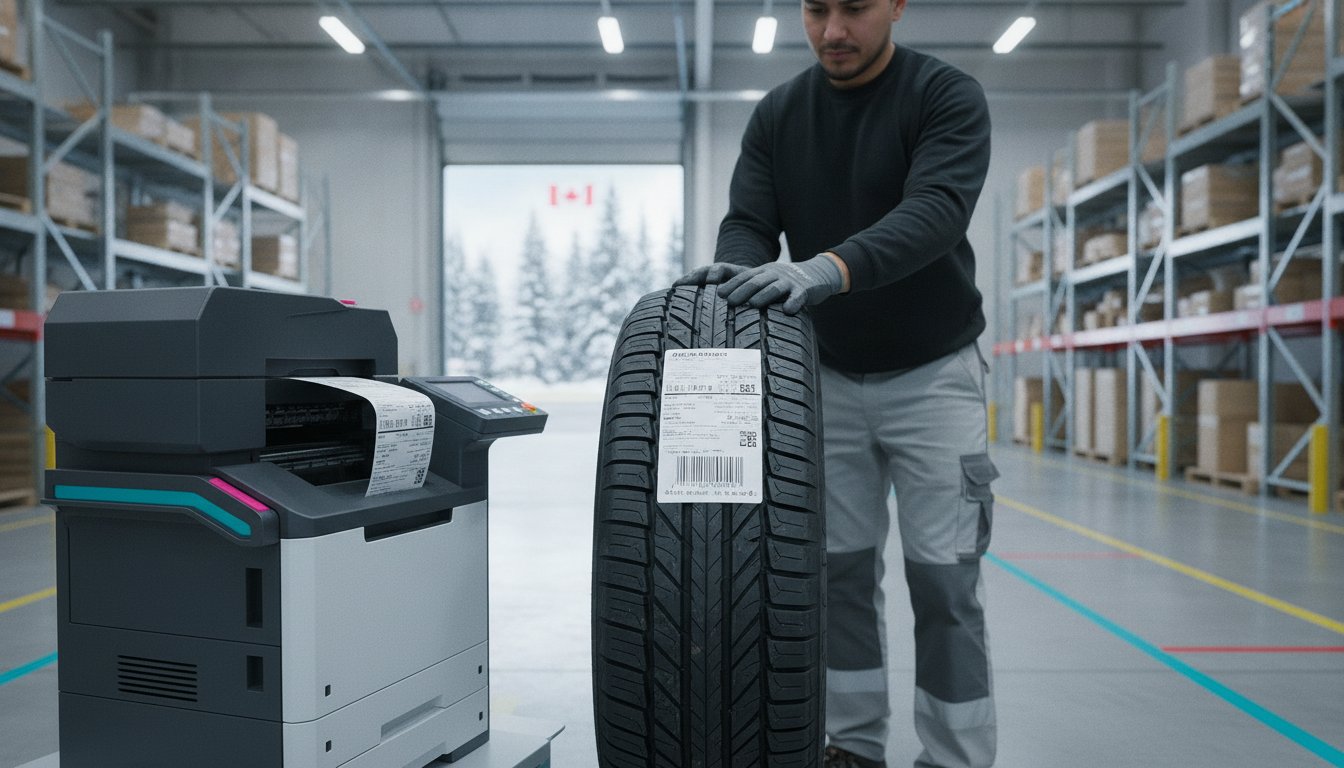
Your logistics chain is only as strong as the adhesive on your labels. If a barcode peels off a rubber tread in a freezing distribution centre, your shipment is effectively invisible. Do you find yourself dealing with lost inventory because standard labels can't handle the unique chemistry of a tire? You aren't alone. Most Canadian businesses realize that standard adhesives fail when faced with rubber oils and winter condensation. Finding reliable canpar and fedex tire shipping labels in Canada is a technical necessity for maintaining operational seamlessness and fiscal responsibility.
This article promises to show you how to select and print labels that actually stick, helping you avoid the $20 Canpar Demand Tire Delivery Fee and other costly handling surcharges. We will examine the hardware specifications required for high-volume tire shipping, from durable thermal transfer ribbons to the benefits of internal label unwinders in dusty environments. You'll discover how to achieve 100% label adhesion while ensuring a seamless integration with FedEx Ship Manager and MyCanpar. By the end, you'll have a clear diagnostic path to reducing shipping errors and protecting your inventory throughout the Canadian logistics chain.
Key Takeaways
- Understand why the unique chemistry of rubber treads and Canadian winter condensation necessitates specialized Aggressive Hot Melt adhesives to prevent lost inventory.
- Navigate the updated 2026 FedEx and Canpar surcharges and packaging requirements to ensure your shipments are scanned properly by automated sorting systems.
- Compare the performance deltas between paper and synthetic polypropylene face stocks to select the most durable canpar and fedex tire shipping labels in Canada.
- Identify the best hardware solutions for your facility by comparing print speeds and durability features across high-volume Zebra and TSC thermal printer models.
- Streamline your procurement process by sourcing Canadian-made industrial labels that eliminate cross-border fees and ensure a consistent supply for your operations.
The Challenge of Shipping Tires with FedEx and Canpar in Canada
Why does the simple act of labelling a tire often lead to a logistical nightmare? For many Canadian businesses, the sight of a pallet of tires with missing labels is a sign of impending fiscal loss and operational disruption. Tires are fundamentally different from traditional packaging. They are chemically volatile and physically irregular, making them "difficult-to-stick" surfaces that reject standard adhesives. When you rely on canpar and fedex tire shipping labels in Canada, you aren't just buying a piece of paper; you are investing in a specialized component designed to survive a high-friction, chemically active environment. If a label fails during transit, your shipment becomes "unidentified freight," leading to manual sorting delays, lost inventory, and significant carrier surcharges.
Why Standard 4x6 Labels Fail on Rubber
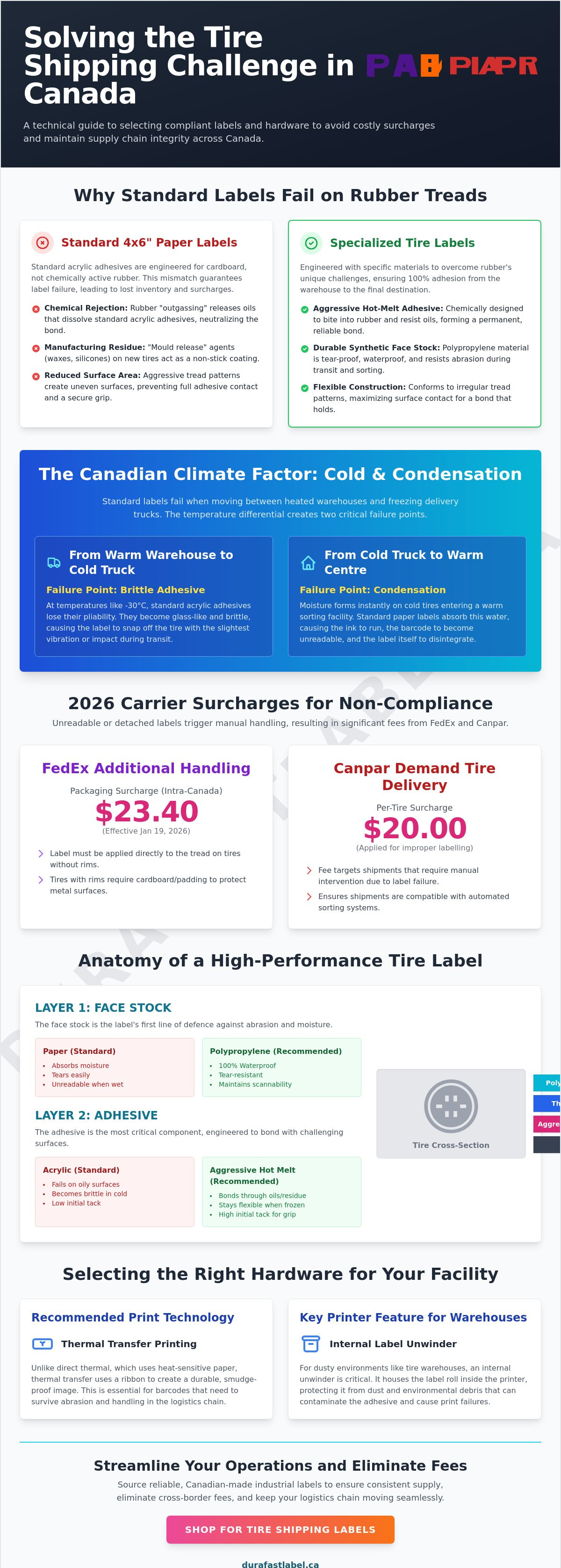
Have you ever noticed how a standard shipping label bubbles or peels away from a tire within hours? This happens because rubber is a porous material that undergoes "outgassing." As tires sit, they release chemical components and oils that interact with the acrylic adhesives found on standard 4x6 labels. This interaction effectively "kills" the adhesive bond. Other than this chemical rejection, the physical tread patterns significantly reduce the actual surface area available for a label to grip. New tires also carry "mould release" agents, which are waxes or silicones used during manufacturing to help tires pop out of their moulds. These agents act like a non-stick coating, ensuring that standard labels have almost zero chance of permanent adhesion. While advanced safety features like a Tire-Pressure Monitoring System (TPMS) manage internal safety, it is the external label that manages the safety of your inventory during transit.
Canadian Logistics: Winter Hazards for Shipping Labels
Does your warehouse team understand the difference between application temperature and service temperature? In the Canadian climate, this distinction is critical for operational seamlessness. A label applied in a heated Ontario facility might seem secure, but as it hits a cross-dock in the Prairies at -30°C, the adhesive can become brittle and snap. Condensation is another silent killer. When tires move from cold trucks to warm sorting centres, moisture forms on the surface. Standard paper labels absorb this moisture, leading to unreadable barcodes and structural failure. This is why specialized tire labels utilize synthetic face stocks and aggressive hot-melt adhesives. These materials are engineered to remain pliable in extreme cold and resist the moisture that ruins standard paper options. Failing to use the correct material doesn't just risk a lost shipment; it invites carrier surcharges. With Canpar implementing a $20 Demand Tire Delivery Fee and FedEx updating its Additional Handling Surcharges for 2026, the cost of an unreadable label has never been higher.
FedEx and Canpar Tire Shipping Requirements for 2026
How do you ensure your shipments remain compliant with the latest carrier updates? For 2026, both major Canadian carriers have introduced rigorous surcharges aimed at non-standard packaging. Managing canpar and fedex tire shipping labels in Canada requires more than just a printer; it requires an understanding of the specific protocols that prevent your inventory from being flagged for manual handling. Carriers prioritize automated sorting to maintain their margins, and any label that fails to scan or any package that requires human intervention will incur a significant fee. Sourcing high-performance tire labels is the first step toward avoiding these logistical hurdles.
FedEx Automotive Shipping Protocols
FedEx has updated its Additional Handling Surcharge (AHS) structure for 2026. For intra-Canada shipments, the packaging surcharge is $29.40 until January 18, 2026, dropping to $23.40 on January 19, 2026. The main difference between shipping tires with rims and those without lies in the packaging requirements. Tires with rims must have the metal surface protected by cardboard or padding to prevent damage and sorting errors. For tires without rims, FedEx mandates applying the label directly to the tread. Note that as of September 13, 2025, FedEx applies a 40-lb (18 kg) minimum billable weight to packages meeting AHS-Dimension criteria, making accuracy in your shipping software essential for fiscal responsibility.
Canpar Ground and Select Services for Tires
Canpar Express introduced a $20 Demand Tire Delivery Fee per piece, effective from October 2025 through January 19, 2026. This fee is a significant operational cost that underscores the need for precision. The MyCanpar portal is also evolving, with a new Small Business Portal launching in Q2 2026 to streamline label generation. When generating labels for Canadian domestic shipping, you must ensure the weight and dimension limits are strictly followed to avoid "Pick Up on Demand" delays. If you handle returns, using Canpar pickup tags effectively ensures that your customers don't struggle with label adhesion issues on their end.
Automation is the backbone of the Canadian logistics chain. If your barcode is scuffed or poorly printed, it bypasses the high-speed scanners in major hubs like Mississauga or Calgary. This leads to manual intervention and delays. While tires are generally straightforward, certain automotive components or specialized tires may fall under the Transportation of Dangerous Goods Regulations, necessitating specific warning labels alongside your shipping identification. When sourcing canpar and fedex tire shipping labels in Canada, businesses must prioritize the durability of the barcode over the cost of the label to ensure a first-time scan rate. If you need help determining which specific label stock meets these 2026 carrier standards, you can reach out to our technical team for a consultation.
Anatomy of a High-Performance Tire Label: Adhesive and Durability
What makes one label survive the rigours of a cross-country haul while another fails before leaving the dock? The answer lies in the technical anatomy of the label itself. For businesses managing canpar and fedex tire shipping labels in Canada, understanding the delta between standard shipping stock and specialized tire labels is essential for operational longevity. The Tire and Rubber Association of Canada (TRAC) emphasizes the importance of industry standards, and these standards extend to how products are identified and tracked throughout the supply chain. A high-performance label isn't just a carrier of information; it's a precision-engineered component designed to bond with chemically active surfaces.
Adhesive Strength: Beyond Standard Shipping Labels
The primary differentiator in tire labelling is the use of Aggressive Hot Melt adhesive technology. Unlike the acrylic adhesives found on standard 4x6 labels, hot melt adhesives have a higher "Initial Tack." This metric measures the immediate bond formed when the label touches the rough, oily surface of a tire. These specialized adhesives are designed to flow into the microscopic valleys of the rubber tread, creating a permanent bond that resists the physical friction of automated sorting belts. An aggressive adhesive is a rubber-optimized bonding agent that maintains structural integrity even when exposed to the chemical outgassing common in new tire inventory. To prevent the adhesive from soaking into the face stock and ruining the print, a specialized barrier coating is applied. This layer ensures that the barcode remains crisp and scannable, preventing the "ghosting" effect that leads to manual sorting delays in Canadian logistics hubs.
Weatherproofing for the Canadian Supply Chain
The main difference between paper and synthetic polypropylene (BOPP) face stocks is their response to environmental debris and moisture. While paper labels are a cost-effective baseline for boxed goods, they lack the structural integrity for bare tire shipping in the Canadian climate. Synthetic tire shipping labels offer superior moisture resistance, which is vital when tires are exposed to snow and slush during cross-docking. Other than moisture protection, synthetic materials provide necessary UV resistance. Tires stored in outdoor holding yards are subject to intense sunlight that can yellow standard paper and degrade adhesives. By using weatherproof industrial labels, you ensure the shipment remains legible from a Vancouver port to a Halifax warehouse. This durability is especially critical for thermal transfer printing, where the combination of a synthetic face stock and a high-quality ribbon creates a smudge-proof image that survives the high-friction Canadian logistics chain. Choosing the right thermal transfer labels ensures that your barcodes remain scannable regardless of the weather conditions or handling intensity.
Selecting the Right Printer for Tire Shipping Labels
Does your current printer produce labels that survive the high-friction environment of a Canadian shipping hub? When managing canpar and fedex tire shipping labels in Canada, the hardware you choose is just as critical as the adhesive. The main difference between direct thermal and thermal transfer technology lies in longevity and environmental resistance. While direct thermal printers are a baseline solution for short-term shipping, they are prone to fading when exposed to heat or friction. For tires, which often sit in outdoor holding yards or endure long-haul transit across the Prairies, thermal transfer is the superior choice. This technology uses a ribbon to melt ink onto the label surface, creating a permanent image that does not smudge or degrade.
The specialized liners and heavy-duty adhesives of tire labels require specific hardware adjustments. Other than the technology itself, you must consider printhead pressure. Tire label stock is significantly thicker than standard 4x6 paper, which can cause slippage in low-end desktop models. High-quality thermal label printers allow you to calibrate the tension and pressure to ensure the barcode prints with perfect clarity at high speeds. This precision is vital for maintaining a first-time scan rate in automated sorting centres, helping you avoid the manual handling surcharges implemented by FedEx and Canpar for 2026.
Thermal Transfer: The Gold Standard for Durability
Why are thermal transfer ribbons necessary for long-haul Canadian shipping? In a climate where labels face snow, slush, and road salt, a standard printed image isn't enough. You need a bond that is chemically resistant. Matching the correct thermal transfer ribbons to your synthetic face stock ensures that the barcode remains legible regardless of the weather. For polypropylene tire labels, a wax-resin or full resin ribbon is typically required. This combination creates a smudge-proof finish that survives the high-friction belts in a Mississauga distribution centre. Using the wrong ribbon type can lead to unreadable barcodes and lost inventory, which directly impacts your fiscal responsibility.
Desktop vs. Industrial Printers for Automotive Hubs
The decision between a desktop and an industrial model depends on your daily print volume. For 24/7 operations or high-volume distribution centres, industrial label printers like the Zebra ZT series are designed for longevity. These models feature all-metal frames and high-capacity internal label unwinders that protect your rolls from warehouse dust and environmental debris. In contrast, compact desktop printers from TSC or Godex are excellent for local tire shops with lower daily requirements. Regardless of the model, regular maintenance is essential. You should clean the printheads frequently to remove adhesive residue and dust, ensuring consistent print speeds of 6 to 10 ips (inches per second) without sacrificing quality.
Integrating these printers with your existing workflow is straightforward. Most modern Zebra and TSC models are fully compatible with FedEx Ship Manager and the MyCanpar portal using standard ZPL or Windows drivers. This allows for the seamless generation of canpar and fedex tire shipping labels in Canada directly from your workstation. If you're unsure which hardware configuration best suits your daily volume or specific label thickness, contact our printer specialists for a technical assessment.
Sourcing Reliable Tire Shipping Labels in Canada
Why wait for international shipments when you can source high-performance materials within your own borders? Procuring your canpar and fedex tire shipping labels in Canada from a domestic supplier eliminates the uncertainty of customs delays and the burden of unexpected brokerage fees. This is particularly vital during the twice-yearly Canadian tire changeover peaks. When the demand for winter tires surges in October, your shipping department shouldn't be stalled by a lack of specialized supplies. Sourcing locally ensures that your lead times remain short and your operational rhythm remains steady throughout the busiest quarters of the fiscal year.
DuraFast Label Company Canada maintains a comprehensive inventory of specialized stocks designed specifically for the automotive industry. Other than standard 4x6 sizes, we provide custom dimensions for unique applications like oversized agricultural tires or low-profile performance rubber. These labels are engineered to fit the precise hardware specifications of the industrial printers discussed earlier. This ensures that your print speeds remain high without the risk of adhesive oozing or label jams that can occur with inferior imports. Bulk ordering before the seasonal rush allows you to maintain fiscal responsibility while ensuring every tire that leaves your dock is properly identified and scannable.
Why Choose DuraFast Label Company Canada for Your Canadian Operation?
Our team acts as a strategic partner, understanding the intricate logistical challenges of the Canadian supply chain. We provide tire labels that are fully compatible with all major industrial and desktop brands including Zebra, Honeywell, and TSC. This compatibility ensures that you don't have to overhaul your existing hardware to achieve 100% label adhesion. The expertise at DuraFast Label Company Canada means we realize the importance of labels that can survive both the humidity of a Vancouver summer and the deep freeze of a Prairie winter, preventing the lost inventory issues previously discussed.
Maximizing Efficiency in Your Shipping Department
Longevity in your operations is achieved through a well-structured workflow. Using label rewinders and finishers allows your team to handle high-volume rolls with ease, reducing manual labour and preventing tangles during the printing process. It's also essential to train staff on proper application techniques to avoid "flagging," which is when label edges fail to bond and peel away during transit. Applying the label to the flat centre of the tread is the most effective way to ensure it survives the high-friction environment of an automated sorting centre. By setting up a dedicated print station that integrates directly with MyCanpar and FedEx Ship Manager, you create a seamless process that reduces errors and keeps your canpar and fedex tire shipping labels in Canada working as hard as you do.
Secure Your Supply Chain with Professional Tire Labelling
Maintaining operational seamlessness in the automotive sector requires more than just efficient logistics; it demands technical precision at the point of application. We've explored how specialized aggressive adhesives and synthetic face stocks prevent the chemical rejection and moisture damage common in Canadian transit. By aligning your hardware with these high-performance materials, you don't just ensure a barcode scans; you protect your bottom line from the rising 2026 carrier surcharges. Choosing the right canpar and fedex tire shipping labels in Canada is a strategic investment in inventory accuracy and long-term customer satisfaction.
DuraFast Label Company Canada provides the industrial-grade solutions you need to survive the rigours of the Canadian logistics chain. Our products feature specialized aggressive adhesives for rubber and are rigorously tested for Canadian winter durability. They offer seamless compatibility with FedEx and Canpar systems to keep your production moving without interruption. Shop our full range of professional tire shipping labels at DuraFast Label Company Canada to resolve your adhesion challenges today. We're here to help you take control of your production process and achieve better results for your business.
Frequently Asked Questions
Can I use standard 4x6 shipping labels for tires?
Standard 4x6 labels are not suitable for tires because they lack the aggressive hot-melt adhesive required to bond with porous rubber. Standard acrylic adhesives often fail due to outgassing, where rubber oils migrate to the surface and cause the label to bubble or peel. For reliable tracking, you must use specialized tire stock that features a barrier coating to prevent adhesive migration and ensure the barcode remains scannable throughout transit.
Do FedEx and Canpar require tires to be boxed in Canada?
FedEx and Canpar allow tires to be shipped unboxed, but specific packaging protocols must be followed to avoid surcharges. FedEx requires tires without rims to have labels applied directly to the tread, while tires with rims should have cardboard protection on the metal surface. Canpar allows unboxed automotive parts but applies a Demand Tire Delivery Fee for non-standard handling. Proper labelling is the only way to ensure these unboxed items scan correctly in automated hubs.
What is the best adhesive for labels sticking to rubber?
Aggressive Hot Melt adhesive is the industry standard for rubber surfaces because of its high initial tack. This specialized bonding agent is designed to flow into the microscopic treads of the tire, creating a permanent bond that resists the chemical outgassing of new rubber. Unlike standard shipping adhesives, this technology maintains its structural integrity even when exposed to the high friction of sorting belts in major Canadian logistics centres.
How do I prevent my shipping labels from falling off in the winter?
Preventing label failure in winter requires using synthetic polypropylene face stocks and observing application temperature guidelines. While a label might have a wide service temperature range, it must be applied in a dry, relatively warm environment to ensure the initial bond is secure. Using weatherproof materials prevents snow and slush from ruining the barcode, which is essential for canpar and fedex tire shipping labels in Canada during the peak seasonal changeover.
Which thermal printer is best for printing tire labels?
Industrial thermal transfer printers, such as the Zebra ZT series, are the best choice for high-volume tire labelling due to their adjustable printhead pressure. These models handle the thicker liners of tire stock more effectively than entry-level desktop units. For smaller operations, a TSC or Godex desktop printer offers a reliable baseline, provided you use the correct thermal transfer ribbons to ensure the print doesn't smudge during long-haul transit.
Does Canpar provide specialized tire labels for their customers?
Canpar typically provides generic shipping labels that are optimized for corrugated boxes rather than the unique chemistry of rubber. These provided labels often lack the aggressive adhesive necessary for unboxed tires, leading to lost shipments and manual handling delays. To ensure your inventory survives the automated sorting process, it's safer to source specialized tire labels that are fully compatible with the MyCanpar portal and FedEx Ship Manager.
What is an 'Additional Handling Surcharge' for tires?
An Additional Handling Surcharge is a fee applied by carriers like FedEx and Canpar for items that don't meet standard packaging dimensions or materials. For 2026, FedEx has specific surcharges for packaging and weight, while Canpar implements a $20 Demand Tire Delivery Fee. Using high-quality canpar and fedex tire shipping labels in Canada helps you avoid these costs by ensuring every piece is identified and scanned correctly by high-speed automated systems.
Can I print FedEx tire labels on a regular inkjet printer?
Printing tire labels on a regular inkjet printer is not recommended because the ink is prone to smudging when exposed to moisture or friction. Standard inkjet paper also lacks the durability to survive the rough handling of the Canadian logistics chain. Thermal transfer technology is the gold standard for this application; it creates a permanent, smudge-proof image on synthetic stock that remains legible from the warehouse to the customer's door.