Linerless Labels for TSC Mobile Printers: Canadian Guide
10th Sep 2026
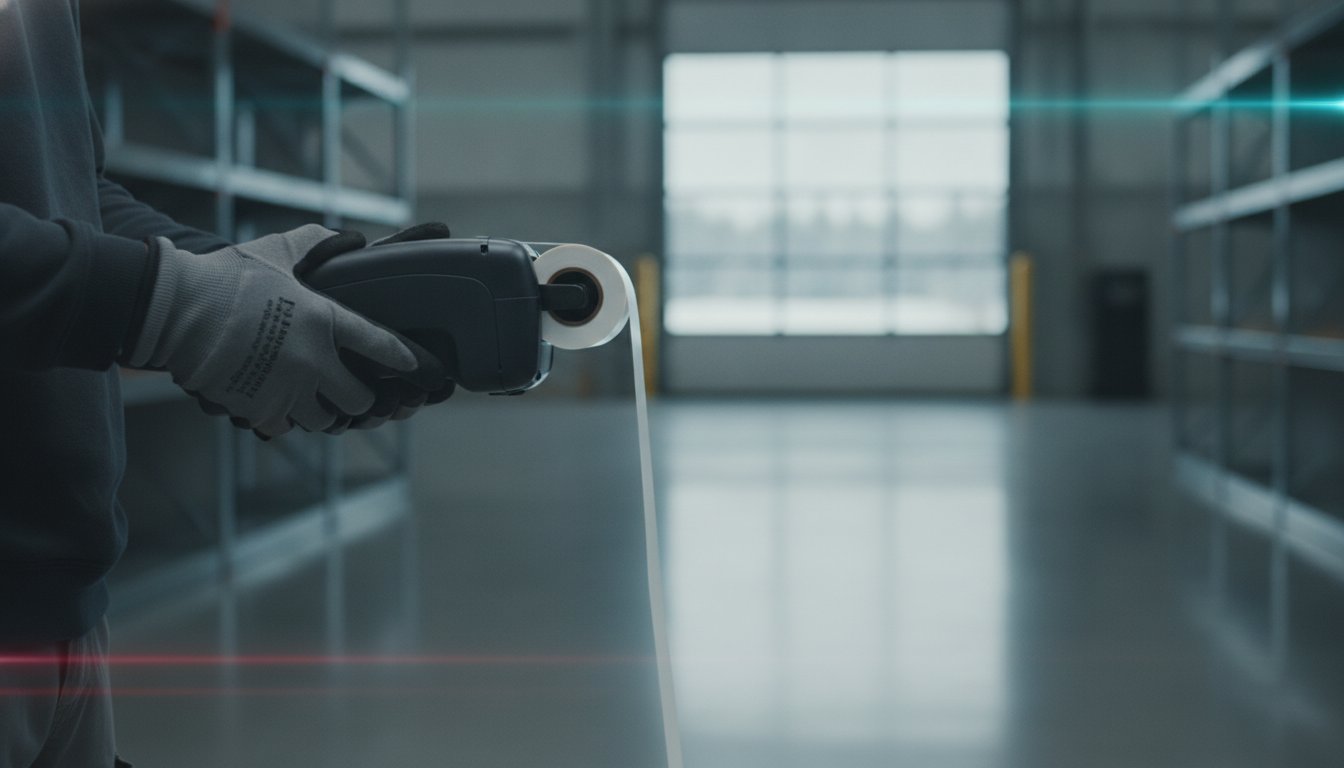
What if the biggest bottleneck in your field operations isn't the hardware itself, but the literal waste it leaves behind? You likely already realize that traditional label liners are a persistent logistical headache, creating piles of slippery debris across your warehouse floor and forcing mobile workers to stop for frequent roll changes. Finding the right linerless labels for TSC mobile printers can often feel like a balancing act between seeking operational efficiency and avoiding the adhesive buildup that can plague mobile mechanisms.
We are here to help you bridge that gap with pragmatic, industrial solutions. You'll discover how to maximize your mobile printing uptime and eliminate operational waste by leveraging high-performance linerless technology. This guide explores how zero-waste rolls extend your print runs and ensure reliable adhesion even in cold Canadian distribution centres. We also examine when your workflow might require the transition to high-durability hardware like the VIPColor VP750, which uses an internal label unwinder to protect your media from environmental debris while providing the water-enhanced durability needed for frozen food applications and condensation-heavy environments.
Key Takeaways
- Understand how the specialized release coating on linerless rolls eliminates silicone backing waste while allowing for significantly more labels per roll.
- Discover how to select the right adhesive strength for linerless labels for TSC mobile printers to ensure reliable performance on recycled corrugated cardboard in Canadian warehouses.
- Learn the essential steps for calibrating TSC sensors and optimizing print head temperatures to prevent adhesive bleed-out and maintain hardware longevity.
- Use a pragmatic framework to measure the operational ROI of linerless technology by accounting for reduced labour costs and minimized downtime during roll changeovers.
- Identify when your production needs require a transition to high-durability colour solutions, such as the VIPColor VP750, for labels that must withstand water, condensation, or environmental debris.
Understanding Linerless Labels for TSC Mobile Printers
How much time does your team lose peeling backings? Linerless labels for TSC mobile printers offer a direct solution to this persistent inefficiency. Unlike traditional rolls, linerless media consists of a continuous strip of face stock with a Pressure-sensitive adhesive applied to the back, but without the silicone-coated paper backing. This design choice transforms the label roll into something resembling a roll of tape, where the label itself acts as its own liner.
The secret to this functionality lies in a specialized release coating applied to the face of the label. This treatment ensures the adhesive doesn't permanently bond to the layer beneath it while wound on the roll. TSC mobile printers, particularly the Alpha-30R and Alpha-40L models, are engineered to handle these materials without the adhesive buildup that would otherwise cripple a standard thermal printer. By utilizing mobile direct thermal labels that are liner-free, your operation can eliminate tonnes of waste while improving your sustainability profile.
This shift is particularly relevant for Canadian logistics providers. With the federal government's goal of achieving zero plastic waste by 2030, reducing non-recyclable waste is no longer just a preference; it's a strategic necessity. Traditional liners are often coated in silicone, making them difficult to recycle in many Canadian municipalities. Switching to a liner-free system immediately removes this waste stream from your facility.
The Mechanics of Liner-Free Printing
Does a thinner roll actually lead to better performance? It does. Because you aren't wasting space on a bulky liner, each roll typically contains 40% to 60% more labels. This isn't just a minor improvement; it's a fundamental shift in how your hardware operates. Standard thermal printers lack the internal components to manage exposed adhesive. If you attempt to run linerless stock through a traditional desktop unit, the glue will quickly wrap around the platen roller, leading to expensive downtime. TSC linerless-ready hardware utilizes non-stick rollers and specialized cutters to ensure the adhesive stays where it belongs.
Why Go Linerless in Mobile Workflows?
Fewer roll changes mean your staff stays focused on the task at hand. In a busy warehouse, stopping to reload a printer every twenty minutes is a productivity killer. Beyond the time savings, you're also removing a significant safety risk. Discarded liners on a warehouse floor are notorious slip hazards. Canadian businesses also benefit from reduced shipping costs and lower storage requirements. Since you're effectively moving more labels in less physical space, you're maximizing every square foot of your distribution centre.
Choosing the Right Material for Canadian Supply Chains
Does your label stay put when the temperature drops below freezing? In Canada, a label printed in a humid coastal port might face vastly different conditions than one applied in a dry prairie warehouse. Selecting the correct linerless labels for TSC mobile printers requires a clear understanding of your specific environment. While standard paper-based linerless stock works well for indoor retail applications, industrial logistics often demand durable direct thermal options that can withstand the rigours of the road across various climate zones.
Adhesive performance is another critical factor. Many Canadian shipping hubs now rely on recycled corrugated cardboard, which has shorter fibres and a more porous surface than virgin board. You need a high-tack adhesive that bites into these surfaces quickly. Using the wrong media can lead to lost shipments and scanning errors at the sorting facility. If you're unsure which grade matches your specific packaging, you can always speak with a labelling expert to request samples for testing on your own containers.
Direct Thermal Linerless vs. Traditional Labels
Direct thermal technology is often the most cost-effective choice for mobile workflows because it eliminates the need for ribbons, reducing the number of consumables your team needs to carry. These Mobile Direct Thermal Labels are designed to perform in high-speed logistics environments where throughput is paramount. While they're ideal for short-term shipping labels, you should consider the shelf-life if they're exposed to direct sunlight or high heat in retail windows. In these specific cases, the thermal coating may react, causing the label to fade or darken over time.
Durability in Cold and Damp Conditions
Humidity and frost are the enemies of standard adhesives. For Canadian grocery distribution, condensation-resistant adhesives are essential. When labels move from a refrigerated truck to a humid loading dock, moisture can cause standard labels to flag or fall off. You need materials that offer "great durability" to ensure barcodes remain legible and adhered even in frozen food storage. Matching these materials to your hardware is straightforward. You must simply match your label width to the specific TSC Alpha-30R (3-inch) or Alpha-40L (4-inch) specifications to ensure a perfect fit and reliable feeding throughout the shift.
Technical Setup and Maintenance for TSC Hardware
Are you struggling with inconsistent label lengths or frequent adhesive jams? Proper configuration is the foundation of a successful linerless deployment. Unlike standard die-cut labels, linerless labels for TSC mobile printers require precise sensor calibration to ensure the internal cutter activates at the correct position. Most liner-free media utilizes a "black mark" on the reverse side of the face stock to signal the end of a label. You'll need to use the TSC diagnostic tool or the printer's control panel to switch the sensor mode from "gap" to "black mark" before your first print run.
Temperature control is another critical factor for operational longevity. If your print head temperature is set too high, you risk adhesive bleed-out, where the glue becomes too fluid and migrates onto the internal components. You should aim for the lowest darkness setting that still produces a crisp, scannable barcode. To manage your fleet effectively, we recommend using the TSC Console. This software allows you to monitor printer health and battery life in the field, ensuring your mobile workers don't face unexpected downtime in the middle of a shift.
Configuring Your TSC Alpha Series Printer
How do you ensure every label separates cleanly? It starts with the driver settings. When installing your Alpha-30R or Alpha-40L, ensure the media type is explicitly set to "Linerless" in the print preferences. This adjustment tells the printer to utilize its specialized non-stick tear bar. You must keep this tear bar free of debris; a quick wipe with a cleaning pen at the start of every shift prevents jagged edges and ensures a professional finish for your retail or logistics labels. If you encounter sensor errors, verify that the black mark sensor is physically aligned with the marks on your specific media.
Preventative Maintenance for Mobile Efficiency
Is routine cleaning really worth the time? In a mobile environment, it's the difference between a reliable tool and a constant headache. We suggest a "roll-for-roll" cleaning protocol: every time you replace a label roll, take thirty seconds to clean the platen roller and print head. Use 99% isopropyl alcohol to dissolve any micro-buildup of adhesive that may have transferred during operation. This simple habit significantly extends the life of your thermal printheads, protecting your investment and maintaining high-quality output. While mobile printers are robust, they remain susceptible to environmental debris in dusty Canadian warehouse environments, making these cleaning cycles vital for operational seamlessness.
Calculating the Operational ROI of Linerless Labelling
Is the initial investment in liner-free media justified by the results? Business owners often focus solely on the price-per-label, but this narrow metric ignores the significant hidden costs associated with traditional thermal labelling. When you switch to linerless labels for TSC mobile printers, you're investing in a system that removes the non-value-added steps from your workflow. You aren't just purchasing media; you're buying back the time your employees spend managing waste and restocking consumables.
Labour Productivity and Roll Yield
How does a 50% increase in roll yield impact an eight-hour shift? In a typical high-volume warehouse, a mobile worker might stop to change a standard label roll ten to twelve times per day. By utilizing linerless rolls, that frequency is cut in half. This reduction doesn't just save the two minutes spent on the physical changeover itself; it eliminates the disruption to the worker's rhythm and the need for frequent trips back to a central restocking station. Industry data from Canadian logistics centres suggests that these cumulative efficiencies can improve overall throughput by up to 15% in fast-paced environments. By maximizing the output of every mobile cart, you're ensuring your labour force remains focused on distribution rather than maintenance.
Fiscal Responsibility and Waste Reduction
Does your current waste management strategy account for the cost of liner disposal? Traditional silicone-coated liners are not only difficult to recycle under current Canadian environmental regulations, but they also represent a significant volume of physical waste that you must pay to have hauled away. Eliminating this waste stream directly supports corporate sustainability goals while reducing your monthly disposal fees. Perhaps more importantly, you're removing the primary source of slip-and-fall accidents in the shipping area. Keeping your warehouse floors clear of discarded liners reduces your liability and ensures a safer, more professional environment for your team.
The long-term value of investing in high-quality linerless labels for TSC becomes even clearer when you consider the lifespan of your hardware. As established, proper media prevents the adhesive buildup that causes premature print head failure. While mobile direct thermal is excellent for shipping, your ROI strategy might eventually lead you to scale into high-volume colour production for retail-ready products. In those instances, hardware like the VIPColor VP750 provides a robust solution with its internal label unwinder designed to protect media from environmental debris while offering the water-enhanced durability needed for frozen food applications.
Are you ready to see how these savings apply to your specific production volume? You can contact our team for a detailed cost-comparison to determine the best path forward for your Canadian operations.
Scaling Your Production: From Mobile to High-Volume Colour
Does your current labelling strategy limit your brand's growth? While linerless labels for TSC mobile printers provide unmatched efficiency for warehouse logistics, they're often restricted to monochrome direct thermal output. As your business expands, you may find that retail-ready products or GHS-compliant chemicals require a more sophisticated approach. Transitioning to colour labelling allows you to maintain the operational speed you've grown accustomed to while significantly enhancing your brand identity and meeting strict regulatory requirements.
The Memjet Dye Ink Series for High-Speed Production
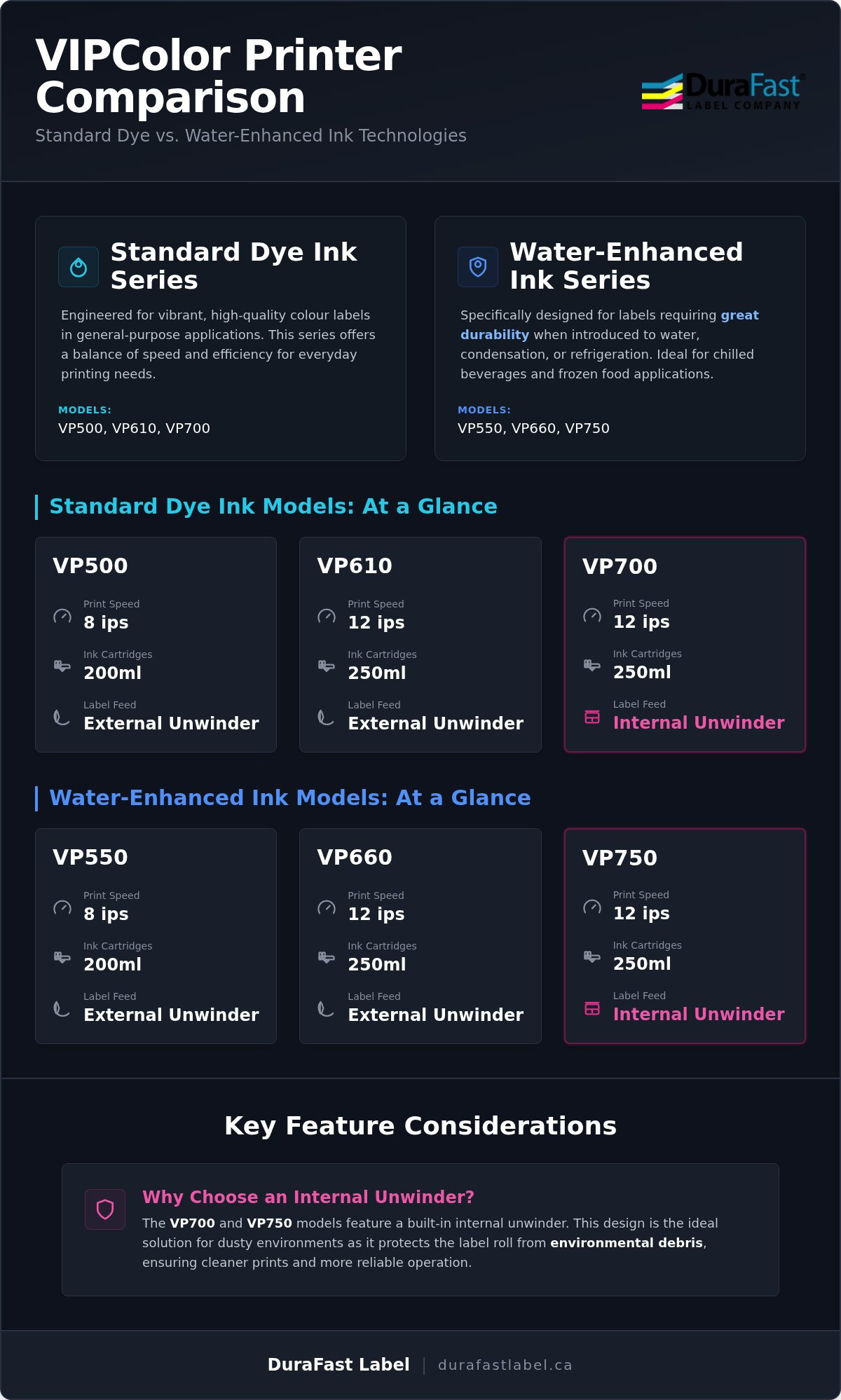
The VIPColor VP500 serves as an excellent entry point for high-speed colour production. It offers a print speed of 8 ips and utilizes 200ml ink cartridges with an external label unwinder. For operations requiring higher throughput, the VP610 increases performance to 12 ips and uses larger 250ml ink cartridges, also featuring an external label unwinder. If your production floor is prone to dust or airborne particles, the VP700 is the strategic choice. It maintains the 12 ips speed and 250ml cartridge capacity of the VP610 but includes a built-in internal label unwinder. This hardware feature is essential for protecting your label rolls from environmental debris that could otherwise compromise print quality or damage sensitive internal components.
Water Enhanced Solutions for Extreme Environments
When your labels must survive exposure to water, condensation, or frozen food storage, the water enhanced dye ink series provides the necessary resilience. The VP550 offers a max print speed of 8 ips with 200ml ink cartridges and an external unwinder, serving as a robust starting point for durable colour. Scaling up, the VP660 delivers a max print speed of 12 ips and uses 250ml ink cartridges, utilizing an external label unwinder for high-volume needs.
The flagship VP750 distinguishes itself by offering an internal label unwinder, providing the same protection against environmental debris as the VP700 while delivering 12 ips and 250ml capacity. We explicitly recommend the VP550, VP660, and VP750 series for any application requiring great durability when labels are introduced to moisture or cold. These models ensure your barcodes and branding remain legible regardless of the environmental challenges your supply chain faces. You can explore our full range of colour label printers to find the ideal hardware for your scaling requirements today.
Optimizing Your Canadian Logistics with Linerless Technology
Deploying linerless labels for TSC mobile printers represents a strategic shift toward a zero-waste, high-efficiency logistics model. By eliminating the silicone liner, you've removed a major slip hazard and significantly increased the number of labels available on every roll. This choice doesn't just lower your disposal fees; it empowers your mobile workforce to complete shifts with fewer interruptions and greater accuracy. You're no longer just managing hardware; you're refining your entire distribution process.
We're here to act as your strategic partner throughout this transition. As an authorized TSC and VIPColor provider, we offer national shipping across Canada and expert technical support for everything from initial sensor calibration to scaling up to water-enhanced colour units like the VP750. Browse our full range of TSC-compatible linerless labels and mobile printers to find the ideal fit for your specific warehouse environment. It's time to take full control of your production and achieve the operational seamlessness your business deserves.
Frequently Asked Questions
Are linerless labels compatible with all TSC mobile printers?
Linerless labels are not compatible with every TSC model; they require printers specifically engineered with non-stick components. Models such as the TSC Alpha-30R and Alpha-40L are designed to handle the exposed adhesive of these rolls without jamming. If you try to use linerless media in a standard printer, the adhesive will quickly foul the platen roller and print head. You should always verify that your specific hardware is linerless-ready before purchasing media.
Do linerless labels require special maintenance for the print head?
Yes, using linerless labels for TSC mobile printers requires a consistent cleaning schedule to manage micro-buildup of adhesive. You should clean the platen roller and print head with 99% isopropyl alcohol every time you change a roll. This preventative measure ensures the non-stick surfaces remain effective and prevents labels from wrapping around the roller. Neglecting this routine can lead to jagged cuts and premature wear on your thermal printheads.
Can I use linerless labels in cold storage or frozen food environments?
You can certainly use linerless labels in cold storage, provided you select a material with an all-temperature adhesive. Standard adhesives may lose their tack in freezing conditions, causing labels to fall off. For applications involving heavy condensation or frozen foods, we recommend scaling to the water enhanced dye ink series. Models like the VP750 provide the great durability required to ensure your barcodes remain scannable and adhered in damp Canadian warehouses.
What is the main advantage of linerless labels over traditional thermal labels?
The primary advantage is the elimination of silicone-coated backing waste, which directly supports corporate sustainability goals. Because there is no liner, each roll contains up to 60% more labels compared to traditional rolls of the same diameter. This increased yield reduces the frequency of roll changes and eliminates the safety risk of discarded liners on the warehouse floor. It effectively turns your mobile printer into a more productive, zero-waste tool.
How do I prevent adhesive buildup on my TSC Alpha-30R?
Preventing buildup on your TSC Alpha-30R involves a combination of proper hardware settings and regular maintenance. You should set your print darkness to the lowest level that produces a clear image to prevent the adhesive from overheating and bleeding. Additionally, using a cleaning pen on the tear bar and platen roller during every shift change is vital. These small adjustments ensure that the specialized non-stick coatings on your printer remain functional for the long term.
Are linerless labels more expensive than traditional labels in Canada?
While the initial price-per-roll for linerless labels for TSC mobile printers may be higher than standard labels, the total operational cost is often lower. You're getting significantly more labels per roll, which reduces shipping and storage expenses. When you factor in the labour savings from fewer roll changes and the elimination of waste disposal fees, the return on investment becomes clear. It's a strategic choice focused on long-term fiscal responsibility rather than just the upfront cost.
Do linerless labels work with both direct thermal and thermal transfer printers?
Linerless technology is almost exclusively used with direct thermal printing in mobile applications. This setup is preferred because it eliminates the need for ribbons, making the mobile printer lighter and easier to manage in the field. While some industrial colour printers like the VP700 use inkjet technology for high-volume production, mobile linerless workflows rely on the heat-sensitive coating of the label itself. This simplicity is what makes it so effective for fast-paced logistics.
Is an internal label unwinder necessary for industrial labelling environments?
An internal label unwinder is highly recommended for industrial environments where dust and environmental debris are present. Hardware like the VP700 or the water enhanced VP750 houses the label roll inside the printer body to prevent contaminants from reaching the media. This protection is crucial because even small amounts of grit can damage the print head or affect the adhesive's performance. It's a necessary feature for maintaining high-quality output in challenging Canadian warehouse settings.