Industrial Label Printers: The 2026 Canadian Business Roundup and Selection Guide
21st Jul 2026
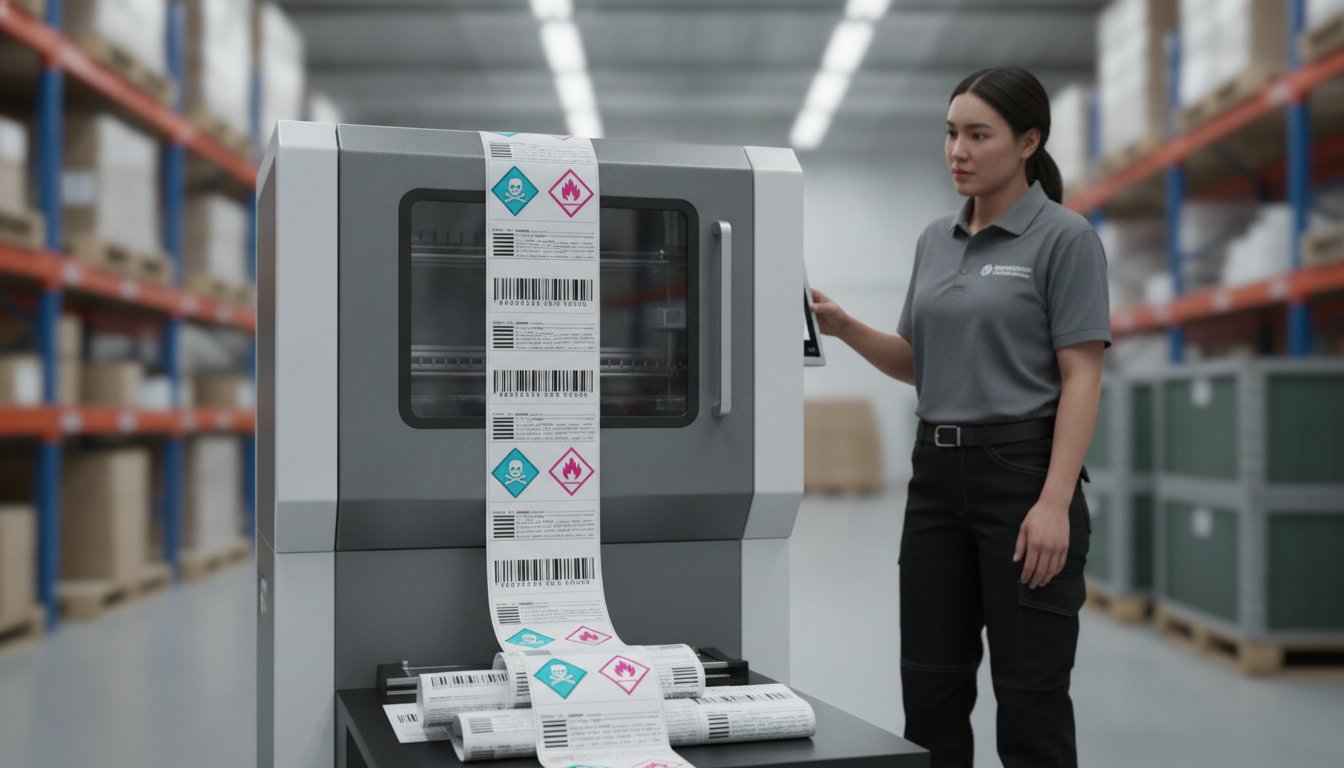
Could your current labelling process survive a 15% daily value audit or a -30°C shipping container? By July 2026, the regulatory landscape for Canadian manufacturers has shifted, making the ability to print compliant, durable labels in-house a strategic necessity rather than a luxury. Most operations managers realize that the high cost of outsourcing and the risk of printer downtime in dusty or cold environments are hurdles that can no longer be ignored. You need a solution that balances fiscal responsibility with high-performance output.
In this roundup, you'll discover the ideal industrial label printers for your specific production volume and compliance needs through our expert multi-brand comparison. We'll examine how matching the right technology, such as Memjet or thermal transfer, to your environment can reduce your cost-per-label and ensure GHS or WHMIS 2015 compliance. We'll provide a detailed look at the hardware configurations and technical metrics that drive faster production throughput and operational seamlessness for your business.
Key Takeaways
- Identify the production threshold—typically 1,000 units per day—where upgrading to industrial label printers significantly reduces your total cost of ownership.
- Evaluate the technical differences between thermal transfer and colour inkjet technologies to match your requirements for barcode reliability or high-speed Memjet production.
- Ensure GHS and WHMIS 2015 compliance by selecting specialized pigment inkjet hardware designed for chemical resistance and environmental resilience.
- Protect your hardware investment by understanding how environmental debris and dust in rugged warehouse settings impact printhead longevity.
- Optimise your production line by calculating the true cost-per-label through the use of brand-specific ink cartridges and high-performance ribbons.
Defining the Industrial Standard: When to Upgrade Your Labelling
How do you know when your current labelling setup is holding back your business growth? For many Canadian manufacturers, the breaking point arrives when daily production consistently exceeds 1,000 labels. While desktop units serve as a helpful starting point, they aren't built for the rigours of a 24/7 production floor. Transitioning to industrial label printers allows you to move away from light-duty plastic components toward rugged steel frames designed for continuous operation. This shift isn't just about speed; it's about achieving operational seamlessness and long-term fiscal responsibility. By bringing production in-house, you eliminate the markups of third-party vendors and gain complete control over your own supply chain.
Duty Cycles and Long-Term Reliability
The main difference between desktop and industrial models lies in the duty cycle and hardware durability. Industrial units are engineered to run for hours without overheating or requiring frequent calibration. When you evaluate these machines, you'll notice that high-performance models often feature internal label unwinders. These integrated components protect your media from environmental debris while significantly reducing the printer's footprint on a crowded warehouse floor. This design is a better choice for businesses operating in dusty or high-traffic areas where external media would be exposed to damage.
Performance metrics also see a dramatic leap when you upgrade. While a standard desktop printer might struggle at 4 or 5 ips, professional industrial label printers easily reach 10 to 14 ips (inches per second). This speed is critical when you're trying to clear a shipping dock before the daily carrier pickup. When deciding between Thermal Transfer vs. Colour Inkjet technology, you must consider whether your priority is high-speed monochrome barcodes or vibrant, on-demand product branding that survives the moisture of a Canadian winter.
The Problem with Outsourcing
Relying on external print shops introduces unnecessary logistical hurdles into your workflow. You're forced to manage large minimum order quantities, which ties up capital in inventory that might become obsolete if regulations change. For instance, the upcoming 2026 FOP nutrition labelling requirements mean many pre-printed labels will soon be useless, leading to wasted resources. In-house printing provides several tangible benefits for your operation:
- Reduced cost-per-label by eliminating third-party service fees.
- Immediate inventory tracking and barcode management.
- The ability to print exactly what you need, avoiding the wait for shipments.
- Faster production throughput with high ips capabilities.
In-house printing allows for immediate inventory tracking and agile barcode management. You can print exactly what you need, when you need it, ensuring your production line never stops because a shipment of labels is stuck in transit. By investing in your own hardware, you transform a recurring expense into a controlled asset that supports your long-term efficiency.
The Technology Divide: Thermal Transfer vs. Colour Inkjet
Does your application require a simple monochrome barcode or a full-colour product label? Choosing between thermal and inkjet technology determines the long-term durability of your branding. Direct thermal printing is often the standard for shipping labels, but it lacks the longevity required for industrial tracking. For labels that must survive friction or chemical exposure, thermal transfer is the better choice. This technology uses a heated printhead to melt a ribbon onto the label surface, creating a permanent bond that meets standards for Environmental Resilience and Application-Specific Performance.
The main difference between these methods is the media's reaction to heat and light. While direct thermal labels are cost-effective for short-term use, they will darken when exposed to heat or UV rays. In contrast, thermal transfer provides a smudge-proof finish that remains legible in rugged warehouse environments. You'll find that selecting the right technology upfront prevents the logistical headache of unreadable barcodes during the shipping process.
Thermal Transfer for High-Volume Barcoding
When you're running high-volume logistics, matching your media is vital for operational success. You must use high-quality thermal transfer ribbons that are specifically compatible with your label material to ensure maximum scuff resistance. Brands like Zebra and Honeywell remain the industry standard for Canadian shipping because their hardware is built for these high-stress applications. If you aren't sure which ribbon grade fits your substrate, it's helpful to speak with a labelling expert to avoid wasting media on incompatible settings.
Memjet and Pigment Inkjet for Product Branding
If your business requires vibrant colour for retail packaging, Memjet Technology offers a significant speed advantage. These systems can reach speeds up to 12 ips, allowing you to produce thousands of full-colour labels in a single shift. The only difference between these industrial systems and smaller desktop tanks is the ink capacity; industrial industrial label printers utilize large cartridges, often 250ml or more, to significantly lower your cost-per-label. For a deeper look at these hardware capabilities, see our VIPColor VP550 Memjet Color Label Printer guide.
You must also choose between dye and pigment inks based on your product's environment. Dye inks offer the most vibrant colours for prime retail labels, but they can struggle when introduced to water. For products facing condensation for frozen foods or harsh chemical exposure, pigment-based inks are the superior choice. Pigment particles sit on top of the media, providing excellent UV resistance and water durability that dye-based alternatives simply cannot match.
Top Industrial Label Printer Brands for 2026
Which brand provides the specific technical edge your facility requires? Selecting the right manufacturer involves more than just comparing price points; it requires matching hardware capabilities to your environmental stressors. Zebra remains a foundational choice for operations that prioritize ruggedness and high-volume thermal transfer. Their hardware often integrates sophisticated RFID capabilities, which is a significant trend highlighted in recent market analysis for Top Industrial Label Printer Brands for 2026. For businesses focusing on high-volume logistics, models like the Zebra ZT411 offer speeds of 14 ips, ensuring your shipping labels keep pace with your fastest production lines.
While Zebra dominates the monochrome space, brands like Afinia and VIPColor have redefined what's possible for on-demand colour. Afinia provides versatile solutions that bridge the gap between prime product branding and durable industrial marking. Their systems are designed for businesses that need to scale their production without sacrificing print quality or increasing their cost-per-label.
Beyond labelling, maintaining a professional brand identity often involves other physical media. For businesses looking to extend their professional look to team gear or corporate giveaways, A1 Promotions Ltd. provides specialized custom apparel solutions that ensure your logo looks as sharp on fabric as it does on your packaging.
High-Speed Colour: VIPColor VP700 vs VP750
The main difference between the VIPColor VP700 and the VP750 lies in their hardware configuration and ink chemistry. When you evaluate these industrial label printers, you'll notice the VP700 utilizes an internal label unwinder, which creates a more compact footprint for tight workspaces. In contrast, the VP750 is often paired with an external unwinder to accommodate larger media rolls, reducing the frequency of roll changes during long print runs.
The only difference in output quality comes down to the ink. The VP750 uses water enhanced dye inks, which provide superior moisture resistance compared to standard dye inks. This makes the VP750 a better choice for "wet labels" found on chilled beverages or products exposed to high humidity. Both models utilize Memjet Technology to achieve speeds of 12 ips, allowing you to maintain high-speed production for professional-grade retail packaging.
Compliance and Durability: Epson and Afinia
For Canadian manufacturers, meeting GHS and WHMIS 2015 standards is a non-negotiable requirement. Epson ColorWorks has become the gold standard for pigment inkjet technology because it simplifies the production of compliant chemical labels. These printers produce smudge-proof, fade-resistant output that survives harsh industrial environments. If you're currently updating your safety protocols, our WHMIS Labels 2026 guide provides a detailed roadmap for staying ahead of Canadian workplace regulations.
Afinia also offers specialized hardware for compliance, such as the Afinia L502. When equipped with pigment inks, the L502 is a better choice for BS5609-certified chemical labelling, ensuring labels remain legible even after saltwater immersion. By choosing between these brands based on your specific durability needs, you ensure your labelling process supports both your branding goals and your legal obligations.

Environmental Resilience and Application-Specific Performance
How does a dusty warehouse affect your hardware longevity? Environmental debris is the primary enemy of printhead health. While clean-room laboratories allow for lighter hardware, rugged industrial settings require industrial label printers with sealed internal components and durable metal frames. If your facility processes automotive parts or construction materials, you need a chassis that prevents dust from settling on the media path. This protection ensures that every barcode remains crisp and scannable, preventing the logistical hurdle of manual data entry when a scanner fails.
Some Canadian industries face even more aggressive challenges that require specialized media handling. For instance, manufacturing tire labels requires printers that can manage high-tack, aggressive adhesives without jamming the internal rollers. These adhesives are designed to bond to rough rubber surfaces but can easily gum up a standard printhead if the hardware isn't built for high-stress duty cycles. Similarly, horticulture labels and tags must endure the extremes of Canadian climates. You must pair UV-resistant thermal transfer ribbons with synthetic substrates to ensure these tags don't become brittle or fade after months of exposure to sun, rain, and frost.
Cold Storage and Moisture Resistance
Have you considered how condensation affects your ink chemistry? Standard dye inks often fail when labels are introduced to water or heavy condensation, as the colours can bleed or wash away entirely. This is a common hurdle in the frozen food industry where labels must transition from warm packing areas to sub-zero storage. For these applications, pigment-based inkjet or thermal transfer systems are better choices. If you're weighing the pros and cons of different thermal technologies for these environments, our Direct Thermal Label Printers comparison provides the technical data needed to make an informed decision.
RFID and Future-Proofing Logistics
As logistics become more automated, integrating RFID printers into your workflow is a strategic move for long-term efficiency. Industrial label printers from Zebra and SATO lead the Canadian landscape by offering sophisticated RFID encoders that work reliably even in metal-heavy environments. These systems allow for automated supply chain tracking where inventory is scanned without a direct line of sight, reducing labour costs and human error. To ensure you select a configuration that matches your specific environmental stressors, you should consult with our technical specialists to find a durable solution that prevents data loss.
Optimizing Your Production Line: The DuraFast Advantage
How do you determine the true value of your labelling investment? Calculating the true cost-per-label requires looking beyond the initial hardware price to include ink volumes (measured in ml), ribbon usage, and media consumption. To maintain fiscal responsibility, you must realize that using third-party consumables often leads to higher maintenance costs and inconsistent print quality. Using brand-specific inkjet ink cartridges ensures that your industrial label printers continue to produce high-resolution labels without clogging the printheads or requiring frequent recalibration. This strategic choice prevents the disruption of your production schedule and maximizes the lifespan of your equipment.
High-volume automation requires more than just a fast printer. To achieve true operational seamlessness, you should integrate label rewinders and finishers into your production line. These tools allow you to manage large print runs efficiently, preparing rolls for automated label applicators without manual intervention. This configuration is a better choice for businesses looking to reduce labour costs and increase production throughput. By matching your hardware to your specific volume targets, you transform a logistical hurdle into a competitive advantage.
Maintenance for Maximum Longevity
Preventing disruption starts with a disciplined maintenance schedule. Environmental debris and adhesive buildup are the primary causes of premature hardware failure in industrial label printers. When dust settles on the media path, it acts as an abrasive against the printhead, leading to dead pixels and unreadable barcodes. Follow this checklist to protect your investment:
- Clean the printhead every time you change a ribbon or ink cartridge.
- Use approved isopropyl alcohol wipes to remove adhesive residue from the sensors.
- Inspect the platen roller for any signs of wear or trapped debris.
- Ensure the internal label unwinders are free of dust before loading new media.
Regular maintenance is the only difference between a printer that lasts three years and one that lasts a decade. For a deeper dive into hardware care, our Thermal Printheads Maintenance Guide provides technical instructions for replacement and troubleshooting.
Software and Integration
Software is the bridge between your inventory database and your physical labels. Professional suites like Loftware and Bartender allow you to realize better data accuracy across your organization by pulling information directly from your ERP system. This eliminates the risk of manual entry errors and ensures that every barcode and nutrition symbol meets the 2026 Canadian regulatory standards. These software packages also allow you to manage variable data across different hardware models, providing a unified interface for your entire fleet. If you're looking for all-in-one hardware and software bundles, our colour label printers page provides several integrated solutions. Every business has unique logistical challenges, and we invite you to consult with our experts to organize a tailored in-house labelling strategy that empowers your growth.
Future-Proofing Your Canadian Labelling Strategy
Navigating the technical specifications of industrial label printers doesn't have to be a logistical hurdle. By matching your production volume and environmental stressors with the right hardware, you'll realize significant gains in operational seamlessness. Whether you require the high-speed output of Memjet Technology for vibrant retail branding or the rugged durability of thermal transfer for warehouse logistics, the right choice empowers your business to scale with confidence. You've seen how specific technical metrics, from ips capabilities to ink volumes in ml, directly impact your fiscal responsibility and production throughput.
As an authorized dealer for industry leaders like Epson, Zebra, and VIPColor, we offer more than just equipment. We provide expert Canadian-based technical support and a comprehensive inventory of ribbons, ink, and blank labels to ensure your production line never stops. Don't let outdated hardware or high outsourcing costs slow your growth. Find the perfect industrial label printer for your Canadian business at DuraFast Label. Take control of your production processes today and achieve the reliable, professional results your brand deserves.
Frequently Asked Questions
What is the main difference between an industrial label printer and a desktop model?
The main difference between an industrial label printer and a desktop model is the duty cycle and construction. Industrial units feature rugged metal frames and high-performance motors designed for 24/7 operation. While desktop printers are suitable for a few hundred labels per day, industrial hardware handles thousands without overheating. These machines also accommodate larger media rolls, which reduces downtime by minimizing the frequency of material changes during high-volume production runs.
How do I choose between thermal transfer and colour inkjet for my warehouse?
Choosing between these technologies depends on your need for colour and durability. Thermal transfer is the standard for smudge-proof monochrome barcodes and shipping labels. If your warehouse requires on-demand product branding or colour-coded inventory, colour inkjet is the better choice. You should opt for pigment-based inkjet systems if your labels will be exposed to moisture or chemicals, as they offer superior resilience compared to standard dye-based alternatives.
Which industrial printer is best for GHS and WHMIS chemical compliance in Canada?
The Epson ColorWorks series and the Afinia L502 are the top choices for GHS and WHMIS compliance. These industrial label printers utilize pigment-based inks that produce labels capable of withstanding harsh chemical exposure and saltwater immersion. This is critical for meeting Canadian safety regulations, as it ensures that hazard symbols and safety data remain legible throughout the product's lifecycle, even in rugged industrial or outdoor environments.
Can I use any brand of thermal ribbon in my Zebra or Honeywell printer?
While you can technically use various brands, you must match the ribbon's chemical composition to your label material. Using a wax ribbon on a synthetic label will result in smudging, while a full resin ribbon requires specific heat settings to bond correctly. It's vital to use high-quality thermal transfer ribbons that are compatible with your hardware to prevent premature printhead failure and ensure your barcodes meet scan accuracy standards.
What does "ips" mean in label printing and why does it matter for my business?
"ips" stands for inches per second, representing the maximum speed at which the printer can produce labels. For a busy Canadian business, a higher ips rating translates to faster production throughput and fewer bottlenecks at the shipping dock. While desktop models often top out at 4 or 5 ips, high-performance industrial label printers can reach speeds of 10 to 14 ips, allowing you to clear large orders quickly.
How does condensation affect colour inkjet labels on frozen food products?
Condensation can cause standard dye-based inkjet labels to smudge or run, making them unsuitable for the frozen food sector. To solve this, you should use pigment-based inks which provide excellent moisture resistance. These inks bond with the substrate to ensure that labels introduced to water or frost remain crisp and professional. This prevents the logistical hurdle of unreadable barcodes or damaged branding during the cold chain process.
Are there industrial label printers that handle RFID encoding and printing simultaneously?
Several industrial models from Zebra and SATO are specifically designed to handle RFID encoding and printing in a single pass. These machines verify the RFID tag's data while simultaneously printing the human-readable text and barcodes on the label surface. This integration is essential for modern inventory management, as it ensures that the physical label and the digital data chip are perfectly synchronized for automated tracking.
What maintenance is required to keep an industrial label printer running in a dusty environment?
To maintain performance in a dusty warehouse, you must clean the thermal printhead and platen roller with isopropyl alcohol during every media change. Environmental debris can build up on the sensors and rollers, leading to paper jams or "dead" pixels on your labels. Using a printer with an internal label unwinder provides an extra layer of protection by keeping the label roll shielded from airborne dust until it reaches the printhead.