4x6 Tire Shipping Labels in Canada: The 2026 Guide to Durable Logistics
18th Sep 2026
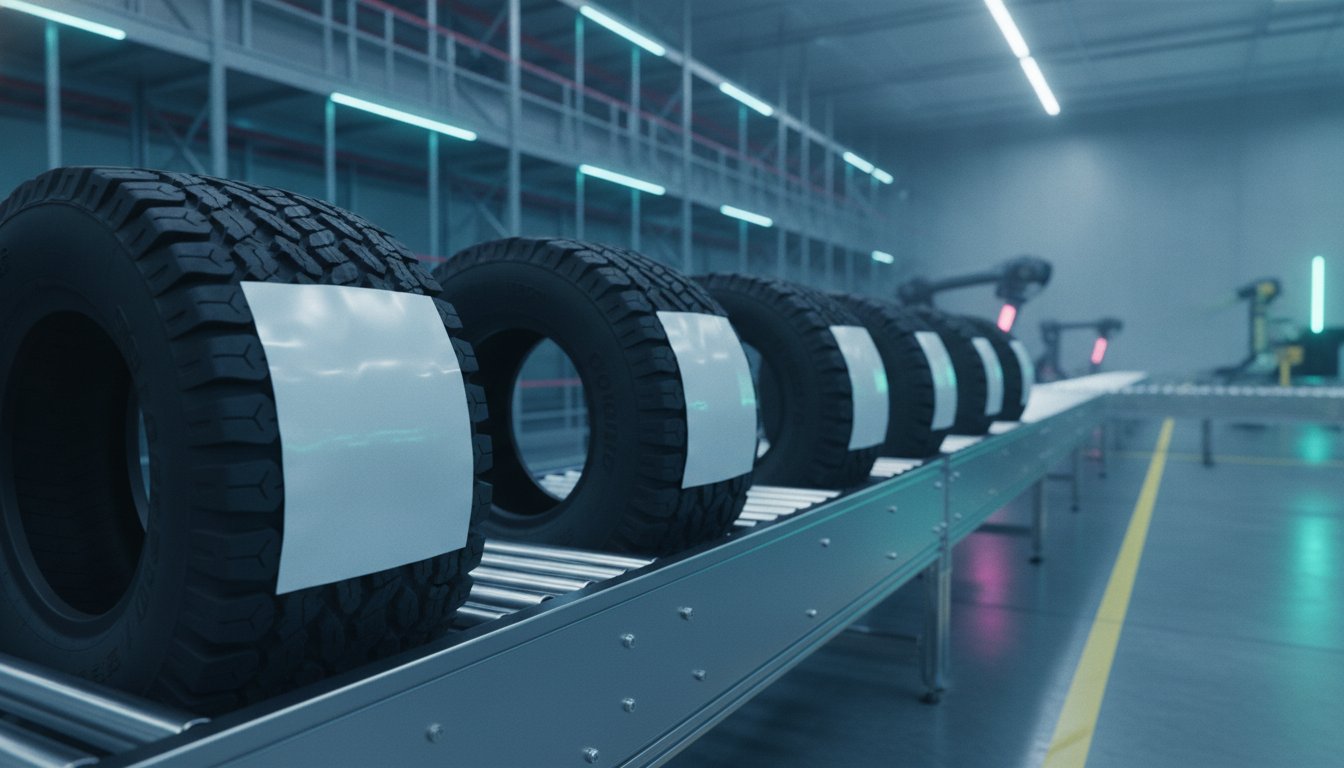
A single fallen shipping label can cost your business more than just the price of a re-shipment; it can trigger expensive carrier surcharges and damage your reputation during the peak seasonal rush. You likely know the frustration of seeing standard labels curl and peel off oily tire treads, especially when the temperature drops to -40°C in a Canadian winter. Finding the right 4x6 tire shipping labels Canada professionals can trust involves more than just picking a sticky piece of paper. It's about selecting a system designed to survive the journey from a dusty warehouse to a frozen staging bay.
This guide will show you how to achieve zero-fail adhesion and streamlined in-house printing that meets 2026 Canadian shipping standards. We'll examine why water enhanced models like the VP550 or VP750 are essential for great durability against condensation and how internal unwinders on the VP700 protect your media from environmental debris. We'll also compare technical specs, such as the 8 ips speed of the VP500 versus the 12 ips capability of the VP610, to help you choose the right output for your volume. By the end, you'll have a clear roadmap to selecting the industrial printers and high-tack labels that keep your logistics moving and your operations efficient.
Key Takeaways
- Understand why specialized high-tack adhesives and barrier coatings are essential to prevent 4x6 tire shipping labels Canada from peeling or smudging on oily surfaces.
- Learn to distinguish between standard dye inks and the water-enhanced series, including the VP550, VP660, and VP750, to ensure great durability against condensation and moisture.
- Identify how hardware features like internal label unwinders protect your media from environmental debris in dusty tire distribution centres.
- Evaluate print speeds and cartridge capacities, such as the 12 ips and 250ml tanks found in the VP610 and VP660, to optimize your high-volume logistics workflow.
- Discover the benefits of sourcing industrial labeling supplies from a Canadian partner to maintain operational seamlessness and hardware compatibility.
The Challenge of 4x6 Tire Shipping Labels in Canada
Shipping a loose tire is a logistical hurdle that standard packaging solutions can't handle. Unlike flat corrugated boxes, tires are cylindrical, heavy, and chemically active. This creates a significant problem for Canadian businesses trying to maintain carrier compliance. Major couriers like Purolator and UPS Canada require 4x6 labels for automated sortation, but the porous, oily nature of vulcanized rubber makes adhesion difficult. When you use 4x6 tire shipping labels Canada logistics providers can actually scan, you reduce the risk of surcharges and lost inventory.
Environmental Factors in Canadian Logistics
The Canadian climate adds another layer of complexity to label performance. In regions where temperatures drop to -40°C, standard adhesives lose their "tack" and become brittle, causing labels to fly off during transit. Humidity and road salt also contribute to label degradation. When tires move from a freezing outdoor yard into a heated staging bay, heavy condensation forms on the rubber surface. This moisture can cause standard dye inks to bleed or smudge. For these scenarios, the water enhanced dye ink series, which includes the VP550, VP660, and VP750, provides the great durability required to keep barcodes legible despite moisture exposure.
Why Rubber Surfaces Require Specialized Solutions
Why do standard labels fail so often? It's largely due to rubber outgassing and surface texture. Tires constantly release processing oils and carbon black, which migrate into standard adhesives and cause them to fail. You need a high-tack adhesive with a specialized barrier coating to prevent this migration. The physical texture of the tread also means the label has less surface area to grip. While thermal-transfer printing technology is a traditional choice for these rough surfaces, modern inkjet solutions offer more flexibility for high-volume colour marking.
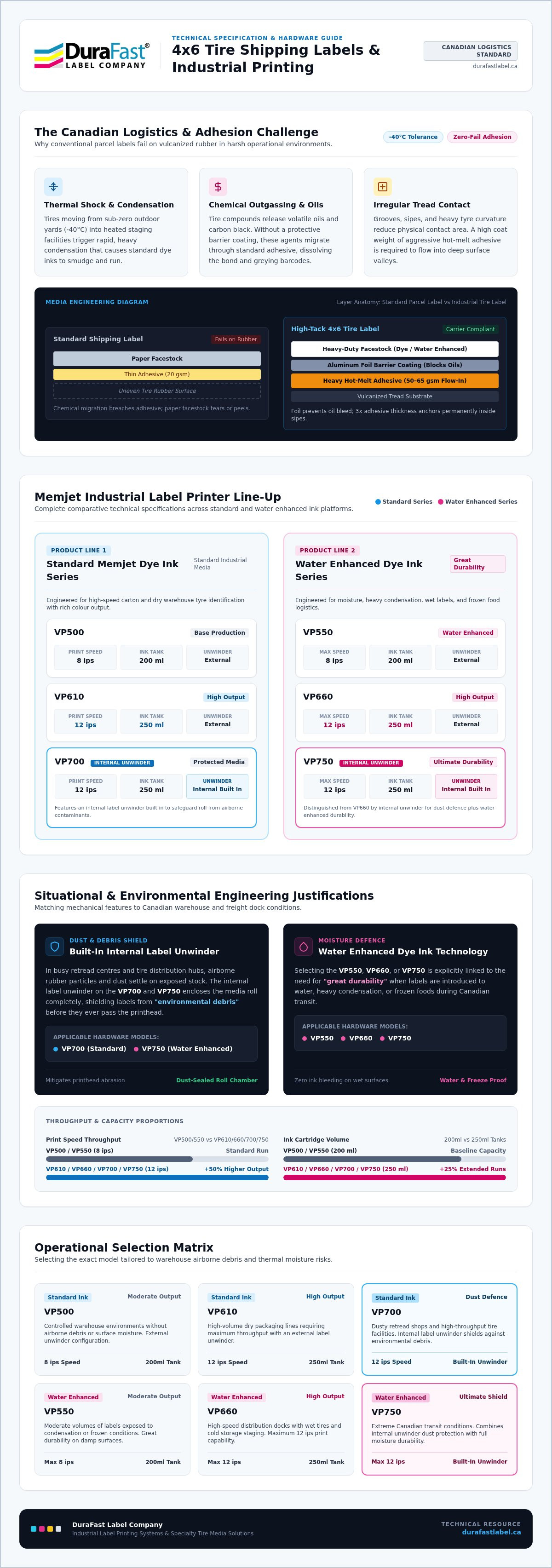
Your warehouse environment also dictates your hardware needs. In dusty retread facilities or distribution centres, airborne particles can ruin a print job. Choosing a printer with an internal label unwinder built in, such as the VP700 or the water enhanced VP750, protects your label roll from environmental debris. This ensures that the media remains clean before it ever reaches the printhead. If your volume is lower, the VP500 and VP550 offer an 8 ips print speed and 200ml ink cartridges with an external unwinder. For higher throughput, the VP610 and VP660 increase performance to 12 ips with 250ml cartridges, providing the operational seamlessness required for the busy Canadian shipping season.
Technical Specifications: Adhesion and Durability
Success in automotive logistics depends on the chemical compatibility between your label and the tire tread. We define high-tack tire labels as specialized 4x6 media with aggressive adhesives designed for irregular, low-energy surfaces. These labels must maintain the integrity of the tire identification numbers required by Transport Canada tire safety standards. Without a robust adhesive, your shipment risks becoming unidentified freight before it even leaves the province.
A critical component often overlooked is the barrier coating. Standard shipping labels lack a protective layer between the adhesive and the facestock. Over time, the processing oils and carbon black in the rubber migrate through the adhesive, causing the label to turn grey and the barcode to become unreadable. High-quality 4x6 tire shipping labels Canada suppliers provide often feature an aluminum foil barrier. This layer blocks chemical migration, ensuring your branding and shipping data remain crisp for months.
High-Tack Adhesive Technology
How do these adhesives manage to stick to rough rubber? It's a process called wetting out. While standard parcel adhesives have a coat weight of about 20 gsm, tire-grade hot-melts use 50 to 65 gsm. This thicker layer flows into the deep sipes and irregular textures of the tread. Immediate bond strength is vital in high-speed Canadian distribution centres. You don't have time to wait for an adhesive to cure. You need a permanent bond that withstands the friction of automated conveyor belts and the vibration of long-haul trucking.
Surface Preparation and Application Best Practices
Even the best adhesive can fail if the application environment is neglected. Tires are often coated in mould-release agents during manufacturing, which act as a non-stick barrier. It's best to apply labels to a clean, dry section of the tread. While tire labels can survive sub-zero temperatures, the initial application should ideally occur when the surface is above -5°C. This ensures the adhesive remains pliable enough to create a permanent bond. If your facility deals with heavy condensation or frozen inventory, choosing the water enhanced series of printers is a wise move. The VP550, VP660, and VP750 provide the great durability needed for wet environments. For a tailored assessment of your specific warehouse needs, you can speak with our technical team to find the right material match for your 4x6 tire shipping labels Canada operations.
Choosing the Right Printing Technology for Tire Labels
Selecting the right hardware is the final step in securing your supply chain. You don't want to sacrifice speed for quality when the busy winter tire season arrives. While many warehouses rely on thermal transfer, high-speed colour inkjet technology using Memjet printheads allows for on-demand colour coding and branding without slowing down your line. This is particularly useful for adhering to the GS1 Logistic Label Guideline, which ensures your SSCC barcodes and shipping data are globally recognized. Printing the specific 4x6 tire shipping labels Canada carriers require means understanding these hardware differences to ensure every barcode is sharp and scannable.
Standard Memjet Dye Ink Series (VP500, VP610, VP700)
For dry environments, the standard Memjet dye ink series offers exceptional value and performance. The VP500 is an entry-level workhorse, providing a print speed of 8 ips and using 200ml ink cartridges with an external label unwinder. If your facility requires higher throughput, the VP610 increases performance to 12 ips and utilizes larger 250ml ink cartridges, also with an external unwinder. For those operating in dusty tire distribution centres, the VP700 is the preferred choice. It maintains the 12 ips speed and 250ml capacity of the VP610 but includes an internal label unwinder built in. This feature is essential for protecting your label roll from environmental debris, which can otherwise compromise print quality and reduce the life of your printhead.
Water Enhanced Dye Ink Series (VP550, VP660, VP750)
Canadian logistics often involve tires arriving at the loading dock covered in frost, slush, or moisture. In these cases, you need great durability that standard dye inks cannot provide. The water enhanced dye ink series is specifically intended for durability in applications involving wet labels, condensation, or frozen foods. The VP550 offers a max print speed of 8 ips with 200ml cartridges, while the VP660 provides 12 ips with 250ml cartridges; both models use external label unwinders. The flagship VP750 combines the 12 ips speed and 250ml capacity with a built-in internal unwinder, offering the same protection against debris as the VP700 while ensuring your 4x6 tire shipping labels Canada shipments stay legible in the wettest conditions. You can explore our full range of colour label printers to find the exact match for your warehouse volume and environmental needs.
Optimizing Your Tire Labelling Workflow
How do you transition from a manual, error-prone labelling process to a high-speed, automated system that keeps your logistics moving? Efficiency in a tire distribution centre isn't just about how fast you can print; it's about how well you integrate your hardware and software to prevent bottlenecks. Standardizing your templates for 4x6 tire shipping labels Canada carriers expect ensures that every unit leaving your dock is compliant and scannable. By focusing on operational seamlessness, you reduce the risk of manual entry errors that lead to lost shipments and carrier penalties.
Software and Automation
Dynamic data is the backbone of modern automotive logistics. Using professional design tools like Bartender or NiceLabel allows you to automate the inclusion of batch numbers and DOT codes directly onto your 4x6 labels. This ensures that every tire is traceable throughout its lifecycle without requiring separate, manual marking steps. If your workflow involves high-volume parcel shipping, you can also browse our direct thermal labels for logistics to find cost-effective solutions for secondary packaging. Integrating these software tools with your VIPColor hardware creates a diagnostic and curative approach to data management, allowing you to scale your production as seasonal demand peaks.
Hardware Maintenance and Accessories
Maintaining high scan success rates requires more than just premium media. Regular printhead cleaning is a simple yet vital task that prevents barcode smudging and line dropouts. In high-volume environments, label rewinders are essential for roll-to-roll production. These accessories allow you to print thousands of labels in a single batch, neatly wound and ready for use with automatic applicators. This setup is particularly effective when paired with the 12 ips speed of the VP610 or VP660, which both utilize 250ml ink cartridges to minimize operator intervention during long runs.
Your choice of hardware placement also dictates your long-term reliability. As previously discussed, "environmental debris" like rubber dust and particulate matter can compromise your print quality. If your labelling station is located directly on the warehouse floor, choosing a model with an internal label unwinder built in, such as the VP700 or the water enhanced VP750, provides a layer of protection that external models like the VP500 or VP550 lack. These enclosed systems ensure your media remains pristine until the moment of application. To build a workflow that maximizes your resources and minimizes downtime, you can contact our experts for a personalized consultation today.
Sourcing Quality 4x6 Tire Labels in Canada
Securing a reliable supply of 4x6 tire shipping labels Canada businesses can depend on is a strategic necessity for logistics continuity. When your operations rely on high-speed output, a delay in media delivery can halt your entire distribution line. Sourcing from a domestic partner eliminates the unpredictability of cross-border shipping and ensures that your heavy label rolls arrive without excessive freight costs. A Canadian supplier provides the operational seamlessness required to manage seasonal surges, such as the mandatory winter tire windows in Quebec and British Columbia, without risking stockouts.
Compatibility is the other half of the equation. Using generic labels in high-performance hardware like VIPColor printers can lead to adhesive oozing or poor ink absorption. You need media specifically engineered to work with the Memjet technology found in your fleet. Whether you're running the standard series for dry warehouse environments or the water enhanced models for great durability in wet conditions, matching your media to your hardware protects your investment and ensures every barcode meets carrier standards.
The DuraFast Advantage for Canadian Businesses
DuraFast Label serves as a comprehensive resource for the Canadian automotive industry, offering national shipping and specialized technical support from coast to coast. As an authorized dealer for VIPColor, Epson, and Zebra, we provide access to the complete ecosystem of hardware and consumables. This includes everything from the entry-level VP500 to the high-capacity VP750. Our expertise allows us to act as a strategic partner, helping you choose between stock 4x6 templates and custom sizes for specialized inventory needs. If you're looking to upgrade your current hardware, you can learn more about the VIPColor VP550 Memjet Printer and how it fits into a modern logistics workflow.
Next Steps for Your Labelling Operations
Transitioning to a more robust labelling system doesn't have to be a diagnostic hurdle. We encourage you to take control of your production process by testing our high-tack materials in your specific environment. Every warehouse has unique levels of dust, moisture, and temperature fluctuations that affect label performance. Consulting with a specialist can help you determine if your application requires the water-enhanced ink of the VP750 or if the standard VP700 with its internal label unwinder is sufficient for your dust levels. To begin optimizing your supply chain, you can shop our dedicated tire label collection or request a sample kit for on-site testing. Taking these steps now ensures your logistics remain durable and compliant throughout the 2026 shipping season.
Securing Your 2026 Tire Logistics Strategy
Securing your supply chain requires a proactive approach to material selection and hardware maintenance. You've learned that standard labels simply aren't equipped to handle rubber outgassing or the extreme shifts in the Canadian climate. By prioritizing high-tack adhesives and barrier coatings, you ensure your shipments remain compliant and scannable from the warehouse to the customer's door. This technical precision prevents the surcharges and delays that disrupt high-volume distribution.
Whether you choose the 12 ips speed of the VP610 or the great durability of the water enhanced VP750, matching your technology to your specific environment is the key to operational seamlessness. As an authorized VIPColor dealer with specialized high-tack adhesive expertise, we maintain extensive Canadian inventory to support your growth. We understand the intricate challenges of automotive marking and provide the industrial reliability your business demands.
Are you ready to eliminate label failure and streamline your distribution? You can order your professional 4x6 tire shipping labels from DuraFast Canada to get started. Our expert team is here to help you navigate the technical specifications and find the perfect fit for your production needs. Let's build a more reliable and efficient logistics process together.
Frequently Asked Questions
What makes 4x6 tire shipping labels different from standard shipping labels?
These labels use specialized high-tack rubber-based adhesives and integrated barrier coatings. Standard shipping labels typically have a lower adhesive coat weight and lack the aluminum foil layer needed to prevent oil migration. Without this barrier, processing oils from the tire tread will eventually soak into the facestock, causing the adhesive to fail and the barcode to become unreadable during transit.
Do I need a special printer for 4x6 tire shipping labels in Canada?
You require an industrial-grade printer that can handle the increased thickness and weight of specialized tire media. While many desktop units support the dimensions, the 4x6 tire shipping labels Canada businesses rely on require the robust drive systems found in VIPColor or Zebra hardware. These printers manage the high-friction environment of aggressive adhesives without jamming or causing premature printhead wear.
Can I use direct thermal printers for tire labels in winter conditions?
Direct thermal printing is a viable option if you use outdoor-grade synthetic media like Ultramax DT. Standard paper-based thermal labels often degrade when exposed to moisture or extreme cold. For long-haul Canadian logistics, we typically recommend thermal transfer or high-speed colour inkjet solutions. These technologies offer better resistance to the road salt, slush, and sub-zero temperatures encountered across the provinces.
What is the difference between standard dye ink and water-enhanced dye ink for tires?
Standard dye ink models like the VP500 or VP700 are ideal for dry warehouse applications. However, the water enhanced dye ink series, including the VP550, VP660, and VP750, is specifically intended for durability in applications involving wet labels, condensation, or frozen foods. This ensures your labels maintain great durability even when tires move from a freezing outdoor yard into a humid, heated staging bay.
How do I prevent 4x6 labels from peeling off tires during transit?
Success starts with selecting a high-tack adhesive and following proper application steps. You should apply the label to a clean, dry section of the tread at a temperature above -5°C. Using a printer that maintains consistent tension, such as the VP610 or VP660, ensures the media isn't compromised before application. Applying firm pressure helps the aggressive adhesive "wet out" into the deep sipes of the rubber.
Are internal label unwinders necessary for warehouse environments?
They are highly beneficial in dusty environments like tire distribution centres. An internal label unwinder, which is built into the VP700 and VP750, protects the label roll from environmental debris. This prevents dust and particulates from settling on the media before it reaches the printhead. This protection ensures better print quality and significantly extends the life of your equipment in industrial settings.
Does DuraFast Label ship tire labels across all Canadian provinces?
Yes, DuraFast Label provides national shipping for 4x6 tire shipping labels Canada wide. We maintain a Canadian-based inventory to ensure logistics continuity and avoid the delays associated with cross-border shipping. Whether your business is located in the Maritimes, the Prairies, or the North, we provide specialized technical support and consumables to keep your in-house labelling operations running smoothly throughout the year.
What is the best print speed for high-volume tire distribution centres?
High-volume facilities should prioritize a print speed of 12 ips to maintain warehouse throughput. Models like the VP610, VP700, VP660, and VP750 all offer this 12 ips capability alongside 250ml ink cartridges for fewer interruptions. If your volume is lower, an 8 ips speed with 200ml cartridges, found in the VP500 and VP550, provides a cost-effective and reliable solution for your labelling needs.