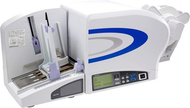
The Importance of Durable Labels in Manufacturing Environments
7th May 2026
Manufacturing floors are not forgiving environments. Equipment runs hot, chemicals are handled daily, and constant movement creates friction on nearly every surface. In the middle of all this, labels quietly carry critical information by tracking parts, ensuring compliance, and maintaining safety. When those labels fail, the consequences are rarely small.
Having durable labels is an unavoidable necessity. Here’s why they’re significant for ensuring smooth operations.
Importance of Durable Labels
The importance of durable labels in manufacturing environments isn’t just as identifiers; they’re part of the operational backbone. A faded barcode or peeling warning label can disrupt workflows, delay shipments, or even create safety hazards.
Durable labels are specifically engineered to withstand harsh conditions, such as high temperatures, solvents, oils, UV exposure, and abrasion. Poor labeling and traceability systems can significantly impact supply chain efficiency, particularly in industries relying on serialized tracking and compliance documentation.
In environments like automotive, electronics, or chemical processing, labels must remain readable for months or even years. For example:
- Heat-resistant labels are essential for components that pass through curing ovens
- Chemical-resistant labels are required for drums, containers, and lab samples
- Abrasion-resistant labels ensure barcodes remain scannable during handling and transport
Failure in any of these areas can break traceability. That’s where industrial-grade printing solutions come in.
Thermal transfer printers from brands like Zebra Technologies and SATO Holdings are commonly used because they produce long-lasting prints when paired with the right ribbon and label materials. These systems are designed to handle continuous output without compromising print quality, something standard office printers simply can’t match.
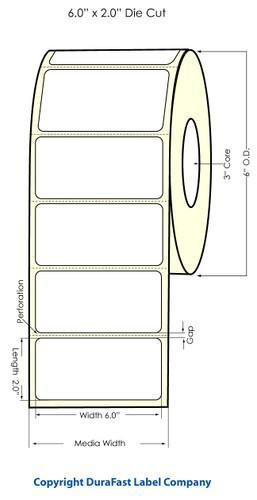
What Are Thermal Transfer Labels Used For?
Thermal transfer labels are widely used in manufacturing because they offer superior durability compared to direct thermal alternatives. Instead of relying on heat-sensitive paper, thermal transfer printing uses a ribbon to bond ink onto the label surface, creating a more permanent mark.
This makes them ideal for:
- Asset tracking and equipment labeling
- Compliance labeling (e.g., UL, CSA certifications)
- Outdoor applications exposed to weather
- Long-term inventory storage
Research shows that thermal transfer labels can maintain legibility longer than direct thermal labels in high-exposure environments. That longevity directly translates into fewer relabeling costs and less operational disruption.
In manufacturing, where downtime is expensive, reliability matters more than convenience. Thermal transfer labels also support a wide range of materials, such as polyester, polypropylene, and vinyl, each designed for specific conditions like extreme heat or chemical exposure.
Which Barcode Printer Is Best For Industrial Use?
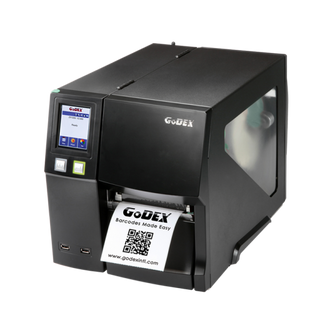
Choosing the right printer is just as important as choosing the right label. Industrial barcode printers are built for high-volume, high-demand environments where performance and consistency are critical.
Key features to look for include:
- All-metal construction for durability
- High print resolution for small, dense barcodes
- Fast print speeds to keep up with production lines
- Compatibility with thermal transfer ribbons
- Support for multiple label materials
Industrial models such as the Zebra ZT411 4-Inch and SATO WWCLP2001 CL4NX Plus are often preferred for their advanced connectivity and automation integration.
Label Materials Explained
Not all “durable” labels are created equal. The performance of a label depends heavily on its material and adhesive.
Some commonly used materials include:
- Polyester (PET): ideal for heat resistance and long-term durability
- Polypropylene (BOPP): resistance to moisture and chemicals
- Vinyl: flexible and ideal for curved or irregular surfaces
- Tamper-evident materials: essential for compliance and security
Adhesives are equally critical. Labels used in manufacturing often require high-performance adhesives that can bond to rough, oily, or uneven surfaces. Poor adhesion is one of the most common reasons labels fail prematurely.
Meeting Compliance and Industry Standards
Manufacturing industries often operate under strict labeling regulations. Whether it’s hazard communication (GHS), electrical safety (UL), or automotive standards, labels must meet specific durability and legibility requirements.
For instance:
- UL certification requires labels to withstand heat, moisture, and chemical exposure
- GHS labels must remain legible under harsh conditions to ensure worker safety
- Aerospace and automotive industries require long-term traceability
Using substandard labels can lead to failed inspections or rejected shipments, both costly setbacks.
The Hidden Cost Of Label Failure
It’s easy to underestimate the impact of a failed label until it happens at scale.
Consider these scenarios:
- A barcode becomes unreadable, halting automated scanning systems
- A safety label peels off, leading to compliance violations
- A product loses traceability, triggering recalls or regulatory issues
Each of these situations carries real financial consequences. Poor data visibility, often linked to labeling issues, can increase operational costs significantly.
Durable labels help eliminate these risks by ensuring information remains intact throughout the product lifecycle.
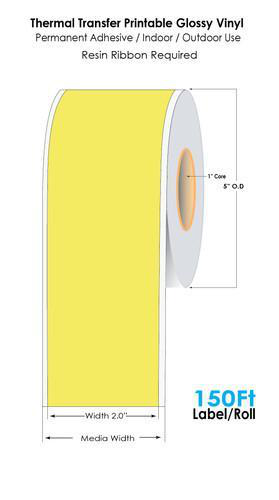
When labels remain intact, readable, and scannable, they quietly protect efficiency, compliance, and safety across the entire operation.
With one of the largest selections of thermal transfer labels, industrial-grade printers, and ribbons compatible with leading brands like Zebra, Honeywell, and SATO, DuraFast Label Company offers complete labeling systems tailored for demanding environments.
Our solutions include everything from durable thermal transfer labels for long-term industrial use to certified chemical labels designed for extreme durability and resistance in harsh conditions.
If your operation can’t afford labeling failures, it’s time to upgrade to solutions built for real-world conditions. Explore our labeling systems today and ensure your production line never slows down because of something as small but critical as a label.