The Complete Guide to Choosing Labels for Cold Storage and Freezer Applications
17th Jul 2026
Are Your Labels Surviving the Cold, or Costing You Time and Money?
What happens when a product label peels off in a freezer, smudges in a refrigerated warehouse, or becomes unreadable during transport? For many businesses, the answer is simple: lost inventory visibility, shipping delays, compliance concerns, and unnecessary replacement costs.
According to industry data, temperature-sensitive products account for a significant portion of global food, pharmaceutical, and logistics operations. As cold chain requirements continue to grow, businesses are placing greater emphasis on label performance in refrigerated and frozen environments. A label that performs well at room temperature may fail when exposed to moisture, condensation, ice, and sub-zero temperatures.
At DuraFast Label Company, we help businesses identify durable label solutions designed for demanding environments. From material selection to adhesive performance, choosing the right label can help maintain readability, tracking accuracy, and product identification throughout the supply chain.
In this guide, we discuss how cold storage and freezer labels work, the factors that affect performance, and what to consider when selecting materials and adhesives for refrigerated and frozen applications.
Why Cold Storage and Freezer Labels Matter
Labels used in cold environments face challenges that standard labels often cannot handle.
Common conditions include:
- Refrigerated storage between 0°C and 8°C
- Frozen storage below 0°C
- Repeated temperature fluctuations
- Condensation and moisture exposure
- Ice formation on packaging
- Abrasion during transportation and handling
When labels fail under these conditions, businesses may experience:
- Scanning errors
- Product identification issues
- Inventory management disruptions
- Regulatory compliance concerns
- Increased labour costs from relabelling
This is why selecting high-quality cold storage and freezer labels should be part of any product identification strategy.
Understanding Adhesive Performance in Cold Environments
The adhesive is often the most important component of a freezer label.
Even a durable face material can become ineffective if the adhesive cannot maintain contact with the package surface.
Initial Tack vs Long-Term Adhesion
Two adhesive characteristics deserve special attention:
Initial Tack
This refers to how quickly the label bonds to the surface after application.
Long-Term Adhesion
This measures the adhesive's ability to remain attached throughout storage, transportation, and handling.
For cold storage and freezer labels, both factors matter.
Freezer-Grade Adhesives
Specialized freezer adhesives are formulated to perform at low temperatures. These adhesives are designed to:
- Bond to cold surfaces
- Resist lifting and edge curling
- Maintain adhesion during freeze-thaw cycles
- Perform in humid environments
Applying labels before products enter cold storage can improve adhesion, but many modern freezer-grade adhesives are also designed for direct application to chilled products.
The Impact of Moisture and Condensation 
Moisture is one of the biggest challenges in refrigerated environments.
Products frequently move between different temperature zones, creating condensation that can weaken standard labels.
Common Moisture Risks
These include:
- Water droplets on packaging
- Humid storage conditions
- Frost accumulation
- Condensation during transportation
- Frequent handling
For this reason, cold storage and freezer labels should provide excellent moisture resistance.
Why Moisture Resistance Matters
Moisture-resistant labels help maintain:
- Barcode readability
- Product information visibility
- Regulatory compliance
- Inventory tracking accuracy
Studies within logistics and food distribution sectors consistently show that barcode readability directly affects operational efficiency. When labels remain readable throughout storage and shipping, businesses reduce scanning errors and improve workflow accuracy.
Choosing the Right Label Material
Material selection plays a major role in label durability.
Different materials perform differently when exposed to freezing temperatures and moisture.
Paper Labels
Paper labels can be suitable for some refrigerated applications.
Advantages include:
- Lower cost
- Good print quality
- Easy application
Limitations include:
- Reduced moisture resistance
- Lower durability in freezing conditions
- Potential tearing and deterioration
Polypropylene Labels
Polypropylene is one of the most commonly used materials for cold storage and freezer labels.
Benefits include:
- Excellent moisture resistance
- Strong durability
- Good print performance
- Resistance to tearing
These labels are often used in food packaging, warehouse operations, and logistics environments.
Polyester Labels
Polyester materials offer additional durability for demanding applications.
Advantages include:
- Excellent temperature resistance
- Chemical resistance
- Superior dimensional stability
- Long-term durability
Polyester labels are frequently selected for industrial and pharmaceutical environments.
Matching Labels to Packaging Surfaces
Not all packaging materials behave the same way.
Surface characteristics affect adhesive performance significantly.
Common Packaging Types
Cold storage products are commonly packaged in:
- Cardboard cartons
- Corrugated boxes
- Plastic containers
- Shrink-wrapped products
- Glass containers
- Flexible packaging
Each surface may require a different adhesive formulation.
For example, textured corrugated surfaces often need stronger adhesives than smooth plastic containers.
Printing Considerations for Cold Storage Labels 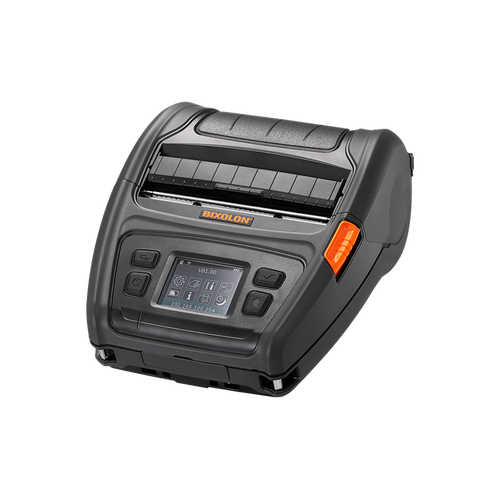
Printing technology also affects label performance.
Businesses using a 4x6 shipping label printer for warehouse and logistics operations should ensure that labels and inks are compatible with freezer environments.
Barcode Quality Matters
Barcodes must remain readable despite exposure to:
- Moisture
- Condensation
- Low temperatures
- Handling and transportation
Many organizations use a 4x6 colour label printer to add branding, warnings, handling instructions, and product identification information while maintaining barcode clarity.
Will Your Labels Still Be Working After Months in the Freezer?
The true test of a label is not how it looks when applied. It is how well it performs after weeks or months in refrigerated and frozen conditions.
At DuraFast Label Company, we provide durable labelling solutions, specialized materials, and consumables that help businesses maintain clear identification and reliable barcode performance throughout cold chain operations. Whether you need labels for food packaging, warehouse management, pharmaceuticals, or logistics applications, we can help you identify products designed for demanding environments.
If you are looking for dependable cold storage and freezer labels that support long-term performance in refrigerated and frozen conditions, contact DuraFast Label Company today and let us help you find the right solution for your application.