How Do Serial Number Labels Improve Asset Tracking?
23rd Jun 2026
Key Highlights
-
Serial number labels support traceability, maintenance, and warranty tracking
-
Durable materials reduce asset loss and misidentification
-
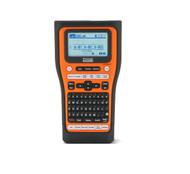
The Brother PT-E560BTVP simplifies Brother label printer serial number workflows
-
Waterproof and laminated options improve long-term readability
-
Custom formats support branding and QR-based tracking
-
Choosing the right printer and tape improves compliance and efficiency
The moment a technician cannot identify a piece of equipment, productivity comes to a halt. In industrial, IT, medical, and manufacturing environments, unclear identification leads to delayed maintenance, failed audits, and avoidable downtime. Serial number labels address this challenge by giving every asset a clear, permanent identity that teams can rely on.
When organizations depend on handwritten tags or low-quality stickers, label failure becomes inevitable. Text fades, edges peel, and critical information becomes unreadable over time. This makes it difficult to track service history, manage warranties, or meet regulatory requirements, gradually increasing operational risk and inefficiency.
This blog explores how to print serial number labels effectively, how to choose the right serial number label maker and serial number label printer, and what materials perform best in demanding environments. It also outlines best practices for creating labels that remain readable, secure, and reliable throughout an asset’s entire lifecycle.
Why Are Serial Number Labels Critical for Equipment Identification and Asset Management?
As equipment inventories grow, clear identification becomes essential. Serial number labels create a direct, visible link between physical assets and their records, helping teams manage equipment accurately without relying on manual tracking or assumptions.
When applied consistently, serial number labels support both daily operations and long-term asset control by:
-
Ensuring traceability across the asset lifecycle, making it easier to track maintenance history, warranty status, and service actions
-
Improving inventory accuracy, allowing faster audits, cleaner records, and easier verification across locations
-
Reducing errors and asset loss, especially in environments with similar or shared equipment
-
Supporting compliance requirements by linking assets clearly to inspection logs, safety checks, and regulatory documentation
Without reliable serial number labels, even well-designed asset management systems lose accuracy over time. Clear, durable labelling keeps equipment, data, and operations aligned.
How to Print Serial Number Labels Easily and Professionally?
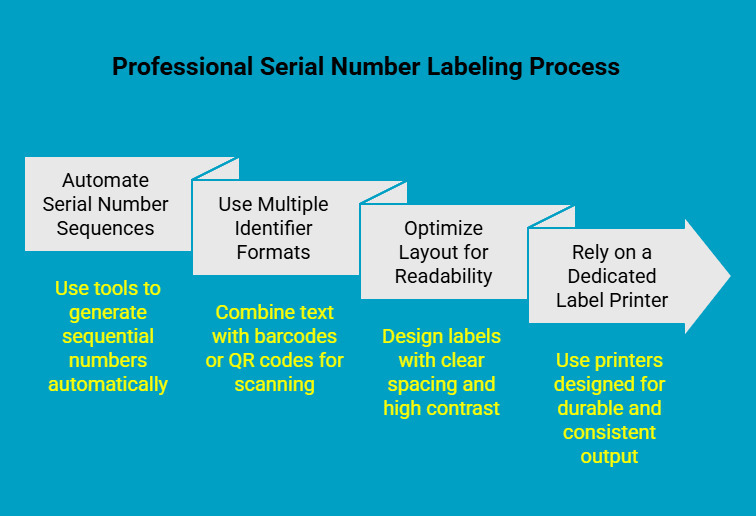
Printing serial number labels in a professional environment requires a structured approach that balances accuracy, efficiency, and consistency. As the number of assets increases, manual numbering and ad hoc formatting introduce errors that can disrupt tracking, audits, and maintenance workflows. A standardized process ensures every label follows the same logic and remains readable over time.
1. Automate Serial Number Sequences to Reduce Errors
Automation is the foundation of professional serial number labelling. Serialization tools generate sequential numbers automatically, eliminating the risk of duplicate or skipped entries. This is especially important when labelling large batches of equipment or updating asset inventories across multiple departments.
2. Use Multiple Identifier Formats for Faster Tracking
Effective serial number labels often combine text with machine-readable formats. Printing alphanumeric identifiers alongside barcodes or QR codes allows teams to scan assets quickly, reducing manual data entry and improving accuracy in asset management systems.
3. Optimize Layout for Readability and Scan Accuracy
Label design plays a critical role in long-term usability. Clear spacing, high-contrast colours, and appropriate tape widths ensure serial numbers remain legible and scannable, even in low-light or high-wear environments. Consistent formatting also supports faster visual identification during inspections or maintenance.
4. Rely on a Dedicated Serial Number Label Printer
A dedicated serial number label printer ensures consistent output, durable prints, and repeatable results across all labelling tasks. These printers are designed to handle industrial demands, producing labels that maintain clarity and adhesion over time.
By combining automation, thoughtful design, and purpose-built hardware, businesses can create serial number labels that support reliable tracking, reduce errors, and streamline asset management from deployment through end of life.
What Is the Best Serial Number Label Maker for Industrial Applications?
In industrial settings, labelling equipment is rarely done at a desk. Technicians often work around machinery, electrical panels, server rooms, or outdoor sites where conditions are unpredictable. A reliable serial number label maker must function consistently in these environments without compromising print quality or durability.
The Brother PT-E560BTVP is commonly chosen for industrial applications because it is designed for field use rather than light office tasks. Its rugged build and portable design allow teams to create clear, durable serial number labels exactly where they are needed, reducing rework and improving accuracy.
Why the Brother PT-E560BTVP Works Well in Industrial Environments
-
Portable, battery-powered operation that supports on-site labelling without access to a workstation
-
Bluetooth connectivity for printing from mobile devices and PCs, improving flexibility
-
Multi-line layouts and automatic serialization to speed up repetitive labelling tasks
-
Support for laminated Brother TZe tapes that resist moisture, abrasion, and fading
By combining durability with efficient labelling features, this serial number label maker helps teams maintain consistent asset identification across equipment, panels, and tools while keeping workflows smooth and reliable in demanding industrial conditions.
How to Choose the Right Serial Number Label Printer for Your Workflow?
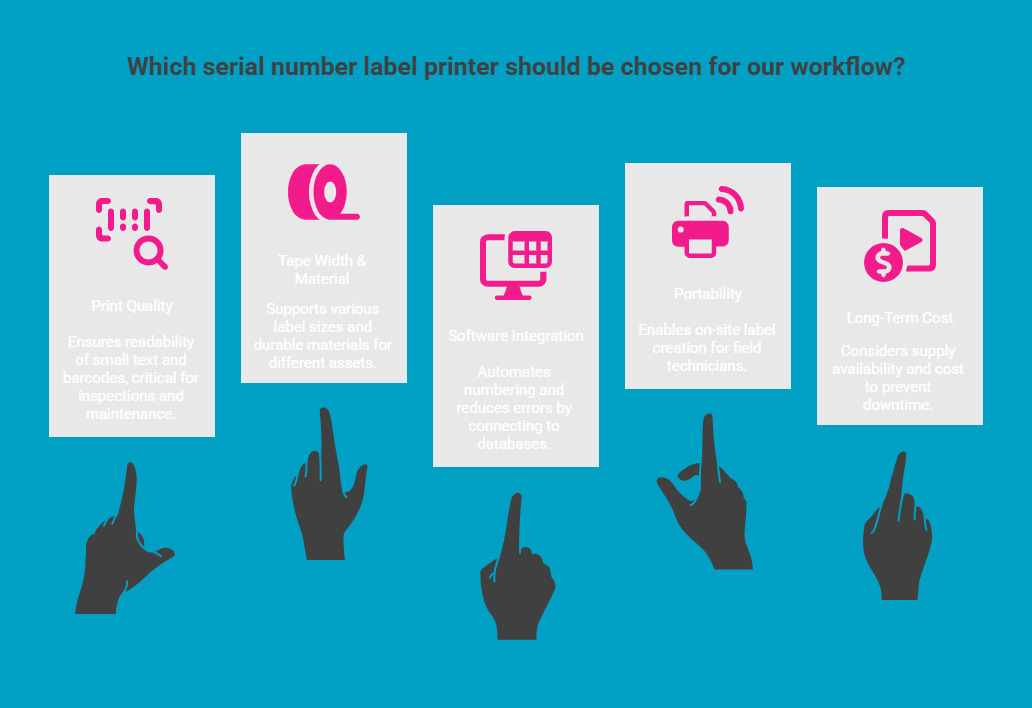
Selecting the right serial number label printer begins with understanding how and where labels will be used. A printer suited for light office tasks may struggle in industrial or field environments. The right choice supports accuracy, durability, and efficiency across the full asset lifecycle.
1. Print Quality and Readability Requirements
High print resolution is critical when printing small text, barcodes, or QR codes. Clear output ensures serial numbers remain readable during inspections, audits, and routine maintenance, even after long-term use.
2. Tape Width and Material Compatibility
Different assets demand different label sizes and materials. A printer that supports multiple tape widths and durable options allows consistent labelling across equipment, cables, panels, and tools without switching systems.
3. Software Integration and Data Sources
Compatibility with spreadsheets or asset databases helps automate numbering and reduce manual entry errors. Mobile and desktop software options also enable on-site label creation, improving speed and consistency.
4. Portability and Work Environment
For technicians working in the field or across large facilities, portability matters. Battery-powered printers with rugged designs allow serial number labels to be created wherever assets are located, not just at a fixed workstation.
5. Long-Term Cost and Supply Availability
Beyond the printer itself, consider the availability and cost of compatible label supplies. Reliable access to durable tapes and adhesives ensures consistent output and prevents downtime caused by incompatible or low-quality materials.
A well-chosen serial number label printer reduces rework, supports scalable workflows, and maintains reliable asset visibility as operations grow.
What Types of Serial Number Labels Are Available for Different Use Cases?
Serial number labels are designed for different environments, surfaces, and durability requirements. Choosing the right label type helps ensure clear identification, long-term adhesion, and reliable tracking across the full lifecycle of equipment and assets.
|
Label Type |
Best Use |
Materials |
Example Application |
|---|---|---|---|
|
Laminated serial number labels |
Indoor and outdoor equipment |
TZe laminated tape |
Industrial machinery, control panels |
|
Waterproof serial number labels |
Wet, cold, or washdown environments |
Laminated material with strong adhesive |
Food processing facilities, laboratories |
|
Cable serial ID labels |
Wiring and cabling identification |
Flexible ID material or heat-shrink tubing |
Electrical systems, network racks |
|
Custom serial number labels |
Branded asset tracking |
Custom text, QR codes, logos |
Rental equipment, shared tools |
|
Permanent metal serial number labels |
Extreme industrial conditions |
Metal plates |
Heavy manufacturing environments |
Selecting the correct serial number labels ensures that identification remains readable, securely attached, and reliable throughout the entire lifespan of the asset.
Brother Label Printer Serial Number Printing Capabilities
Brother label printers support efficient, accurate serial number labelling for product identification and technical and industrial environments. Using a Brother label printer serial number workflow, technicians can create consistent labels without manual numbering or rework.
Core capabilities include:
-
Automatic serial number sequencing for unique asset identification, including unique serial numbers
-
Barcode and QR code printing for scan-based tracking
-
Port, rack, and panel numbering templates for structured systems
-
Industrial symbols and compliance icons for regulated settings
These features enable standardized serial number labels across teams, improving traceability and reducing labelling errors across sites.
How to Ensure Serial Number Labels Stay Attached and Readable Over Time?
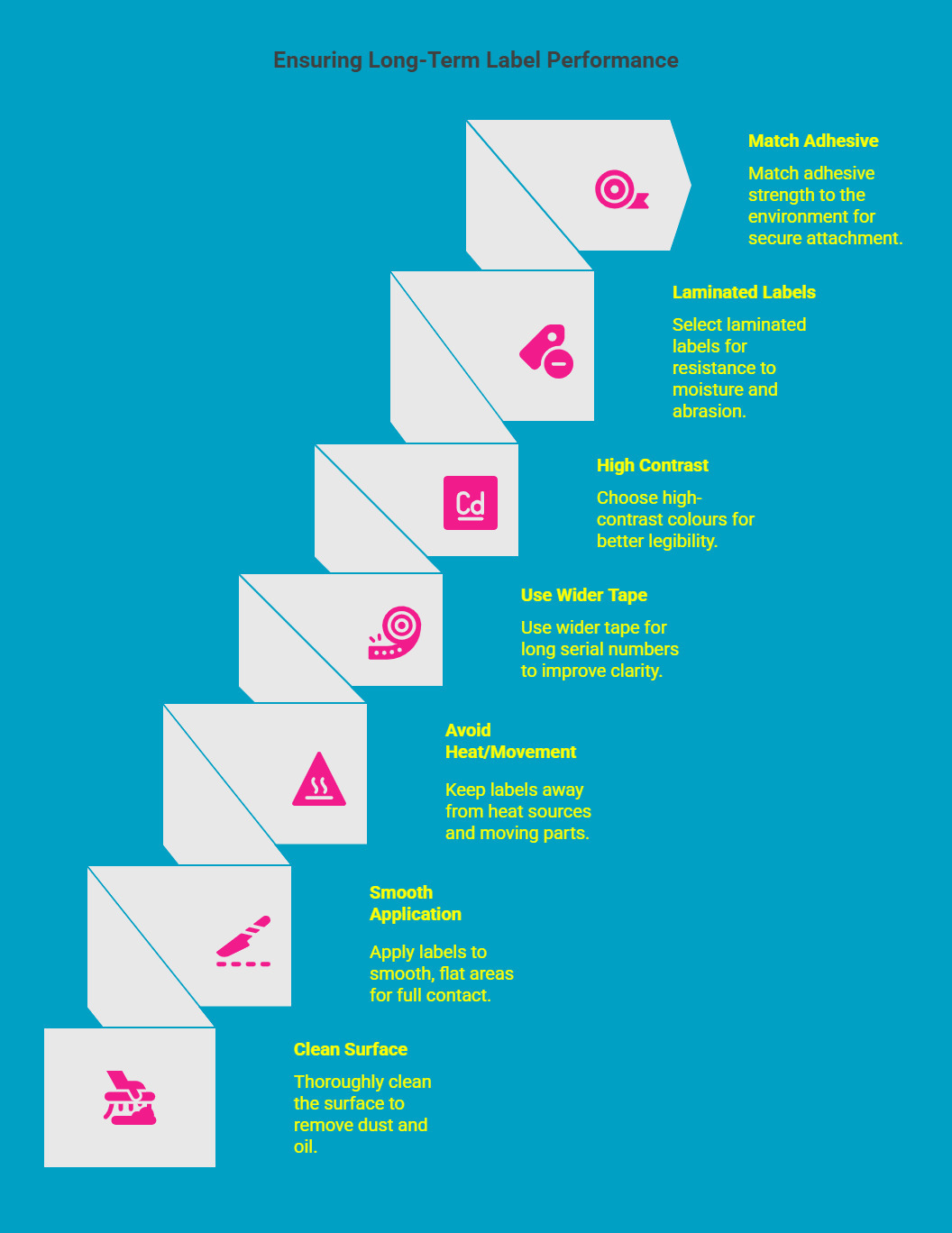
Long-term performance of serial number labels depends on both preparation and material choice. Even durable labels can fail if applied to the wrong surface or used in unsuitable conditions. A few practical steps can significantly improve adhesion and readability over time.
To maximize label lifespan and reliability, follow these best practices:
-
Clean and dry the surface thoroughly to remove dust, oil, or residue that can weaken adhesion
-
Apply labels to smooth, flat areas whenever possible to ensure full contact with the surface
-
Avoid placing labels near heat sources or moving parts that can cause lifting or wear
-
Use wider tape widths for long serial numbers, barcodes, or QR codes to improve clarity and scan accuracy
-
Choose high-contrast text and background colours to maintain legibility in low-light or industrial settings
-
Select laminated labels instead of paper for resistance to moisture, abrasion, and UV exposure
-
Match the adhesive strength to the environment, such as extra-adhesive tapes for cold or high-touch surfaces
When these practices are combined with laminated materials, serial number labels remain securely attached and easy to read even in demanding environments. This consistency supports accurate asset identification, reduces relabelling, and helps maintain reliable tracking throughout the equipment’s operational life.
When Should You Use Waterproof Serial Number Labels?
Not all environments are kind to standard labels. When equipment is exposed to moisture, temperature fluctuations, or regular cleaning, label failure becomes a real risk. In these situations, waterproof serial number labels provide the protection needed to keep identification clear and intact over time.
These labels are especially well-suited for environments where water, condensation, or cleaning agents are part of daily operations, including:
-
Refrigeration and cold storage, where condensation and low temperatures can weaken standard adhesives
-
Outdoor equipment is exposed to rain, humidity, and sunlight
-
Chemical or washdown environments, such as laboratories or food processing facilities
-
Frequently handled tools, where abrasion and friction can cause ink wear or peeling
By using waterproof, laminated materials with strong adhesives, businesses ensure each label's serial number remains readable and securely attached, even under demanding conditions. This protects asset traceability, reduces relabelling costs, and supports consistent long-term equipment tracking.
Where to Buy Custom Serial Number Labels and Compatible Supplies?
Once you have the right printer in place, the quality of your serial number labels depends heavily on the supplies you use. Businesses typically choose between printing labels in-house using blank tapes or ordering preprinted labels, depending on label volume, customization needs, and operational workflows.
Reliable supply options include:
-
Blank laminated Brother TZe tapes for on-demand serial number printing
-
Flexible ID and extra adhesive materials for curved, textured, or high wear surfaces
-
Preprinted custom serial number labels for standardized layouts, branding, or large-scale deployments
For businesses that require dependable performance, DuraFastLabel.ca is a trusted source for genuine Brother label supplies in Canada. Their range is specifically designed to work seamlessly with professional printers such as the Brother PT-E560BTVP, ensuring strong adhesion, sharp print quality, and long-term durability.
By sourcing compatible materials from https://www.durafastlabel.ca/contact-us/, organizations reduce printer issues, avoid premature label failure, and maintain consistent asset identification across equipment, tools, and facilities.
Final Thoughts
Clear asset identification is not optional in modern operations. Serial number labels create consistency, accountability, and transparency across equipment lifecycles. When paired with the right printer and durable materials, they reduce errors, simplify audits, and protect critical asset data.
By standardizing how assets are labelled and choosing solutions designed for real-world conditions, businesses strengthen maintenance workflows, improve compliance, and keep operations running smoothly as inventories scale and environments become more demanding.
FAQs
Can I print barcodes or QR codes on serial number labels?
Yes. Professional label printers allow you to print serial number labels with barcodes or QR codes, making asset identification faster and more accurate while improving scanning in pharmaceuticals, inventory tracking, maintenance record management, and data analysis across different environments.
Do laminated serial number labels work outdoors or in harsh conditions?
Yes. Laminated and waterproof serial number labels are built to resist UV exposure, moisture, chemicals, and abrasion, making them suitable for outdoor equipment, industrial machinery, laboratories, and high-contact or washdown environments, ensuring product authenticity.
What tape width is recommended for serial number printing?
Wider tape widths are recommended when printing barcodes, QR codes, or multi-line serial number labels, as they improve text spacing, scan reliability, and long-term readability, especially on equipment with detailed identification requirements due to their versatility.
How do I print sequential or auto-numbering labels?
Most professional serial number label printers include auto-serialization tools that generate sequential numbers automatically, reducing manual input errors and helping teams label large volumes of assets quickly and consistently.
Can I create custom layouts for branded serial number labels?
Yes. Custom serial number labels can include logos, QR codes, and standardized layouts, allowing businesses to maintain consistent branding while supporting internal tracking, asset management systems, and compliance documentation.
How can I find the serial number label on my printer?
The serial number label is typically located on the back, underside, or inside the battery compartment of the printer, and it is also often listed in the device settings or system information menu.
What is the difference between serial number stickers and tags?
Serial number stickers are adhesive labels applied directly to surfaces, while tags are non-adhesive and usually attached with ties or fasteners, making stickers a unique identifier better for permanent asset identification and tags suitable for temporary labeling.
How do I choose the best material for serial number labels?
Choose the material based on the environment and surface where the label will be applied. Laminated materials suit most industrial uses, waterproof serial number labels work for wet or outdoor conditions, and flexible materials fit curved or textured surfaces, ensuring effective product authentication.