RFID Labels vs Traditional Barcode Labels: Which Is Better for Inventory Tracking?
29th Jun 2026
Inventory tracking systems rarely fail because of missing tools; they fail because the wrong identification method is used for the wrong environment. The debate between RFID labels and traditional barcode labels usually comes down to visibility, speed, and scalability, but the real difference shows up in day-to-day operations: how fast items move through a system and how accurately they’re recorded.
Both RFID and traditional barcode labels solve the same core problem: identifying products, but they do it in very different ways. Here’s how to decide which one is better for the function.
How barcode labels work in real inventory environments
Traditional barcode systems rely on optical scanning. A scanner must directly “see” the barcode for it to be read. That means each item is scanned individually, whether at receiving, picking, or shipping.
Despite this limitation, barcode systems remain widely used because they are cost-effective and reliable. According to research, barcodes are scanned more than 10 billion times per day globally across retail and logistics systems, making them one of the most widely adopted identification standards in the world.
In practical terms, barcode systems are still ideal for:
- Small to medium inventory environments
- Shipping workflows
- Point-of-sale operations
- Basic warehouse tracking
Businesses using barcode printing solutions often rely on formats like 4x6 shipping label printer setups to handle logistics labeling efficiently. However, the limitation is speed. Every scan is manual and line-of-sight dependent.
How RFID labels change the tracking model
RFID (Radio Frequency Identification) labels work differently. Instead of scanning visually, they use radio waves to transmit data. This allows multiple items to be read simultaneously, even without direct line of sight.
Research shows that RFID-enabled retail environments can improve inventory accuracy to over 95%, compared to average barcode-based accuracy levels that often fall between 60%–80% depending on operational maturity.
That difference comes from automation. RFID reduces human scanning steps, which reduces human error.
In warehouses or retail backrooms, this means:
- Entire pallets can be scanned at once
- Inventory counts take seconds instead of hours
- Shrinkage and misplacement become easier to detect
But RFID systems require more investment in hardware and infrastructure, which is where decision-making becomes important.
Cost comparison: upfront vs long-term efficiency
Barcode systems are significantly cheaper to implement. A basic scanner and label printer setup is enough to start operations. Businesses often begin with barcode printers and expand as needed.
RFID systems, on the other hand, require:
- RFID-enabled printers
- RFID tags (which cost more per unit than barcode labels)
- Fixed or handheld RFID readers
While the initial cost is higher, studies suggest RFID systems can reduce labor costs in inventory counts in high-volume environments due to reduced manual scanning requirements.
Accuracy and inventory visibility
Barcode systems depend heavily on compliance. If an item isn’t scanned, it doesn’t exist in the system. This creates gaps in visibility, especially in fast-moving warehouses.
RFID improves visibility by continuously capturing data as items move through checkpoints. This leads to near real-time inventory updates without requiring manual scanning at every step. However, barcode systems still maintain strong accuracy in controlled environments.
Scalability: where each system performs best
Barcode systems scale well in predictable environments but require more labor as volume increases. More products mean more scans, more time, and more potential errors.
RFID scales differently. Once infrastructure is in place, adding more inventory does not proportionally increase scanning time. This makes RFID more suitable for:
- Large distribution centers
- Multi-location retail networks
- High-volume manufacturing
RFID vs barcode: which is better?
The answer depends entirely on operational scale and complexity:
Barcode labels are better when:
- Cost control is important
- Inventory volume is moderate
- Manual scanning is manageable
RFID labels are better when:
- Speed and automation are priorities
- Large-scale inventory tracking is required
- Real-time visibility is critical
In many modern supply chains, the most effective solution is not choosing one over the other, but combining both, depending on workflow needs.
A lot of inventory systems don’t fail because of the technology itself; they fail because the setup doesn’t match how fast products actually move.
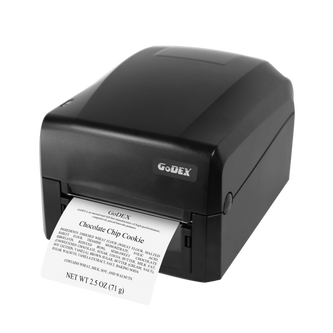
This is where DuraFast Label Company plays a practical role by offering complete printing solutions designed for both barcode and RFID workflows.
Whether a business is starting with a label printer for shipping workflows or upgrading to advanced RFID-enabled systems for large-scale inventory visibility, we provide equipment suited for different operational levels.
Upgrade your inventory tracking system with advanced labeling solutions. Contact us today to build a faster, more accurate, and scalable workflow.