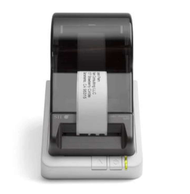
How to Choose the Best Label Adhesive Types?
17th Mar 2026
Key Highlights
-
Label adhesive choice affects durability, readability, and clean removal.
-
Common adhesive types include removable, permanent, freezer-grade, and tamper-evident.
-
Surface material, temperature, and handling affect adhesive performance.
-
Freezer-grade and industrial adhesives support cold and harsh environments.
-
Adhesive quality prevents curling, lifting, and barcode readability issues.
-
Matching adhesives with Seiko printers ensures smooth feeding and output.
-
Selecting the right adhesive reduces waste, reprints, and disruptions.
Choosing the right label adhesive is just as important as selecting the correct label size or printer. The adhesive determines how well a label sticks, how long it lasts, and whether it can be removed cleanly or not at all.
For businesses handling shipping, retail packaging, inventory, or compliance labeling, understanding adhesive behavior helps prevent label failure, wasted materials, and operational issues.
This guide explains the most common label adhesive types, how they perform in real-world environments, and how to choose the best option for your printing and packaging needs.
What Are the Most Common Label Adhesive Types and How Do They Work?
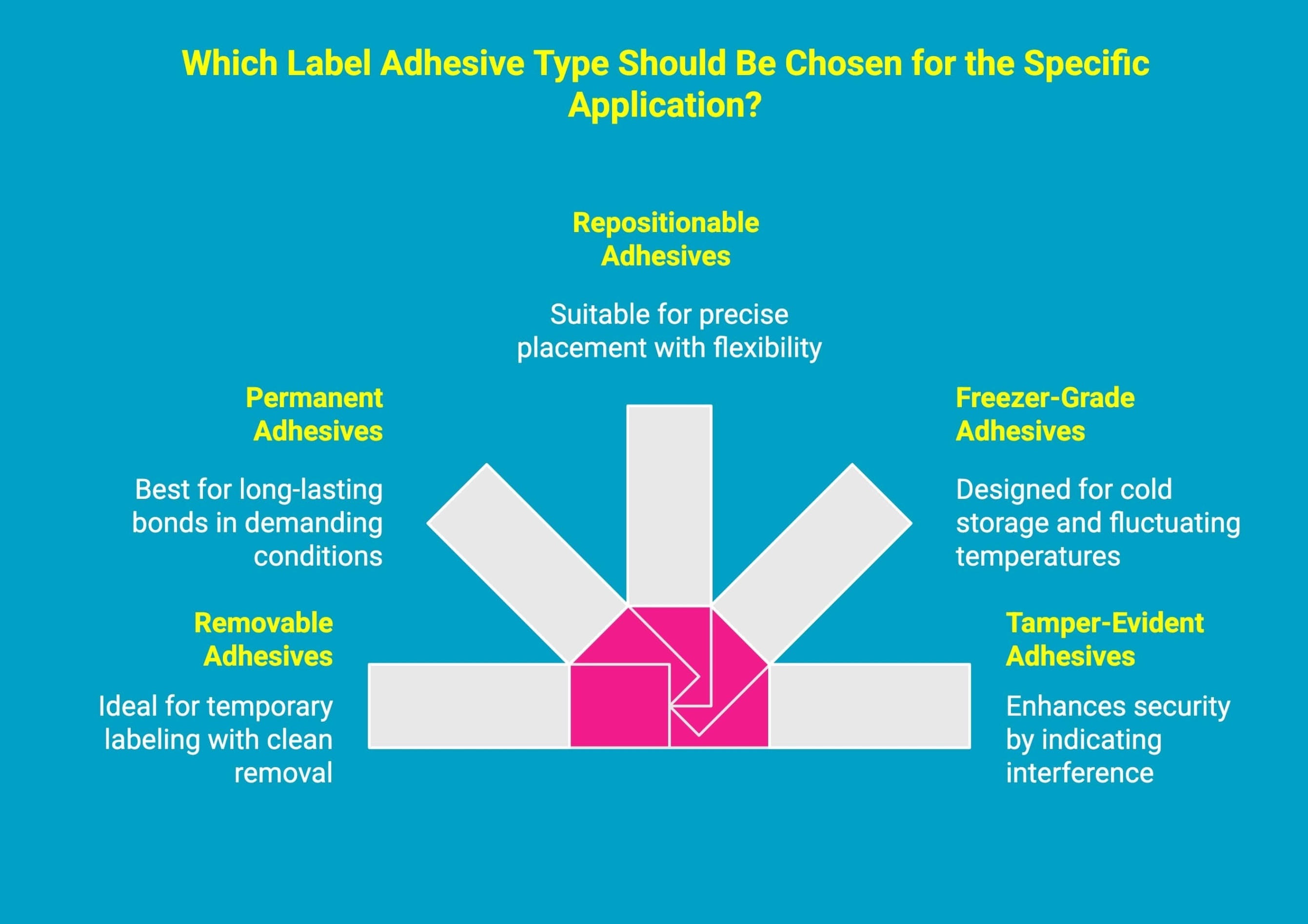
Label adhesives are engineered to match specific use cases, surfaces, and environments. Choosing the right adhesive impacts label durability, readability, and removal. From short-term office use to long-term shipping or cold storage, each adhesive type is designed to deliver reliable performance under defined conditions.
Understanding how each adhesive behaves helps you select labels that apply cleanly, stay secure, and remove properly without damaging surfaces.
1. Removable Label Adhesives
Removable adhesives provide a light to moderate bond designed for temporary labeling. They peel away cleanly without residue, making them ideal for office filing, inventory rotation, retail pricing, or short-term identification where labels must be changed frequently or repositioned.
2. Permanent Label Adhesives
Permanent adhesives create a strong, long-lasting bond intended to remain in place for the product’s lifespan. These adhesives resist handling, friction, and environmental exposure, making them suitable for shipping labels, asset tags, barcodes, and applications where label failure is not acceptable.
3. Repositionable Label Adhesives
Repositionable adhesives allow limited adjustment after application before fully setting. They are useful when precise placement matters, such as shelving, organizing, or temporary signage. This flexibility reduces waste and reprints while still delivering secure adhesion once positioned correctly.
4. Freezer-Grade Label Adhesives
Freezer-grade adhesives are formulated to maintain adhesion in cold, damp, or fluctuating temperatures. Commonly used for food storage, pharmaceuticals, and cold-chain logistics, these adhesives prevent label lifting or curling even when applied to chilled or frozen surfaces.
5. Tamper-Evident Label Adhesives
Tamper-evident adhesives are designed to visibly break, tear, or leave residue when removed. They enhance security by clearly indicating interference, making them ideal for packaging, compliance labeling, warranties, and regulated environments where product integrity must be protected.
Selecting the correct adhesive ensures labels perform consistently, protect your products, and support efficient printing and handling across every stage of use.
In this blog, learn about the hidden costs of poor label quality and how to avoid them.
What Should You Know About Types of Label Adhesives for Different Business Applications?
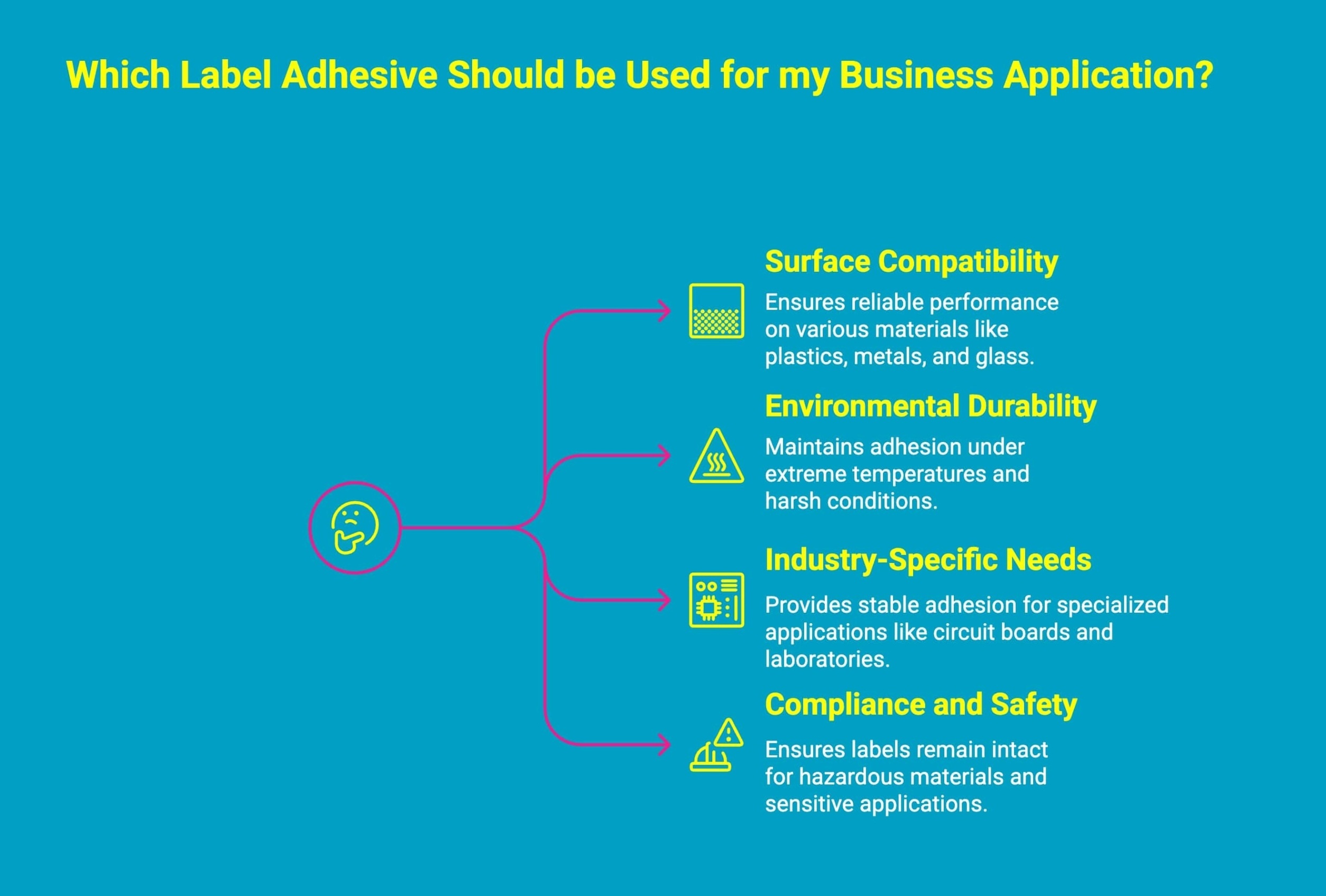
Label performance depends on matching adhesives to surfaces, environments, and usage duration. Businesses must consider materials, handling, and exposure conditions to ensure labels stay readable and secure. The right adhesive prevents lifting, misprints, and failures that disrupt operations and compliance.
Knowing how application conditions affect adhesion helps you make the right choice the first time.
1. Surface Compatibility and Adhesive Chemistry
Different surfaces require different bonding formulas. Acrylic adhesives offer durability, excellent adhesion, resistance to UV light, and long service life, while rubber adhesive options bond quickly to rough materials. Choosing the correct type of label ensures reliable performance on plastics, metals, glass, and packaging films.
2. Temperature, Environment, and Durability Needs
Environmental exposure directly impacts adhesion. Consider the temperature range, application temperature, and minimum application temperature when labeling cold storage or outdoor goods. Some adhesives withstand extreme temperatures over a long time, making them suitable for harsh environment labels used in logistics, storage, and industrial workflows.
3. Industry-Specific and Technical Labeling Uses
Specialized industries demand precision. Circuit board labels, electrical labels, datacom labels, and laboratory labels require stable adhesion without residue or interference. Adhesives must protect sensitive components on a circuit board while remaining legible, compliant, and secure in controlled or regulated settings.
4. Compliance, Print Methods, and Safety Labeling
Regulated applications need dependable bonding. Hazardous material labels and sensitive labels must remain intact under handling and exposure. Compatibility with inkjet printers also matters, ensuring crisp output while the correct choice of adhesive maintains compliance, safety, visibility, and long-term reliability.
Selecting the right adhesive ensures labels apply cleanly, perform consistently, and support business operations without costly reprints or failures.
Read this guide to understand how digital label printing is transforming packaging workflows.
How Do Types of Self-Adhesive Labels Compare for Print Quality and Durability?
Different self-adhesive label types perform differently depending on print method, surface conditions, and environmental exposure. The table below highlights how common self-adhesive label types compare across durability, removability, and ideal applications, making it easier to select the right option for office, retail, shipping, or industrial labeling needs.
|
Adhesive Type |
Key Benefits |
Removal |
Ideal Use Cases |
Example with Seiko Smart Labels |
|---|---|---|---|---|
|
Removable |
No residue |
Easy |
Office labeling, filing, pricing |
SLP removable labels |
|
Permanent |
Long-lasting hold |
Not removable |
Shipping, product packaging, barcodes |
SLP standard labels |
|
Freezer/Industrial |
Withstands cold, heat & moisture |
Permanent |
Food storage, warehouses |
Toughie industrial labels |
|
Tamper-Evident |
Security protection |
Proof of removal |
Seals, compliance, assets |
Tamper-proof labels |
|
Repositionable |
Adjust alignment |
Temporary |
Retail shelf tags |
Retail labels |
Print quality depends on both the label material and the adhesive layer. High-quality adhesives prevent edge lifting, which keeps barcodes flat and readable. Durable adhesives also ensure printed information remains legible even after handling, storage, or environmental exposure.
How Do Adhesive Labels Perform on Different Surfaces and Environments?
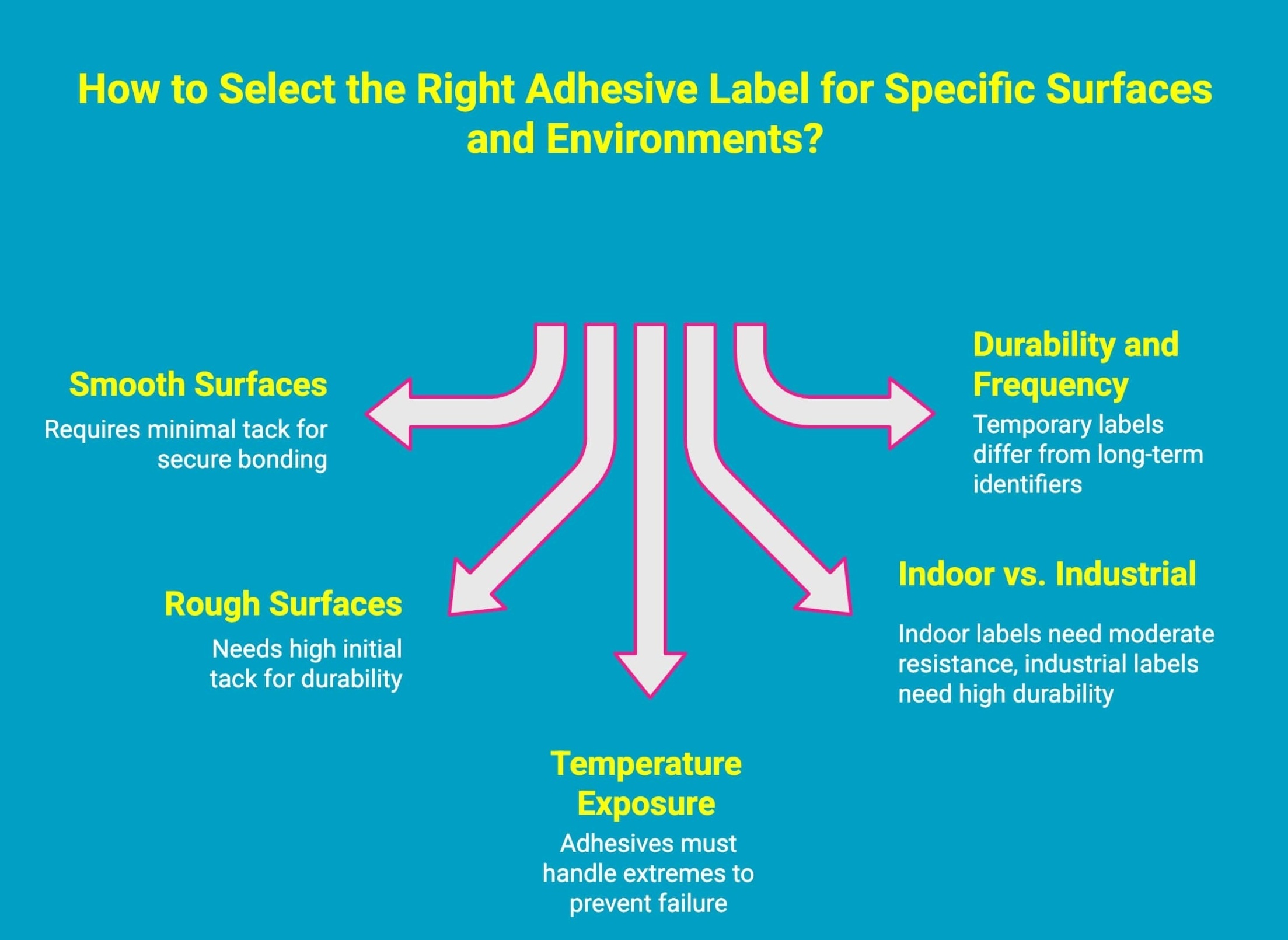
Label performance varies widely based on surfaces and environmental conditions. Adhesives must handle smooth, rough, indoor, and industrial use while maintaining reliability. Understanding how bonding reacts to exposure, surface texture, and handling demands ensures labels stay intact, readable, and functional across real-world business scenarios.
Performance depends on matching adhesive behavior to real usage demands.
1. Surface Type and Adhesive Bonding Behavior
Smooth glass and plastics allow a secure bond with minimal effort, while rough materials need high initial tack. Proper label placement improves durability across various applications, especially where uneven textures challenge adhesion and require stronger bonding characteristics for consistent results.
2. Temperature Exposure and Environmental Stress
Adhesives behave differently across standard temperature ranges and temperature extremes. Temperature handling becomes critical when labels face extreme heat or extreme cold, where poor adhesive selection can cause lifting, cracking, or complete bond failure over time.
3. Indoor Versus Industrial Usage Conditions
Labels used in indoor environments and stable indoor environments face fewer stresses and often need only moderate resistance. In contrast, industrial settings expose labels to harsh environmental factors, demanding durability across various conditions found in manufacturing and warehousing.
4. Durability, Change Frequency, and Application Purpose
Temporary labels used for frequent changes differ from long-term identifiers. Understanding the most common label adhesive properties helps businesses across various industries select solutions suited for standard temperature environments or rugged use involving chemicals, abrasion, and outdoor exposure.
Matching adhesive strength to surface type and exposure ensures dependable label performance without unnecessary reprints, failures, or operational disruptions.
What Is Adhesive Label Paper and When Should You Use It?
Adhesive label paper is designed for clean printing and reliable bonding in controlled, everyday business settings. It’s a cost-effective option for short-term use where durability demands are low but clarity matters. Understanding when paper labels outperform synthetic options helps businesses label efficiently without overspending.
The key is matching material choice to environment and usage length.
1. When Adhesive Label Paper Is the Right Choice
Paper labels work best for indoor, administrative, and short-term tasks. They deliver excellent print sharpness for text and barcodes, making them ideal for office filing, mailing labels, return addresses, and basic product identification in low-stress environments.
2. When Synthetic Labels Are a Better Alternative
Synthetic labels outperform paper in demanding conditions. They resist moisture, tearing, and temperature shifts, making them suitable for shipping, storage, and industrial workflows. When labels face handling, friction, or exposure, synthetic materials maintain adhesion and readability far longer.
3. Printer Compatibility and Everyday Performance
Most adhesive label paper is fully compatible with Seiko Instruments SLP series printers. This ensures smooth feeding, crisp output, and consistent barcode quality, helping businesses produce professional labels quickly without adjusting workflows or investing in specialized materials.
Choosing adhesive label paper for the right applications keeps labeling efficient, professional, and cost-effective while preserving durability where it truly matters.
How Do You Choose the Best Adhesive for Labels Based on Your Printer and Workflow?
Choosing the right label adhesive means aligning printer technology, label material, and daily workflow demands. Adhesives that work on products may fail during printing if poorly matched. The right combination ensures smooth feeding, clean output, and consistent performance without jams, residue, or wasted labels.
Below is how adhesive choice aligns with specific printer workflows.
Seiko SLP-620
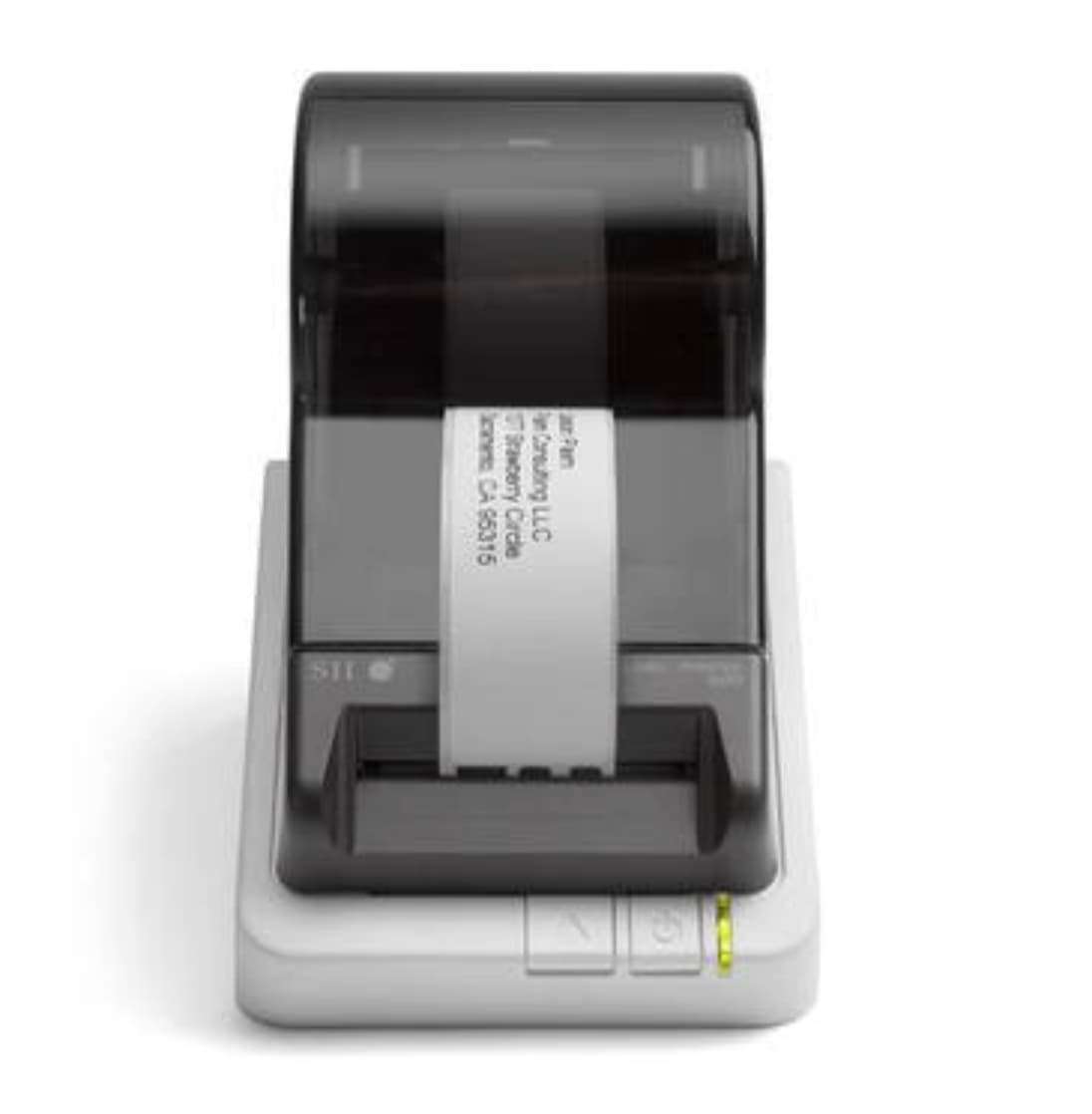
The SLP-620 performs best with adhesives designed for clean liner release and thermal stability. Using compatible removable or permanent adhesives prevents residue buildup, ensures accurate tracking, and supports reliable printing for office, mailing, and moderate-volume labeling workflows.
Seiko SLP-650
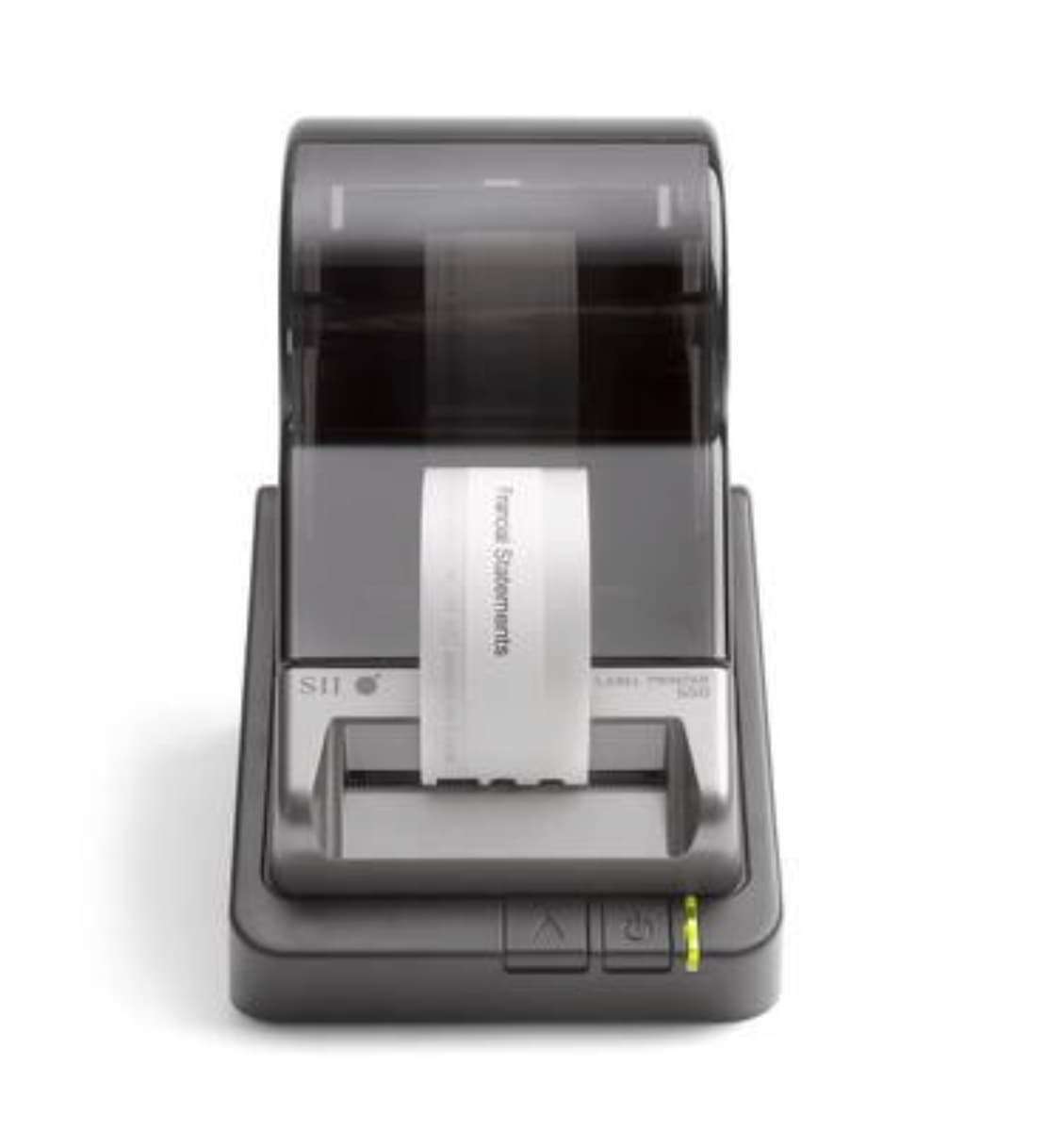
For higher-volume workflows, the SLP-650 benefits from adhesives that maintain a consistent grip without oozing under heat. Well-matched adhesives reduce misfeeds, improve alignment, and allow seamless transitions from printing to application in shipping or fulfillment environments.
Seiko SLP-650SE
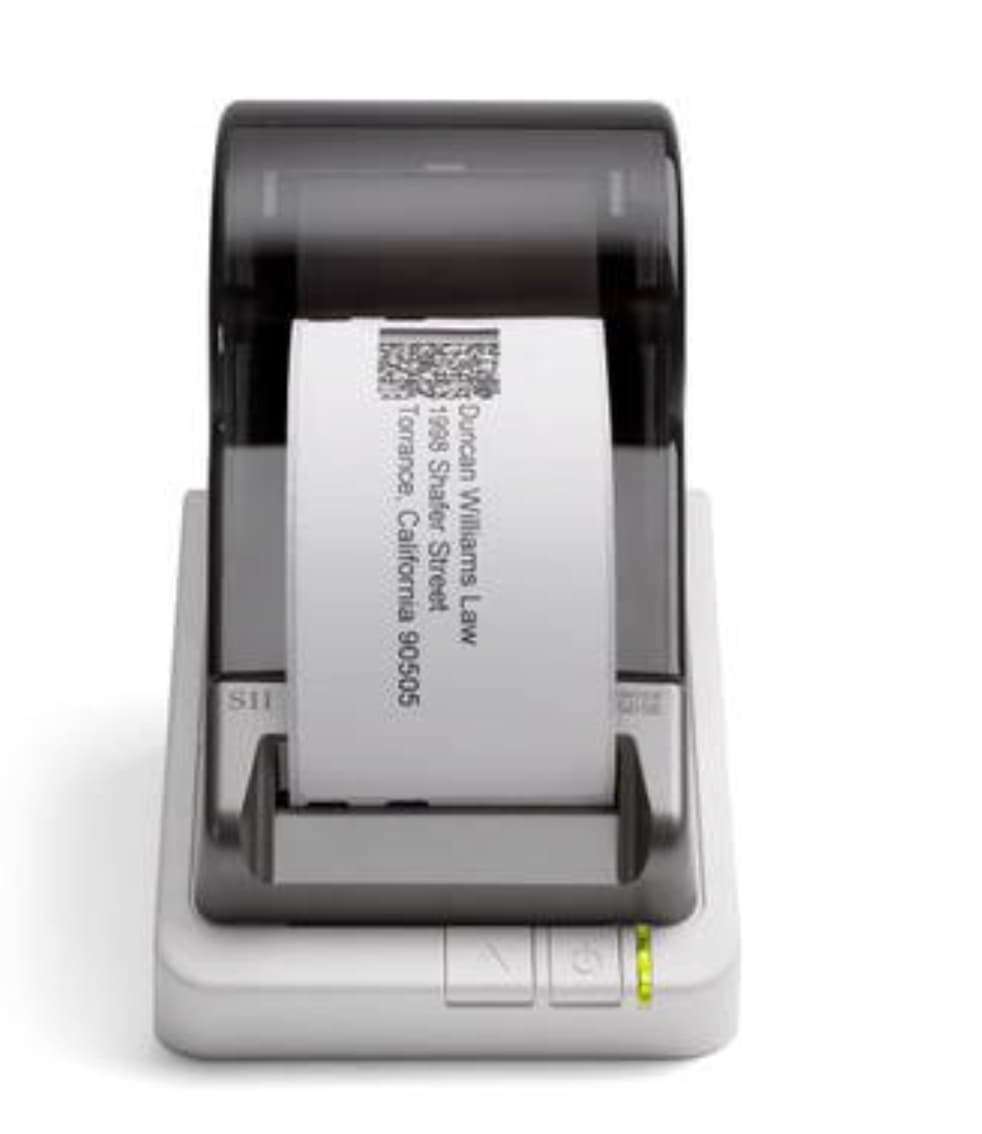
The SLP-650SE supports a wide range of label types, but performance depends on adhesive quality. Testing adhesives before large runs helps avoid jams and ensures dependable results across removable, durable, and shipping-focused label applications.
Matching each printer with the right adhesive keeps workflows efficient, protects hardware, and ensures professional-quality labels from first print to final application.
What Are Large Adhesive Labels and When Are They Required?
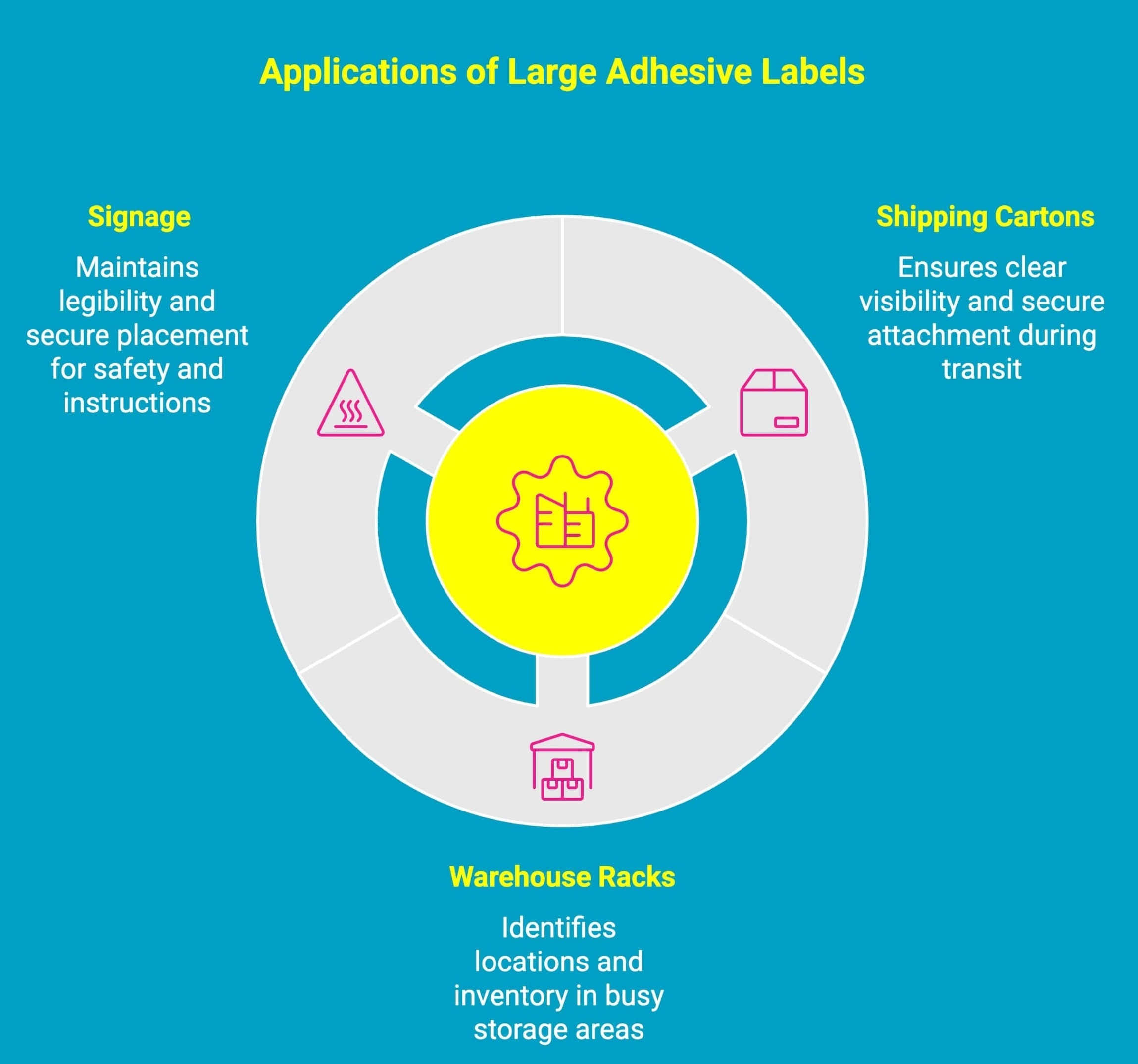
Large adhesive labels are used when information must be clearly visible, consistently readable, and securely attached. Common applications include shipping cartons, warehouse storage, signage, and high-volume mailing. As label size increases, adhesion strength and material quality become essential to prevent peeling or curling.
As requirements change, large labels support both logistics and mailing workflows.
1. Shipping Cartons and Pallet Identification
Large adhesive labels are essential for shipping cartons and pallets where information must be readable from a distance. These labels require strong adhesion to withstand stacking, transit vibration, and friction, ensuring barcodes, handling instructions, and tracking details remain intact throughout delivery.
2. Warehouse Racks and Storage Areas
In warehouse environments, large labels help identify rack locations, inventory zones, and bulk items. Because racks and bins often have uneven or coated surfaces, adhesives with higher tack are needed to prevent edge lifting and ensure long-term visibility in busy storage areas.
3. Signage and Safety Communication
Large adhesive labels are also used for signage, warnings, and instructional displays. These labels must remain flat and legible over time, resisting peeling at the edges while maintaining clarity, especially in areas exposed to handling, airflow, or frequent visual reference.
Choosing the right adhesive for large labels ensures secure placement, clear communication, and dependable performance across high-visibility business applications.
Why Permanent Adhesive Labels Are the Best Option for Shipping and Retail?
Permanent adhesive labels are built for durability, security, and long-term visibility. In shipping and retail environments, labels must survive handling, transit, and storage without lifting or fading. Permanent adhesion ensures barcodes, product details, and compliance information remain readable from origin to final destination.
This reliability makes permanent labels a default choice for high-risk workflows.
1. Durability and Barcode Readability in Shipping
Shipping environments expose labels to friction, stacking, and repeated handling. Permanent adhesive labels form a strong bond that resists peeling and scuffing, keeping barcodes scannable throughout transit. This consistency reduces delays, scanning errors, and compliance issues during distribution and delivery.
2. Theft Prevention and Inventory Accuracy
Permanent labels are difficult to remove or replace, reducing the risk of tampering, theft, and mislabeling. This secure attachment supports accurate inventory tracking, asset identification, and long-term storage, especially for products that move frequently or remain in warehouses for extended periods.
3. Professional Appearance in Retail Settings
In retail, permanent adhesive labels help maintain a clean, professional presentation. They withstand shelf handling, customer interaction, and routine stocking without curling or falling off, ensuring pricing, branding, and regulatory information stays intact throughout the product’s lifecycle.
Choosing permanent adhesive labels provides the strength, security, and reliability required to keep shipping and retail operations running smoothly.
How Can Personalized Adhesive Labels Enhance Branding and Professional Presentation?
Personalized adhesive labels transform ordinary packaging into a branded experience. By combining custom design with reliable adhesion, businesses can present products more professionally and consistently. Well-made personalized labels improve shelf appeal, reinforce brand recognition, and signal quality across every customer touchpoint.
Customization turns labels into visual brand assets.
1. Stronger Brand Identity and Shelf Impact
Custom colors, finishes, shapes, and sizes help products stand out in crowded spaces. Personalized adhesive labels create a cohesive look across packaging and displays, making branding instantly recognizable while ensuring labels remain aligned, clean, and visually appealing over time.
2. Versatile Use Across Marketing and Sales
Custom labels are widely used for boutique packaging, storefront displays, events, craft sales, and promotional campaigns. Reliable adhesives keep labels secure during handling, transport, and display, ensuring the brand message stays intact from presentation to purchase.
3. Professional Presentation for Growing Businesses
Personalized labels help small and local businesses compete visually with established brands. Consistent, high-quality labeling communicates credibility and attention to detail, reinforcing trust and professionalism without requiring complex or expensive packaging solutions.
Investing in personalized adhesive labels enhances brand presence, improves presentation, and creates a polished, memorable customer experience.
Where Can You Buy Reliable Labelling Adhesives and Compatible Supplies?
At DuraFast Label Company, we provide Seiko Smart Label printers and fully compatible label supplies, making it easy for businesses to build a reliable, end-to-end labeling setup from one trusted source. Our Seiko printers are paired with tested label materials to ensure smooth feeding, accurate alignment, and consistent print quality.
By choosing printer-matched supplies, businesses reduce setup issues, minimize waste, and maintain professional results across daily labeling tasks.
Simplify your labeling workflow. Shop Seiko printers and compatible label supplies at DuraFast Label Company for dependable performance or contact us for more information.
Conclusion
The right label adhesive ensures your labels stay where they belong, look professional, and perform reliably throughout their intended use. By understanding adhesive types, surfaces, environments, and printer compatibility, businesses can reduce waste, improve efficiency, and protect their brand presentation. Investing time in choosing the correct adhesive leads to better results across printing, packaging, and operations.
Frequently Asked Questions
What is the difference between removable and permanent adhesive labels?
Removable adhesive labels are designed for short-term use and peel away cleanly without residue. Permanent adhesive labels create a strong, lasting bond intended for long-term applications and usually cannot be removed without damaging the label or surface.
Can adhesive labels work in extreme environments like freezers or warehouses?
Yes. Freezer-grade and industrial adhesive labels are engineered to perform in extreme conditions, including cold temperatures, humidity, heat, and rough handling, ensuring labels remain secure, legible, and properly adhered in warehouses and cold storage environments.
Are tamper-proof labels necessary for product security?
Tamper-proof labels are important when security or compliance is required. They provide visible evidence of tampering or removal, helping protect products, assets, and sensitive information while supporting authenticity, chain-of-custody tracking, and regulatory requirements in many industries.
Do different adhesive types affect print quality?
Yes. Adhesive quality directly impacts print performance. Poor or mismatched adhesives can cause curling, edge lifting, or feeding problems, leading to smudged prints and unreadable barcodes, while high-quality adhesives support flat labels and consistent print clarity.
What is the difference between permanent and removable adhesive labels?
Permanent adhesive labels are designed for long-term attachment and resist removal once applied. Removable adhesive labels are intended for temporary use and can be removed cleanly without residue, making them ideal for short-term identification or re-labeling needs.
What are the main types of adhesive labels available?
Common adhesive label types include removable, permanent, freezer-grade, industrial-strength, repositionable, and tamper-evident labels. Each type is designed for specific surfaces, environments, and durability requirements, helping businesses choose labels that match operational needs.
What types of sticker labels are available for printing?
Sticker labels for printing include paper labels, synthetic labels, clear labels, removable stickers, permanent stickers, freezer labels, and tamper-evident stickers. The best option depends on printer type, surface material, environment, and durability requirements.