How to Select the Right Adhesive for Your Product Labels
7th Aug 2026
A label can be printed at perfect resolution, sized correctly, and still fail completely, not because of the print, but because of what's holding it to the product. Adhesive rarely gets the attention that print quality does, but it's just as often the reason a label peels off in a freezer, slides off a warm surface, or leaves a sticky residue nobody wanted. Here’s why matching the adhesive to the actual environment the product sits in matters as much as anything printed on the label itself.
What Determines Which Adhesive Is Right for a Product Label?
The right adhesive for product labels comes down to three things: the surface the label sticks to, the temperature range it needs to survive, and whether the label is meant to stay permanently or come off cleanly later.
Getting any one of these wrong tends to show up fast: a label that lifts at the edges within days, or one that leaves behind a sticky residue when someone tries to remove it.
Acrylic-based adhesives are the most common starting point for general labeling, since acrylic adhesive is widely used for barcode labels because it resists degradation, discoloration, and brittleness over time across a range of surfaces including paper, plastic, and metal.
When Should I Use a Permanent Adhesive?
Use permanent adhesive any time the label is meant to stay on the product for its entire life cycle: product identification, compliance labeling, or anything where removal would be a problem rather than a feature.
Permanent adhesive is also more versatile with temperature than people often assume: it's built to endure both high and low temperature extremes, including cryogenic settings, which is why it remains the default choice for most custom product labels for retail packaging.
This tier is also the standard warehouses rely on for scanning accuracy, since a label that shifts or lifts even slightly can distort the barcode enough to cause scan failures.
When Does a Removable Adhesive Make More Sense?
Removable adhesive fits situations where the label needs to come off cleanly later: pricing labels, promotional stickers, or temporary labeling that changes frequently. It trades some durability for that convenience: removable adhesive offers only moderate resistance to chemicals and water and isn't designed for extreme temperature environments, so it's a poor match for anything shipping outdoors or stored in a freezer.
This tier works well for retail price tags, seasonal promotions, or labels applied to reusable containers where the surface needs to stay clean underneath.
What Makes Freezer-Grade Adhesive Different From Standard Adhesive?
Freezer-grade adhesive is formulated specifically to stay flexible in cold conditions where standard adhesive would stiffen and fail. Standard adhesives can stiffen and lose their bond in freezing environments, while freezer-grade adhesive is built to stay flexible and adhered in the cold: a distinction that matters more than most businesses expect until a batch of labels starts falling off in cold storage.
One detail worth planning around: most freezer labels need to be applied before the product goes into the freezer, since the adhesive needs a warmer surface to initially bond before the cold sets in.
How Do High-Temperature Adhesives Hold Up in Hot Environments?
High-temperature adhesives are built to maintain their bond under sustained heat rather than softening or sliding off, which is essential for products like engine parts, industrial equipment, or anything exposed to direct sunlight for extended periods. This category overlaps with weatherproof labels and waterproof barcode labels, since products facing heat exposure are frequently facing moisture and UV exposure at the same time.
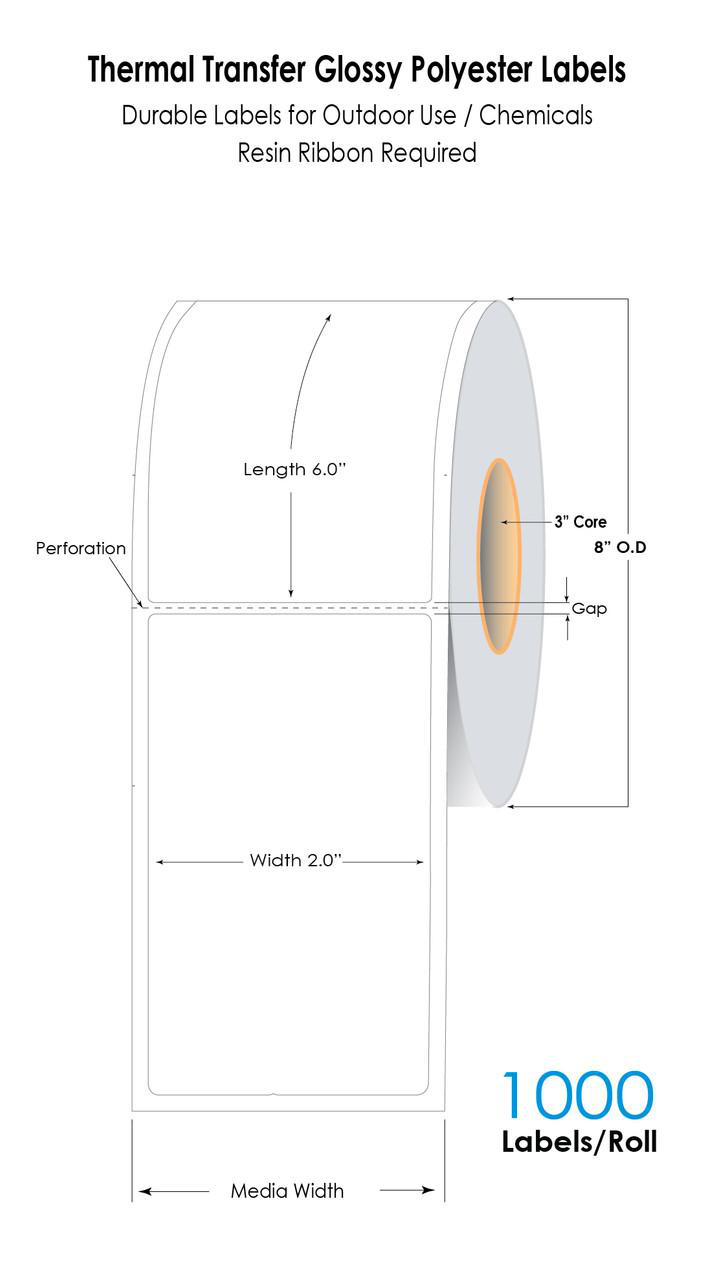
Automotive applications are a common example: oil change labels and other under-hood labeling need adhesive that won't loosen from engine heat, which is why these typically use the same high-temperature acrylic formulations found in industrial labeling rather than general-purpose adhesive.
What Happens If I Choose the Wrong Adhesive for My Packaging Environment?
The most common failure is a label that looks fine on day one and fails weeks later: peeling at the corners, sliding on a warm surface, or losing its bond in a freezer it wasn't rated for. This is more disruptive than it sounds: a lost or unreadable label on a shipped product can mean a barcode that no longer scans, a return that shouldn't have happened, or a compliance label that's no longer legible when it matters most.
Testing under the product's actual storage and shipping conditions before committing to a full print run is the simplest way to catch this early, rather than finding out after labels are already applied to inventory.
Adhesive rarely gets the same attention as print resolution or label material, but it's just as capable of making a well-designed label fail in the field. Matching the adhesive to where the label will actually live, not just how it looks on the roll, is what keeps a label doing its job long after it's applied.
Sourcing the right adhesive usually means sourcing the right label stock to begin with, since adhesive and facestock are chosen together rather than separately. DuraFast Label Company carries label stock built around exactly these environments: waterproof barcode labels and weatherproof labels for products facing moisture or outdoor exposure, durable vinyl labels for long-term or high-heat applications, and custom barcode labels for standard permanent labeling on retail and warehouse products.
Not sure which adhesive fits your product's actual storage and shipping conditions? Contact us today to get the adhesive right the first time.