How to Choose the Right Label Material for Color Inkjet Printing
10th Jul 2026
A lot of businesses put serious thought into which color label printer to buy, then grab whatever label stock happens to be in stock or on sale. That mismatch quietly causes more label failures, wasted ink runs, and reprints than most people expect. The label material isn't a secondary decision. It's half the equation.
Here's a practical breakdown of the main label materials used in color inkjet printing, what each one actually does well, and where they fall short to help you make an informed decision when getting label material for color inkjet printing.
Why Material Choice Matters More Than You Think
The two key components of producing an effective label are choosing the right facestock material and selecting the best ink to print on that label. With inkjet printing specifically, this pairing matters more than with other print methods because inkjet deposits liquid ink directly onto the surface; how that ink absorbs, dries, and bonds is entirely determined by the material underneath it.
Pigment-based inks are more durable than dye-based inks because they resist fading for longer and don't smudge as much when drying; they also offer good long-term water-fastness and UV resistance. Dye inks, on the other hand, print colors with more vibrancy and saturation, but without the same fade resistance. Knowing which ink type your printer uses is the starting point for choosing the right label material, because not every material works with every ink.
Paper Labels: The Starting Point for Most Operations
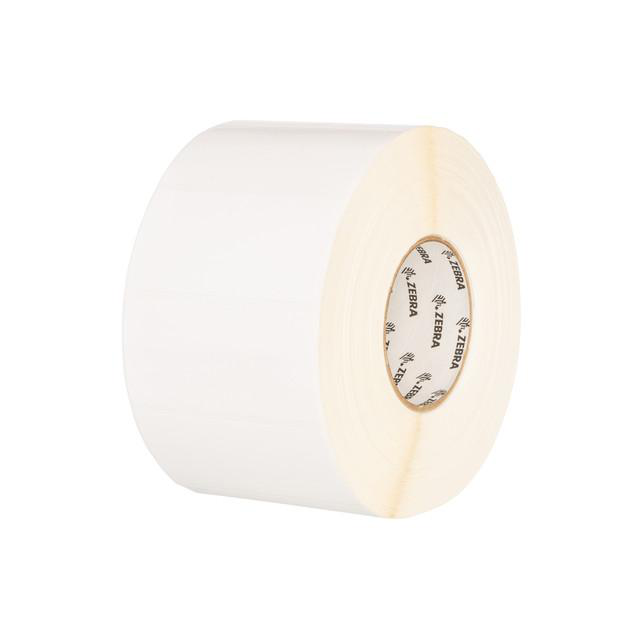
Paper is the most widely used label material, and for good reason. It produces sharp, high-contrast prints because the porous coating accepts pigment smoothly, and it's the lowest cost-per-roll option. It's easy to write on, which makes it practical for hand-noted lot codes or small-batch identification.
Paper inkjet labels also come in a couple of finish options to match the look a brand is going for. A matte finish gives a soft, non-reflective surface that's easy to read under bright lighting and resists fingerprint smudging, while a high gloss finish has a shiny surface that makes colors appear more vibrant and saturated, which can help product labels stand out on a shelf.
That said, paper has clear limits. Paper labels have poor water and abrasion resistance, and they're not freezer-safe without over-lamination. They also have less tensile strength, which means they tear more easily during automated application.
Paper labels work well for: indoor product labels, short-run or frequently changing designs, food packaging in dry environments, and basic 4x6 label printer applications where weatherproofing isn't needed.
Polypropylene (BOPP): The Workhorse Synthetic
Polypropylene, often called BOPP (Biaxially Oriented Polypropylene), is where most businesses graduate to once paper starts falling short. It's a synthetic film that offers good durability and moisture resistance at a lower price point than polyester or vinyl, and it's available in white and clear finishes, as well as matte and glossy finish, making it a versatile choice for many industries.
Within the BOPP family, GHS BS5609 chemical-resistant labels are a specialized subtype built for tougher applications. Printed only with pigment inks, this matte synthetic material is designed for extreme weather, temperature swings (heat, cold, or humidity), and contact with water, oil, or chemicals, making it suitable for outdoor use, moisture-rich environments, or products needing long-term durability. These labels can even be submerged in salt water for up to 12 months without breaking down, which is why they're a common choice for hazardous materials and industrial chemical labeling.
In practice, this makes BOPP the go-to for food and beverage producers, cosmetics brands, and any business putting labels on bottles, jars, or refrigerated products.
One important note: pigment inkjet inks generally do not bond well with glossy coated synthetic materials like polypropylene unless tested specifically for that application; it's worth confirming compatibility before running a full production batch.
Polyester (PET): Maximum Durability
When the label environment is genuinely harsh, with chemical exposure, extreme temperatures, UV, and abrasion, polyester is the material to reach for. Polyester labels are designed for durability in harsh environments, withstanding extreme temperatures, moisture, chemicals, and abrasions.
PET's higher surface energy improves ink adhesion, especially when coated, and it delivers more consistent digital printing results when top-coated, making it the better choice for barcode labels, asset tags, and industrial applications where ink durability is critical.
Polyester resists high heat, abrasion, solvents, and UV exposure better than any other printable film; it has dimensional stability under heat and won't warp in sunlight or machinery, with high tensile strength that resists tearing on sharp edges or corners.
The trade-off is cost and stiffness. Polyester is the most expensive of the three main inkjet label materials, and its rigidity makes it less suitable for curved or flexible surfaces.
Whether you're running a color label printer for small business operations or premium product packaging, the label stock underneath everything else is what determines whether the final result holds up.
That's exactly the kind of decision DuraFast Label Company is built to help with. Our inkjet label catalog covers the full material spectrum with custom-sized options available to match any printer and application.
Ready to match the right label material to your printer and application? Browse label materials and stop guessing what will work before it's too late.