How Barcode Verification Helps Reduce Supply Chain Errors
17th Jul 2026
What happens when a barcode scans incorrectly at a distribution hub handling thousands of products per hour? Even a small scan failure can trigger shipment delays, inventory mismatches, and costly returns.
Studies in supply chain operations consistently show that labelling and scanning errors can account for a significant portion of fulfilment disruptions, especially in high volume retail and manufacturing environments where accuracy is expected at near perfect levels.
This is where barcode verification to reduce supply chain errors becomes essential. At DuraFast Label Company, we focus on supporting businesses with barcode printing solutions and consumables that help improve label quality before products ever leave the facility.
While printers like Epson thermal label printer systems and Zebra mobile printer units are widely used in the industry, the real difference often comes down to whether barcodes are verified before application.
In this article, we look at how barcode verification works, how grading systems measure quality, and why scan accuracy is critical for retailers and distributors.
What Barcode Verification Actually Means
Barcode verification is a controlled process that tests the printed barcode against established quality standards, most commonly ISO/IEC grading systems. Unlike a basic scanner check, verification evaluates how well a barcode will perform under different scanning conditions.
It measures:
- Contrast between bars and background
- Edge definition and print clarity
- Quiet zone (blank space around the code)
- Symbol contrast consistency
- Print gain or loss during production
When businesses implement barcode verification to reduce supply chain errors, they are essentially ensuring that every label meets a measurable standard before it enters circulation.
Understanding Barcode Grading And Why It Matters
Barcodes are graded from A to F, with A being the highest quality and F meaning unreadable. This grading system is based on how likely a barcode is to scan correctly across different environments.
A quick breakdown:
- Grade A: Near perfect scan performance, highly reliable in fast scanning environments
- Grade B: Very good quality, suitable for most retail and warehouse operations
- Grade C: Acceptable but may fail under poor lighting or damaged labels
- Grade D or F: High risk of scan failure, typically rejected in professional supply chains
Using barcode verification to reduce supply chain errors helps businesses catch low grade labels before they create downstream issues. In environments like retail distribution centres, even a small percentage of poor-quality barcodes can slow down entire workflows.
How Scan Quality Directly Affects Supply Chain Performance
Scan quality is often underestimated until problems appear. A barcode that prints slightly faded or misaligned may still look fine to the human eye but fail at automated checkpoints.
Here is what poor scan quality can cause:
- Shipment delays due to manual data entry corrections
- Inventory mismatches between warehouse systems and actual stock
- Increased labour costs from exception handling
- Product returns caused by incorrect scanning at checkout
- Reduced efficiency in high speed sorting environments
When companies rely on barcode verification to reduce supply chain errors, they significantly reduce these risks by identifying printing issues early rather than reacting to them after distribution.
The Role Of Barcode Printing Systems In Verification Success 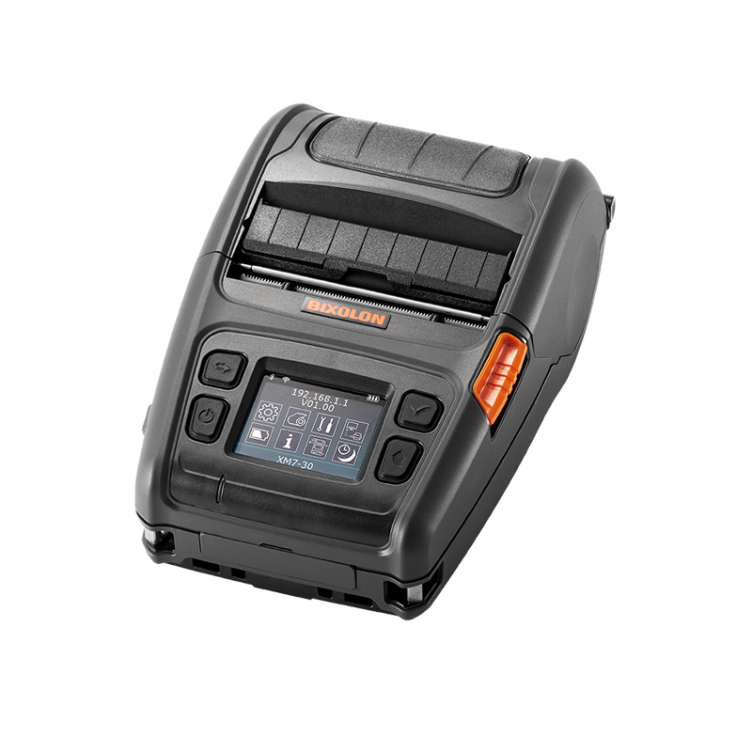
Verification is only as strong as the printing process behind it. High quality printing systems ensure that barcodes meet the standards needed for consistent grading.
Many businesses rely on a mix of hardware and software such as:
- Barcode printing solutionsdesigned for industrial and retail environments
- Epson C7500 ink-based systems for high volume colour label output
- Epson thermal label printerunits for detailed product labelling
- Zebra mobile printerdevices used for on-the-go warehouse labelling
- Bartender barcode software for label design, formatting, and data integration
Each of these components plays a role in ensuring barcodes are printed with clarity and consistency. When paired with barcode verification to reduce supply chain errors, the result is a controlled labelling process from design to final scan.
Common Causes Of Barcode Failure In Supply Chains
Even with advanced systems, barcode issues can still occur. The most frequent causes include:
- Low resolution printing or incorrect DPI settings
- Ink or ribbon inconsistency in production runs
- Poor label material compatibility with printers
- Damage during shipping or handling
- Incorrect scaling during label design in software systems
- Misalignment during high-speed printing
Using barcode printers for sale that are compatible with industrial workflows helps reduce many of these issues, especially when paired with proper verification tools and quality consumables.
Why Verification Is Becoming Standard Practice
Retailers and distributors are increasing their reliance on automated scanning systems, which means there is less tolerance for unreadable labels. In many warehouses, a single unreadable barcode can interrupt conveyor systems or require manual intervention, slowing down entire processes.
Barcode verification to reduce supply chain errors is becoming a standard requirement because:
- Automation depends on consistent scan success rates
- Global supply chains require uniform labelling standards
- Retail compliance audits often require barcode quality proof
- High volume operations cannot afford manual correction delays
As distribution networks grow more complex, verification acts as a control point that protects both accuracy and efficiency.
Strengthening Accuracy With The Right Partner
What if barcode errors could be reduced before products even leave the production floor? That is the goal of integrating verification into everyday labelling workflows.
At DuraFast Label Company, we support businesses with barcode printing solutions and label consumables that help maintain consistent print quality across production environments. From ink systems like Epson C7500 ink to media designed for Epson thermal label printer setups, we focus on helping teams maintain dependable output that works with verification standards rather than against them. We also support operations that rely on systems such as Zebra mobile printer units in fast moving warehouse environments.
For companies comparing barcode printers for sale, or refining their current labelling setup, the goal is not just printing labels, but ensuring every barcode performs correctly at the point of scan. That is where verification becomes the final safeguard between production and successful delivery.
If consistent scanning, fewer shipment interruptions, and better control over labelling quality matter to your operation, reaching out to DuraFast Label Company can help align your printing and consumable choices with real world supply chain demands.