How Does Labelling Objects in the Classroom Actually Work?
7th Jul 2026
Key Highlights
-
Explains how labelling objects in the classroom creates structure, supports student independence, and improves daily routines.
-
Breaks down how classroom labels reduce clutter, lost materials, and unnecessary interruptions.
-
Covers practical labelling ideas for learning stations, storage areas, student materials, technology, and classroom libraries.
-
Shows how colour coding and print-rich classroom labels improve transitions and classroom flow.
-
Shares best practices for designing, applying, and maintaining durable labels that last all year.
-
Explores how Brother P-touch label printers support consistent, flexible, and long-lasting classroom labelling systems.
Classrooms are busy places, and no two days ever look the same. Students move from lessons to group work, independent tasks, hands-on activities, and cleanup routines, often in quick succession. When supplies go missing or students are unsure where things belong, small moments of confusion can quickly interrupt the flow of the day.
Labelling objects in the classroom quietly solves many of these everyday challenges. Clear, visible labels help students know exactly where materials live, how spaces are meant to be used, and what is expected of them, without constant reminders. Over time, this consistency builds independence, confidence, and a sense of shared responsibility for the classroom.
In this guide, you will explore practical ways classroom labelling supports smoother routines, better organization, and more engaged learning. It also covers creative ideas, durability tips, and how print-rich classroom labels can make teaching feel more manageable.
How Does Labelling Help Classrooms Run More Smoothly?
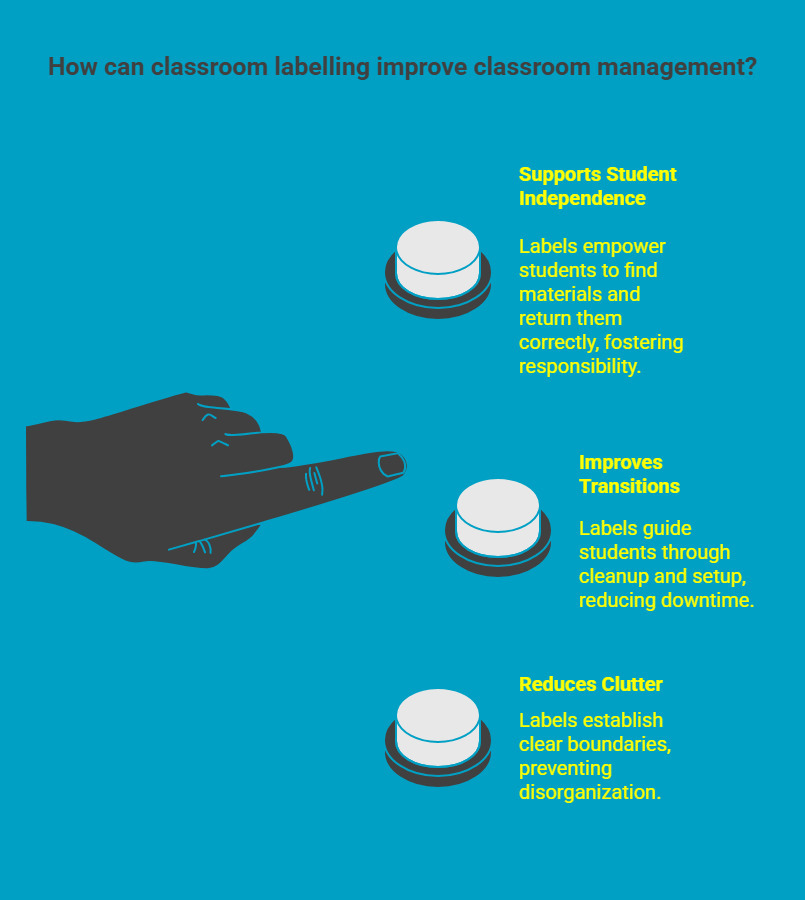
Labelling objects in the classroom creates visual systems that guide behaviour without constant verbal direction. When expectations are clear and visible, students move more confidently through daily routines, and classroom management becomes less reactive.
1. Supports Student Independence
Clear labels give students the information they need to act independently. When shelves, bins, and shared supplies are consistently marked, students know where items belong and how to return them correctly.
This reduces reliance on teacher prompts and encourages responsibility. Over time, repeated interaction with classroom labels also supports word recognition, visual association, and early literacy development.
Well-labelled classrooms help students:
-
Locate materials without asking for assistance
-
Return items correctly after use
-
Build confidence in following routines independently
2. Improves Transitions and Cleanup
Transitions often determine how smoothly a classroom runs. Visual cues such as classroom bin labels and storage markers guide students through cleanup and setup without slowing lessons down.
Instead of waiting for instructions, students follow established systems, which keep movement purposeful and reduce downtime between activities.
Effective labelling during transitions:
-
Shortens cleanup and reset time
-
Reduces noise and confusion
-
Maintains lesson flow and momentum
3. Reduces Clutter and Confusion
Without clear labelling, storage areas quickly lose structure. Items are misplaced, supplies mix, and clutter builds over time. Classroom labelling establishes clear boundaries that define where materials belong.
This structure benefits both students and teachers, particularly in shared spaces, resource rooms, or multi-grade classrooms where multiple users rely on the same systems.
Clear labels support long-term organization by:
-
Preventing storage areas from becoming catch-all spaces
-
Making it easier to spot missing or misplaced items
-
Maintaining consistency even as classroom needs change
When labels stay consistent and visible, classrooms run with less friction and fewer interruptions. Small systems like labelling create structure that supports learning without adding to a teacher’s workload.
What Creative Labelling Ideas Can Transform Different Classroom Areas?
Thoughtful classroom labelling works best when it mirrors how students actually use the space. Focusing on high-traffic areas first creates immediate improvements in organization and independence without overcomplicating the system.
1. Streamline Learning Stations
Clear classroom object labels help students move between learning stations independently and stay focused on tasks.
-
Use short, descriptive text for quick recognition
-
Pair text with simple icons for accessibility
-
Keep colours and formats consistent across stations
This reduces transition time and limits unnecessary questions.
2. Keep Storage Areas Functional
Storage spaces stay organized longer when labels are flexible. Classroom editable labels allow categories to change as supplies rotate throughout the year.
-
Label by category, not individual items
-
Use readable fonts for visibility from a distance
-
Apply durable labels to mobile carts and cupboards
This approach supports long-term organization rather than constant rework.
3. Clarify Student Material Ownership
When each labelled classroom object has clear ownership, daily routines run more smoothly.
-
Use uniform name labels for desks and cubbies
-
Keep placement consistent across storage areas
-
Avoid overcrowding labels with extra details
Clear ownership reduces mix-ups and reinforces responsibility.
4. Manage Technology Without Confusion
Shared devices and accessories require simple, durable labelling to prevent loss.
-
Label both equipment and storage locations
-
Use numbers or symbols for quick matching
-
Choose labels that withstand frequent handling
This protects school equipment and saves time.
5. Organize the Classroom Library
Well-labelled libraries help students browse and return books independently.
-
Group books by genre, theme, or reading level
-
Use clear shelf and bin labels
-
Keep formats consistent for easy navigation
This maintains order while encouraging independent reading habits.
When classroom labelling is clear and consistent, students spend less time searching and more time learning. Small, thoughtful changes in how spaces are labelled can significantly improve daily classroom flow and organization.
For faster, more consistent labelling at scale, the right application tools make a real difference. Explore this guide for label applicators to streamline placement and keep organized systems efficient and easy to maintain.
How Can Colour Coding Make Learning Spaces More Engaging?
Colour coding improves classroom organization by giving students clear visual signals they can process quickly. When labels use a consistent colour system, students understand how spaces, materials, and activities are grouped without needing extra explanation.
This approach supports smoother routines and faster transitions. Students learn where to go, what to use, and where items belong by recognizing colour patterns rather than stopping to ask questions.
Practical ways to apply colour coding effectively include:
-
Assigning one colour to each subject area to separate materials clearly
-
Using the same colour on storage bins, shelves, and folders for related items
-
Aligning label colours with visual schedules to reinforce daily routines
-
Applying colour consistently across the classroom to avoid mixed signals
When paired with clear text, print-rich classroom labels keep colour coding functional rather than decorative. Consistent use creates learning spaces that feel structured, easy to navigate, and visually balanced.
How Can You Keep Your Labels Lasting Longer?
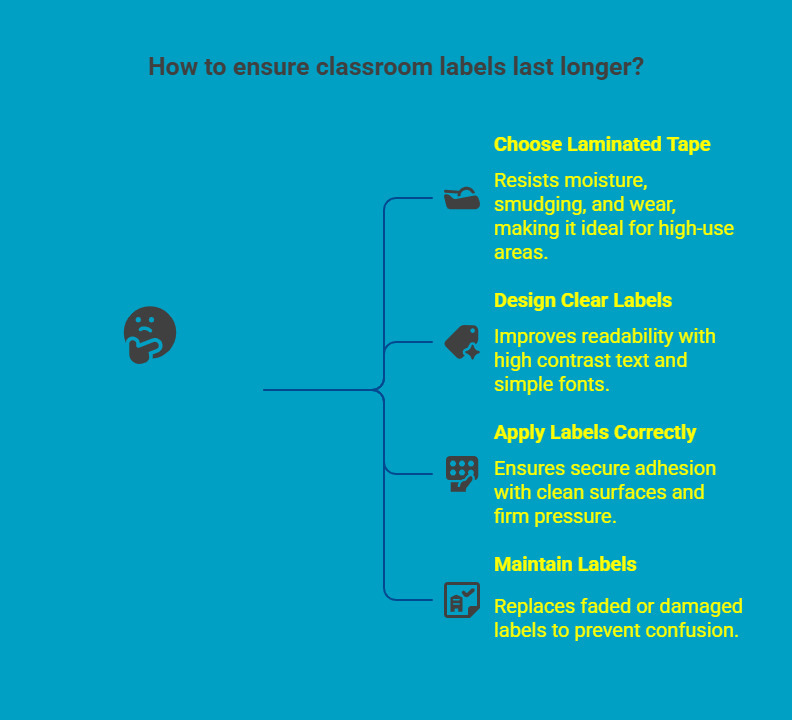
Even the most well-designed classroom labels lose their impact if they fade, peel, or become hard to read. In high-use learning environments, durability matters just as much as clarity. A few intentional choices can significantly extend the life of classroom labels.
1. Choose the Right Tape
Not all label tapes are built for frequent handling. Laminated tapes are better suited for classroom use because they resist moisture, smudging, and surface wear caused by cleaning and daily student interaction. This makes them more reliable for bins, shelves, and shared supplies.
2. Design Clear, Readable Labels
Labels should communicate information instantly. High contrast text, simple fonts, and balanced spacing improve readability from a distance. Avoid cluttered designs or decorative fonts that reduce visibility, especially in fast paced classroom settings.
3. Apply Labels Correctly
Proper application affects how long labels stay in place. Clean and dry surfaces help adhesives bond securely, while firm, even pressure prevents edges from lifting. Taking a moment to apply labels carefully reduces early peeling.
4. Maintain Label Quality Over Time
Labels should be reviewed periodically as part of classroom upkeep. Replacing faded or damaged labels promptly keeps systems consistent and prevents confusion. When durable materials are used from the start, maintenance remains minimal.
Clear, long-lasting labels support organization only when they remain visible and intact. By combining durable materials, thoughtful design, and proper application, classroom labelling systems can stay effective throughout the school year.
How Do Brother P-touch Printers Support Classroom Needs?
Effective classroom labelling depends on clarity, durability, and the ability to adjust as classroom layouts and materials evolve. Brother P-touch printers help teachers maintain organized learning spaces by producing labels that stay consistent, readable, and easy to update throughout the school year.
1. Brother P-touch PT-P950NW for High-Volume Classroom Labelling
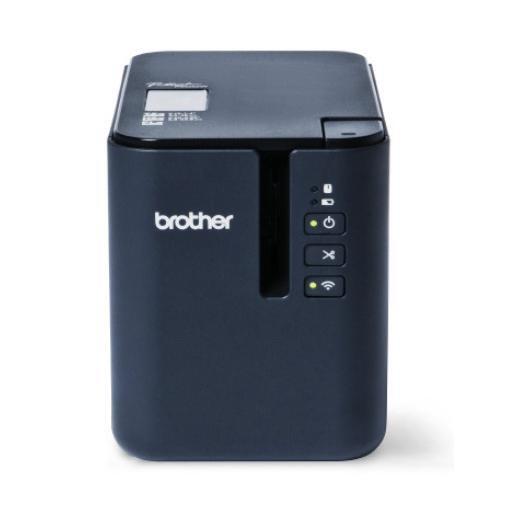
The Brother P-touch PT-P950NW is designed for classrooms and schools that manage large amounts of labelled materials. It supports laminated tapes that withstand frequent handling, cleaning, and daily wear, making it suitable for shared environments.
This model is particularly effective for:
-
Creating consistent classroom bin labels and storage identifiers
-
Labelling shared resources such as libraries, supply rooms, and learning centres
-
Maintaining uniform formatting across multiple classrooms through network connectivity
By centralizing label creation, the PT-P950NW helps schools maintain a cohesive classroom labelling system without variation in style or readability.
2. Brother P-touch PT-E560BTVP for Mobile and Flexible Classroom Labelling
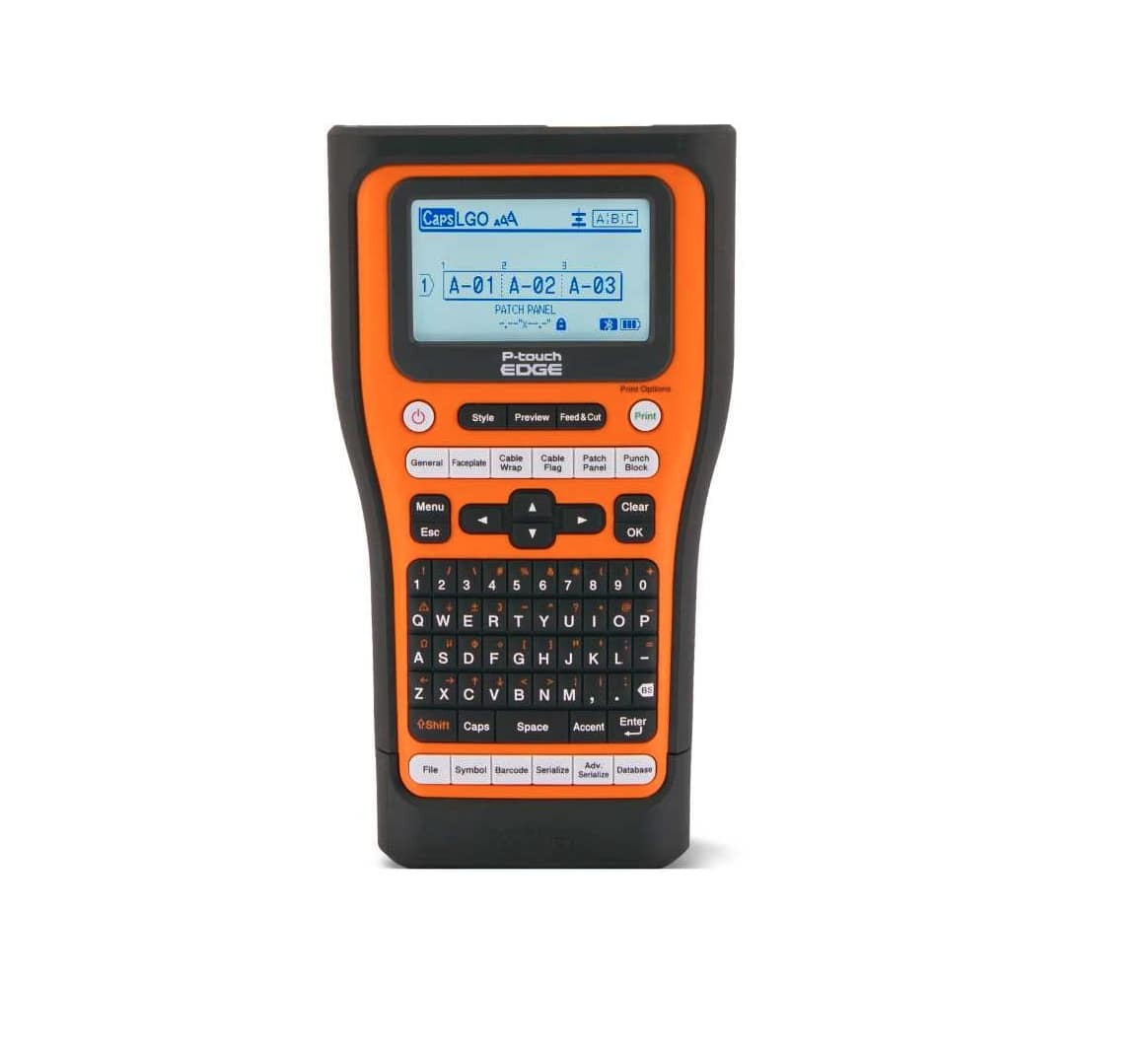
The Brother P-touch PT-E560BTVP supports teachers who need the ability to label materials directly within the classroom. Its Bluetooth connectivity allows quick label creation without leaving the room, making it easier to respond to changing organizational needs.
This printer works well for:
-
Updating labels for classroom objects as materials rotate
-
Adding or revising classroom door labels and equipment markers
-
Supporting organization in high-traffic areas where layouts change often
Its portability makes ongoing classroom labelling practical rather than disruptive.
Used together, these printers support a durable and adaptable classroom labelling approach, helping teachers maintain organized, easy-to-navigate learning environments with minimal effort.
Why Educators Choose DuraFast Label for Classroom Labelling?
Creating effective classroom labelling systems is not just about having the right ideas. It also depends on access to reliable label printers, durable tapes, and guidance that understands real classroom conditions. This is where DuraFast.ca plays a practical supporting role for schools and educators across Canada.
DuraFast.ca provides a wide range of Brother P-touch label printers and compatible label tapes designed for environments that demand durability and consistency. For classrooms, this means labels that stay readable despite frequent handling, regular cleaning, and daily student use.
What makes DuraFast.ca especially useful for classroom settings includes:
-
Access to education-ready label printers suited for both high-volume and mobile labelling needs
-
Durable laminated label tapes that hold up on bins, shelves, doors, and shared equipment
-
Product guidance that helps schools choose the right printer and tape combination for long-term use
Rather than offering one-size-fits-all solutions, DuraFast.ca supports classrooms, libraries, and shared school spaces with tools that scale as needs grow. Whether teachers are setting up new classrooms, reorganizing learning areas, or maintaining existing systems, having reliable labelling tools reduces friction and saves time over the school year.
For educators looking to build classroom labelling systems that last beyond the first few weeks, DuraFast.ca offers dependable tools that support clarity, organization, and consistency without adding unnecessary complexity.
Equip your classroom with reliable label printers and durable supplies from https://www.durafastlabel.ca/contact-us/.
Final Thoughts
Labelling objects in the classroom works because it creates clear systems that students can rely on every day. When labels are consistent, durable, and thoughtfully placed, classrooms run with fewer interruptions and less clutter.
Students move more independently, transitions become smoother, and teachers spend less time managing small disruptions. By combining clear visual structure with long-lasting labels and the right tools, classroom organization becomes easier to maintain and more effective throughout the school year.
Frequently Asked Questions
Why Is It Important to Label Things in a Classroom?
Labelling objects in the classroom improves organization, reduces confusion, and supports student independence. Clear labels act as constant visual guidance, helping students follow routines, locate materials, and return items correctly without repeated teacher instructions.
What Should I Label in My Classroom?
Teachers should label classroom objects such as storage bins, shelves, learning stations, student materials, technology equipment, and doors for all learners. Focusing on high-use areas first delivers immediate benefits in organization, efficiency, and daily classroom flow.
What Are Some Tips for Labeling Different Areas of the Classroom?
Use consistent fonts, clear wording, and strong contrast for readability. Match label designs to student age, include icons where helpful, and use durable materials so labels withstand frequent handling, cleaning, and daily classroom activity.
What Makes a Good Label Printer for Classroom Use?
A good label printer for the classroom produces durable, laminated labels, supports clear formatting, and allows quick on-demand printing. Reliability, ease of use, and long-lasting tape quality are essential for busy classroom environments.
How Do Classroom Object Labels Improve Student Organization?
Classroom object labels provide visual cues that help students identify where crayons and other items belong, encouraging responsibility and independence. Over time, consistent labelling builds organizational habits and reduces time spent searching for or misplacing supplies.
What Are Some Free Printable Resources for Classroom Object Labels?
Free printable classroom object labels are available on education resource websites, teacher blogs, and learning platforms. These resources offer basic designs that can be customized, printed, and laminated for short-term classroom labelling needs, and you might want to consider a decor bundle for a more cohesive look.
Are There Any Activity Sheets for Practicing Labelling Classroom Objects?
Yes, many educational websites provide activity sheets that help students practice labelling classroom objects. These worksheets reinforce vocabulary, object recognition, and spelling skills while supporting hands-on learning and classroom engagement.