WHMIS Labels 2026: The Complete Guide to Canadian Workplace Compliance
17th Jul 2026
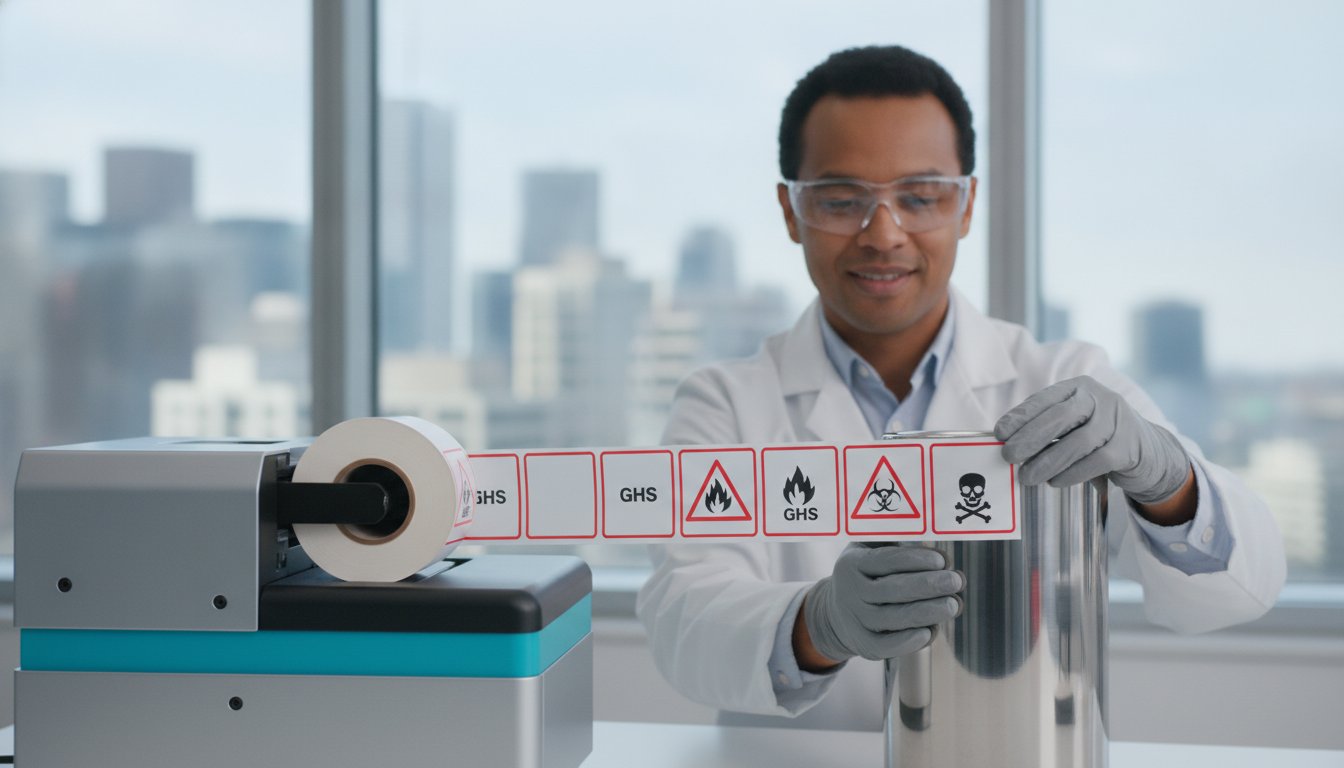
Did you know that occupational disease deaths now exceed traumatic fatalities in most Canadian jurisdictions? A 2026 report from the University of Regina highlights this sobering reality, proving that clear chemical identification is much more than a simple administrative task. It's a critical line of defence for your team and your business reputation.
You likely realize that staying current with the latest GHS alignment is vital, yet the fear of non-compliance penalties or labels that peel and fade in harsh environments is a common stressor for many operations. We understand the challenge of balancing regulatory precision with operational efficiency. This guide will help you master the essential whmis labels requirements and show you how to implement a compliant, durable in-house printing system tailored for your specific facility. We will explore the six mandatory label elements, the technical advantages of pigment-based inks, and the specific materials that ensure your safety information remains legible despite heavy chemical exposure.
Key Takeaways
- Understand your legal obligations following the December 2025 transition deadline to ensure every hazardous product in your facility meets the latest GHS standards.
- Identify the six mandatory elements required for compliant whmis labels, including bilingual hazard statements and standardized red-bordered pictograms.
- Learn the specific scenarios where your team must produce workplace labels, such as during chemical decanting or when original supplier tags become unreadable.
- Discover why pigment-based ink is the only viable choice for industrial environments where labels face constant exposure to moisture and harsh solvents.
- Evaluate how high-speed hardware like the VIPColor VP750 or the versatile Afinia L502 can reduce costs by replacing expensive pre-printed inventory with an on-demand system.
What are WHMIS Labels and Why are They Critical in 2026?
Why does the year 2026 represent a critical milestone for your facility’s safety protocols? It’s because the multi-year transition to align with the Globally Harmonized System (GHS) has officially concluded. As of December 15, 2025, every hazardous product in a Canadian workplace must be fully compliant with the amended Hazardous Products Regulations. This means that whmis labels are no longer a target for future implementation; they’re a strict legal requirement for current operations. The Workplace Hazardous Materials Information System serves as our national standard for hazard communication, ensuring that every person handling chemicals has the data they need to stay safe.
Labels act as the primary line of defence at the point of use. While a Safety Data Sheet (SDS) provides exhaustive detail, the label offers immediate, life-saving information. If your facility fails a provincial OHS inspection or a safety audit due to outdated signage, the consequences are severe. You could face significant fines, product seizures, or even mandatory work stoppages that halt your production lines. In an era where occupational disease deaths now exceed traumatic fatalities in most jurisdictions, the accuracy of your labelling is a matter of both legal and moral importance.
The Evolution from WHMIS 1988 to 2026 Standards
The visual language of safety has shifted. You likely remember the old WHMIS 1988 system with its distinctive circular hatched borders. Those have been replaced by standardized red diamond pictograms. While many still use the term "WHMIS 2015," current legislation simply refers to the system as "WHMIS" because the transition phase is over. This modern approach helps workers identify hazards instantly, reducing the risk of accidental exposure in high-pressure industrial environments.
Key Stakeholders: Suppliers, Employers, and Workers
Compliance is a shared responsibility across the supply chain. Suppliers must provide compliant whmis labels and SDSs for every product they ship. However, the burden shifts to you, the employer, once a product enters your facility. You are responsible for creating workplace labels when chemicals are decanted into smaller containers or when original labels become unreadable. Finally, workers are required to participate in mandatory training and follow the instructions on each label to maintain a secure workplace.
The 6 Essential Elements of a Compliant WHMIS Supplier Label
Achieving compliance in 2026 requires more than just a passing knowledge of safety symbols. It demands a precise understanding of how information is structured on your whmis labels. Health Canada mandates six specific elements on every supplier label to ensure consistency across the country. These elements work together to provide a tiered warning system that ranges from immediate visual cues to detailed handling instructions. While supplier labels are provided by the manufacturer, understanding the nuances between Supplier Labels vs. Workplace Labels is vital for maintaining safety when products are used in your facility.
- Product Identifier: This is the brand name, chemical name, or generic name of the product. It must match the identifier used on the Safety Data Sheet (SDS).
- Hazard Pictograms: These are the distinctive red-bordered diamonds that visually communicate the specific hazard class of the chemical.
- Signal Words: Only two words are used to indicate the severity of a hazard. "Danger" is reserved for high-severity risks, while "Warning" is used for lower-severity hazards.
- Hazard Statements: These are standardized phrases that describe the nature of the hazard, such as "Extremely flammable gas."
- Precautionary Statements: These provide specific instructions on how to minimize or prevent adverse effects, covering prevention, response, storage, and disposal.
- Supplier Identifier: Every label must list the name, address, and telephone number of the Canadian manufacturer or importer.
Bilingual Requirements for the Canadian Market
Canada’s bilingual nature is reflected in its safety legislation. Every label must present information in both English and French. You can achieve this by using a single bilingual label or two separate, adjacent labels. When you organize these layouts, ensure the text remains legible despite the high density of information. For smaller containers, using a condensed font or a wrap-around label design often provides the best balance between compliance and clarity.
Understanding GHS Pictograms and Their Meanings
Pictograms provide a universal visual language. Symbols like the "Exploding Bomb" (instability), "Flame" (flammability), "Corrosion" (skin or eye damage), and "Skull and Crossbones" (acute toxicity) are designed for instant recognition. The "Exclamation Mark" is often required for less severe health hazards, such as skin irritation. Because these symbols rely on a distinct red border to meet legal standards, the quality of your print is paramount. If the red is muddy or the symbol is blurry, the label may be deemed non-compliant during an audit. If you have questions about how to achieve high-resolution, compliant results for your facility, please reach out to our labelling experts for a consultation.
Supplier Labels vs. Workplace Labels: When Must You Print Your Own?
Who is responsible for the safety information on a container once the original seal is broken? While manufacturers must provide initial whmis labels on all hazardous products, the employer carries the legal duty to maintain that information throughout the product's lifecycle. According to the CCOHS Guide to WHMIS Labels, the responsibility for compliance shifts to your facility in several common operational scenarios. Understanding these triggers is the first step in moving from reactive safety measures to a proactive, compliant workflow.
There are three primary situations where you must print and apply your own labels. First, the most frequent scenario is decanting. If you transfer a cleaning solvent from a 20-litre bulk drum into smaller, portable spray bottles, each of those bottles requires its own identification. Second, you must replace labels that have become unreadable. Industrial environments are harsh; chemical spills, constant handling, and environmental debris can quickly degrade a supplier's original tag. Finally, if your facility produces a hazardous mixture for internal use, you are responsible for its complete labelling. Failing to address these scenarios can lead to confusion during safety audits and, more importantly, increase the risk of accidental exposure for your team.
Workplace Label Simplified Requirements
Workplace labels are designed to be less complex than supplier labels, yet they remain vital for daily safety. While they don't require the full six elements discussed previously, they must include three core pieces of information: the product name (which must match the SDS exactly), safe handling precautions, and a clear reference stating that a Safety Data Sheet is available on-site. Many Canadian businesses realize that printing full supplier-style labels for workplace use is actually a better strategy. Using a consistent visual language with standard pictograms across all containers simplifies worker training and reduces the chance of a misunderstanding during a high-pressure shift.
Managing Labels for Decanted Chemicals
The "transfer rule" is a frequent source of confusion in manufacturing and distribution centres. You must apply a workplace label the moment a substance enters a second container. There is one narrow exception to this rule: if the person who decants the chemical uses it entirely during their own shift and the container remains under their direct control, a label isn't legally required. However, this exception is risky. If that bottle is set down and left unattended for even a few minutes, it becomes a non-compliant hazard. It's far more efficient to use blank labels for workplace safety to ensure every container is identified, regardless of how long it stays in use. This approach eliminates guesswork and ensures your facility stays prepared for an unannounced provincial OHS inspection.

Choosing the Right Technology for In-House WHMIS Labelling
How do you move from understanding the law to physically producing a label that won't fail during a solvent spill? In-house production of whmis labels requires a strategic match between your printing hardware and the chemical environment of your facility. The main difference between a standard office label and an industrial safety label lies in the chemistry of the ink and the durability of the substrate. If you select the wrong combination, you risk labels that smear, peel, or become unreadable, which directly leads to non-compliance during a safety audit.
The "Dye vs. Pigment" debate is the most critical technical hurdle to clear. While dye-based inks are known for vibrant colours, they are water-soluble and will run the moment they encounter moisture or chemicals. Pigment ink, however, uses solid particles suspended in liquid that bond to the surface of the label. This makes pigment ink the only viable choice for chemical environments where durability is non-negotiable. Beyond ink type, you must consider your production volume. Hardware print speed is measured in inches per second (ips); for high-volume facilities, a higher ips rating ensures that safety protocols don't become a bottleneck in your distribution chain.
Pigment Inkjet Printers for Full-Colour WHMIS Labels
Modern pigment-based printers, such as the Afinia L502, are specifically engineered to handle environmental debris and moisture. These units provide the flexibility to produce high-resolution, full-colour labels that meet GHS standards instantly. Many industrial leaders also utilize Memjet Technology for its incredible speed and precision, allowing for the rapid printing of complex pictograms without sacrificing clarity. For a detailed comparison of ink types, you can explore our guide on Afinia L502 Dye vs Pigment Ink to determine which technology suits your specific chemical exposure risks.
Thermal Transfer Solutions for Harsh Industrial Environments
In scenarios involving extreme solvent or oil exposure, thermal transfer remains a preferred solution. This process uses a heated printhead to melt a ribbon onto the label material. The key to success here is matching the ribbon to the substrate. For maximum abrasion resistance, resin ribbons are the standard because they create permanent, non-smearing text that can withstand harsh scrubbing. Investing in durable thermal transfer ribbons ensures that your hazard warnings remain intact even in the most punishing industrial settings.
BS5609 Certification: The Gold Standard for Durability
If your products are stored outdoors or shipped via marine transport, you must look for BS5609 certification. This international standard is divided into two parts. Section 2 evaluates the adhesive's ability to stay attached to a drum after three months of saltwater immersion. Section 3 tests the durability of the print itself. You must realize that this certification applies to the specific combination of the printer, the ink, and the label material. Changing any one of these components can void the certification. If you are unsure which combination meets these rigorous standards, please contact our labelling experts for a technical consultation.
Implementing an On-Demand WHMIS Labelling System with DuraFast
How do you turn a complex regulatory requirement into a streamlined operational advantage? Transitioning to an on-demand system for whmis labels is the most effective way to eliminate the logistical headaches associated with pre-printed inventory. By partnering with DuraFast Label, you gain access to the technical expertise and hardware configurations necessary to maintain a compliant workplace without the burden of long lead times or wasted stock. This proactive approach allows you to update hazard information the moment an SDS changes, ensuring your safety protocols are always current.
Selecting the right hardware is the first step in this logical progression. The main difference between models like the Afinia L502 and the VIPColor VP750 lies in their intended workload and speed. The Afinia L502 provides exceptional versatility for businesses that require high-quality pigment ink for chemical resistance but have varied label sizes. In contrast, the VIPColor VP750 is engineered for high-volume environments, utilizing Memjet Technology to produce labels at speeds up to 12 ips. Choosing the right tool ensures that your labelling process remains a supportive part of your workflow rather than a bottleneck.
Scaling Your Production: Baseline and Delta Models
The distinction between desktop and industrial printers is vital for long-term reliability. Industrial models often include an internal label unwinder, which is essential for protecting the media from dust and environmental debris before it reaches the printhead. This feature significantly extends the life of your equipment in dusty warehouse settings. Furthermore, industrial units utilize larger ink tanks with high "ml" capacities. This reduces your cost per label and minimizes the frequency of changeovers during large-scale chemical labelling runs, allowing for a more seamless and fiscally responsible operation.
Software and Accessories for Seamless Compliance
Automation is the most effective way to prevent human error in hazard communication. Professional label design software, such as Loftware or Bartender, can pull data directly from your digital SDS library to populate whmis labels automatically. This ensures that every pictogram and precautionary statement is perfectly synchronized with the chemical's classification. To further optimize your production line, consider integrating label rewinders and dispensers to handle high-volume output with ease. You can Explore Industrial Label Printers for WHMIS Compliance to find the specific hardware configuration that will empower your team to achieve better safety results. DuraFast Label remains committed to supporting Canadian businesses with national shipping and the technical guidance required to keep your facility compliant and efficient.
Future-Proof Your Facility with Compliant WHMIS Labelling
The 2026 regulatory landscape leaves no room for ambiguity. With all transition periods now concluded, your operation must ensure every hazardous container features precise, bilingual identification. You've learned that mastering whmis labels isn't just about legal adherence; it's about building a culture of safety through durable, legible communication. By choosing pigment-based inkjet technology or resin-ribbon thermal transfer, you protect your workers from the risks of faded or smeared hazard warnings.
Implementing an on-demand printing system allows you to adapt to new Safety Data Sheet updates instantly while reducing the waste associated with pre-printed stock. We provide the GHS and BS5609 compliant materials you need, backed by expert technical support for industry-leading Afinia and VIPColor hardware. With our national Canadian shipping, you can maintain a seamless supply of industrial-grade consumables regardless of your location. Ready to take control of your chemical labelling process? Find your WHMIS printing solution at DuraFast Label Canada today. We're here to help you build a safer, more efficient workplace for the long term.
Frequently Asked Questions
Do WHMIS labels need to be bilingual in Canada?
Yes, all whmis labels must be bilingual to comply with federal law. You're required to present information in both English and French on either a single bilingual label or two separate, adjacent labels. This ensures every worker in a Canadian facility can access critical safety data in both official languages. Failing to provide bilingual text is a significant non-compliance issue that can lead to failed safety audits or provincial OHS penalties.
Can I print my own WHMIS labels?
Absolutely, you can print compliant whmis labels in-house using specialized hardware like pigment inkjet or thermal transfer printers. Many businesses find that an on-demand system reduces waste and allows for immediate updates when a Safety Data Sheet (SDS) changes. This strategy empowers you to take full control of your facility safety marking without relying on external vendors. Using the right combination of ink and durable media ensures your labels meet all required legibility standards.
What is the difference between WHMIS 2015 and the current 2026 standards?
The main difference is that the multi-year transition period for GHS alignment officially ended on December 15, 2025. While people previously used the term "WHMIS 2015" to distinguish it from the 1988 system, it's now the only legal standard for workplace chemicals in Canada. You're now required to use the standardized red diamond pictograms and updated hazard classifications for every hazardous product on your site. There's no longer a grace period for using outdated symbols or classifications.
What ink should I use for chemical labels?
Pigment-based inks are the only reliable choice for industrial chemical environments. Unlike dye-based inks that smear when wet, pigment particles bond to the substrate to resist moisture, UV rays, and harsh solvents. This technical choice is vital for maintaining legibility and compliance throughout the product's lifespan. If your labels face frequent handling or chemical exposure, pigment ink provides the longevity you need to prevent safety information from fading or washing away.
Are old WHMIS 1988 labels still legal?
No, WHMIS 1988 labels are completely illegal as of 2026. Every hazardous product in your workplace must now feature the standardized red diamond pictograms and updated hazard statements. If you still have containers with the old circular hatched borders, they must be relabelled immediately to avoid penalties during safety audits. Maintaining these outdated labels poses a significant risk to worker safety and your company's legal standing during a provincial inspection.
What happens if a supplier label is damaged?
You must replace a damaged supplier label with a workplace label immediately. The employer is responsible for ensuring the new label includes the product identifier, safe handling instructions, and a clear reference to the Safety Data Sheet. This prevents accidents caused by unidentifiable or poorly marked chemicals in your facility. Printing these labels on-demand ensures that your workplace remains safe and organized even when original packaging fails due to leaks or heavy use.
Does WHMIS apply to consumer products?
Some consumer products are exempt from WHMIS labelling if they fall under the Consumer Chemicals and Containers Regulations (CCCR). However, this exemption typically only applies if the product is used in the workplace in the same manner and frequency as a typical consumer would use it. If the product is used in larger industrial quantities or more frequently than a household user would, you may still be required to provide updated safety information and training.
Is BS5609 certification required for all WHMIS labels?
BS5609 certification isn't mandatory for all applications, but it's the gold standard for labels that face extreme conditions. If your containers are stored outdoors or shipped by sea, this certification ensures the adhesive and print can survive saltwater immersion and heavy abrasion. It provides peace of mind for high-risk industrial environments where label failure could lead to catastrophic safety or environmental incidents. Many Canadian exporters use this standard to ensure global compliance.