Waterproof Inkjet Labels Canada: Ultimate 2026 Guide
30th Jul 2026
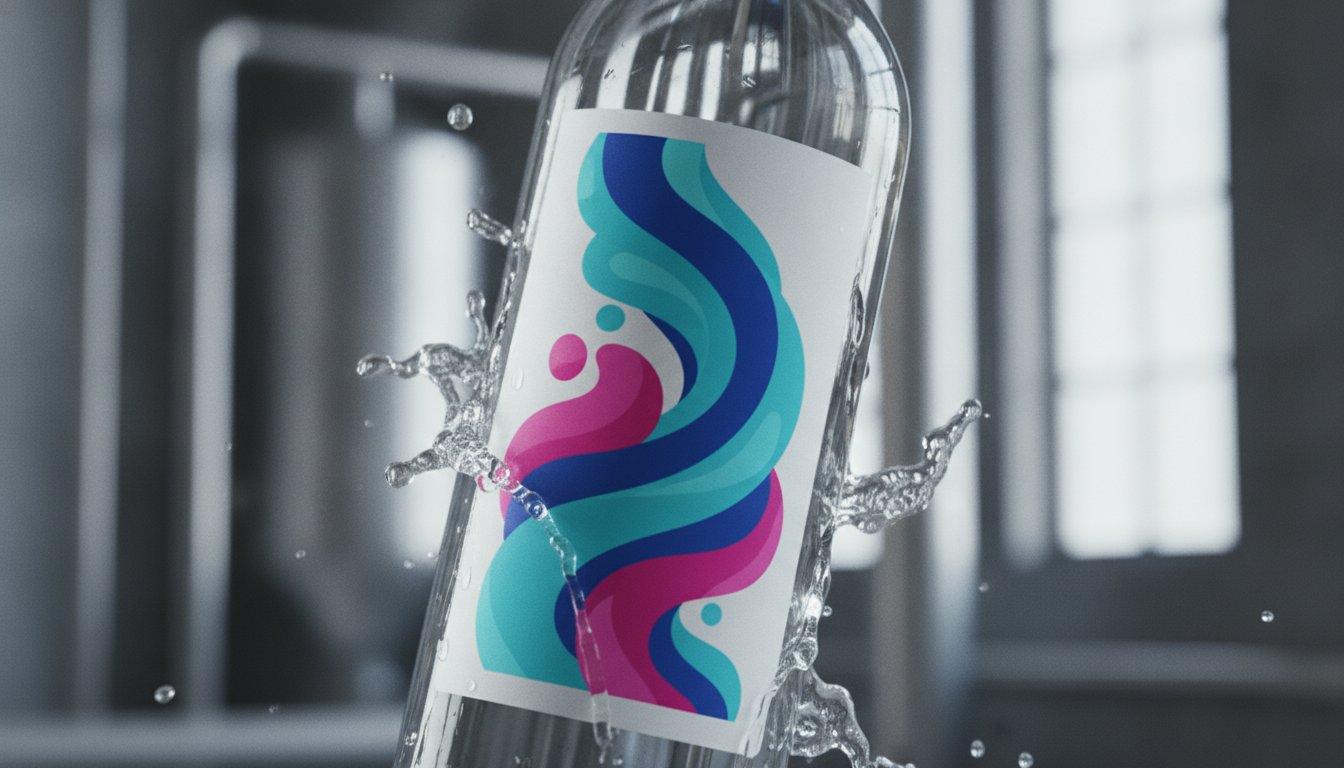
How much does a single illegible label cost your business when a customer rejects a shipment or a safety inspector flags a container? You've likely felt the frustration of pulling a product from a refrigerator only to find the "water-resistant" sticker peeling away or the ink smeared into an unreadable grey blur. It's a common hurdle for many Canadian entrepreneurs who realize too late that not all synthetic media is created equal. Finding high-quality waterproof labels for inkjet printers Canada shouldn't be a gamble that ends in wasted inventory and lost professional credibility.
We understand that your brand's reputation relies on labels that remain crisp and professional, even when exposed to condensation, chemicals, or the sub-zero temperatures of a prairie winter. This guide will help you select and implement high-performance solutions that withstand moisture and submersion without smudging or peeling. We'll explore the technical synergy between pigment ink chemistries and specialized top-coats. You'll also learn the critical difference between water-resistance and true waterproofing to ensure your production line remains efficient and compliant throughout 2026.
Key Takeaways
- Distinguish between water-resistant paper and true synthetic bases to eliminate common failures like peeling in cold storage or high-moisture environments.
- Identify why pigment-based ink chemistry is the essential requirement for achieving long-term UV stability and smudge-proof results during submersion.
- Compare the practical performance metrics of Vinyl, Polyester, and Polypropylene (BOPP) to find the ideal match for your container's shape and surface texture.
- Ensure your industrial operations meet the latest WHMIS 2015 and BS5609 standards by selecting certified waterproof labels for inkjet printers Canada.
- Learn how to bridge the gap between desktop prototyping and industrial-scale production through strategic media and printer pairing.
Understanding the Science of Waterproof Inkjet Labels
Why do some labels survive a Canadian winter while others peel off before they even leave the warehouse? The answer lies in the fundamental chemistry of the label construction. Standard inkjet paper relies on cellulose fibres that naturally absorb moisture. When these fibres get wet, they expand, causing the material to warp and the ink to run. To achieve professional results, you must look beyond generic marketing claims and understand how waterproof labels for inkjet printers Canada are engineered to lock in colour at a molecular level.
The Science of Inkjet Printing dictates that for an image to remain stable, the ink must either penetrate a porous surface or bond to a specialized coating. In a truly waterproof setup, we move away from absorbent paper and toward non-porous synthetic bases. This transition is essential for any business operating in environments where moisture is a constant factor, such as food production or chemical manufacturing.
Water-Resistant vs. Truly Waterproof: Know the Difference
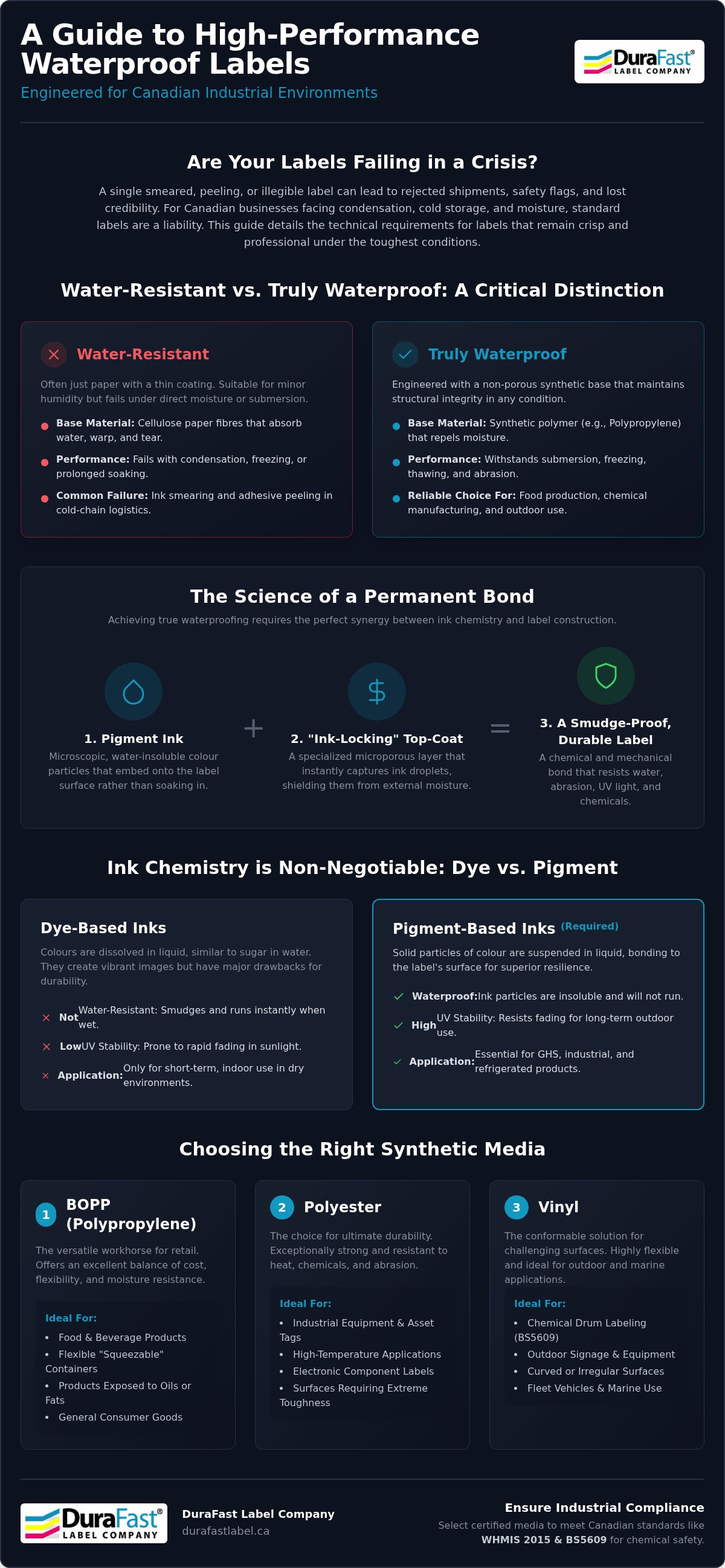
Are you currently using "water-resistant" labels and finding they still fail in the field? Many businesses mistakenly purchase these products, which are often just standard paper with a thin varnish or aqueous coating. While these can handle a light splash or high humidity, they fail when exposed to prolonged submersion or the heavy condensation common in Canadian cold-chain logistics. The main difference between these categories is the base material. Truly waterproof labels utilize a synthetic base that maintains its structural integrity even when frozen, thawed, or soaked for days. If your products are introduced to water during the cooling process or stored in industrial freezers, synthetic media is the only reliable choice.
The Importance of Top-Coat Technology
How does ink stick to a plastic surface without smearing? This is where "ink-locking" top-coats become essential. High-performance inkjet labels feature a microporous layer that acts like a series of microscopic wells. These wells capture the ink droplets instantly, shielding them from external moisture while allowing the liquid carrier to evaporate. This prevents the feathering or bleeding often seen on lower-quality media. DuraFast Label Company Canada labels are specifically engineered with these advanced coatings to ensure that high-resolution graphics remain crisp. By pairing the right top-coat with pigment-based inks, you create a bond that resists chemicals, abrasion, and moisture. This technical synergy is what allows a label to maintain its professional appearance from the production line to the customer's hands, regardless of environmental debris or temperature fluctuations.
Choosing the Right Synthetic Media: Vinyl, Polyester, and Polypropylene
How do you determine which synthetic base is appropriate for your specific application? While the science of top-coat technology ensures your ink stays put, the underlying material dictates how the label handles physical stress, temperature fluctuations, and chemical exposure. Choosing the wrong substrate can lead to label failure even if the print remains crisp. For businesses seeking waterproof labels for inkjet printers Canada, the selection usually narrows down to three primary industrial-grade options: Polypropylene, Polyester, or Vinyl. Just as a professional who uses high-quality hair colouring accessories from ESTL+CO expects precision and durability, choosing the right label substrate is essential for maintaining brand integrity in challenging environments.
The main difference between these materials is their chemical composition and physical flexibility. Each material serves a distinct purpose in the Canadian market, from high-speed food packaging lines to outdoor industrial equipment marking. Understanding these differentiators allows you to maximize your resources and avoid the fiscal waste of replacing failed labels in the field.
BOPP Labels: The Go-To for Canadian Food and Beverage
Biaxially Oriented Polypropylene (BOPP) is the workhorse of the Canadian retail and food sectors. Why is it so prevalent for consumer goods? It offers an excellent balance of cost efficiency and moisture resistance. BOPP is particularly effective for products containing oils, fats, or acids, which often degrade standard adhesive bonds. In the beverage industry, the "squeeze-factor" is a critical metric for success. If you are labelling flexible plastic bottles or jars, inkjet labels made from BOPP provide the necessary elasticity to expand and contract without cracking or lifting at the edges. This inherent flexibility makes it a better choice for curved surfaces compared to more rigid films.
Polyester (PET) and Vinyl: When Ruggedness is Mandatory
What happens when your labels must survive extreme heat or harsh chemical exposure? Polyester (PET) is the professional solution for environments where durability is non-negotiable. PET labels are characterized by their high-heat resistance and exceptional dimensional stability, meaning they won't shrink or warp when introduced to industrial cleaning processes or high-friction environments. Polyester is specifically engineered for high UV stability and tear resistance, ensuring that your branding and safety data remain intact even under duress.
Vinyl is the premier choice for heavy-duty industrial applications and long-term outdoor exposure in the Canadian climate. Given the intensity of our winters and the potential for "environmental debris," vinyl's thickness and weatherability provide a significant advantage for equipment that stays outdoors year-round. When your application requires GHS Compliance in Canada, selecting a rugged material like PET or Vinyl ensures that critical hazard information remains legible throughout the product's entire lifecycle. If you're unsure which synthetic media aligns with your specific container type, you can request a material consultation to find the most cost-effective match for your production needs.
The Critical Role of Ink Chemistry: Dye vs. Pigment
Why does a label that looked perfect in the printer turn into a messy blur the moment it hits condensation? The main difference between these outcomes is the molecular structure of the ink itself. Dye-based inks are composed of colourant molecules fully dissolved in a liquid carrier, much like sugar in water. In contrast, pigment inks consist of tiny, solid particles suspended in the fluid. When dye ink hits a synthetic surface, the water in the environment can easily re-dissolve those molecules, leading to running and smearing. Pigment particles are insoluble and, once bonded to the media's top-coat, they resist liquid penetration and environmental debris. This makes pigment ink the only viable choice for waterproof labels for inkjet printers Canada that must survive real-world industrial conditions.
Can you use a standard home printer for professional waterproof labelling? The short answer is no. Most consumer-grade printers utilize dye inks because they produce vibrant colours on standard paper. However, these inks lack the UV stability and moisture resistance required for commercial use. While some modern systems use "water-enhanced dye inks" to offer better durability than standard dye, they still fall short of the industrial resilience provided by true pigment chemistry. For businesses operating in wet environments, such as frozen food packaging or chemical manufacturing, the transition to a dedicated pigment-based printer is a strategic necessity rather than an optional upgrade.
Why Pigment Ink Wins for Waterproof Labelling
Pigment ink provides a physical barrier that resists fading and chemical contact. Hardware like the Epson C6000 series or the Afinia L502 are specifically designed to handle the higher viscosity of these inks. Using the right ink is often a regulatory requirement; if you are producing hazardous material identifiers, you should consult a WHMIS labels guide. Choosing Synthetic Media optimized for pigment ensures your safety data remains legible under duress.
Testing Your Ink and Media Synergy
We recommend a simple smudge test to confirm your combination holds up. After printing, allow the label to cure for 24 hours. This drying time is crucial for synthetic media to fully lock the particles in place. Submerge the label in water and rub the surface firmly. If the image remains sharp, you have achieved successful synergy. We encourage ordering samples to realize the difference in quality before committing to a full production run.
Industrial Standards and GHS Compliance in Canada
Why is regulatory compliance a non-negotiable factor for your labelling strategy? In Canada, the Hazardous Products Regulations require that safety information remains legible throughout a product's entire lifecycle, regardless of environmental stress. This makes the implementation of waterproof labels for inkjet printers Canada a legal necessity for businesses handling chemicals or maritime shipments. When safety data is at stake, the structural integrity of the label must survive exposure to salt spray, heavy abrasion, and chemical contact without degrading or losing professional clarity.
BS5609 Certification: The Gold Standard for Durability
What does it take for a label to be deemed "marine-grade"? The BS5609 standard is the primary benchmark, involving a rigorous 90-day seawater submersion test to ensure the label won't detach or smear in extreme conditions. The only way to achieve this certification is by testing the specific combination of synthetic media and pigment ink chemistry together. For high-stakes applications where failure could lead to rejected international shipments or safety violations, utilizing UL certified labels ensures your packaging meets the stringent International Maritime Dangerous Goods (IMDG) codes.
Comparing Industrial Hardware for GHS Compliance
Achieving compliance also requires selecting hardware that can handle the technical demands of GHS labelling. The main difference between the Epson C6000 and the Epson C6500 series is the maximum print width and intended application size. The C6000 is a better choice for standard 4-inch wide chemical bottles, while the C6500 accommodates larger 8-inch media for drums and industrial containers. Both models deliver high-resolution output at speeds up to 5 ips, ensuring your production remains efficient. These printers utilize high-capacity pigment ink cartridges to maintain UV stability and moisture resistance, which are essential for labels that will be introduced to water or environmental debris.
DuraFast Label Company Canada acts as your technical consultant to ensure your production line meets the latest WHMIS 2015 standards, which fully aligned with GHS revisions as of December 14, 2025. While inkjet technology is the premier choice for high-resolution colour safety icons, some industrial tasks may require the extreme smudge resistance of thermal transfer ribbons paired with specialty tags. We help you evaluate these options based on your specific logistical hurdles, ensuring your safety data remains crisp and legally robust. If you need to verify your current compliance status, contact our technical team for a comprehensive review.
Sourcing High-Performance Waterproof Labels from DuraFast Label Company Canada
Why settle for a generic supplier when your production line requires technical precision? DuraFast Label Company Canada serves as a strategic partner for businesses that need to bridge the gap between desktop prototyping and industrial-scale production. We focus on the technical synergy between the printer hardware and the media substrate to ensure your output remains professional under duress. Buying from a specialist ensures that your waterproof labels for inkjet printers Canada are optimized for your specific ink chemistry, preventing the fiscal waste associated with failed adhesive bonds or smeared graphics. If your operations also require specialized bonding solutions for other packaging tasks, you can find out more about high-performance options.
Roll-Fed Solutions for VIPColor and Afinia Printers
If you are scaling your operations, choosing the right hardware configuration is vital for long-term efficiency. The main difference between the VIPColor VP700 and the VP750 involves the unwinder setup and environmental resilience. The VP700 features an internal label unwinder, which minimizes the printer's footprint and protects the media from dusty environments or environmental debris. In contrast, the VP750 utilizes an external label unwinder to accommodate larger rolls for high-volume runs. While both models utilize Memjet Technology, the VP750 is often the better choice for wet labels because it is engineered for water enhanced dye inks that provide superior moisture resistance. By sourcing our blank labels for sale, you ensure your media is perfectly matched to these high-speed specifications.
Logistics play a critical role in maintaining a lean production schedule. DuraFast Label Company Canada provides national shipping across the country, allowing you to avoid the unpredictability of cross-border delays or customs duties. This reliable supply chain ensures that your production of waterproof labels for inkjet printers Canada never grinds to a halt due to a lack of specialized synthetic media. Whether you are labelling craft beverages in British Columbia or industrial chemicals in Ontario, our local expertise ensures you receive the exact roll or sheet configuration required for your specific application.
Expert Consultation for Canadian Entrepreneurs
How do you determine which hardware and media combination is most cost-effective for your volume? We encourage you to reach out for a technical assessment of your current labelling workflow. Our team acts as a knowledgeable consultant to help you navigate complex product lineups and technical metrics like print speeds measured in ips. We are committed to helping you organize your production and centre your focus on growth by providing prescriptive, solution-oriented guidance. Let us help you implement a labelling system that delivers industrial reliability and professional results for 2026.
Future-Proof Your Labelling Operations for 2026
Selecting the right waterproof labels for inkjet printers Canada is a strategic decision that directly impacts your operational efficiency and brand integrity. You've seen that true durability requires a precise synergy between pigment ink chemistry and specialized synthetic media. By moving beyond "water-resistant" paper and adopting industrial-grade synthetics like BOPP or Polyester, you ensure your products remain professional and compliant in even the harshest environments. It's about more than just a sticker; it's about maintaining legibility from the production line to the customer's hands.
DuraFast Label acts as your strategic partner in this transition. As an authorized dealer for high-speed industrial pigment-ink printers and a specialist in GHS and BS5609 compliant materials, we provide the technical assessment needed to optimize your workflow. Our Canadian-based expertise and national shipping ensure you avoid cross-border delays while maintaining a lean, responsive production line. If you're ready to scale your in-house labelling or need to verify your materials against the latest 2026 standards, we are here to assist.
Shop our complete range of waterproof inkjet labels at DuraFast Label Canada and find the ideal solution for your business. We look forward to helping you realize your production goals and empowering your growth.
Frequently Asked Questions
Are inkjet labels actually waterproof or just water-resistant?
Inkjet labels can be truly waterproof when you pair a synthetic media base with a specialized microporous top-coat. While water-resistant paper labels might survive light splashes, they eventually fail under prolonged submersion or heavy condensation. For professional applications, a synthetic substrate like Polypropylene or Polyester is required to ensure the material doesn't warp or degrade when introduced to water. This distinction is critical for businesses operating in high-moisture Canadian environments.
Do I need special ink to print waterproof labels on my inkjet printer?
You must use pigment-based inks to achieve a permanent, waterproof result. Unlike dye inks that dissolve in water, pigment particles bond with the label's top-coat to create a moisture-resistant barrier. If you're using waterproof labels for inkjet printers Canada with a dye-based system, the image will likely smear or fade when exposed to condensation. Hardware like the Epson C6000 or Afinia L502 is specifically engineered for this pigment-based durability.
What is the best material for waterproof labels in a freezer environment?
Polypropylene (BOPP) and Polyester (PET) are the better choices for freezer environments due to their ability to withstand extreme temperature fluctuations. The main difference between these and standard labels is the aggressive adhesive designed to bond to cold surfaces. These materials won't crack or peel when moved from a sub-zero freezer to room temperature, which is a common logistical hurdle in Canadian cold-chain distribution.
Can I print waterproof labels on a standard home inkjet printer?
Standard home printers typically utilize dye-based inks, which are not suitable for creating truly waterproof labels. Even if you use synthetic media, the dye ink will remain susceptible to smearing and UV fading. To produce labels that survive submersion or chemical contact, you require an industrial printer designed for pigment inks. This ensures the professional longevity needed for commercial products rather than temporary home crafts.
What does BS5609 certification mean for my Canadian business?
BS5609 certification indicates that your label material and ink combination have passed a rigorous 90-day seawater submersion test. For Canadian businesses shipping hazardous materials internationally by sea, this is often a legal requirement under GHS and IMDG regulations. It reassures safety inspectors that your hazard warnings will remain legible even in the event of a maritime accident or prolonged exposure to salt spray and abrasion.
How do I prevent my inkjet labels from smearing when they get wet?
Preventing smears requires the technical synergy of pigment-based ink and a compatible synthetic top-coat. The only way to ensure success is to allow the printed labels to cure for at least 24 hours before they are introduced to moisture. This drying time allows the ink particles to fully lock into the microporous layer of the media, creating a durable bond that resists environmental debris and friction.
Are waterproof labels for inkjet printers more expensive than standard labels?
Synthetic waterproof labels for inkjet printers Canada do have a higher upfront cost than standard paper labels because of their advanced material construction. However, they offer better long-term value by preventing product returns, re-labelling costs, and regulatory fines. When you factor in the fiscal responsibility of protecting your brand's reputation in wet or cold environments, the investment in durable media becomes a pragmatic business decision.
Can I get custom-sized waterproof labels on rolls in Canada?
You can absolutely source custom-sized waterproof labels on rolls directly within Canada through specialists like DuraFast Label. We provide both standard and bespoke dimensions to fit your specific container requirements. By sourcing locally, you avoid cross-border delays and ensure your roll-fed labels are perfectly compatible with your VIPColor, Afinia, or Epson printer's internal or external unwinder configurations for seamless production.