VIPColor VP550 vs Afinia L502: Which Colour Label Printer Wins for Canadian SMEs?
23rd Jul 2026
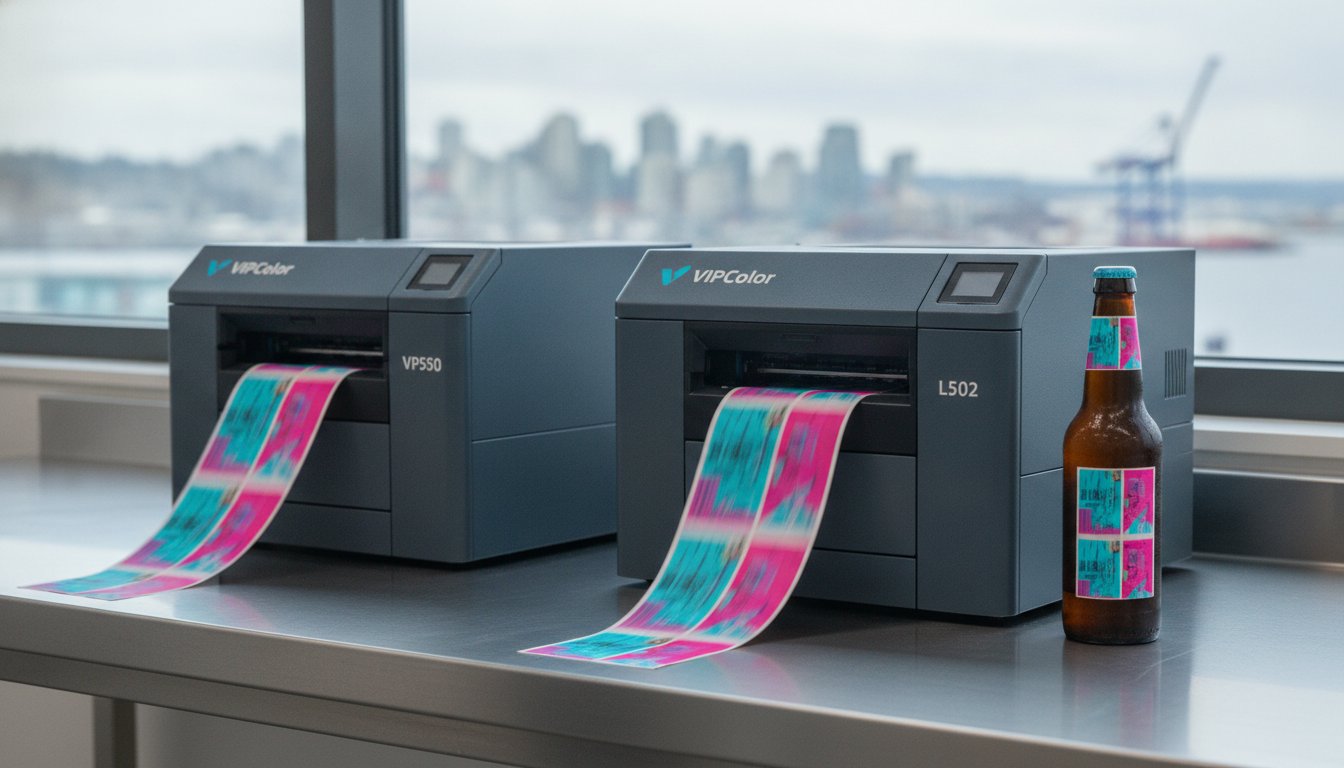
What if the bottleneck in your production line isn't your staff, but the very printer you rely on to get products out the door? Many Canadian business owners realize that relying on third-party print shops often leads to high costs and frustrating delays during peak seasons. When you're ready to bring production in-house, the debate often settles on the VIPColor VP550 vs Afinia L502. It's a common crossroads because both machines promise professional output, yet the main difference between them lies in how they balance raw speed against environmental durability.
You need labels that can survive the moisture of a refrigerator and the harsh conditions of a Canadian shipping route without smudging or peeling. This comparison will help you decide whether to prioritize the 8 ips speed of Memjet technology or the versatile Duo Ink system. We'll examine critical technical specifications, ink chemistries, and throughput speeds to ensure your chosen solution reduces your cost-per-label while maintaining a professional 1600 dpi or higher brand image. By the end, you'll know which hardware configuration fits your specific production environment and budget.
Key Takeaways
- Compare the VIPColor VP550 vs Afinia L502 to determine whether your workflow requires the rapid 8 ips throughput of Memjet or the flexible ink options of HP technology.
- Discover how "Duo Ink" technology provides the versatility to swap between vibrant dye and durable pigment inks to meet diverse labelling requirements for Canadian shipping.
- Learn to calculate production efficiency by understanding how print resolution and speed metrics translate into realistic daily label volumes for your SME.
- Evaluate physical hardware logistics, including the workspace footprint of each unit and how external label unwinders impact the organization of your production centre.
- Assess the Total Cost of Ownership by comparing ink cartridge volumes, such as the VP550’s 200ml tanks, against your initial hardware investment and monthly output needs.
Navigating the Mid-Range: Why Compare the VIPColor VP550 and Afinia L502?
How much time does your team spend waiting for label shipments to arrive from a third-party print house? For many Canadian SMEs, the answer is often "too much." The mid-range market for colour label printers has expanded to address this specific logistical hurdle. By choosing between the VIPColor VP550 vs Afinia L502, you're looking at two machines that bridge the gap between small desktop units and massive industrial presses. These printers provide a core value proposition that is hard to ignore. They deliver professional, high-resolution quality while maintaining a compact desktop footprint that fits into any production centre.
Moving production in-house isn't just about convenience. It's a strategic move to maximize your existing resources. The VIPColor VP550 utilizes Memjet technology to deliver high-speed results. The Afinia L502 relies on a proven HP thermal inkjet engine. Understanding the nuances of these technologies is essential for operational seamlessness. Both brands offer solutions that utilize advanced inkjet printing technology to produce vibrant labels that stand out on retail shelves or survive the rigours of Canadian shipping routes.
The In-House Advantage for Canadian Entrepreneurs
Are minimum order quantities (MOQs) forcing you to sit on thousands of dollars in unused inventory? Transitioning to an in-house model allows you to adopt a "just-in-time" inventory strategy. You'll eliminate the wait times associated with external print houses. You gain the ability to print exactly what you need. This shift directly improves fiscal responsibility by reducing waste. For a Canadian innovator, this flexibility is a powerful tool for scaling production without the typical bottlenecks. It puts you back in control of your supply chain.
Core Technologies: Memjet VersaPass vs. HP Thermal
The main difference between these two contenders starts at the printhead. The VIPColor VP550 features Memjet VersaPass technology. This uses a stationary, page-wide printhead to achieve speeds of up to 8 ips. In contrast, the Afinia L502 uses HP-based thermal inkjet systems. This technology is renowned for its reliability and widespread industry adoption. While Memjet focuses on high-volume throughput, the HP system in the L502 offers unique versatility with its Duo Ink system. Your choice between these technologies will dictate your long-term efficiency and the durability of your labels in environments ranging from dusty warehouses to refrigerated storage. Selecting the right engine ensures your labels remain professional regardless of the environment.
Speed and Throughput: Calculating Your Production Efficiency
How quickly can you move from a digital design file to a pallet ready for shipment? For a busy production centre, every second saved during the printing process contributes to a leaner, more responsive operation. When comparing the VIPColor VP550 vs Afinia L502, print speed is the most immediate differentiator. The VP550 operates at a brisk 8 inches per second (ips), while the Afinia L502 reaches up to 6 ips in dye mode and 5 ips when utilizing pigment inks. This difference isn't just a minor technicality; it's a fundamental shift in how you plan your daily production cycles.
The VIPColor VP550 is the pragmatist's choice for businesses that face high-volume short runs or sudden spikes in demand. Because it can produce 1,000 6x4" labels in under 10 minutes, it prevents the production bottlenecks that often occur during seasonal peaks. While the Afinia L502 is highly capable, its slower throughput means it's better suited for operations with more consistent, moderate daily volumes. Regardless of which machine you choose, ensuring your output meets Canadian labelling requirements is vital for legal compliance and consumer clarity. High speeds are only beneficial if the resulting labels are accurate and legible.
Quantifying Daily Output for the Warehouse
The VP550 offers a 33% speed advantage over the L502. If your facility runs multiple shifts, this extra capacity allows you to process significantly more inventory without adding additional hardware. For standard shipping labels, this translates to hundreds of extra units per hour. When throughput speed becomes the primary driver of your return on investment, the VP550's Memjet engine provides the necessary horsepower to keep your logistics team moving. If you're unsure which speed profile matches your current growth trajectory, speaking with a labelling expert can help clarify your requirements.
Resolution and Print Quality at 1600 DPI
Does a higher speed mean a sacrifice in quality? Not with these models. Both printers handle fine-detail work exceptionally well, which is critical for small fonts and intricate logos. The VP550 delivers a stunning 1600 x 1600 dpi resolution, creating retail-ready branding that competes with any professional print house. This high resolution ensures that even at maximum production speeds, your barcodes remain sharp and scannable. This level of precision is essential for maintaining operational seamlessness as your products move through the Canadian supply chain, from the warehouse to the retail shelf.
Ink Chemistry and Durability: Water-Enhanced vs. Duo Ink Systems
What happens when a perfectly designed label meets the reality of Canadian logistics? When comparing the VIPColor VP550 vs Afinia L502, the choice often hinges on how the ink interacts with your specific environment. While both printers produce stunning visuals, they approach durability differently. The VP550 utilizes a specialized "Water-Enhanced" dye ink system designed to resist moisture. In contrast, the Afinia L502 offers "Duo Ink" flexibility. This allows you to switch between dye and pigment ink heads depending on the job. This distinction is critical if your products face "environmental debris" or significant temperature swings during transit. Your choice here determines the long-term reliability of your product's shelf presence.
The main difference between these systems is their chemical resilience. Dye inks are generally more vibrant, making them the standard for retail appeal. However, standard dye often fails when introduced to water. The VP550 addresses this by using water-resistant formulations. The L502 takes a different path by offering a full pigment option for maximum durability. Selecting the right chemistry ensures your labels survive the rigours of the supply chain without fading or smudging.
The Power of Water-Enhanced Dye for the Cold Chain
Smudged labels on chilled products can damage your brand's reputation instantly. The VP550 acts as a curative for this problem. Its water-enhanced dye inks are specifically formulated to withstand the condensation that forms on frozen food packaging or craft beer bottles. This makes it an ideal choice for the Canadian cold chain. For the best results, you should pair these inks with weatherproof labels to ensure your branding remains intact from the freezer to the customer's hand. This combination provides the longevity needed for chilled nutraceuticals and frozen meats without requiring the slower speeds of a full pigment system.
Afinia L502: The Versatility of Pigment Ink
Some applications require a level of resilience that only pigment ink can provide. If you're printing labels for chemical containers that must meet GHS label requirements, the Afinia L502 is the superior option. Its ability to utilize pigment inks ensures your labels remain legible even after extreme UV exposure or contact with harsh substances. By using inkjet labels optimized for pigment bonding, you can produce both vibrant retail packaging and durable industrial tags on a single machine. This versatility allows you to consolidate your equipment needs. You must simply remember that swapping between dye and pigment requires a head change.
Another factor in your decision should be ink capacity. The VP550 uses large 200ml individual CMYKK ink cartridges. This high capacity supports longer print runs with fewer interruptions compared to the individual cartridges found in the L502. If your goal is operational seamlessness during high-volume periods, the larger tanks of the VP550 offer a clear advantage in reducing downtime and managing your total cost of ownership.

Operational Logistics: Hardware Footprint and Media Handling
How much space do you have on your production bench? It's a question that determines your daily workflow efficiency and how comfortably your team can operate. Comparing the VIPColor VP550 vs Afinia L502 involves more than just looking at print speeds; you must consider the physical footprint and how each machine manages media rolls. While both units are designed for desktop use, their configurations impact how your team interacts with the hardware. The main difference between these two lies in how they balance compact design with the need for high-capacity media handling.
Hardware durability is a non-negotiable factor for Canadian SMEs operating in dusty or unconditioned spaces. Both printers feature industrial-grade construction, but the way they protect sensitive components from environmental debris varies. Choosing a machine with a robust chassis ensures long-term operational seamlessness. It prevents the minor disruptions that can turn into major production bottlenecks during your busiest shipping seasons.
Managing Large Media Rolls and Unwinders
Loading labels shouldn't be a chore that halts your entire afternoon. The use of external label unwinders allows these printers to handle larger roll diameters, which is a significant advantage for high-frequency label changes. By utilizing an external loading system, you gain ergonomic benefits that reduce the physical strain on operators. Larger rolls mean fewer interventions. This is especially important when you're running high-volume jobs using blank labels for retail or logistics. While the Afinia L502 is often praised for its open accessibility, the VP550's media path is engineered to keep tracking precise even at its maximum 8 ips speed. This precision reduces the risk of label drifting during long print runs.
Environmental Resilience in Canadian Workspaces
Is your production centre a pristine office or a busy warehouse floor? In many Canadian settings, equipment must contend with varying levels of dust and humidity. The internal components of these printers are shielded by sturdy frames designed for longevity. If your environment is particularly harsh, you might even consider comparing these mid-range units against full-scale industrial label printers to see which level of protection suits your facility. Maintenance requirements are also straightforward. Both models allow for easy printhead replacement, ensuring you don't need a dedicated technician for routine care. This self-sufficiency is a curative for the downtime that often plagues smaller businesses.
If you're struggling to visualize how these units will fit into your current production layout, contact our support team for a detailed technical consultation. We can help you map out the physical requirements for your specific workspace.
The Decision Matrix: Which Printer Suits Your Canadian Operations?
How do you balance the need for fiscal responsibility with the demand for high-performance output? Selecting between the VIPColor VP550 vs Afinia L502 requires you to weigh your immediate budget against your long-term production goals. This decision isn't just about hardware; it's about finding the curative for your specific logistical pains. While the VP550 offers a significant throughput advantage for high-volume short runs, the L502 provides a level of ink versatility that is rare in the mid-range market. Your choice will ultimately dictate how seamlessly your labels move from the production floor to the customer's doorstep.
A thorough Total Cost of Ownership (TCO) analysis is essential for any growing SME. While the Afinia L502 typically requires a lower initial investment, the VIPColor VP550 utilizes larger 200ml individual ink tanks that often result in a lower cost-per-label for high-volume users. You must evaluate whether the upfront savings of the L502 outweigh the long-term efficiency gains and lower consumable costs of the VP550. For many, the ability to print 1,000 labels in roughly 10 minutes is the primary driver of ROI, especially during the frantic holiday shipping seasons common in the Canadian market.
Scenario-Based Selection Guide
- Choose the VIPColor VP550 if: You require high-speed output for chilled goods, frozen foods, or any product where moisture resistance and rapid turnaround are non-negotiable.
- Choose the Afinia L502 if: You need the flexibility to switch between GHS-compliant pigment inks for industrial use and vibrant dye inks for retail packaging on a single device.
For an enterprise scaling from 1,000 to 10,000 labels per month, the VP550 provides the necessary headroom to handle growth without requiring a hardware upgrade in the near future. It ensures your production capacity stays ahead of your sales curve.
Sourcing Your Solution from DuraFast Label Company Canada
When you're ready to modernize your labelling process, partnering with a domestic expert ensures a smoother transition. Sourcing your equipment through DuraFast Label Company Canada provides access to national shipping and the significant benefits of duty-free procurement within our borders. We offer a comprehensive range of colour label printers and specialized consumables tailored to Canadian environmental conditions. Our team acts as a strategic partner, offering an advisory voice that helps you maintain operational seamlessness. We're here to ensure your labels don't just look professional but also survive the rigours of the Canadian supply chain.
Scaling Your Canadian Production with the Right Hardware
Are you ready to eliminate the bottlenecks of outsourced printing and take full control of your brand's presentation? Choosing between the VIPColor VP550 vs Afinia L502 is a significant step toward achieving long-term fiscal responsibility and operational seamlessness. Whether you prioritize high-speed throughput for your chilled goods or ink versatility for GHS compliance, the right choice will empower your business to scale with confidence. You don't have to navigate these technical specifications alone.
As an authorized VIPColor and Afinia service provider, DuraFast Label Company Canada is your strategic partner in production growth. We maintain a comprehensive inventory of ink and blank labels specifically optimized for these engines. With fast national shipping across Canada, we ensure your production centre never faces an unnecessary delay. To find the most cost-effective path for your specific volume, Contact DuraFast Label Company Canada for a Custom Label Cost Analysis today. We look forward to helping you realize your in-house labelling goals and seeing your products stand out on Canadian shelves.
Frequently Asked Questions
What is the main difference between the VIPColor VP550 and Afinia L502?
The primary difference between the VIPColor VP550 vs Afinia L502 lies in their core print engines and ink versatility. The VP550 utilizes Memjet technology to prioritize rapid output, while the L502 focuses on versatility through its Duo Ink system. This allows the L502 to switch between dye and pigment inks, whereas the VP550 relies on a specialized water-enhanced dye system for all tasks.
Can the Afinia L502 print GHS-compliant chemical labels?
Yes, the Afinia L502 is fully capable of printing GHS-compliant chemical labels when equipped with pigment ink. This technology ensures that your labels remain legible even when exposed to harsh chemicals or prolonged UV light. It's a curative solution for industrial businesses that need to meet strict safety regulations without investing in multiple machines.
Is the VIPColor VP550 faster than the Afinia L502?
The VIPColor VP550 is significantly faster, offering a maximum print speed of 8 inches per second (ips). In comparison, the Afinia L502 reaches up to 6 ips when using dye inks and 5 ips with pigment inks. This speed advantage makes the VP550 a better choice for high-volume production environments where throughput is the main priority.
Do both printers use the same type of inkjet technology?
No, these printers utilize distinct types of inkjet technology. The VP550 uses Memjet VersaPass technology, which features a stationary, page-wide printhead for high-speed delivery. The L502 uses an HP-based thermal inkjet system, which is renowned for its reliability and the flexibility it provides when swapping between different ink chemistries.
Which printer is better for frozen food and refrigerated products?
The VIPColor VP550 is the superior choice for refrigerated or frozen food products. Its water-enhanced dye inks are engineered to resist the smudging and bleeding often caused by condensation. When you pair this with a high-quality synthetic label stock, your branding remains professional even in the damp conditions of a cold chain.
Are these printers compatible with major label design software like BarTender?
Both printers are fully compatible with industry-standard software like BarTender, Loftware, and NiceLabel. They utilize standard Windows drivers, which means they'll integrate into your current production centre without requiring complex custom programming. This ensures operational seamlessness for your design team from day one.
How do the ink cartridge sizes compare between these two models?
The ink capacities vary significantly between these two models. The VP550 features large 200ml individual CMYKK cartridges, which support longer print runs with fewer interruptions. The L502 uses smaller individual cartridges, making it more suitable for businesses with moderate monthly volumes that don't require massive ink reservoirs for daily operations.
Can I use third-party labels with the VP550 and L502?
You can use third-party labels, but you must ensure they're specifically coated for inkjet printing. Standard thermal or laser labels don't allow the ink to dry properly, leading to smearing and poor image quality. Using media that is verified for these specific engines is the best way to maintain professional results and protect your printheads from damage.