Ultramax DT Mobile Labels: Durable Solutions for Logistics
7th Sep 2026
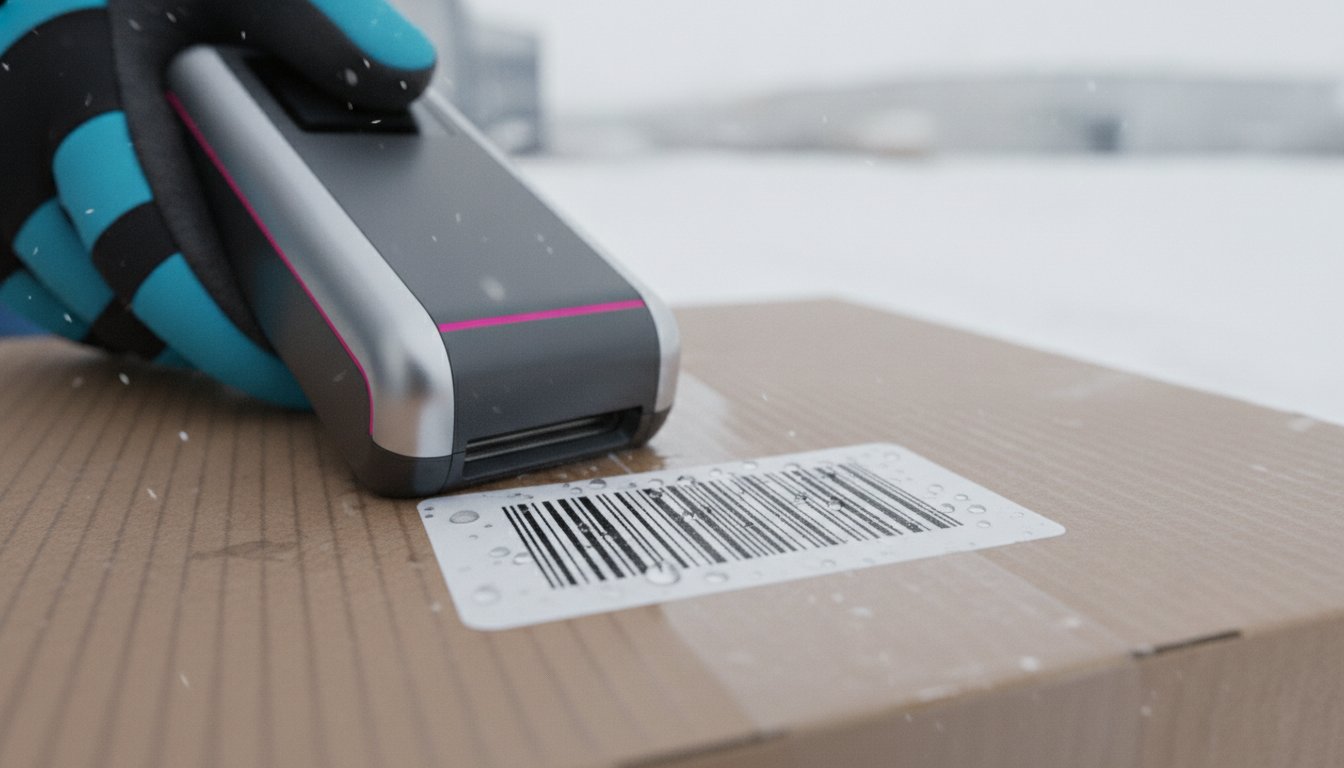
How much revenue is lost when a delivery driver can't scan a package because the label has turned into a blurred, soggy mess? You likely realize that standard paper labels often fail the moment they face moisture, abrasion, or the freezing temperatures common in Canadian logistics. It's frustrating to deal with printer jams or the constant need for replacements that drive up operational costs. This is where Ultramax DT Mobile Direct Thermal labels change the game for field operations. By combining the convenience of direct thermal technology with the ruggedness of synthetic film, these labels ensure your data stays intact from the warehouse to the customer's doorstep.
We understand that operational seamlessness is the backbone of your business growth. That's why we've focused on providing solutions that prioritize fiscal responsibility through reduced failure rates. In this article, you'll discover how Ultramax DT synthetic labels provide ribbon-free durability for mobile printing in the most demanding environments. We'll examine the technical advantages of patent-pending BOPP film, its verified service temperature range from -54°C to 93°C, and how it serves as a reliable alternative to traditional thermal transfer setups. You'll learn how these labels remain scannable for up to a year in outdoor conditions, ensuring your logistics chain remains uninterrupted. This focus on "great durability" when labels are introduced to water or condensation is a core principle we apply across our entire range of industrial marking solutions.
Key Takeaways
- Understand the technical advantages of synthetic BOPP film over traditional paper to prevent label failure in demanding field conditions.
- Learn how Ultramax DT Mobile Direct Thermal labels provide rugged, ribbon-free durability across a wide service temperature range of -54°C to 93°C.
- Discover how chemical resistance against common industrial substances like alcohol and saltwater ensures barcodes remain scannable for the long term.
- Identify the best practices for configuring mobile printers from Zebra, TSC, and Honeywell to maximize print quality and equipment longevity.
- Realize the operational benefits of sourcing industrial-grade labels from a Canadian supplier to reduce lead times and stabilize your supply chain.
What are Ultramax DT Mobile Direct Thermal Labels?
Ultramax DT is a synthetic BOPP film engineered for rugged environments. This material represents a significant leap forward for logistics teams who need labels that don't quit. Unlike standard paper options that tear or degrade when exposed to moisture, Ultramax DT Mobile Direct Thermal labels use a patent-pending synthetic facestock designed specifically for the rigours of field service. By moving away from wood-pulp based products, businesses can achieve a level of operational seamlessness that was previously only possible with stationary industrial printers.
The "DT" in the name refers to Direct thermal printing, a process that creates images by applying heat directly to the label surface. This technology is essential for mobile operations because it eliminates the need for ink ribbons or toners. For a delivery driver using a Zebra ZQ630, this simplicity is vital. Carrying extra ribbons in a truck is impractical and leads to downtime; with mobile direct thermal labels, the printer's heat activates a specialized topcoat. This creates a high-contrast image without the mechanical complexity of thermal transfer ribbons, allowing for a lighter, more reliable mobile setup.
The Evolution of Mobile Direct Thermal Technology
The logistics industry has moved beyond simple paper rolls. In the past, mobile printing was often limited to indoor receipts that would fade or smudge under the slightest pressure. Today, high-performance synthetics like Ultramax DT have solved these legacy issues. Smudge-prone labels are a liability in modern logistics, especially as 2026 standards demand higher scannability rates for automated sorting systems. If a barcode is scratched or damp, the package gets rejected. This stalls your operation and increases costs, making the shift to durable synthetics a matter of fiscal responsibility.
Durability Across the Product Line
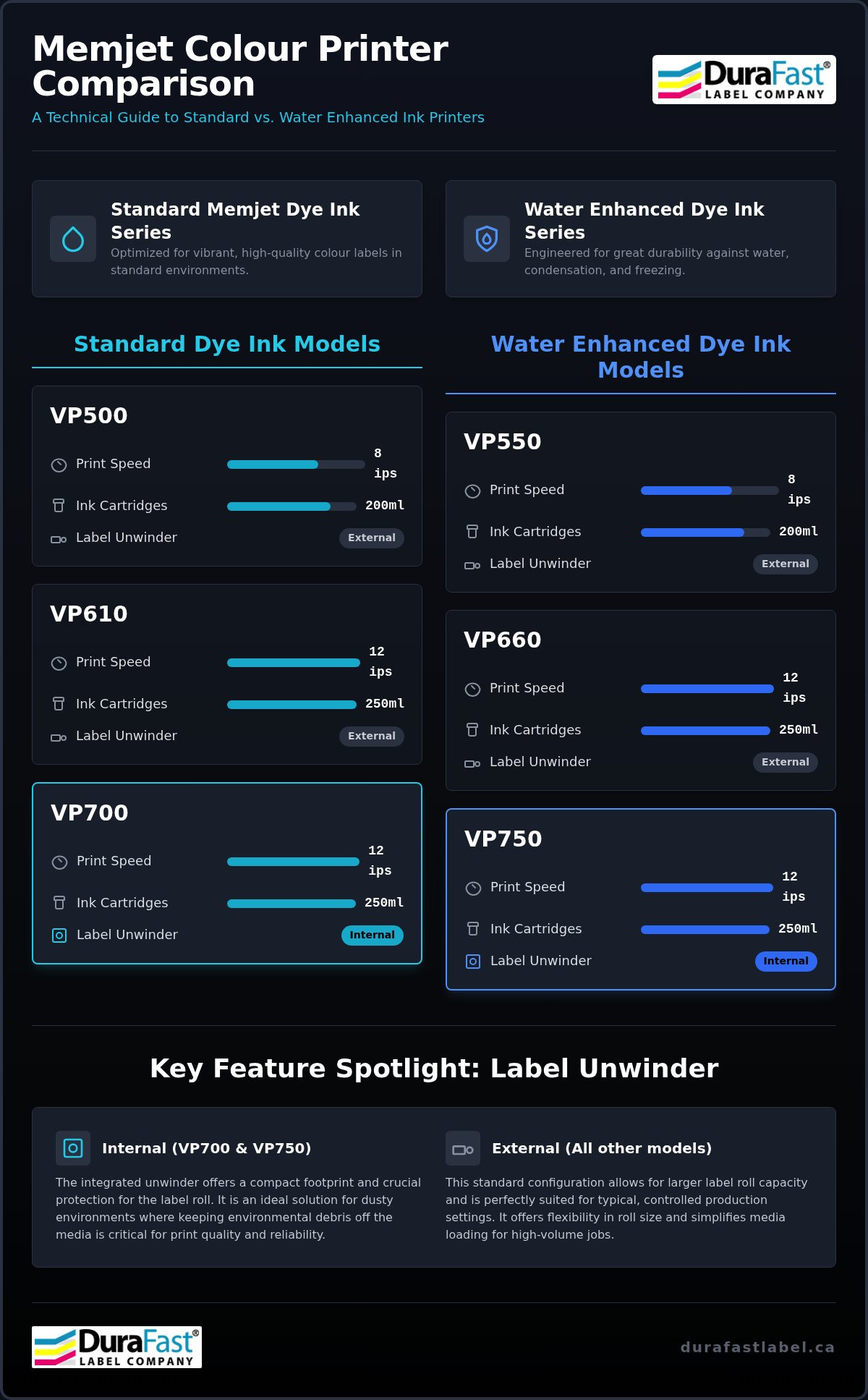
Our commitment to rugged performance extends to our colour label printers as well. We clearly distinguish between our standard Memjet dye ink series and our water enhanced dye ink series. The standard VP500 prints at 8 ips with 200ml cartridges, while the VP610 and VP700 reach 12 ips with 250ml cartridges. For applications involving moisture or frozen foods, the water enhanced VP550 (8 ips, 200ml) and VP660 (12 ips, 250ml) offer the "great durability" required. Both the VP700 and VP750 feature an internal label unwinder to protect rolls from environmental debris, whereas the VP500, VP610, VP550, and VP660 utilize external label unwinders.
Key Specifications for Canadian Mobile Applications
Precision matters when you're outfitting a fleet of mobile printers. Ultramax DT is typically available in standard 2-inch and 4-inch widths to fit most portable units. However, the most critical specification for mobile compatibility is the core size. Most portable printers require a 0.75-inch core, which is significantly smaller than the 1-inch or 3-inch cores used in desktop or industrial models. This BOPP (Biaxially Oriented Polypropylene) facestock provides the tear resistance and environmental durability that paper simply can't match, ensuring your labels stay intact from the warehouse to the customer.
The Science of Synthetic Durability: Why BOPP Matters
Why do some labels survive where others fail? The answer lies in the molecular structure of Biaxially-oriented polypropylene (BOPP). This synthetic material provides the foundation for Ultramax DT Mobile Direct Thermal labels, offering a level of chemical resistance that paper cannot match. In industrial settings, labels are often exposed to harsh substances like alcohol, bleach, ammonia, and even xylene. While these would dissolve the face of a standard paper label, the polypropylene base remains unaffected. This durability ensures that critical tracking data isn't lost during the cleaning of equipment or accidental spills in the field.
Beyond the base material, the patent-pending top-coat plays a vital role in maintaining high-contrast barcode clarity. This layer is engineered to handle "environmental debris" such as dust and grit without allowing it to scratch the printed image. It also provides UV resistance, preventing the yellowing or fading that typically occurs when direct thermal paper is exposed to sunlight. By choosing a synthetic option, you're investing in a label that remains readable for up to a year in direct outdoor exposure, which is a significant advantage for Canadian logistics and field services.
Performance in Wet and Cold Environments
Canadian winters and refrigerated logistics demand "great durability" when labels face water or condensation. Standard adhesives often fail in these conditions, but Ultramax DT is specifically engineered for frozen food and outdoor applications. With a verified service temperature range of -54°C to 93°C, the permanent adhesive maintains a secure bond even at sub-zero temperatures. This is particularly relevant for businesses choosing between our printer models. For instance, while the standard VP610 prints at 12 ips with 250ml cartridges, those requiring extreme moisture resistance should opt for the water enhanced VP660, which also prints at 12 ips with 250ml cartridges. Both utilize external label unwinders, but for dusty environments, the VP750 offers an internal label unwinder to further protect your media from the elements.
Protecting Your Mobile Hardware
Using high-quality synthetic liners doesn't just benefit the label; it protects your printer. Paper labels naturally shed dust and fibres, which accumulate on the printhead and rollers. Over time, this debris acts as an abrasive, leading to premature failure. Synthetic facestocks are inherently cleaner, which directly contributes to printhead longevity. For more information on keeping your equipment in top shape, see our guide on Thermal Printheads: Maintenance and Replacement. If you have questions about which material fits your specific mobile unit, you can always speak with our technical team for a tailored recommendation.
Ultramax DT vs. Standard Paper Labels: Performance Analysis
Why does material choice impact the bottom line? While standard paper labels are cost-effective for short-term indoor use, they lack the structural integrity required for the Canadian supply chain. Ultramax DT Mobile Direct Thermal labels utilize a biaxially oriented polypropylene (BOPP) facestock that is virtually impossible to tear by hand. This physical strength prevents labels from being ripped off packages during sorting or transit. In contrast, paper labels often fail at the edges when snagged on conveyor belts or pallet wraps, leading to unidentified shipments and costly manual intervention.
Have you considered the friction your labels endure inside a delivery vehicle? High-friction environments are the enemy of standard direct thermal paper. Without a protective topcoat, paper labels smudge and lose contrast when rubbed against other boxes. Ultramax DT is engineered with a scratch-resistant surface that maintains barcode integrity even after extensive handling. This durability isn't just about aesthetics; it's about fiscal responsibility. By reducing the frequency of label replacements and preventing "lost" packages, the higher initial investment in synthetic media results in a significantly lower Total Cost of Ownership (TCO).
When to Choose Synthetic Over Paper
Choosing the right media depends on your specific application. Paper labels are perfectly sufficient for temporary retail price tags or indoor office use where environmental stress is minimal. However, for mission-critical applications like outdoor asset tracking, medical specimen labelling, or long-distance shipping, Ultramax DT is the strategic choice. If you're unsure which hardware best supports these materials, our Direct Thermal Label Printers: Comparison Guide provides a detailed breakdown of compatible equipment for various industrial needs. Realizing the waste reduction of fewer failed labels is a key step toward a more sustainable operation.
The Scannability Factor
How often does your sorting equipment reject a package due to a "no-read" error? Automated distribution centres rely on high-contrast barcodes to maintain speed. Ultramax DT provides a superior white background and deep black imaging, ensuring contrast ratios that exceed global supply chain standards. This precision is especially important when using high-speed equipment. For instance, while the standard VP500 prints at 8 ips, the VP610 and VP700 models reach 12 ips using 250ml cartridges. The VP700, like its water enhanced counterpart the VP750, features an internal label unwinder to protect your media from environmental debris. This ensures that 100% scan success rates are achievable, protecting your supply chain from unnecessary delays.
Optimizing Mobile Printing: Compatibility and Best Practices
Achieving peak performance from your mobile fleet requires more than just high-quality media. Ultramax DT Mobile Direct Thermal labels are engineered for universal compatibility with leading hardware from Zebra, TSC, Honeywell, and Brother. To ensure seamless operation, you must calibrate your devices specifically for synthetic media. Unlike paper, which absorbs heat differently, synthetic BOPP requires a slightly higher darkness setting to achieve crisp, high-contrast barcodes. We recommend starting with a mid-range darkness setting and a print speed of 2 to 4 inches per second (ips) to ensure the thermal topcoat activates perfectly without overheating the printhead.
Accurate indexing is another critical factor for operational efficiency. Most Ultramax DT rolls include a black sensing mark on the back of the liner. This mark tells the printer exactly where one label ends and the next begins, preventing the "drift" that leads to wasted media. In Canadian warehouses where humidity levels fluctuate, storage also plays a role in performance. Keep your rolls in a cool, dry centre away from direct sunlight to preserve the integrity of the patent-pending topcoat and the permanent adhesive.
Zebra and TSC Mobile Integration
If you're using the Zebra ZQ600 series or the TSC Alpha series, sensor alignment is paramount. Ensure your printer's transmissive or reflective sensor is positioned to detect the die-cut edges or the black mark. For businesses seeking consistency across their entire operation, maintaining parity between mobile units and stationary hardware is a smart move. For example, while your field teams use mobile units, your central hub might use a VIPColor VP700 with an internal label unwinder to protect rolls from environmental debris. The VP700 maintains a 12 ips speed with 250ml cartridges, while the entry-level VP500 offers 8 ips with 200ml cartridges and an external label unwinder. You can learn more about achieving this in our Zebra ZD421 Desktop Printer Guide.
Linerless vs. Die-Cut Ultramax DT
Choosing between die-cut and linerless options depends on your specific workflow. Die-cut Ultramax DT Mobile Direct Thermal labels are the standard for shipping and asset tracking because they are easy to peel and apply. However, linerless options are gaining popularity in Canadian logistics as a way to reduce environmental waste. This transition reduces the frequency of roll changes, which is a major benefit for high-volume field services. If your application involves wet labels or condensation, remember that parity extends to your desktop units too; the water enhanced VP660 (12 ips, 250ml) offers the great durability needed for such environments. While the VP660 prints at 12 ips, the VP550 offers a max print speed of 8 ips with 200ml cartridges. Both utilize external label unwinders. For a deeper dive into portable hardware options, consult our TSC Mobile Printers Guide.
Are you ready to upgrade your mobile labelling strategy with rugged, Canadian-tested solutions? Contact our technical experts today to find the perfect match for your printer fleet.
Securing Your Supply Chain with DuraFast Label Company Canada
Why leave your supply chain to chance with international vendors? Sourcing your Ultramax DT Mobile Direct Thermal labels from a local partner like DuraFast Label Company Canada eliminates the risk of border delays and fluctuating exchange rates. We maintain a robust inventory designed to keep national logistics networks moving without interruption. This proximity doesn't just save time; it allows for a higher level of precision when organizing bulk orders. By consolidating your label procurement with a domestic specialist, you realize greater fiscal efficiency and a more predictable operational budget.
While many businesses rely on the standard 4x6 mobile label, your specific workflow might require custom dimensions or unique configurations. DuraFast Label Company Canada provides the technical expertise to produce labels that fit your exact needs, whether you're outfitting a fleet of handheld printers or synchronizing with your central distribution hub. This synchronization often involves matching your mobile media with the right stationary hardware. As discussed earlier regarding our VIPColor lineup, we ensure that your custom synthetic media performs perfectly whether it's used in a mobile unit or a high-speed desktop printer like the VP750.
Expert Consultation for Industrial Labelling
Do you have a complex logistical hurdle that standard labels can't solve? DuraFast Label Company Canada acts as a strategic partner, leveraging our advisory voice to help you match the right Ultramax DT product to your specific field application. Whether you're dealing with extreme temperature fluctuations or high-abrasion environments, we can help you take control of your production processes to achieve better results. You can Browse our Ultramax DT Mobile Label inventory to find the specifications that best align with your business goals.
National Support and Reliability
Ensuring your operations remain seamless requires a supplier that understands the intricacies of the Canadian market. DuraFast Label Company Canada has built its reputation on providing industrial-grade consumables with the precision that modern business demands. By maintaining consistent stock levels nationally, we help you avoid the disruption of backorders. If you're looking to expand your labelling capabilities with Ultramax DT Mobile Direct Thermal labels, our Comprehensive Guide to Thermal Label Printers offers a thorough overview of the hardware options available to help your business grow.
Empowering Your Logistics with Rugged Labelling Solutions
Transitioning to high-performance synthetics is a strategic move for any business facing the harsh realities of the Canadian supply chain. You've seen how the patent-pending BOPP film of Ultramax DT Mobile Direct Thermal labels provides the rugged durability needed to withstand moisture, abrasion, and extreme temperatures. By eliminating ribbons and reducing label failure, you protect your fiscal interests and ensure operational seamlessness. Whether you're utilizing the standard VP610 or the water enhanced VP660, choosing the right media is essential for maintaining scannable barcodes in high-friction environments.
DuraFast Label Company Canada acts as an authoritative, Canadian-based specialist to help you navigate these technical choices. We understand that protecting your mobile hardware from environmental debris is just as important as the labels themselves. By matching your printer fleet with industrial-grade consumables compatible with all major mobile printer brands, you take control of your distribution process. If you're ready to optimize your field operations and reduce long-term costs, we're here to guide you. Speak with our labelling experts today to secure your supply chain. We look forward to helping your business grow.
Frequently Asked Questions
Do Ultramax DT Mobile Direct Thermal labels require a ribbon?
No, they don't require a ribbon because they utilize direct thermal technology. The printer's heat activates a specialized topcoat on the synthetic facestock to create the image. This simplifies your mobile operations by removing the need for extra consumables like thermal transfer ribbons. It's a significant advantage for field service teams who need to minimize equipment weight and avoid downtime caused by ribbon changes or mechanical complications during transit.
Are Ultramax DT labels waterproof for outdoor use in Canada?
Yes, these labels are highly resistant to water and condensation. They're engineered with a biaxially oriented polypropylene (BOPP) base that doesn't absorb moisture or degrade when wet. This makes them ideal for the unpredictable Canadian climate. They can withstand direct outdoor exposure for up to one year while remaining completely scannable. This durability ensures that your tracking information stays intact regardless of rain, snow, or humidity levels during the shipping process.
Will these labels fit my Zebra ZQ630 or TSC Alpha-4L mobile printer?
Absolutely, Ultramax DT rolls are specifically designed for universal compatibility with major brands like Zebra, TSC, and Honeywell. They typically feature the 0.75-inch core required by most portable units. You'll just need to ensure your printer sensor is aligned with the black sensing mark on the liner for accurate indexing. These labels are a reliable drop-in replacement for standard media, allowing you to upgrade your durability without changing your existing hardware fleet.
What is the shelf life of synthetic direct thermal labels compared to paper?
Synthetic direct thermal labels generally offer superior longevity compared to standard paper. While typical indoor warehouse labels remain scannable for up to two years, Ultramax DT's patent-pending topcoat provides extra protection against environmental factors. It prevents the yellowing often seen with paper when exposed to UV light. DuraFast Label Company Canada ensures these materials maintain their integrity for extended periods, protecting your data and long-term inventory tags from degradation.
Can I use Ultramax DT labels for frozen food applications?
Yes, they're an excellent choice for cold storage and frozen food environments. The permanent adhesive has a verified service temperature range of -54°C to 93°C, ensuring a secure bond even in sub-zero conditions. This "great durability" is a key reason why logistics managers choose these synthetic options. They don't peel or lose adhesion when introduced to frost or condensation, making them a reliable tool for maintaining supply chain visibility in refrigerated distribution centres.
Why should I choose synthetic BOPP over standard direct thermal paper?
You should choose synthetic BOPP when your application demands tear resistance and chemical protection. Standard paper labels often fail when exposed to moisture, oils, or cleaning agents. In contrast, Ultramax DT Mobile Direct Thermal labels are virtually indestructible by hand and resistant to substances like alcohol and bleach. This physical strength prevents labels from being ripped off during sorting, which significantly reduces the operational burden of lost packages and manual re-labelling.
Are there 4x6 options available for mobile direct thermal printers?
Yes, 4x6 shipping labels are a standard offering for mobile direct thermal printers. This size is essential for creating industry-standard logistics labels that include all necessary barcodes. While desktop printers like the VP610 or VP660 use larger rolls, our mobile-compatible 4x6 rolls are wound on 0.75-inch cores. This ensures they fit perfectly inside portable units while providing the same industrial-grade durability as the larger format synthetic labels used with our stationary VIPColor printer models.
How do Ultramax DT labels handle high-friction environments like shipping?
These labels are engineered with a scratch-resistant topcoat that excels in high-friction settings. In a delivery truck or sorting centre, boxes often rub against each other, which would smudge standard paper barcodes. Ultramax DT Mobile Direct Thermal labels maintain high-contrast clarity even after significant abrasion. This ensures that your barcodes remain scannable throughout the entire journey, preventing "no-read" errors and keeping your automated distribution processes running at peak efficiency without the need for manual intervention.