TT306 Jewellery Labels: Professional Rat Tail Tags Guide
18th Oct 2026
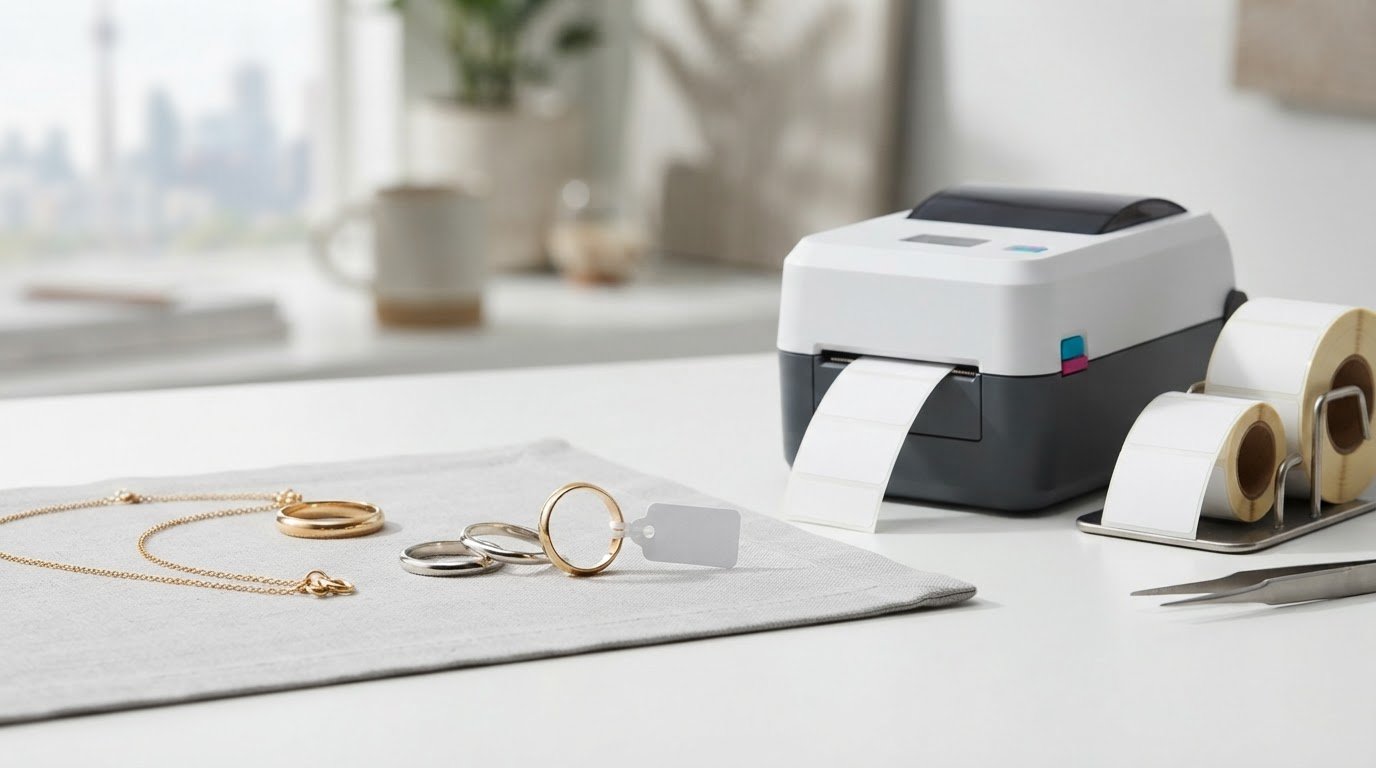
Could a tag with the right model number still be the wrong fit for your jewellery workflow? With names like rat tail tags and jewellery labels used across product listings, it can be difficult to know what TT306 refers to and which details matter before choosing.
It’s sensible to look beyond the model name. TT306 is a specific option within the rat tail tag category, but a confident selection depends on how the tag suits the jewellery you label and the equipment and processes you already use. Avoid assumptions based on a similar model number or a product description that leaves key details unclear.
This guide explains the TT306 product category and offers a practical way to assess its fit. You’ll learn which product information to compare, what to consider about your jewellery items and printing workflow, and how to make an informed enquiry when details need clarification. The aim is straightforward: help you narrow down the right questions before adding TT306 tags to your labelling process.
Key Takeaways
- Understand where TT306 fits within jewellery and ring labelling, without relying on the model name alone.
- Use the jewellery item, readability needs, handling, and retail process to guide your tag selection.
- Compare TT306 with TT307 and TT364 using verified product details, and avoid assuming their specifications are interchangeable.
- Review the tag information and your existing printing workflow before deciding whether it suits your operation.
- Prepare the details of your application to make a focused enquiry about TT306 Rat Tail Tags.
What Are TT306 Rat Tail Tags in Jewellery Retail?
TT306 Rat Tail Tags are a jewellery-labelling product in the rat tail tag category. The product name identifies its category, but it doesn’t establish exact dimensions, material, colour, attachment style, printing method, printer compatibility, or pack quantity. Those details should come from current product information, not assumptions based on the model number.
In retail, jewellery tags help staff distinguish and organize merchandise during everyday tasks. A tag may be used as part of a store’s process for associating an item with an internal identifier, such as a stock-keeping code, or for keeping pieces distinct while they’re handled. The store’s records and procedures provide the wider context; the tag is one part of that system.
Jewellery includes varied items and materials, from rings to necklaces. That variety makes clear identification useful for tasks such as sorting stock, retrieving a particular piece, or supporting a sale. A tag’s category alone, however, doesn’t tell you which item it will suit. Review the actual product details against your merchandise and workflow before choosing.
How Jewellery Tags Support Retail Identification
Think of a ring being moved from the stock area to a display, or a bracelet being located for a customer. A consistent identification process can help staff distinguish one piece from another and connect it with the retailer’s inventory records. The tag doesn’t necessarily tell the item’s full story. Details such as materials, origin, care guidance, or provenance belong in the retailer’s product information unless those details are deliberately included in its labelling process.
This distinction matters because identification and product description serve different purposes. A short code can help staff find a record; the record can hold richer information for sales and customer service. To understand the wider variety of items retailers may label, see Jewellery. A store can then decide what information its tagging process needs to communicate at a glance and what should remain in its records.
What the TT306 Name Tells Buyers, and What It Does Not
The name associates TT306 with Rat Tail Tags, and the product is offered for jewellery labelling. That’s a useful starting point when narrowing down a category. It isn’t a specification sheet. The model number alone doesn’t confirm the tag’s physical construction, how it attaches to an item, or whether it suits a particular printer or process.
Before ordering, use the current product details to resolve the practical questions that affect selection: what the tag’s dimensions and material are, how it is applied, and what printing setup it supports. Match those verified details to the jewellery being labelled and the way staff handle merchandise. DuraFast Label Company Canada’s jewellery and ring labels provide a relevant category reference, while product-specific information helps you assess TT306 without relying on assumptions.
A careful distinction between category and specification helps avoid choosing by name alone. Start with the retail task, identify what staff need to recognize, then use confirmed product information to judge whether the tag fits that task. This gives your team a clearer basis for comparing options and keeping item identification consistent across routine handling.
Which TT306 Tag Details Matter for Your Jewellery and Workflow?
A tag’s suitability depends on more than its category. Before choosing TT306, consider the piece it will accompany, how staff need to read and handle it, and where tagging fits into your retail process. These checks help you focus on useful product details without assuming that a model name guarantees a particular fit.
Match the Tag to the Jewellery Item
Start with the item’s size, shape, display position, and handling routine. A tag that takes up too much visual space may distract from a small piece, while one that is difficult to locate or read may slow identification. Consider how merchandise moves from receiving and storage to display and sale, then compare those needs with verified tag dimensions and attachment details.
Don’t assume the same option suits every piece. A ring displayed on a stand, a bracelet arranged in a case, and a necklace prepared for sale can present different space and handling considerations. The product category alone doesn’t establish whether a particular tag fits any of them. Use current specifications to assess each intended application, including how the tag may affect presentation and whether staff can access its information during routine work.
Review Readability, Handling, and Product Specifications
Readable identification supports everyday tasks such as locating merchandise, distinguishing similar items, and updating stock records. Decide what staff need to see quickly, then consider whether the available printable area and placement can support that information, once those details are verified. For gemstones or other product attributes, keep the tag’s identification role distinct from a fuller description: the GIA Gemstone Identification resource illustrates the specialized context behind gemstone identification.
Only include physical or technical claims that appear in current product information. For a fact-dense summary, the verified detail available here is: TT306 is a Rat Tail Tag product category associated with jewellery labelling. Dimensions, material, colour, attachment, printing method, printer compatibility, and pack quantity require verification before they’re stated as specifications.
Use this checklist to guide your review:
- Item fit: Which pieces will be tagged, and how much space is available?
- Readability: What information must staff identify quickly?
- Handling: At what points in receiving, storage, display, and sale will the tag be used?
- Specifications: What do current product details state about dimensions, material, attachment, and printing?
- Process: How will tag information relate to your inventory records and staff routines?
For a broader view of the relevant product category, explore jewellery and ring labels. If you’re weighing these requirements against a specific application, share your jewellery-tag requirements with DuraFast Label Company Canada to support a more focused product discussion.
How Should Buyers Compare TT306 with Other Jewellery Tag Options?
Similar model numbers can look like a shortcut to comparison, but they don’t explain how one tag differs from another. A reliable comparison uses the same fields for each option and fills them only with details found in current product information. That way, a buyer can separate established facts from unanswered questions instead of treating a number sequence as a product specification.
Build a Fair TT306, TT307, and TT364 Comparison
Use a consistent checklist across all three models. The available product-category information identifies each as a rat tail tag, but doesn’t provide verified model-specific physical or technical details. The table makes that distinction visible: category is established, while the remaining fields require editorial verification against current product information before publication or purchase.
| Specification | TT306 | TT307 | TT364 |
|---|---|---|---|
| Product category | Rat tail tag | Rat tail tag | Rat tail tag |
| Dimensions | Editorial verification required | Editorial verification required | Editorial verification required |
| Material | Editorial verification required | Editorial verification required | Editorial verification required |
| Attachment details | Editorial verification required | Editorial verification required | Editorial verification required |
| Printing method and compatibility | Editorial verification required | Editorial verification required | Editorial verification required |
| Pack quantity | Editorial verification required | Editorial verification required | Editorial verification required |
This format avoids presenting unverified differences as facts. It also makes missing information easy to spot, so a model can’t appear to be a better fit simply because its name sounds familiar or its number is higher. If current product information doesn’t establish a distinction, keep the comparison neutral.
Choose by Application Rather Than Assumed Model Differences
Start with the jewellery item and how it will be displayed, stored, and handled. Then connect verified specifications to a practical need: dimensions may help assess space and presentation, while attachment details may inform how the tag fits into the handling process. Those considerations are useful only once the corresponding product facts are confirmed.
For example, a retailer comparing tags for pieces displayed in different ways should first identify the relevant space and handling requirements. The retailer can then compare verified dimensions and attachment information across models, rather than assuming a model number signals a smaller tag, different material, or particular use. If the available facts don’t establish a meaningful difference, there’s no sound basis for calling one model superior.
Before making a decision, review each option against the same questions:
- Which jewellery items will be tagged, and how are they displayed?
- What verified dimensions and attachment details support that application?
- What printing method, compatibility, and pack information does current product data specify?
- Do the confirmed differences address a real need in the retail process?
This approach turns model comparison into a practical assessment, not a guess. Keep the product details and intended use together, and base the decision only on differences that current information supports.
How Can You Assess TT306 Fit with Your Printing and Retail Process?
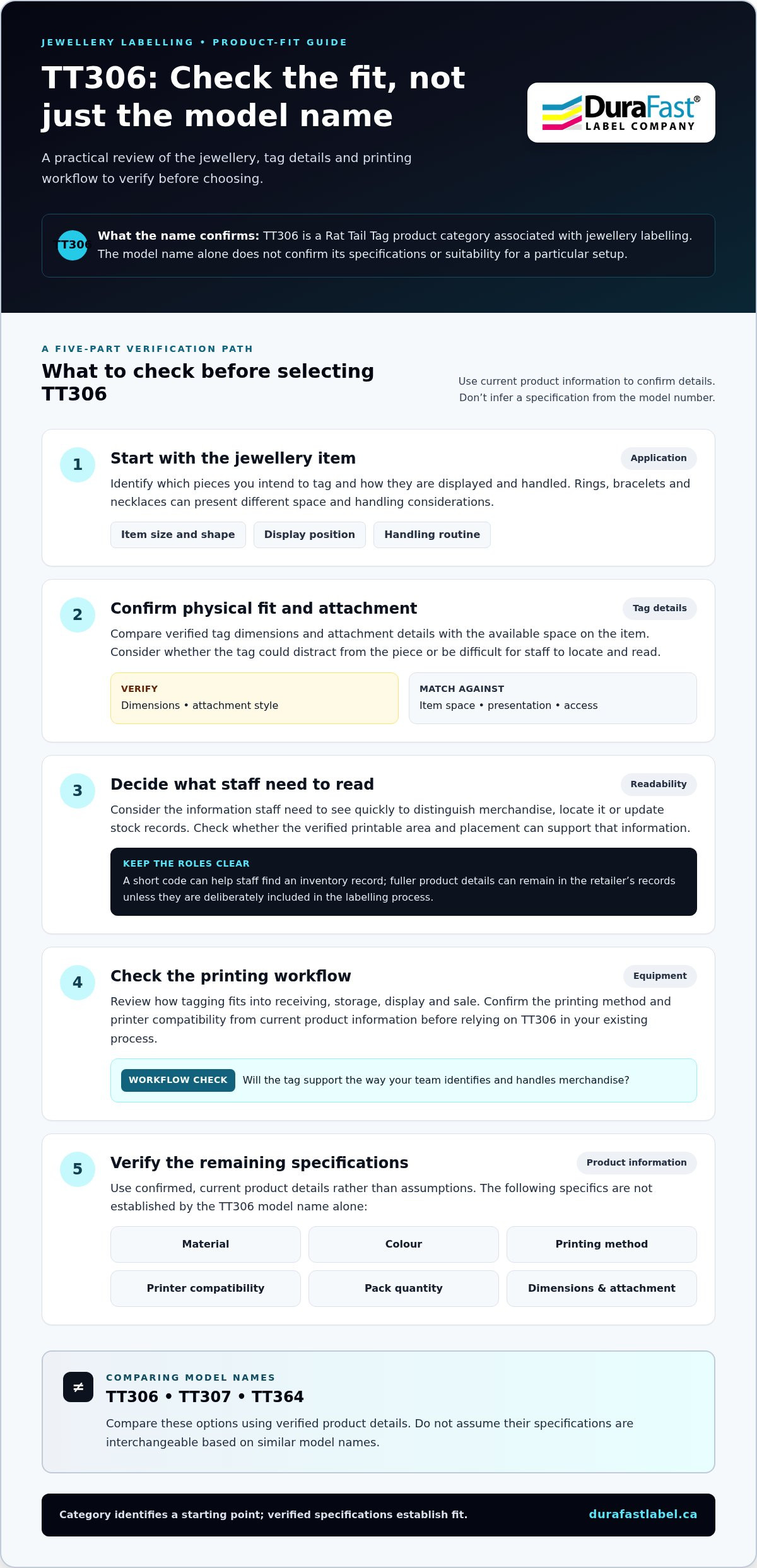
A tag can only support a smooth retail process if its verified details align with the way your team prepares and handles merchandise. Assess the item, product information, equipment requirements, and staff routine in sequence. This helps you identify what you know, what still needs to be checked against current product details, and whether the tag fits the application.
Map the Existing Tagging Workflow
Trace a typical item from arrival to sale. Note when staff identify it, where it is stored or displayed, and whether the tag is handled, removed, or replaced along the way. A receiving team may apply identification before an item goes into stock; sales staff may need to locate or read that information while assisting a customer. The exact steps vary by store, so map your own process rather than assuming every retailer works the same way.
Also identify who does each task. If several team members apply or read tags, consistent placement and clear information can make the routine easier to follow. Consider display practices, too: a tag used on merchandise in a case may be handled differently from one kept with an item in storage. The jewellery and ring labels category offers useful context for considering tags alongside the jewellery items and retail tasks they support.
Check Equipment and Product Fit Without Guesswork
Keep general equipment questions separate from confirmed product compatibility. Your process may involve a printer, software, supplies, or a way to apply the tag, but those needs don’t prove that a particular tag will work with a specific setup. Compare equipment requirements only with documented TT306 information. Don’t infer printing methods or compatible models from the tag’s name or from specifications for other products.
Use this numbered review before deciding:
- Identify the use. Record which jewellery items need tags, where staff handle them, and what information they need to identify.
- Review verified specifications. Use current product details for dimensions, material, attachment, printing requirements, and other relevant attributes. Leave any unanswered specification unresolved rather than guessing.
- Assess the workflow. Compare those verified details with how your team prepares, prints or obtains, applies, reads, and manages tags. Note any equipment requirements that need to match the product information.
- Decide against the application. Choose TT306 only when the documented product details fit the intended use and the workflow. If the available information doesn’t establish a needed fit, gather the missing product detail before making the decision.
This method keeps the decision grounded in your actual retail process. It also gives staff and purchasing teams a shared set of criteria, reducing confusion between a general equipment requirement and a confirmed product specification. For guidance related to your jewellery-tag application, discuss your TT306 requirements with DuraFast Label Company Canada.
Where Can You Get TT306 Rat Tail Tags and Make an Informed Next Step?
DuraFast Label Company Canada offers TT306 Rat Tail Tags as an option within jewellery labelling. They may be relevant to retailers looking for a rat tail tag category product, but deciding whether it suits a particular application depends on the item, retail process, and verified product information. A clear enquiry can bring those points together without relying on assumptions about the model number.
Before discussing your application, note what the tag needs to support. Which jewellery items will you label? What information do staff need to identify during routine work? How are tags handled from receiving through display and sale? These practical details help focus the conversation on fit, while current product information provides the basis for any specification or equipment discussion.
Prepare a Clear Product Enquiry
A useful enquiry describes the task, not just the product name. For example, explain the types of jewellery you intend to label, how staff organize the items, and when they need to read or manage the tag. Include details about your workflow, such as who handles tagging and where it takes place. This gives the discussion a clear operational context without presuming that TT306 has a specific dimension, material, attachment, or performance feature.
If equipment is part of your process, identify it only where it affects documented product fit. Share the relevant printer or application requirements alongside the current product specifications you’re working from. Avoid treating a printer model or printing method as compatible unless TT306 product information states that it is. The goal is a practical assessment based on the product details and your intended use.
- Jewellery application: Identify the item types and how they’re displayed or handled.
- Retail process: Describe who applies, reads, removes, or replaces tags.
- Identification needs: Note what staff need to recognize and how that information fits your records.
- Equipment context: Include relevant setup requirements for comparison with documented product information.
- Specifications: Use current details for any physical or technical attributes that affect your decision.
Take the Next Step with DuraFast Label Company Canada
Keep the decision grounded in the intended jewellery application, your staff’s tagging routine, and verified product details. DuraFast Label Company Canada’s jewellery and ring labels category offers a related product reference as you consider your options. With your requirements organized, it’s easier to discuss whether TT306 fits the workflow you’ve described.
For a focused conversation about the product and your application, Contact DuraFast Label Company Canada about TT306 rat tail tags. Share the jewellery items you need to label and the relevant workflow details, and use current specifications to guide the discussion.
Make Your Jewellery Tagging Decision with Confidence
Before bringing a new tag into your routine, turn your requirements into a clear decision brief. Note the jewellery applications you have in mind, the information your team needs to identify, and the points in your workflow where tagging takes place. Then use current product details to resolve any specification or equipment questions that affect your choice. This gives you a practical basis for evaluating TT306 without relying on assumptions or model names alone.
If you’re preparing to move ahead, DuraFast Label offers TT306 Rat Tail Tags, and the jewellery and ring labels category is a relevant place to consider related product options. Bring your application details into the discussion so the next step stays focused on your merchandise and process. Start a TT306 product discussion with DuraFast Label and move forward with a clearer plan for jewellery identification.
Frequently Asked Questions
What are TT306 Rat Tail Tags?
TT306 is a product in the rat tail tag category for jewellery labelling. In a retail setting, a jewellery tag can help staff associate a piece with an item identifier or inventory record during storage, display, and sale. That category-level description doesn’t establish the tag’s dimensions, material, attachment, or printing requirements. Use current product details for those specifics before planning an application or ordering.
Are TT306 tags suitable for every type of jewellery?
No single tag should be assumed to suit every piece. A delicate item in a compact display may have different space and handling needs from a larger piece kept in stock storage. Consider the jewellery’s size and shape, how it’s presented, and how staff will handle it. Then compare the intended use with confirmed product details, rather than assuming TT306 dimensions or universal fit.
Can TT306 tags be used with any label printer?
Printer fit depends on the requirements documented for both the tag and the equipment, so don’t assume every printer can use TT306. A printer’s general capabilities don’t establish compatibility with a particular tag. Before building a workflow, compare current TT306 product information with the printer’s supported media and operating requirements. This helps avoid planning around a printing method or model that hasn’t been verified for the tag.
What information should a jewellery tag display?
Choose tag content based on what staff need to identify or manage during a transaction. An item identifier, stock reference, or selected retail information may be useful, depending on your store’s process. For instance, a brief identifier can point staff to fuller details in an inventory record. Decide what must be visible at the point of handling, then confirm the product’s verified print area and format before planning the layout.
How do I choose between TT306, TT307, and TT364?
Compare TT306, TT307, and TT364 using the same current product fields, such as dimensions, material, attachment, and documented printing requirements. Next, relate each verified detail to the jewellery items and retail process you’re supporting. If a field lacks confirmed information, leave it open rather than interpreting the model number. A higher or different number alone doesn’t establish a difference in fit or function.
What should I consider before adopting a new jewellery tag?
Review who handles tags, where items are displayed, and how merchandise is identified in your existing process. Consider a routine example, such as an item moving from receiving to a display case, and note where staff need to read or manage its identifier. Compare the proposed process with documented product details, then assess it against real operating needs before making a broader workflow change. Avoid assuming unverified performance.