Thermal Transfer Pot Stakes for Nurseries: The 2026 Professional Guide
6th Jul 2026
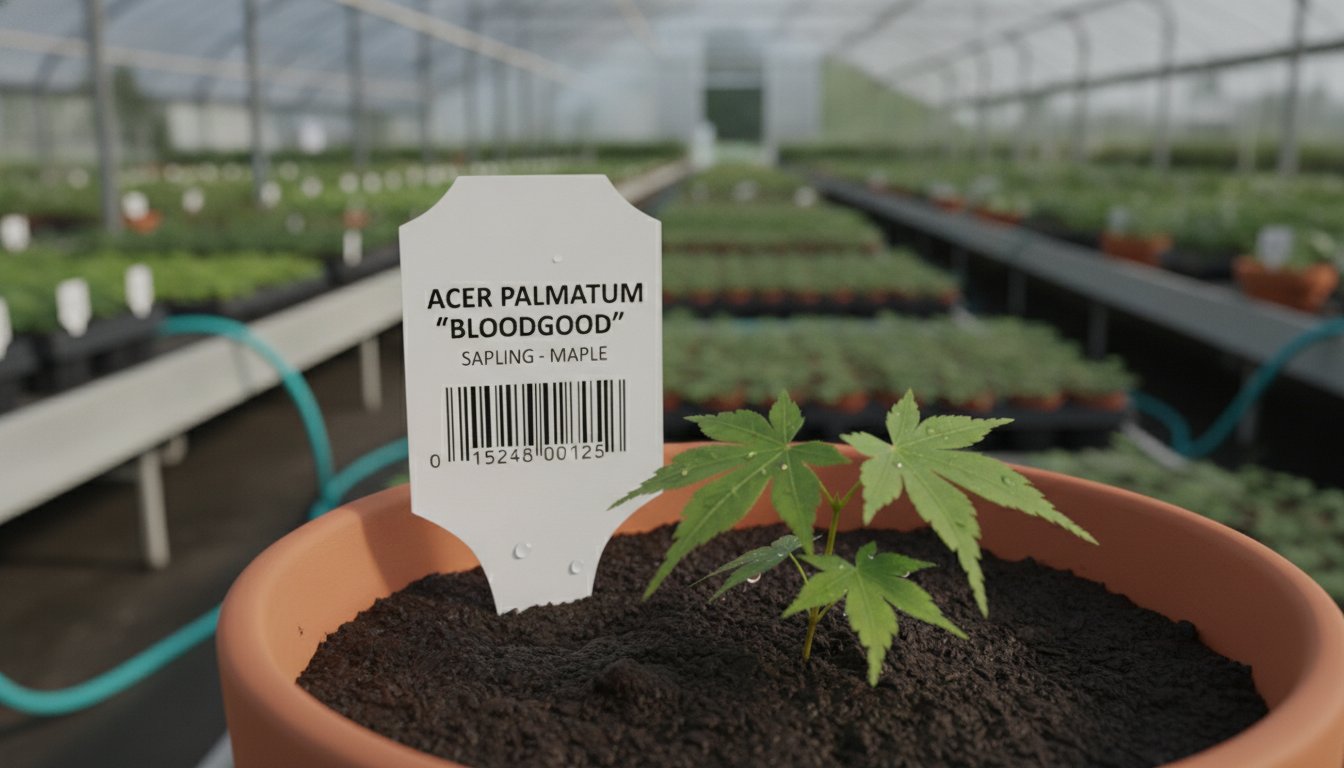
Why does a perfectly printed plant tag often look like a blank slate after just three months in the Canadian sun? For many growers, the struggle with thermal transfer pot stakes for nurseries fading under intense UV exposure or smearing due to chemical fertilizers is an expensive, recurring hurdle. You likely recognize that clear identification is a critical component of both operational efficiency and regulatory compliance. This is especially vital for the 2026 crop year, as updated standards like the USDA Nursery Value Select Pilot program now require uniquely numbered, weatherproof, and indelible labels for container-grown plants.
This guide promises to help you select and print durable, weather-resistant stakes that withstand the Canadian climate while streamlining your daily nursery operations. We'll provide a technical breakdown of the hardware specifications you need, highlighting the main difference between standard desktop units and high-performance horticulture printers. By pairing the right stake material with specific resin ribbons and near-edge technology, you'll achieve professional identification that lasts the full season. We'll also explore how to reduce labour costs through automated printing and scalable inventory tracking to support your business growth.
Key Takeaways
- Understand how the thermal transfer process creates a permanent bond for maximum longevity in variable outdoor conditions.
- Learn why stake thickness, measured in mils, is often the only difference that dictates your hardware choice so you don't experience mechanical downtime.
- Discover how to select thermal transfer pot stakes for nurseries that survive the Canadian climate while reducing your overall labour costs.
- Identify why full resin ribbons are the only reliable choice for resisting the smears caused by irrigation, weather, and chemical fertilizers.
- Recognize the main difference between automated printing and manual marking to realize significant gains in inventory tracking and professional brand presentation.
Understanding Thermal Transfer Pot Stakes for Nurseries
How do you ensure your plant identification survives a Canadian winter or a high-moisture greenhouse? Thermal transfer pot stakes for nurseries are rigid, non-adhesive horticultural tags designed specifically for insertion into soil, plug trays, or pots. Unlike standard adhesive labels that might peel in humid conditions, these stakes are engineered to maintain structural integrity and legibility in the most demanding environments. They serve as the primary link between your inventory database and the physical plant, providing a reliable method for tracking and retail presentation.
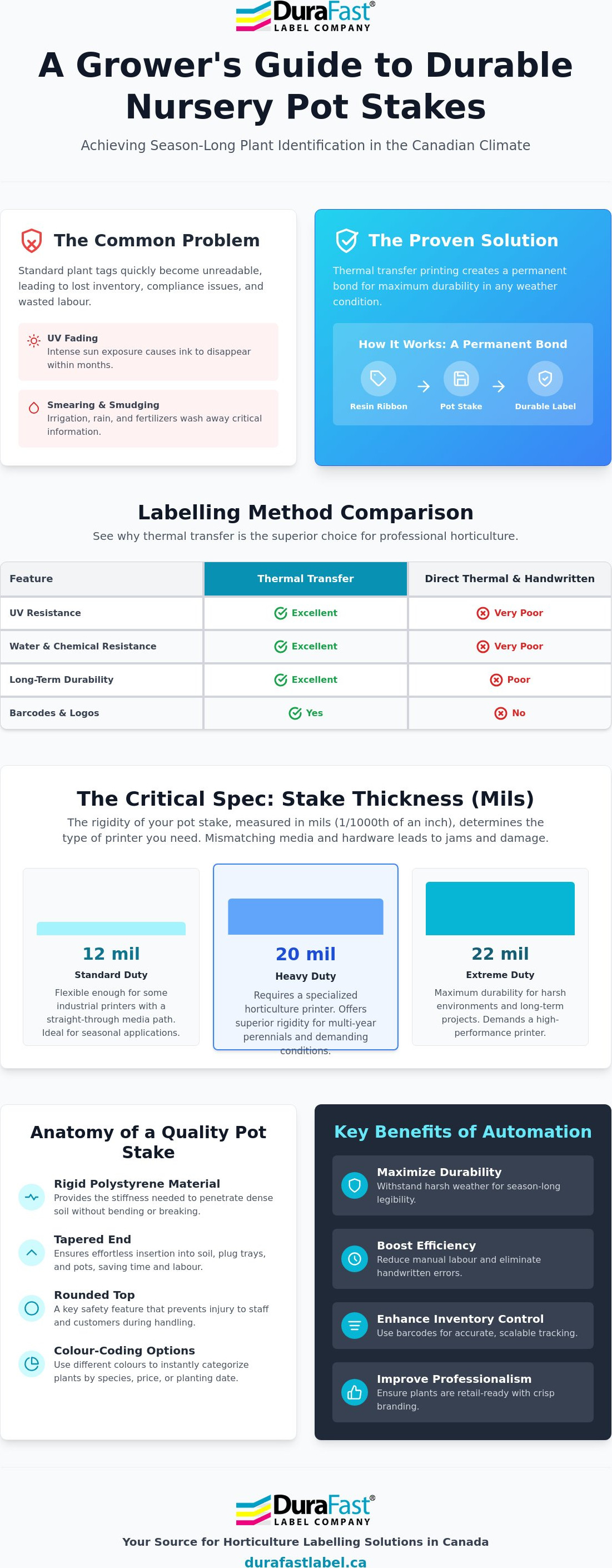
The core mechanism behind this durability is the printing method itself. Thermal-transfer printing utilizes a thermal printhead that applies precise heat to a specialized ribbon. This heat melts the ribbon's ink directly onto the plastic stake, creating a permanent bond that is far superior to traditional ink-on-paper methods. For Canadian growers, this technology is a strategic asset. It provides essential resistance to extreme temperature fluctuations and constant moisture. Whether your stock is sitting in a frozen field or a misting house, the data remains crisp and readable.
Many professional operations are currently transitioning from manual "Garden Markers" to automated printing systems. Hand-written tags are often inconsistent and prone to fading under UV exposure. Moving to an automated system allows you to print high-resolution barcodes, logos, and detailed care instructions. This shift not only improves professional branding but also ensures your products are retail-ready the moment they leave your facility.
Even as you move toward automation, certain boutique projects or display signage may still benefit from manual lettering; in these cases, utilizing premium, weather-resistant marking tools from specialized sources like poscart.com.au can help maintain a high standard of legibility and professional appearance.
Why Thermal Transfer is Essential for Horticulture
The main difference between thermal transfer and direct thermal technology is the use of a ribbon. Direct thermal tags are chemically treated to turn black when heated, which makes them highly sensitive to UV light and heat. In a nursery setting, direct thermal tags will turn grey or fade entirely within weeks. Thermal transfer creates a chemical bond that resists irrigation water, chemical fertilizers, and prolonged sun exposure. This process ensures that your branding and pricing remain intact from the initial potting stage all the way to the customer's garden centre cart.
The Anatomy of a High-Quality Pot Stake
High-quality horticulture labels and stakes are typically manufactured from Polystyrene or Styrene. These materials offer the rigidity needed to penetrate dense soil without bending. The physical design is equally intentional. Most stakes feature tapered ends for effortless soil insertion and rounded tops to prevent injury during handling. You can also utilize colour-coding options, such as blue, orange, or red, to categorize inventory by species, price point, or planting date. This visual system allows your staff to identify and sort stock at a glance, significantly reducing picking errors. If you are looking for specific media, you can find various thermal transfer tags and stakes designed to meet these industrial standards.
Technical Specifications: Thickness, IPS, and Printer Compatibility
Why do some printers handle thermal transfer pot stakes for nurseries with ease while others suffer from constant jams and broken printheads? The answer lies in the "mil" thickness of the media. A "mil" represents one-thousandth of an inch; in the horticulture industry, this measurement dictates your entire hardware strategy. Most standard desktop printers are designed for thin adhesive labels, but pot stakes are significantly more rigid. If you attempt to run heavy-duty stakes through a consumer-grade unit, the lack of clearance will lead to mechanical failure and poor print quality.
The main difference between standard .012 stakes and heavy-duty .020 or .022 stakes is the level of physical resistance they offer. Using .012 media as a baseline, a .020 mil stake represents a significant delta in rigidity and durability. While a .012 stake is flexible enough for most industrial label printers with a straight-through paper path, the .020 and .022 variants provide the superior longevity required for multi-year perennials or large shrubs. Sometimes, the only difference between a successful seasonal print run and a shredded ribbon is the printer's ability to adjust mechanical pressure for these thicker materials. These rigid stakes require high-torque motors to ensure the media moves consistently at the desired "ips" (inches per second). For nurseries scaling their production, maintaining a high ips is the only way to meet shipping deadlines without bottlenecking the potting line.
When managing high-volume nursery rolls, you must also consider the role of label unwinders. Internal label unwinders are convenient for keeping the media protected from the "dusty" conditions of a potting shed. Other than this, external label unwinders allow you to use much larger rolls, which reduces the frequency of media changes during peak season. If you are unsure which hardware matches your specific stake thickness, the technical team at DuraFast Label Company Canada can provide a compatibility assessment to help you avoid equipment mismatches.
Flat-Head vs. Near-Edge Print Technology
The technical delta between flat-head and near-edge printers is critical for stake longevity. Standard flat-head printers require the media and ribbon to stay in contact with the printhead for a longer duration, which creates significant friction when using rigid plastic. In contrast, near-edge printers utilize a different geometry. Near-edge printheads are angled to allow for thicker media passage, reducing friction and extending the life of the component in industrial nursery environments. This technology is the gold standard for printing on .020 mil media because it prevents the premature wear that typically plagues flat-head units.
Physical Design and Environmental Resilience
Greenhouses are notoriously difficult environments for electronics due to environmental debris, soil dust, and high humidity. To protect your investment, we recommend using printers with metal industrial enclosures or placing desktop units inside protective cabinets. Legibility is another factor. Compliance with Container Labeling Regulations requires clear declarations of identity, net contents, and responsibility. Utilizing a high-resolution 300 DPI printhead ensures that even small botanical names and complex barcodes remain crisp and scannable, regardless of how much potting mix dust accumulates on the stake during handling.
Comparing Labelling Methods: Thermal Transfer vs. Alternatives
How much does manual marking actually cost your business when you factor in the labour delta? While a permanent marker and a plastic stake seem like an inexpensive starting point, the lack of scalability is a major logistical hurdle. Hand-marking 1,000 stakes takes hours of staff time that could be redirected toward production. In contrast, automated thermal transfer pot stakes for nurseries can be printed at speeds of up to 10 ips. This allows you to produce thousands of legible, barcode-ready stakes in minutes. The cost-per-stake is significantly lower when you realize the labour savings and the total elimination of transcription errors.
When comparing these to inkjet solutions, the main difference between the two is the media application and ink capacity. Inkjet printers, particularly those featuring Memjet Technology, offer high-speed colour printing using large ml ink cartridges. While Memjet Technology is excellent for prime product labels, thermal transfer remains the only reliable method for printing directly onto rigid pot stakes. Other than this, thermal transfer resin provides a higher level of abrasion resistance against the soil and grit found in nursery environments. Inkjet labels are typically adhesive-based and require a flat surface, whereas pot stakes rely on the physical bond created by melting resin onto a plastic substrate.
Maintaining legibility is not just about aesthetics; it's a requirement for effective inventory tracking. According to this guide to thermal transfer ribbons, the choice of ribbon type directly impacts the scannability of barcodes in harsh conditions. For full-sun outdoor displays, a high-quality resin ribbon is the only solution that prevents the fading common with cheaper ink-based alternatives. This ensures your pricing and plant data remain scannable from the first spring frost through the peak of summer.
Thermal Transfer vs. Direct Thermal
Why is direct thermal technology generally avoided in the nursery industry? Direct thermal media is chemically treated to react to heat, which means it will darken and become unreadable when exposed to sunlight or high temperatures in a greenhouse. Thermal transfer ribbons provide the necessary delta in durability needed for Canadian summers. By using thermal transfer ribbons Canada, you ensure that your data stays crisp and your barcodes remain functional, regardless of UV exposure or heat fluctuations.
Rigid Stakes vs. Wrap-Around Tags
Your choice between rigid stakes and wrap-around tags depends on the plant variety and your potting workflow. Rigid stakes are the standard for bedding flats, herbs, and small perennials. The only difference in application is the structural requirement of the media. Wrap-around tags made from materials like Tyvek, Valeron, or Polylith are better suited for shrubs and trees. These materials are highly tear-resistant and can be looped securely around branches. While stakes are faster to insert during the high-speed potting process, wrap-around tags provide a more permanent solution for stock that stays in the nursery for multiple seasons.
Setup Guide: Matching Ribbons to Horticulture Media
Choosing the right ribbon is just as critical as selecting the stake material itself. The main difference between wax, wax-resin, and full resin ribbons is the level of chemical and scratch resistance they provide to the plastic substrate. Wax ribbons are the most economical choice, but they lack the durability required for outdoor environments. Full resin ribbons are the gold standard for thermal transfer pot stakes for nurseries because they create a resilient bond that ensures plant data remains legible even when exposed to harsh chemical fertilizers or abrasive handling during transport. This high-performance resin is the only way to guarantee that your branding won't wipe away during routine nursery maintenance or shipping.
Technical precision during setup is vital for hardware longevity and print quality. The only difference between a successful seasonal print run and a prematurely damaged printhead often comes down to ribbon width alignment. You must always match the ribbon width to the stake width; using a ribbon that is slightly wider than the stake protects the printhead from direct contact with the rigid plastic media. This prevents the abrasive surface of the stake from causing friction damage to the heating elements. Other than this, performing an adhesion test on your specific plastic stake finish is essential before initiating high-volume production at maximum ips (inches per second) speeds.
Before starting your full spring production, verify your media settings with this technical checklist:
- Perform a "scratch test" with a coin to check for ink flaking or poor resin adhesion.
- Apply water and common liquid fertilizers to the printed area to simulate greenhouse conditions.
- Check for "ribbon wrinkle" by printing a full block of black to ensure the tension is set correctly for the stake thickness.
Resin Formulations for the Canadian Climate
Canadian nurseries face unique challenges, including high humidity and extreme temperature swings. High-quality resin ribbons are specifically designed to withstand condensation and wet labels during heavy spring irrigation cycles. They also include UV-stable components that prevent botanical data from bleaching in direct sunlight. These specialized resins ensure your thermal transfer pot stakes for nurseries remain professional for the duration of the growing season. You can find the specific formulations required for these industrial conditions in our thermal ribbons category.
Software and Barcoding for Inventory Tracking
Managing a vast botanical database requires robust design tools that can handle variable data and complex barcodes. We recommend using Loftware NiceLabel or Bartender for designing your nursery tags. These platforms allow you to organize your database for "batch printing," where you can pull data for hundreds of different plant varieties from a single spreadsheet. This integration supports the use of high-resolution UPC barcodes, ensuring your products are retail-ready for any garden centre point-of-sale system. If you need assistance configuring your database for high-volume printing, contact the experts at DuraFast Label Company Canada for a software consultation.
Horticulture Labelling Solutions from DuraFast Label Company Canada
How do you maintain operational flexibility during the chaotic spring rush? DuraFast Label Company Canada provides a complete ecosystem of horticulture label printers from industry leaders like TSC, SATO, and Toshiba. We bridge the gap between hardware and media by offering thermal transfer pot stakes in various sizes and colours to suit any inventory categorization system. By bringing your production in-house, you realize the freedom to print exactly what you need when the potting line is moving. This eliminates the frustration of minimum order quantities and long lead times often associated with external print shops.
The advantage of working with DuraFast Label Company Canada lies in our technical support and deep hardware expertise specifically for the Canadian market. We don't just provide equipment; we act as a strategic partner to ensure your labelling workflow is seamless and cost-effective. Whether you're a boutique greenhouse or a large-scale commercial producer, our solutions are designed to maximize your resources while maintaining the professional brand image your customers expect.
Industrial vs. Desktop Printers for Nurseries
The main difference between our entry-level desktop models and the TSC industrial series is the physical footprint and internal media capacity. While desktop printers are excellent for smaller greenhouses with limited space, industrial models offer the ruggedness required for high-volume environments. These industrial units feature metal frames and high-torque motors that handle heavy rolls of thermal transfer pot stakes for nurseries without straining the drive system. To ensure your equipment stays operational during peak shipping windows, we also maintain a consistent stock of thermal printheads for rapid replacement, preventing costly downtime when every hour of production counts.
Custom Solutions and Expert Guidance
Every nursery operation has unique logistical hurdles, and a one-size-fits-all approach rarely yields the best results. We encourage you to consult with the team at DuraFast Label Company Canada to realize a bespoke labelling workflow that integrates with your existing inventory software. A critical part of this setup is choosing the right "ips" setting. While it's tempting to run at maximum speed, finding the balance between inches per second and print clarity is the only way to ensure your botanical names and barcodes remain scannable in the field. Other than this, we can assist in selecting the specific resin formulations that bond best with your chosen stake material. Contact DuraFast Label Company Canada today to find the perfect thermal transfer pot stake solution for your nursery.
Optimizing Your Nursery Operations for 2026
Transitioning to an automated labelling system is a strategic investment that directly impacts your nursery's efficiency and retail readiness. By matching high-performance resin ribbons with rigid media, you ensure your plant identification survives the Canadian climate and constant irrigation. We've explored how the right hardware, specifically near-edge printers from brands like SATO, Toshiba, and TSC, prevents the mechanical wear common with thicker stake materials. This shift to in-house production allows you to bypass the delays of external print shops and respond instantly to seasonal inventory shifts.
Implementing professional thermal transfer pot stakes for nurseries gives you complete control over your branding and scannability. As an authorized dealer for leading industrial brands, DuraFast Label Company Canada offers specialized horticulture media tested for the unique demands of the Canadian environment. We provide the expert technical support you need to configure your in-house printing setup for maximum reliability. Our goal is to ensure your hardware and consumables work in perfect tandem to reduce labour costs and eliminate identification errors.
Ready to streamline your potting line? Contact the experts at DuraFast Label Company Canada today to find a bespoke solution that fits your production scale. We look forward to helping your business grow with labels that last.
Frequently Asked Questions
What is the best printer for thick .020 nursery pot stakes?
Near-edge printers from brands like SATO or Toshiba are the best choice for .020 mil stakes. The main difference between these and standard flat-head units is the angled printhead, which prevents mechanical jams and reduces friction. This design allows thicker, rigid media to pass through without damaging the internal components. It's the only way to ensure long-term reliability in high-volume industrial nursery settings.
Can I use direct thermal printers for outdoor plant identification?
You shouldn't use direct thermal printers for outdoor plant identification because the media is highly sensitive to heat and UV light. Direct thermal tags are chemically treated to turn black when heated, which causes them to darken or fade entirely within weeks of sun exposure. Thermal transfer technology is the only reliable solution. It uses a ribbon to create a permanent, weather-resistant bond that withstands the Canadian climate.
How do I prevent my nursery tags from fading in the sun?
Using full resin ribbons is the most effective way to prevent fading. These ribbons contain UV-stable components that protect botanical data from bleaching in direct sunlight. Other than this, selecting high-quality thermal transfer pot stakes for nurseries made from UV-resistant plastics like styrene adds another layer of protection. This combination ensures your barcodes and pricing remain crisp and scannable throughout the entire growing season.
Do thermal transfer pot stakes work with automated potting machines?
Yes, thermal transfer pot stakes work seamlessly with most automated potting machines. These stakes are typically supplied on rolls or in fanfolded stacks that feed directly into the machine's applicator. The main difference between manual and automated stakes is the inclusion of "notches" or "black marks" on the media. These features allow the machine's sensors to detect the exact position for precise, high-speed soil insertion.
What is the difference between styrene and polylith for horticulture tags?
Styrene is a rigid, durable plastic specifically used for stakes that must be pushed into dense soil or plug trays. Polylith is a synthetic paper that is much more flexible, making it ideal for wrap-around tags or branch loops. Both materials are waterproof and compatible with resin ribbons. You should choose styrene for bedding flats and pot-bound stock, while polylith is better suited for shrubs and trees.
Which thermal ribbon is best for resisting fertilizers and pesticides?
A full resin ribbon is the only reliable choice for resisting fertilizers, pesticides, and other common nursery chemicals. Wax or wax-resin ribbons don't have the chemical bond required to stay intact when exposed to these harsh substances. Resin formulations are designed to be smudge-proof and scratch-resistant. This ensures your thermal transfer pot stakes for nurseries maintain professional legibility even after repeated irrigation and chemical applications.
How many pot stakes can I print per minute with an industrial printer?
Industrial thermal printers can reach speeds of 10 to 12 ips. For a standard five-inch pot stake, this translates to roughly 120 to 140 stakes per minute. This high-speed production is critical for scaling your nursery operations during the peak spring rush. Maintaining this output without sacrificing print clarity requires the high-torque motors found in industrial series hardware, which prevent the bottlenecking of your potting line.
Is specialized software required to print barcodes on nursery stakes?
While you can use basic printer drivers, specialized software like Loftware NiceLabel or Bartender is highly recommended for professional results. These platforms allow you to manage complex botanical databases and automate barcode generation for inventory tracking. The main benefit is the ability to perform "batch printing" across hundreds of plant varieties. This streamlines your workflow and ensures your retail-ready labels meet all scannability requirements.