Thermal Transfer Pot Stakes for Nurseries: 2026 Guide
25th Aug 2026
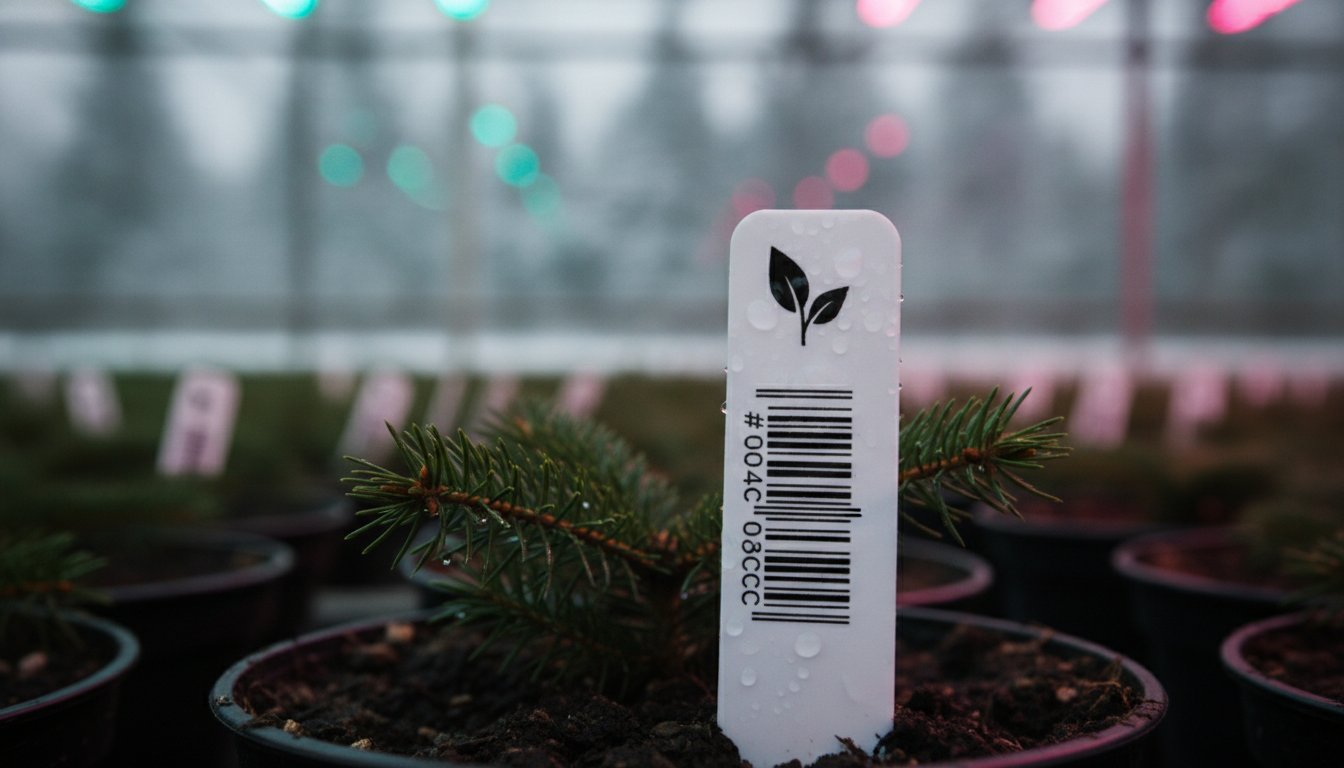
How much does a "lost" plant actually cost your nursery when the label fades to a blank white strip before the shipping season even begins? You've likely dealt with the frustration of ink smearing after a round of liquid fertilizer or stakes snapping like glass during a -30°C Canadian cold snap. It's a logistical headache that drains labour hours and complicates inventory management. Selecting the right thermal transfer pot stakes for nurseries isn't just about marking a price; it's about ensuring your plant identification remains legible from the greenhouse to the garden centre.
As your strategic partner, DuraFast Label Company Canada understands that your labelling system needs to be as resilient as the stock you grow. This 2026 guide will show you how to select and print durable, weather-resistant pot stakes that withstand the unique challenges of our climate while streamlining your daily operations. We'll explore the technical differences between standard and near-edge printers, the necessity of full-resin ribbons for chemical resistance, and how to implement barcoding to reduce manual errors. By the end of this article, you'll know exactly how to configure a hardware setup that eliminates printer downtime and keeps your inventory moving efficiently.
Key Takeaways
- Understand why the Canadian climate necessitates thermal transfer technology over direct thermal to prevent fading and brittle stakes during harsh winter months.
- Learn how to select the correct mil thickness for your thermal transfer pot stakes for nurseries and why this metric is the main difference in hardware configuration requirements.
- Discover why pairing full-resin ribbons with synthetic media is the only reliable way to ensure legibility when stakes are introduced to water and chemical fertilizers.
- Streamline greenhouse logistics by using professional software like Bartender or Loftware to implement automated inventory tracking and reduce manual labelling errors.
- Identify the essential components of a high-efficiency starter kit to successfully transition your labelling production in-house for greater operational flexibility.
Understanding the Role of Thermal Transfer Pot Stakes in Modern Nurseries
Thermal transfer pot stakes for nurseries are more than simple price markers; they serve as the primary database for your greenhouse inventory. These rigid plastic tags are designed to be inserted directly into the soil or growing media, providing a reliable surface for plant names, barcodes, and care instructions. In a professional setting, they act as the final link in a chain of logistical tracking that ensures the right plant reaches the right customer. Unlike standard paper labels, these stakes are built to survive the high-moisture, high-UV environment of a commercial greenhouse.
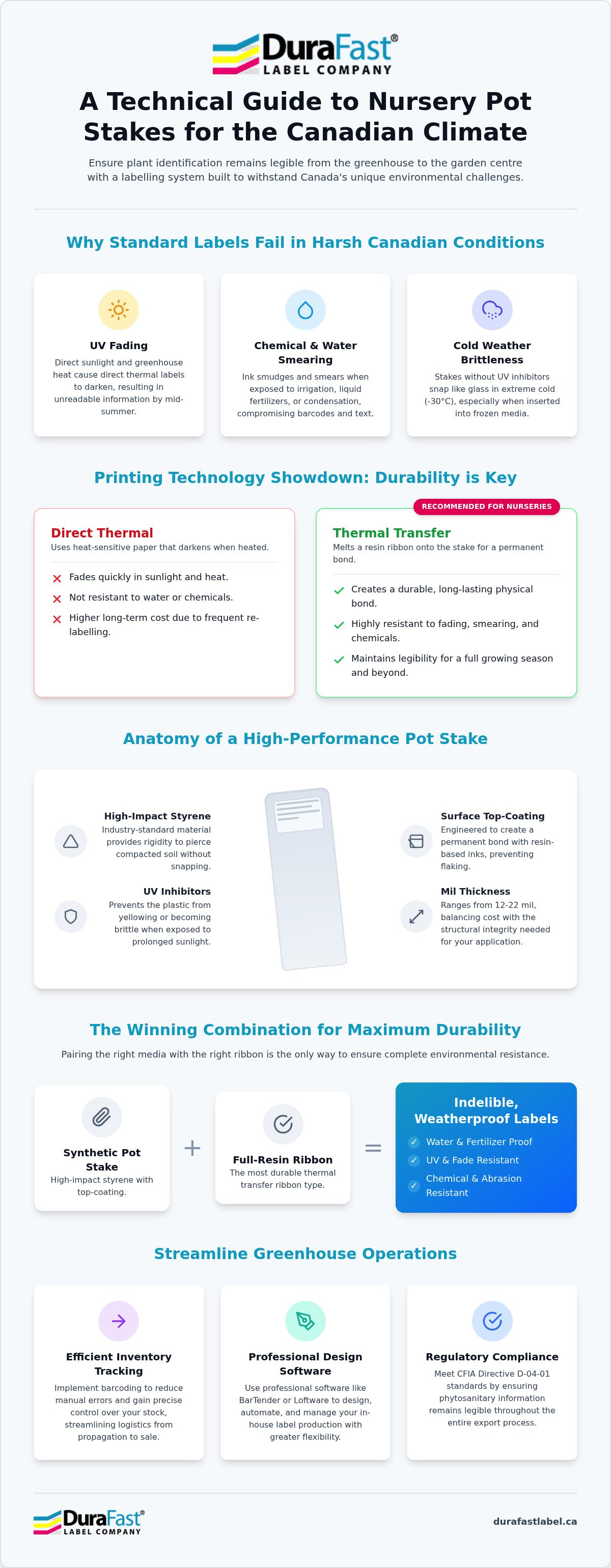
The Canadian climate presents unique challenges that make durable horticulture labels a necessity rather than an option. With the Canadian Food Inspection Agency (CFIA) updating policy directive D-04-01 in late 2025, the standards for indelible plant identification have become stricter for those participating in the Nursery Certification Program. To remain compliant in 2026, nurseries must ensure that phytosanitary information remains legible throughout the entire export process. Faded or brittle labels don't just frustrate retail customers; they can lead to regulatory delays and rejected shipments at the border.
The Anatomy of a High-Quality Pot Stake
Most professional stakes are manufactured from high-impact Styrene, which is the industry standard for rigidity. This material allows the stake to pierce compacted soil or root balls without bending or snapping. However, the plastic itself is only half the story. High-quality stakes are treated with UV inhibitors during the extrusion process to prevent the material from yellowing or becoming brittle when exposed to the sun. Additionally, a specialized surface top-coating is applied to the stake. This coating is engineered to create a permanent bond with resin-based inks, ensuring the text doesn't flake off when introduced to water or abrasive handling.
Thermal Transfer vs. Direct Thermal: The Durability Debate
Choosing the right printing method is critical for long-term success. Direct thermal technology uses heat-sensitive paper that turns black when exposed to sunlight or greenhouse heat. This often results in unreadable labels by mid-summer. In contrast, Thermal-transfer printing technology uses a heated printhead to melt a wax or resin ribbon onto the stake surface. This creates a physical bond that is resistant to fading, smearing, and chemical fertilizers.
While direct thermal printers might seem like a budget-friendly choice initially, the cost of re-labelling an entire crop due to faded text quickly erases any savings. Investing in thermal transfer pot stakes for nurseries allows you to print once and maintain legibility for a full growing season. This reliability reduces labour costs and ensures your brand remains professional in the eyes of the end-user.
Material Science: Selecting Durable Pot Stakes for the Canadian Climate
How do you ensure your plant identification survives the journey from a humid greenhouse to a windy retail lot? The physical properties of thermal transfer pot stakes for nurseries are the primary factor in determining longevity. While many growers focus solely on the printed text, the substrate's mechanical resilience is what prevents the stake from snapping during insertion into compacted or frozen growing media. The main difference between standard styrene and premium UV-treated stakes is the latter's resistance to becoming brittle when exposed to the elements.
One of the most critical metrics for any buyer is thickness, which is measured in "mils." To clarify for those new to technical specifications, a mil is defined as exactly one-thousandth of an inch. Most horticulture stakes range from 12 to 22 mil. Choosing the right thickness is a balance between cost and structural integrity. For example, matching stake length to pot depth is vital for visibility. Using a 3.5-inch stake in a deep 10-inch pot often leads to the label becoming buried during irrigation, while an 8-inch stake provides the necessary visibility for taller nursery stock.
Beyond physical durability, colour-coding serves as a strategic visual language for inventory management. Utilizing yellow, red, or blue stakes allows your staff to sort crops by age, treatment status, or shipping priority at a glance. For those adhering to the GS1 Global Traceability Standard, integrating these visual cues with scannable barcodes creates a robust system that minimizes picking errors. In many cases, the only difference between a successful inventory audit and a logistical failure is the legibility of your barcodes after months of exposure.
Technical Specifications: Thickness and IPS
The relationship between stake thickness and print speed, measured in inches per second (ips), is a logistical hurdle many nurseries overlook. Thicker 20-mil stakes provide superior rigidity but require specialized industrial hardware with high torque to maintain consistency. If you attempt to run 22-mil media through a standard desktop printer at high ips, you'll likely face frequent jams and premature motor wear. Selecting hardware that can handle the thickness of thermal transfer pot stakes for nurseries ensures your production line stays active during the peak spring rush.
Environmental Resilience in Horticulture
In Canada, stakes must survive more than just sunlight. Chemical resistance is vital, as fertilizers and pesticides can dissolve standard wax inks. True environmental resilience requires a substrate that won't absorb moisture or lose its structural integrity in sub-zero temperatures. High-grade styrene stakes maintain their flexibility even during frost, ensuring they don't become brittle and shatter when handled in early spring. If you're unsure which mil thickness suits your specific greenhouse environment, you can speak with our technical team for a media compatibility audit.
Hardware Synergy: Matching Near-Edge Printers and Resin Ribbons
Achieving a crisp, permanent print on thermal transfer pot stakes for nurseries requires more than just high-quality media. It demands a precise synergy between the printhead technology and the ribbon formulation. If you've ever experienced frequent jams or faint barcodes during a production run, the culprit is likely a mismatch between your printer configuration and the thickness of your stakes. Ensuring that your text remains legible is not just a matter of convenience; it's often a requirement to meet Container Labeling Regulations that govern the horticulture industry.
The main difference between flat-head and near-edge printers lies in the mechanical path the media takes. In a flat-head printer, the heating elements are located in the centre of the printhead, requiring the stake and ribbon to travel together for a longer distance under pressure. For thick horticulture media, this often leads to "ribbon wrinkle" or sticking. Near-edge technology resolves this by placing the heating elements at the very tip of the head. This allows the stake to exit the printer at a sharp angle immediately after the ink is fused, which prevents jams and allows for much higher print speeds.
Operating in a nursery also means dealing with environmental debris such as soil dust and peat moss particles. These abrasive materials can quickly degrade a printhead if not managed correctly. We recommend using printers with enclosed media bays or external covers to protect the internal components. Regularly cleaning the printhead with isopropyl alcohol is the only way to prevent "blown pixels," which create white streaks through your barcodes and render them unscannable.
Near-Edge Technology for High-Volume Nurseries
For operations that realize they need to scale, near-edge printheads are the superior choice for handling media over 12 mil. Brands like SATO and Toshiba have developed specific horticulture lineups that excel in these high-torque environments. These industrial machines allow you to adjust print pressure and heat settings with high precision. By fine-tuning these variables, you can achieve a "dark" print without over-heating the ribbon, which extends the life of your hardware and reduces maintenance costs.
Resin Ribbon Formulations for Maximum Longevity
The only way to guarantee that your plant data survives a full year of irrigation and sun exposure is by using a full resin ribbon. While wax or wax-resin blends are cheaper, they lack the chemical bond needed for synthetic pot stakes. Full resin ribbons are engineered to be smear and scratch resistant, even when introduced to petroleum-based fertilizers. You can explore our full range of thermal transfer ribbons to find a formulation that matches your specific stake material. Testing your ribbon against the elements before a full production run ensures that your investment in thermal transfer pot stakes for nurseries translates into long-term operational efficiency.
Streamlining Nursery Operations with Barcoding and Design Software
How do you transition from a manual "best guess" inventory system to one that provides real-time accuracy across multiple greenhouse zones? The solution lies in the digital architecture behind your hardware. By leveraging professional design software like Bartender or Loftware, you can transform your thermal transfer pot stakes for nurseries into sophisticated data carriers. These platforms allow you to automate the printing process by pulling information directly from your existing nursery management systems, which eliminates the risk of human error during manual data entry.
The use of variable data printing is a strategic advantage for modern growers. Instead of printing thousands of identical tags, you can include unique serial numbers, specific block locations, or custom care instructions for different batches. This level of detail is particularly useful for tracking growth cycles or managing compliance for treated stock. When your printer is integrated into your operational workflow, the only difference between a chaotic shipping day and a seamless one is the ability to scan a stake and immediately know its destination and history.
Inventory Management through Barcoding
Selecting the right barcode symbology is essential for the limited surface area of a plant stake. For small 3.5-inch stakes, high-density symbologies like Code 128 or even 2D QR codes are better choices because they store more data in a compact footprint. Scannability is the primary metric for success here. You must ensure your barcodes maintain 100% success rates even under the harsh, flickering lighting of a greenhouse or in the direct glare of the afternoon sun. Real-time tracking from the seedling stage to the final retail sale allows you to identify bottlenecks in your production and optimize your labour allocation.
Professional Label Design for Better Branding
Your plant stakes are often the first thing a retail customer looks at, which makes professional design a vital branding tool. Utilizing industrial printers with a high resolution of 300 DPI ensures that your logos, fonts, and icons remain crisp and legible. If you find yourself running out of space on a narrow stake, consider double-sided printing. This allows you to place the price and barcode on the front while utilizing the back for detailed care guides or promotional QR codes. You can find pre-formatted templates for these layouts by exploring our range of horticulture labels and tags.
Implementing an automated system requires a careful audit of your current digital infrastructure to ensure hardware and software compatibility. If you're ready to modernize your greenhouse tracking and reduce pick-and-pack errors, you can contact our software integration specialists for a consultation on which platform best suits your specific nursery management software.
Implementing a High-Efficiency Labelling System with DuraFast Label Company Canada
How do you transition from a frustrating, manual labelling process to an automated, high-output system? Conducting a thorough audit of your current nursery labelling hurdles is the first step toward operational seamlessness. You might realize that your current printer downtime is caused by using media that is too thick for a standard desktop motor. Perhaps your labour costs are inflated because staff must re-label stock every three months due to fading. By identifying these specific pain points, you can select a starter kit that integrates your printer, ribbons, and thermal transfer pot stakes for nurseries into a single, reliable workflow.
Scaling your production often requires moving from entry-level desktop units to more robust industrial horticulture printers. While desktop models are excellent for small batches, industrial units offer higher ips (inches per second) and larger ribbon capacities. This reduces the frequency of media changes and prevents bottlenecks. This transition is about more than just speed; it's about fiscal responsibility. Investing in hardware that can handle the environmental debris of a greenhouse ensures a lower total cost of ownership over the long term. Having access to technical support from DuraFast Label Company Canada means your operation won't grind to a halt during the peak spring shipping window.
Custom Solutions and Expert Guidance
Why does a one-size-fits-all approach typically fail in the horticulture sector? The only difference between a successful labelling strategy and a wasted investment is how well the components match your specific crop needs, particularly when selecting thermal transfer pot stakes for nurseries that must endure Canadian winters. A conifer nursery requires different stake lengths and UV resistance levels than a greenhouse specializing in bedding plants. Consulting with DuraFast Label Company Canada allows you to match the mil thickness of your stakes to the mechanical capabilities of your hardware. For high-volume operations, exploring our range of industrial label printers provides the torque and durability needed for consistent, year-round production.
Next Steps for the 2026 Growing Season
Preparing for the upcoming season requires a proactive approach to hardware testing. We recommend ordering sample stakes to test ribbon adhesion under your specific greenhouse conditions before committing to a full production run. This ensures that your chosen resin ribbon creates an indelible bond with the stake surface. Once you've confirmed the media compatibility, setting up a dedicated print station with an external label unwinder can significantly increase your daily throughput. If you're ready to modernize your greenhouse operations, you can contact DuraFast Label Company Canada to optimize your nursery labelling and secure your equipment for the 2026 season.
Securing Your Nursery's Growth for the 2026 Season
Modernizing your greenhouse tracking strategy is a strategic investment that pays dividends through reduced labour and improved inventory accuracy. By selecting high-mil thermal transfer pot stakes for nurseries and pairing them with near-edge print technology, you ensure your plant identification remains legible through heavy irrigation and extreme Canadian weather. We've explored how the synergy between specialized full-resin ribbons and professional design software creates a robust system that simplifies regulatory compliance and retail tracking.
DuraFast Label Company Canada acts as your strategic partner in operational scaling. As an authorized Canadian dealer for SATO, Toshiba, and TSC, we provide the industrial hardware and specialized full-resin ribbons required for extreme weather resistance. We offer fast national shipping across Canada to ensure your greenhouse stays equipped during the busiest production windows. Taking control of your in-house labelling today means fewer errors and more professional results for the seasons to come. Shop thermal transfer horticulture labels and stakes at DuraFast Label Company Canada to optimize your labelling workflow. We're here to support your success through every stage of the growing cycle.
Frequently Asked Questions
Are thermal transfer pot stakes waterproof?
Yes, thermal transfer pot stakes for nurseries are fully waterproof and designed for high-volume irrigation environments. Because the ink is fused into the synthetic substrate using a resin ribbon, the print won't smear or wash away when introduced to water. This durability is the main difference between thermal transfer and direct thermal options, which often fail under the constant moisture found in professional greenhouses and outdoor retail centres.
What is the best printer for thick nursery pot stakes?
Near-edge industrial printers from brands like SATO, Toshiba, and TSC are the better choices for thick nursery media. These models are specifically engineered to handle the high torque and pressure required for stakes exceeding 12 mil in thickness. Standard desktop printers often struggle with feed consistency, whereas near-edge technology allows the stake to exit the printhead at a sharp angle; this prevents jams and maintains a high ips rate.
Why are my plant tags fading in the sun?
Fading is typically caused by the use of wax-based ribbons or non-UV-stabilized media. Sunlight breaks down standard inks, but a full-resin ribbon creates a chemical bond that resists UV radiation for a full growing season. If your tags turn yellow or brittle, it's likely they lack the necessary UV inhibitors. Switching to UV-treated thermal transfer pot stakes for nurseries ensures your plant identification remains legible even during the peak Canadian summer.
Do I need a special ribbon for styrene pot stakes?
Yes, a full-resin ribbon is the only reliable choice for printing on styrene or polypropylene pot stakes. While wax-resin blends work for some labels, they don't provide the scratch and chemical resistance required for horticulture applications. Full resin ribbons are formulated to withstand exposure to fertilizers, pesticides, and abrasive handling. This ensures that your barcodes and text don't flake off when the plants are moved or treated in the greenhouse.
Can I print barcodes on both sides of the stake?
Yes, you can print barcodes and care instructions on both sides of the stake to maximize limited surface area. This process requires a printer capable of handling two-sided media or a manual re-feed of the stakes. Using high-density symbologies like Code 128 allows you to store more data in a compact space. This is a strategic way to include both a retail price on the front and a promotional QR code on the back.
What is the difference between flat-head and near-edge printers?
The main difference between these two technologies is the location of the heating elements on the printhead. Flat-head printers have elements in the centre, requiring the media and ribbon to travel together longer under pressure. Near-edge printers place the elements at the very tip, allowing for a faster release. This mechanical distinction is vital for thick stakes because it prevents the ribbon from wrinkling and allows for higher print speeds without compromising quality.
How do I prevent my thermal printhead from wearing out in a dusty greenhouse?
Environmental debris such as soil dust and peat moss can act as an abrasive, leading to premature printhead failure. To prevent this, you should use an industrial printer with a fully enclosed media bay or an external protective cover. Regularly cleaning the printhead with isopropyl alcohol is the only way to remove buildup that causes "blown pixels." Maintaining a clean print station is essential for fiscal responsibility and reducing hardware replacement costs.
Are there eco-friendly options for horticulture labelling?
Many modern pot stakes are manufactured from recyclable styrene, which can be processed alongside other nursery plastics. While the industry relies on synthetic materials for weather resistance, you can reduce your environmental footprint by selecting the thinnest mil thickness that still provides the necessary rigidity for your soil type. Some growers also use barcoding to reduce the physical size of the stake, which minimizes the total amount of plastic used in their labelling operations.