The Ultimate Guide to Choosing a Food and Beverage Label Printer in 2026
28th Jul 2026
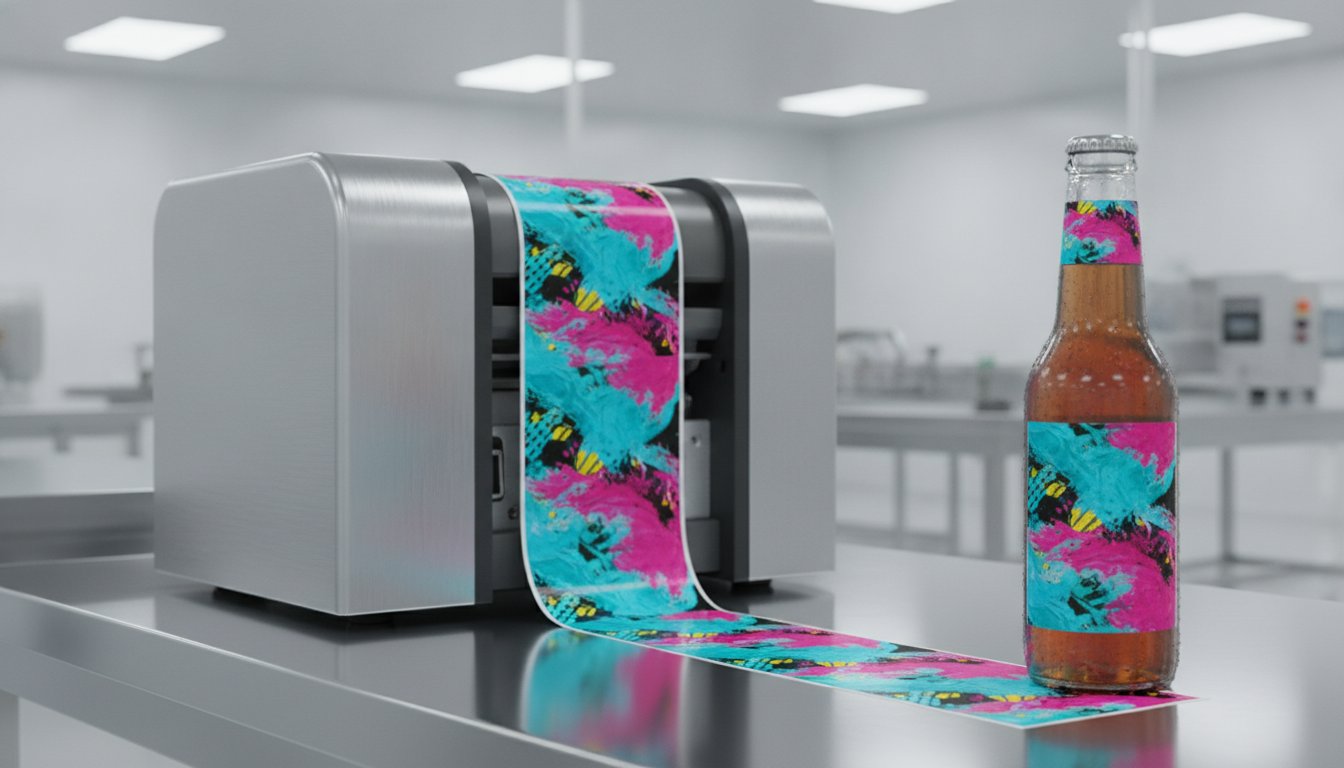
Did you know that the food and beverage sector now accounts for nearly 39 percent of the entire global label market? For Canadian producers, selecting the right food and beverage label printer is no longer just a matter of design; it's a critical operational decision as businesses face the July 2026 compliance deadlines for new traceability and date-labelling standards. You've likely felt the sting of high costs and rigid lead times when outsourcing, or perhaps you've struggled with labels that simply can't handle the heavy condensation of a Canadian cold chain. It's difficult to innovate with seasonal products when you're restricted by minimum order quantities and external schedules.
We're here to help you discover how an in-house labelling solution can enhance your brand's shelf appeal while ensuring every package remains durable and compliant. This guide examines how to match hardware architecture and ink chemistry to your specific production stressors. You'll learn how to reclaim control over your timelines and achieve professional, high-resolution results at a lower total cost of ownership than pre-printed alternatives.
Key Takeaways
- Learn how moving production in-house eliminates the "minimum order" hurdle, allowing for rapid scaling of seasonal flavours and limited-edition runs.
- Understand the critical relationship between print speed (ips) and resolution to ensure your labels maintain professional 1600 dpi clarity without slowing down your production line.
- Discover how to choose a food and beverage label printer that utilizes specialized ink and media to prevent ink bleed in high-moisture refrigerated environments.
- Compare top industry brands like VIPColor and Afinia to find the right balance of moisture resistance and precision for Canadian regulatory compliance.
- Identify the essential hardware combinations, including rewinders and applicators, needed to build a high-efficiency workflow that reduces your total cost of ownership.
Why Print Food & Beverage Labels In-House in 2026?
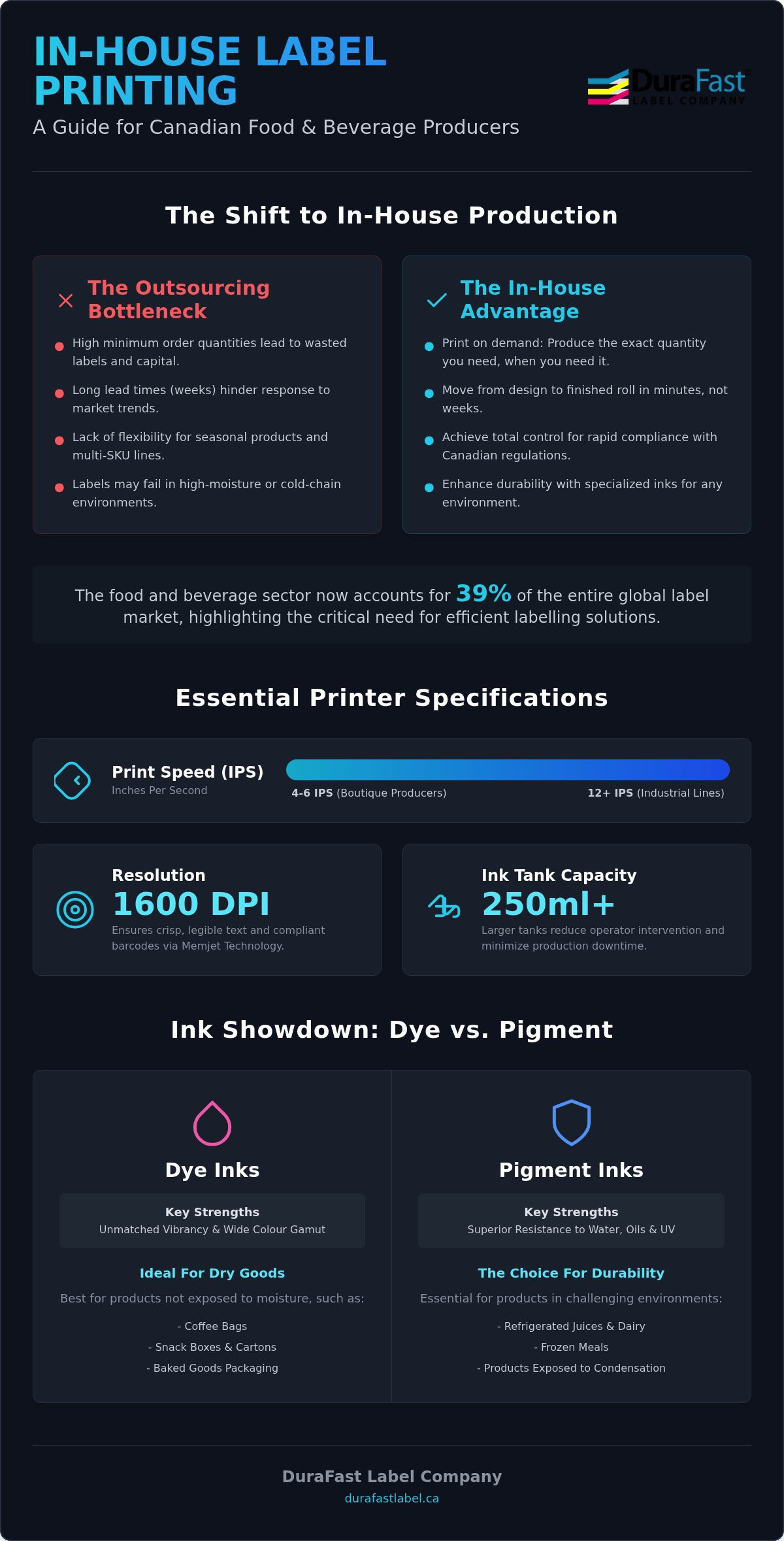
Why are so many Canadian food producers moving away from outsourced printing in 2026? The answer lies in the need for absolute control over the production cycle. When you rely on third-party print houses, you're often forced into high minimum order quantities that don't align with your actual sales forecasts. This frequently results in pallets of unused labels gathering dust in a warehouse. By integrating a dedicated food and beverage label printer into your facility, you eliminate the lead times that typically stretch into weeks. You can move from a design adjustment to a finished roll in minutes, ensuring your product hits the retail shelf while the market demand is still at its peak.
The Cost-Efficiency of Printing on Demand
Let's look at the financial reality of your labelling strategy. While outsourcing might seem cost-effective for massive runs of 100,000 units, the math changes drastically for smaller batches or seasonal products. If you need 1,000 labels for a limited-edition craft soda, the setup fees and "short-run" premiums from an external vendor can be prohibitive. In-house printing allows you to produce exactly what you need without paying for surplus inventory that might become obsolete. It's a strategic way to protect your margins, especially when food labeling regulations evolve and require immediate updates to your nutritional information or ingredient lists.
Flexibility for Multi-SKU Product Lines
Managing multiple SKUs becomes a logistical advantage rather than a burden. Do you offer various flavours, sizes, or nutritional profiles for different markets? Printing on demand means you don't have to manage dozens of different pre-printed label rolls. Instead, you can stock high-quality blank labels and print specific panels, lot codes, and expiry dates as needed. This "just-in-time" labelling is essential for fresh food producers who must maintain strict compliance with Canadian traceability standards. Investing in a high-performance food and beverage label printer gives you the power to pivot your branding instantly without waiting for a shipping container to arrive from a supplier. You gain the agility to respond to Canadian market trends the moment they happen.
This agility is a powerful tool for brand growth; for those looking to complement their in-house labelling with a wider range of marketing materials, BRAND NEW Promotions | Top Promo Supplier in North Texas provides expert promotional solutions to keep your branding consistent across all channels.
Essential Technical Specifications for Food and Drink Labels
How do you determine if a specific printer can actually keep up with your production floor? It's easy to get lost in technical jargon, but focusing on a few core metrics will ensure your investment pays off. One of the most vital specifications is 'ips', or inches per second. This measures how fast the printer physically outputs labels. For a small boutique producer, 4 to 6 ips might be sufficient. However, industrial environments often require 12 ips or higher to prevent bottlenecks. When throughput is high, you also need to consider ink tank capacity. Printers with larger tanks, often 250ml or greater, significantly reduce the frequency of operator intervention. This allows your team to focus on packaging rather than constant maintenance.
Resolution is another non-negotiable factor for premium shelf appeal. Many modern systems utilize Memjet Technology to achieve a professional 1600 dpi resolution. This ensures that even the smallest text on your nutritional panels is crisp and legible. While Canadian regulations are your primary concern, many exporters also refer to the FDA Food Labeling Guide to ensure their technical layouts meet international standards. High-resolution printing isn't just about aesthetics; it's about the clarity required for complex regulatory data and barcodes. Finally, consider your hardware footprint. Internal unwinders save space in tight facilities, while external unwinders allow for larger label rolls, which reduces the number of roll changes during a shift.
Dye vs. Pigment Inks: Which Chemistry Wins?
Choosing between dye and pigment ink depends entirely on your product's environment. Dye inks offer unmatched vibrancy and a wider colour gamut, making them ideal for dry goods like coffee bags or snack boxes. If your products face moisture, such as refrigerated juices or frozen meals, pigment inks are the superior choice. Pigment particles sit on the surface of the media, providing excellent resistance to water, oils, and UV light. Some newer food and beverage label printer models offer water-enhanced dye inks, which provide a balance of vibrancy and improved resilience for moderately damp conditions.
Print Speed and Production Volume Metrics
Your daily duty cycle is the key to hardware longevity. Desktop models are perfect for short bursts of 500 labels, but running them continuously for eight hours can lead to premature burnout. Industrial powerhouses are engineered for these high-volume demands. Speed also dictates how you integrate other hardware. If you're printing at 12 ips, you'll likely need an external label unwinder and a high-speed rewinder to manage the rolls before they reach your applicator. If you aren't sure which duty cycle fits your growth plans, you can discuss your specific volume requirements with our team to find the right match.
How do you distinguish between top-tier brands when each claims to be the definitive solution for your facility? Selecting a food and beverage label printer requires looking past marketing slogans to see how these machines perform in the gritty reality of a Canadian processing plant. While some manufacturers focus on a single technology, we see the value in comparing VIPColor, Afinia, and Epson based on their specific strengths in moisture resistance, throughput, and chemical durability. The VIPColor VP750 stands out as a flagship for environments where humidity and speed are constant challenges. It uses enhanced water-resistant ink technology that bridges the gap between vibrant dye and durable pigment. In contrast, the Afinia L801 and L901 utilize Memjet-powered precision to deliver stunning 1600 dpi prime product labels at incredible speeds. If your facility handles oils or cleaning chemicals, the Epson ColorWorks C6000 and C6500 series are often the preferred choice. These models are engineered for GHS compliance and extreme chemical resistance, ensuring your branding stays intact even in the harshest industrial settings. Understanding these legal frameworks is vital, and resources like the National Agricultural Law Center provide excellent background on the complex requirements that influence label design and durability.High-Volume Industrial Solutions
Does your production line run around the clock? For these intense duty cycles, the VIPColor VP700 series is built for longevity and operational seamlessness. These machines handle massive rolls and feature high-capacity ink delivery systems that minimize downtime. If automation is your goal, the Afinia L901 Plus is designed for integrated 'print and apply' setups, allowing you to move from blank media to a labelled product without manual handling. These industrial label printers are the backbone of high-capacity food plants across Canada.
Mid-Range Desktop Options for Small Batch Producers
What if you have limited floor space or smaller production runs? The Epson C4000 offers compact reliability that fits perfectly in a craft brewery or boutique kitchen. It provides professional results without the massive footprint of an industrial unit. For those who need ultimate versatility, the Afinia L502 features interchangeable dye and pigment printheads. This allows you to switch between vibrant retail labels and durable, moisture-resistant packaging on a single machine. Selecting one of these colour label printers empowers you to maintain high standards without over-investing in hardware that exceeds your current needs.
Durability and Compliance: Handling Condensation, Freezers, and Regulations
How do you ensure your branding survives the journey from a humid production floor to a consumer's refrigerator? In the Canadian food industry, environmental stressors are the primary cause of label failure. When a chilled bottle hits room temperature, condensation forms instantly. If your food and beverage label printer isn't paired with the correct pigment-based ink and moisture-resistant media, that beautiful design will bleed and smudge before it even reaches the retail shelf. It's about the "triangle of durability": the synergy between the ink chemistry, the substrate surface, and the adhesive's performance in extreme temperatures.
Frozen food packaging presents even greater challenges. Standard adhesives often lose their "tack" and become brittle at sub-zero temperatures, causing labels to flag or fall off entirely. You need specialized freezer-grade media that maintains a permanent bond in temperatures as low as -40°C. Beyond physical survival, your labels must meet strict Canadian CFIA standards for food safety and, where applicable, WHMIS labels requirements for workplace safety. Protecting your hardware is equally vital. In facilities processing flour or sugar, fine dust can settle on printheads and cause expensive damage. Industrial-grade housing and regular maintenance are essential to prevent these operational disruptions.
Craft Beverage Labelling Challenges
Are your bottling and canning lines constantly wet? Craft breweries and wineries face unique hurdles, as labels are often applied to damp surfaces. High-speed application requires a label that grips instantly and resists the abrasive forces of the conveyor. For beverages displayed in clear glass bottles, UV resistance is paramount to prevent fading under bright retail lights or outdoor displays. If you're showcasing products at festivals or farmer's markets, using weatherproof UL-certified labels ensures your brand remains vibrant regardless of the weather conditions.
Compliance and Software Integration
How do you manage the complex data required for Canadian retail? Compliance isn't just about the physical label; it's about the information it carries. Professional design software like Bartender or Loftware allows you to generate accurate nutritional panels and compliant barcodes effortlessly. These tools integrate directly with high-performance hardware like VIPColor Label Printers to ensure every batch meets legal standards. If you're ready to upgrade your compliance strategy, reach out to our specialists today for a tailored consultation on your specific labelling environment.
Implementing Your In-House Labelling Strategy with DuraFast Label Company Canada
How do you successfully transition from researching technology to operating a fully functional production line? Implementing an in-house strategy requires more than just hardware; it's about creating a cohesive ecosystem where your food and beverage label printer, blank labels, and ink work in perfect harmony. At DuraFast Label Company Canada, we act as a strategic partner to ensure your chosen components are specifically matched to your unique environmental stressors. This synergy is what prevents the common pitfalls of peeling or fading that we discussed in previous sections.
To achieve a truly professional workflow, you must look beyond the printer itself. High-efficiency production lines often require label rewinders to manage finished rolls and applicators to ensure precise placement on your packaging. These tools eliminate manual bottlenecks and allow you to scale your output as your brand grows. Choosing a Canadian partner like DuraFast Label Company Canada for your consumables ensures that you have steady access to local stock, avoiding the logistical delays and cross-border fees that can disrupt your operations. Future-proofing your facility means selecting scalable software and hardware that can adapt to new Canadian regulations as they emerge. For those looking to enhance their production environment, Southern Select Equipment provides professional-grade solutions tailored for high-volume food service facilities.
Maintenance and Operational Longevity
How can you protect your investment for the long term? Regular maintenance is the key to preventing downtime, especially in dusty or high-moisture food processing environments. We recommend a strict cleaning schedule for printheads to ensure consistent quality and prevent clogs. It's also vital to stay current with firmware updates and software patches for your design suites to maintain compatibility with new operating systems. When using specific technologies, knowing exactly when to replace thermal transfer ribbons or ink cartridges ensures that your print quality never dips below the professional standard your customers expect.
Next Steps: Consultation and Setup
Are you ready to see the actual impact on your bottom line? The best way to start is with a comprehensive cost-per-label analysis tailored to your specific product line. We can help you calculate the exact ROI of moving away from outsourced printing. We also encourage setting up a demo to test media and ink compatibility with your actual containers, whether they are glass bottles, plastic pouches, or cardboard boxes. Don't leave your brand's shelf appeal to chance. You can contact our expert team today to schedule your consultation and take full control of your labelling process.
Elevate Your Production Standards with In-House Labelling
Transitioning to an in-house strategy isn't just about purchasing equipment; it's about securing the agility your brand needs to thrive in the competitive Canadian market. You've seen how matching the right ink chemistry to your specific environmental stressors prevents the common failures of peeling and fading. By selecting a high-performance food and beverage label printer, you reclaim total control over your inventory, eliminate wasteful minimum order quantities, and ensure your packaging always meets the latest CFIA standards.
DuraFast Label is here to support your growth as an authorized Canadian dealer for industry leaders like VIPColor, Afinia, and Epson. We provide specialized knowledge in moisture-resistant and freezer-grade labelling, backed by a full inventory of Canadian-stocked inks and blank labels. Our team is ready to help you navigate the technical specifications to find the solution that maximizes your operational resources and protects your bottom line.
Contact our Canadian labelling experts today for a personalized consultation and discover how a customized setup can lower your total cost of ownership. We look forward to helping you empower your production process and enhance your brand's presence on the shelf.
Frequently Asked Questions
What is the best food and beverage label printer for a small business in 2026?
The Epson ColorWorks C4000 and the Afinia L502 are the top recommendations for Canadian small businesses this year. These models offer a compact footprint and professional-grade colour quality without the high cost of industrial-scale machinery. They're ideal for boutique producers who need to manage multiple SKUs and seasonal flavours with minimal waste.
Will inkjet labels run or smudge if the food container gets wet or cold?
Inkjet labels won't run or smudge if you utilize a food and beverage label printer equipped with pigment-based inks and moisture-resistant media. This specific combination creates a durable bond that withstands heavy condensation and damp environments. It's the industry standard for ensuring your branding remains crisp from the refrigerator to the consumer's hand.
How much does it cost to print food labels in-house versus outsourcing?
In-house printing generally offers a lower total cost of ownership for short to mid-sized runs by eliminating external setup fees and minimum order requirements. You also save money by reducing the waste associated with obsolete pre-printed labels when regulations or ingredients change. While hardware requires an initial investment, the per-label savings often realize a rapid return.
Do I need special software to print nutritional panels and barcodes?
Yes, professional suites like Bartender or Loftware are essential for generating compliant barcodes and accurate nutritional panels. These programs automate the complex data required by Canadian labelling regulations. They ensure that every label you produce is formatted correctly for retail distribution without the risk of manual entry errors.
Can these printers handle labels for frozen food products?
These printers are fully capable of producing frozen food labels when paired with specialized freezer-grade adhesives and synthetic media. It's critical to use substrates designed to maintain a permanent bond at sub-zero temperatures. This prevents labels from flagging or peeling off during the freezing process or throughout the cold chain journey.
What is the difference between dye and pigment ink for food labelling?
Dye inks offer unmatched vibrancy for dry goods, while pigment inks provide the essential moisture and UV resistance needed for chilled products. Most food and beverage label printer setups in the dairy or beverage sectors use pigment inks because they're far more resilient against environmental stressors. Pigment chemistry ensures your text remains legible even when exposed to oils or water.
How fast can a professional food label printer produce labels?
Speed depends on the hardware class, with desktop models typically reaching 4 to 6 inches per second. Industrial units are much faster, often exceeding 12 inches per second to keep pace with high-volume bottling or packaging lines. Matching the printer's speed to your daily duty cycle is vital to prevent production bottlenecks.
What maintenance is required for an industrial colour label printer?
Maintenance involves regular printhead cleaning and managing firmware updates to ensure operational longevity. In food production environments, it's also important to keep the printer's internal components free from debris like flour dust or sugar spray. A steady cleaning schedule prevents clogs and maintains the high-resolution output your brand requires for the retail shelf.