The Strategic Benefits of Linerless Labels for Canadian Businesses
23rd Aug 2026
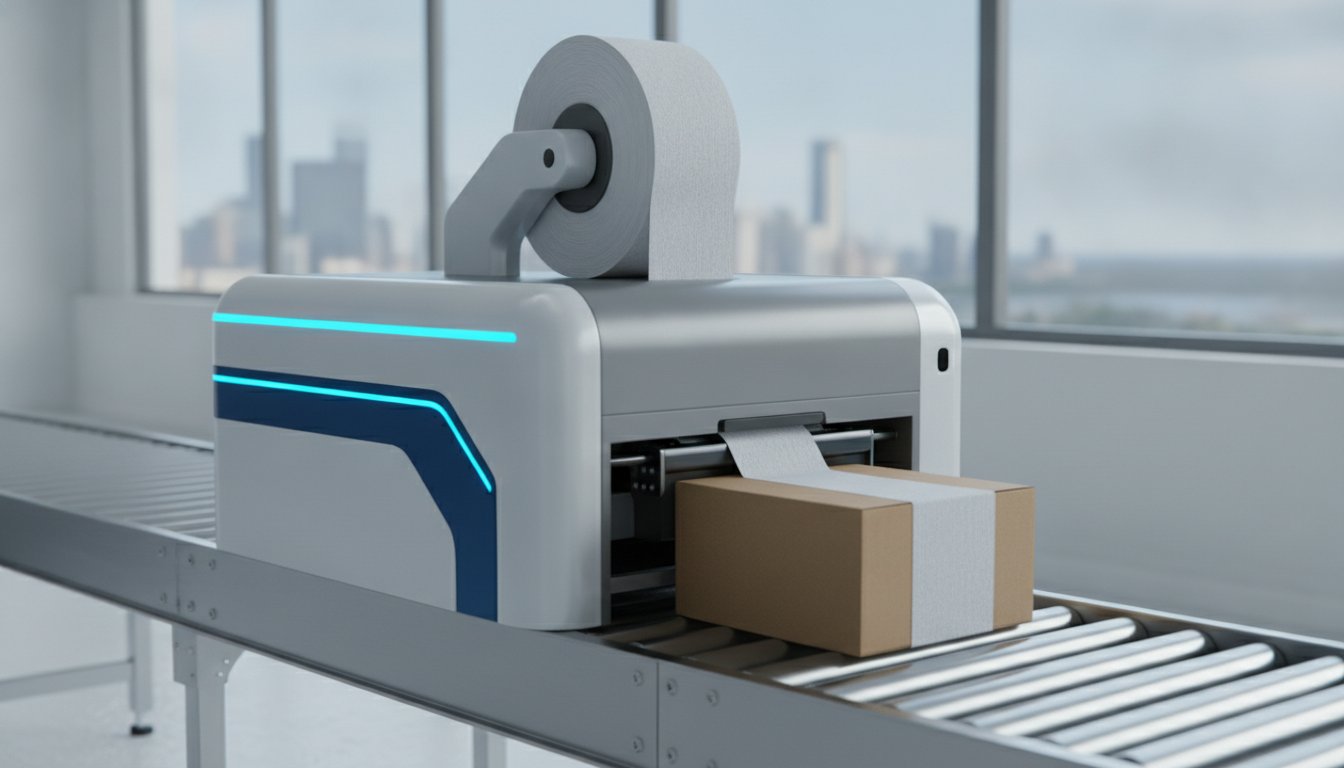
What if your labelling process could generate zero waste while simultaneously increasing your production uptime by up to 40%? For many Canadian facility managers, the daily reality involves managing piles of discarded silicone liners that create slipping hazards and clutter the production centre. You likely recognize that every minute spent on a roll change is a minute of lost productivity, especially when rising shipping costs demand more efficient packaging solutions. Understanding the benefits of linerless labels is the first step toward reclaiming those lost hours and reducing your environmental footprint. It's not just about going green; it's a pragmatic move to optimize your entire logistical chain.
We've found that transitioning to liner-free technology allows businesses to fit significantly more labels on a single roll, which directly translates to fewer interventions and a lower cost-per-label. You'll discover how specialized hardware, such as the Seiko SLP720RT, eliminates the need for a backing sheet and streamlines national distribution. We will explain the main difference between traditional backed media and linerless alternatives, focusing on roll yield and hardware durability. By the end, you'll have a clear roadmap for enhancing your company’s sustainability profile while achieving a more seamless, high-performance operation.
Key Takeaways
- Learn how removing the release liner allows for up to 40% more labels per roll, significantly reducing operational downtime for roll changes in your facility.
- Discover how the reduced weight of linerless rolls lowers freight costs and optimizes storage space for national Canadian distribution.
- Understand the environmental and safety benefits of linerless labels, including the elimination of silicone waste and "slip and trip" hazards on the warehouse floor.
- Identify the specialized hardware requirements, such as the Seiko SLP720RT, and why a non-stick internal mechanism is essential for handling liner-free adhesive.
What Are Linerless Labels and How Do They Function?
Have you ever considered how much space is wasted by the backing paper on a standard roll of labels? Linerless labels are pressure-sensitive rolls wound without a silicone release liner. The primary difference between traditional and liner-free labels is the total elimination of this backing material. This simple change allows for significantly more labels per roll, which is why the industry is rapidly moving toward liner-free configurations for high-volume logistics and e-commerce. One of the key benefits of linerless labels is the immediate reduction in raw material usage, which supports both fiscal responsibility and operational seamlessness.
The Technology Behind the Release Coating
How does the adhesive stay on the roll without sticking to itself? The secret lies in a silicone-based or non-stick topcoat applied directly to the face of the label stock. This layer acts as a barrier, ensuring the adhesive on the underside releases cleanly as the roll unwinds. You don't have to worry about the label losing its grip; the adhesive remains aggressive enough to bond instantly to packaging, even in dusty warehouse environments. A release coating is the critical component that enables linerless functionality by preventing the adhesive from permanently bonding to the layer underneath. This technology ensures a smooth feed through the printer, preventing the disruption that often occurs with traditional backing jams.
Linerless vs. Traditional Die-Cut Labels
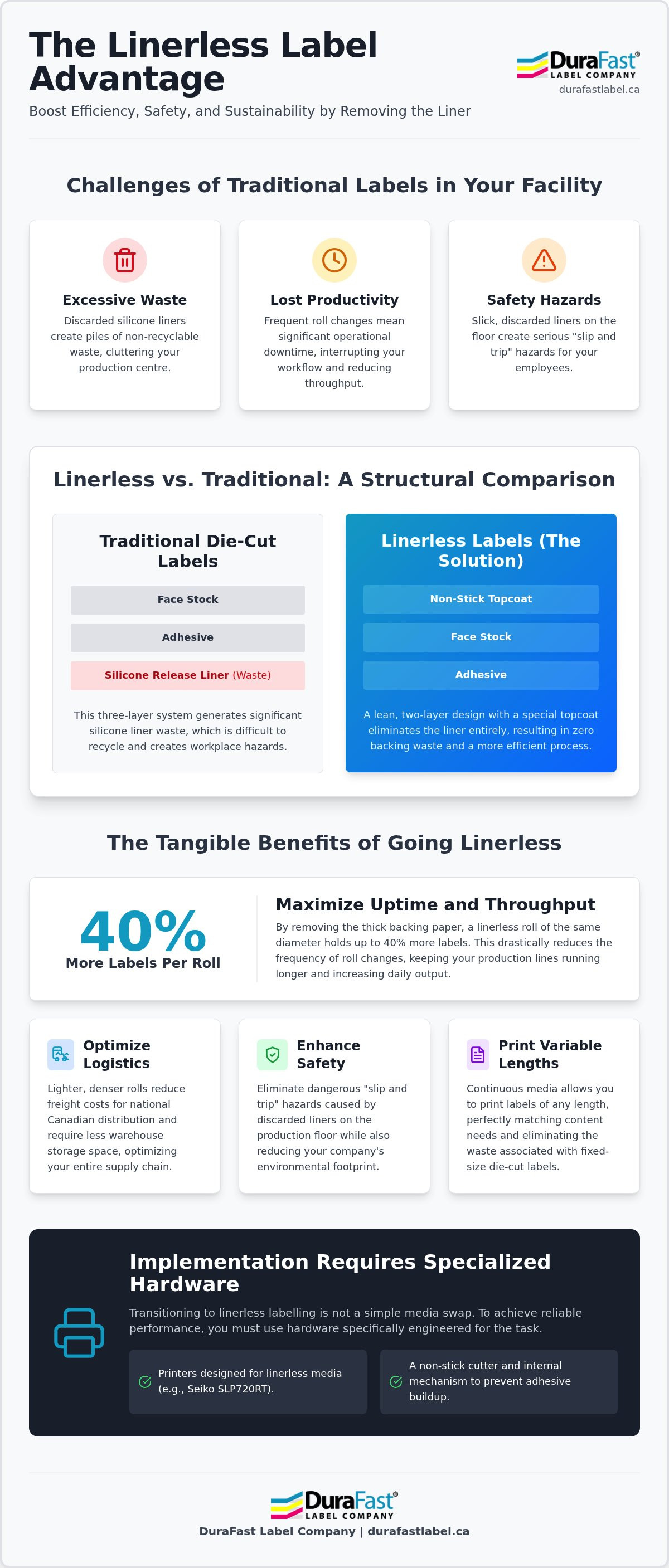
Why does the construction matter for your daily throughput? Traditional die-cut labels utilize a three-layer system: the face stock, the adhesive, and the silicone-coated liner. Linerless labels move to a leaner two-layer design. While this saves space, it also changes how the printer interacts with the media. Since the labels are continuous, the printer’s specialized cutter must manage the roll without getting gummed up by exposed adhesive. Standard cutters aren't designed for this. You'll need hardware specifically built for the task to realize the full benefits of linerless labels. If you're currently evaluating blank labels for sale, it's vital to match the media to your printer's internal configuration. Choosing the right combination ensures your labelling line remains active and efficient.
Maximizing Operational Efficiency with Higher Label Yields
Have you ever calculated the actual percentage of your label roll that ends up in the trash? Traditional rolls are physically limited by the thickness of the silicone backing. By removing this liner, you can fit up to 40% more labels on a roll of the same outer diameter. This is one of the most tangible benefits of linerless labels for high-volume Canadian operations. You're effectively increasing your media capacity without requiring larger equipment or expanding your storage centre. This density allows for a more streamlined workflow where the focus remains on production rather than constant maintenance.
Variable Length Printing: A Game Changer
Traditional die-cut labels have fixed dimensions, which often forces you to pay for "white space" that serves no functional purpose. Linerless systems utilize continuous media, allowing the printer to cut the label exactly where the data ends. If you're printing pharmacy labels, some might require extensive dosage instructions while others only need a simple barcode. Variable length printing ensures you use the exact amount of material required for each task. This flexibility is a significant advantage for food service and pharmaceutical industries where data density fluctuates. You no longer need to stock multiple sizes of blank labels to accommodate different content requirements.
Reducing Material Changeover Frequency
How much time does your team lose to roll changes during a single shift? In high-speed industrial environments where printers often run at speeds of 6 to 10 ips (inches per second), a standard roll can deplete rapidly. Because linerless rolls contain significantly more material, you reduce the frequency of changeovers. This keeps your labelling line active for longer intervals, which directly improves your daily throughput. Fewer stops mean less downtime and a more consistent rhythm for your logistical team. This operational seamlessness is a key driver for businesses looking to maximize their existing hardware investments.
If you're looking to determine how these yield increases could impact your specific production metrics, you can speak with our technical advisors for a tailored efficiency analysis. Understanding the benefits of linerless labels in the context of your unique ips requirements can help you realize long-term fiscal savings and improved workplace safety.
Economic Benefits: Shipping Costs and Storage Footprints
Are you paying to ship material that your team immediately throws away? Traditional label rolls include a heavy silicone backing that adds significant weight to every shipment without adding any value to the final product. One of the strategic benefits of linerless labels is the total elimination of this "purchased waste." By removing the liner, you ensure that every gram of weight in your freight shipment consists of functional material. This shift reflects a commitment to fiscal responsibility and operational seamlessness. You're no longer subsidizing the transport of landfill-bound debris, which allows you to allocate those savings toward your company's growth.
Reducing Your National Distribution Freight Costs
Shipping supplies across the vast Canadian landscape requires a meticulous approach to weight management. Consider the weight difference between 100 traditional rolls and 100 linerless rolls. Because the liner can account for a substantial portion of a roll's total mass, switching to a liner-free configuration drastically reduces your freight charges. This is especially impactful for large-scale retailers managing national distribution networks. Lower roll weight also improves pallet utilization. You can fit more functional labels onto a single pallet, reducing the total number of shipments required to keep your satellite locations stocked. It's a pragmatic solution for businesses looking to combat rising fuel surcharges and transportation fees while maintaining high-performance standards.
Optimizing Warehouse and Centre Space
Warehouse space is a premium asset in any industrial setting. Traditional labels require more physical room because the bulky liners take up space on every shelf. When you adopt linerless technology, you can store more labels in the same warehouse footprint. This increased density means you won't have to place replenishment orders as frequently. Reducing the frequency of deliveries helps minimize disruptions at your receiving centre and lowers administrative overhead. For those operating high-volume environments, pairing these consumables with industrial label printers ensures your hardware is as efficient as your media. You'll realize that the benefits of linerless labels extend far beyond the printhead; they optimize your entire storage and supply chain infrastructure by maximizing every square centimetre of available space.
Sustainability and Workplace Safety in Canadian Facilities
How does your labelling waste affect your safety record and environmental targets? Traditional labelling processes produce a staggering amount of silicone-coated waste that's difficult and expensive to recycle. By adopting a liner-free approach, Canadian businesses can divert thousands of tonnes of waste from local landfills every year. This isn't just a corporate social responsibility initiative; it's a strategic alignment with modern ESG (Environmental, Social, and Governance) goals. The benefits of linerless labels include a cleaner, safer production area that reflects your commitment to industrial reliability and environmental stewardship.
Zero-Waste Labelling for a Greener Operation
Manufacturing and transporting traditional labels requires more raw materials and energy than their linerless counterparts. When you eliminate the backing, you reduce the carbon footprint associated with every roll used in your facility. This technology is a cornerstone for companies pursuing zero-waste-to-landfill certifications across their national operations. It's also vital to ensure that your sustainable practices don't compromise regulatory safety standards. For instance, maintaining proper chemical safety while using sustainable media is a top priority for industrial managers. You can consult our WHMIS labels 2026 guide to ensure your greener operation remains fully compliant with Canadian workplace standards.
Mitigating Slip Hazards and Improving Ergonomics
Have you noticed how discarded liners tend to accumulate around packing stations and conveyor belts? These silicone-coated strips are notoriously slippery and represent a primary slip and trip hazard in fast-paced sorting centres. Removing the liner at the source eliminates this risk entirely, creating a more secure environment for your floor staff. It also improves fire safety by removing piles of thin, flammable waste from your production area. The practical advantages for your employees include:
- Reduced labour required for floor cleaning and constant waste removal.
- Fewer ergonomic strains from handling and disposing of heavy waste containers.
- Cleaner surfaces in dusty or high-traffic industrial environments where liners often trap debris.
By streamlining the waste stream, you empower your employees to focus on their core tasks without the disruption of a cluttered workspace. This operational seamlessness is one of the most immediate benefits of linerless labels that your team will notice during their daily shifts. It allows you to maintain a high-performance culture while prioritizing the well-being of your workforce.
Ready to improve your facility's safety and sustainability profile? Contact our advisors today to discuss a linerless transition plan tailored to your specific logistical needs.
Implementing Linerless Solutions: Hardware and Maintenance
Can you simply load linerless media into your existing direct thermal printer? The direct answer is no. Standard printers are designed for media with a backing that protects internal components from adhesive. To realize the benefits of linerless labels, you must utilize specialized liner-free printers equipped with non-stick platen rollers and specialized internal paths. These components ensure the labels move through the mechanism without sticking or jamming. Without this dedicated hardware, the exposed adhesive will quickly compromise your equipment's reliability and lead to significant operational disruption.
The specialized cutter is perhaps the most critical hardware differentiator. A standard cutter is built to slice through paper or thin plastic liners. Linerless adhesive is far more aggressive and will gum up a traditional blade within a few dozen cycles. Specialized linerless cutters feature non-stick coatings and a unique shearing action designed to handle exposed adhesive. Which configuration suits your production centre? Internal label unwinders are excellent for minimizing the printer's footprint in tight retail spaces. Conversely, external label unwinders offer better environmental resilience in dusty industrial settings and allow you to use larger media rolls for even higher yields.
Selecting the Right Liner-Free Printer
Choosing the correct model depends heavily on your specific application and data requirements. We frequently recommend the Seiko SLP720RT for desktop applications that require high-performance output in a compact frame. This model is particularly effective because it offers 300 DPI resolution. This high pixel density is essential for ensuring that barcodes remain crisp and scannable on variable-length labels. While mobile units offer portability for warehouse picking, desktop units like the SLP720RT provide the industrial reliability needed for stationary packing stations where consistent print quality is paramount.
Critical Maintenance for Adhesive Management
What is the only difference in maintenance between traditional and liner-free systems? It's the frequency and method of cleaning the platen rollers. Because the adhesive is in direct contact with the roller, you must use specialized cleaning pens to remove adhesive residue and environmental debris. Allowing buildup to accumulate will eventually cause the media to wrap around the roller, potentially damaging your thermal printheads. A steady, methodical maintenance routine ensures the longevity of your hardware and maintains the fiscal responsibility that makes the benefits of linerless labels so attractive. By prioritizing these simple protocols, you ensure your labelling line remains active and your cost-per-label stays low.
Future-Proofing Your Canadian Labelling Operations
Transitioning to liner-free technology isn't just a sustainable choice; it's a strategic optimization for your entire supply chain. By eliminating the backing material, you unlock significant roll density and reduce the freight weight of every shipment across Canada. You've seen how specialized hardware manages variable-length data without the waste of fixed-size die-cut media. Understanding the full benefits of linerless labels allows you to prioritize both fiscal responsibility and workplace safety in a high-volume environment.
As an authorized partner for Seiko and Zebra, we maintain a specialized Canadian inventory ready for immediate shipping. Our team provides the expert technical support you need for a seamless transition from traditional systems to linerless configurations. You can connect with our technical advisors to evaluate your current setup and determine the best path forward for your facility. Taking control of your production waste today ensures a more efficient, high-performance operation for years to come.
Frequently Asked Questions
Do linerless labels require a special printer?
Yes, linerless labels require a dedicated printer specifically engineered for liner-free media. Standard printers lack the non-stick platen rollers and specialized cutters needed to handle exposed adhesive. If you attempt to use a regular printer, the labels will wrap around the roller and gum up the internal mechanism. Specialized hardware like the Seiko SLP720RT is designed with specific coatings to ensure operational seamlessness and prevent disruption in your production centre.
Can I use linerless labels in my existing thermal transfer printer?
No, you cannot use linerless labels in a standard thermal transfer printer. Most linerless media is designed for direct thermal technology, and traditional thermal transfer hardware lacks the non-stick internal components required for adhesive management. Attempting to use this media in an incompatible machine will lead to adhesive buildup on the printhead and rollers. It's a better choice to invest in dedicated liner-free printers to maintain industrial reliability and print quality.
Are linerless labels only available for direct thermal printing?
While most common applications utilize direct thermal technology, specialized linerless solutions for other print methods exist but are less frequent in standard logistics. Direct thermal is preferred because it eliminates the need for ribbons, further reducing waste and simplifying the hardware configuration. This setup is ideal for high-volume shipping where the benefits of linerless labels include faster roll changes, reduced weight, and a significantly smaller environmental footprint.
How much waste can a business save by switching to liner-free labels?
A business can eliminate 100% of its silicone-coated liner waste by making the switch to liner-free technology. In a high-volume facility, this can represent thousands of tonnes of material diverted from Canadian landfills annually. Since the liner typically accounts for a significant portion of a traditional roll's weight and volume, you also reduce the carbon footprint associated with transporting "purchased waste" that serves no functional purpose after the label is applied.
Do linerless labels cause more adhesive buildup on the printhead?
They don't cause excessive buildup if you use the correct hardware and follow steady maintenance protocols. Specialized printers feature non-stick rollers that prevent the adhesive from transferring to the internal paths. You must perform regular cleaning with specialized pens to remove environmental debris and any minor residue. This preventative care ensures the longevity of your thermal printhead and maintains consistent scannability across every roll used in your facility.
Are linerless labels suitable for frozen food applications with condensation?
Yes, specific linerless media is engineered with advanced adhesives that perform well in cold and damp environments. These labels are designed to bond securely even when introduced to condensation for frozen foods or wet labels in refrigerated transport. It's important to select a high-performance adhesive grade that matches your specific environmental resilience needs to ensure the labels remain attached and scannable throughout the entire national distribution chain.
What is the main difference between internal and external unwinders for linerless printers?
The main difference is the physical footprint and the maximum roll diameter the printer can accommodate. Internal unwinders keep the media inside the printer casing, which is perfect for compact retail counters or small workstations. External unwinders allow you to use much larger rolls, which increases your total label yield and reduces changeover frequency. External configurations are often better choices for industrial environments where maximizing media capacity is a priority.
How does variable length printing save money on material costs?
Variable length printing saves money by cutting the label exactly where the printed content ends. Unlike fixed-size die-cut labels, you don't pay for empty "white space" on every tag. This flexibility allows one roll of media to serve multiple purposes, from short barcodes to long ingredient lists. This optimization is one of the key benefits of linerless labels that directly improves your company's fiscal responsibility and reduces raw material consumption.