The Comprehensive Guide to Inkjet Colour Label Printers for Canadian Businesses (2026)
29th Jun 2026
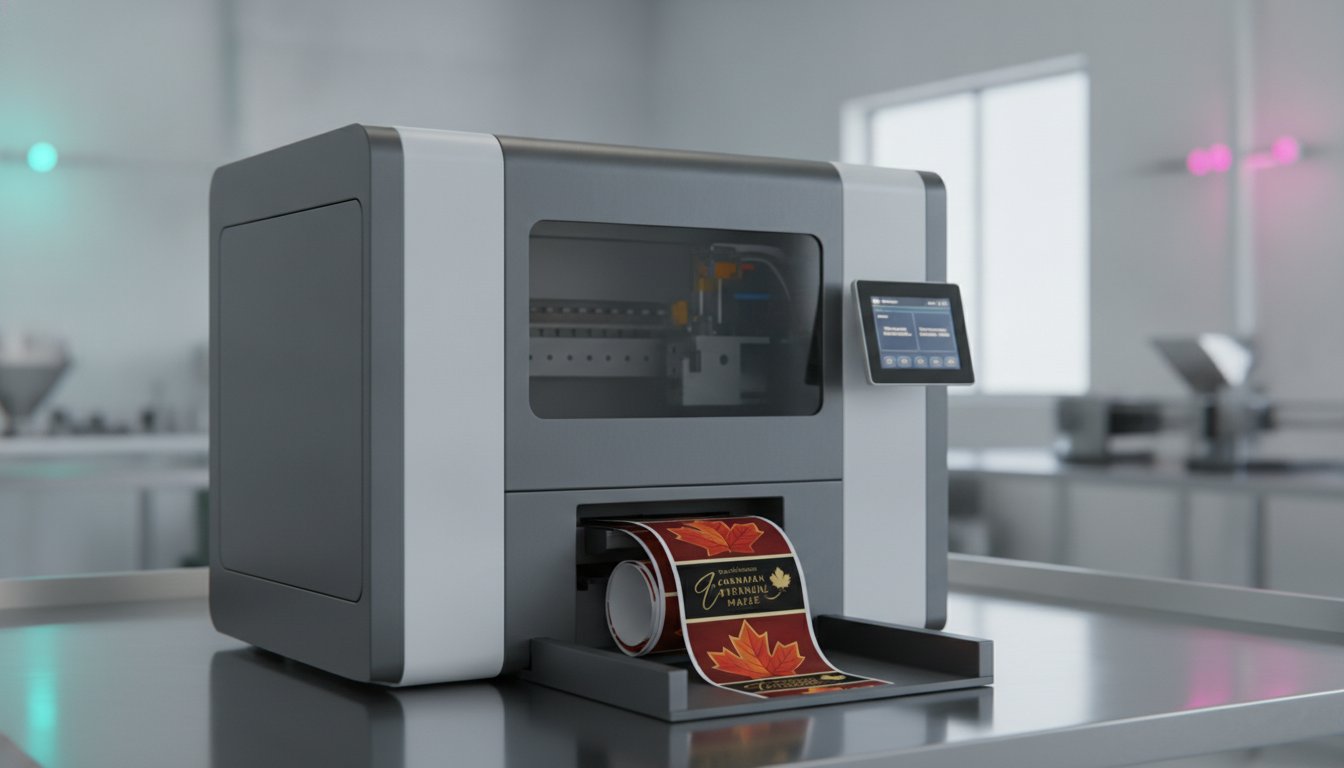
How many thousands of dollars are currently sitting on your warehouse shelves in the form of obsolete label rolls? For many Canadian businesses, the traditional model of outsourcing leads to high minimum order quantities and wasted inventory whenever regulations like the 2026 front-of-package nutrition symbols change. Bringing your production in-house with inkjet color label printers allows you to avoid these logistical hurdles. You likely feel the pressure of balancing professional branding with the need for immediate flexibility, especially when labels must survive condensation, cold storage, and the rigours of national shipping.
This guide helps you realize the benefits of switching to on-demand labelling to eliminate lead times and significantly reduce your cost-per-label. You'll discover how to achieve professional-grade results in-house while ensuring your packaging remains compliant and durable. We will break down the technical differences between dye and pigment systems, compare print speeds, and help you select the right hardware to take complete control of your labelling process.
Key Takeaways
- Transitioning to in-house production helps you avoid high minimum order quantities and prevents inventory waste caused by shifting Canadian labelling regulations.
- Learn the main difference between dye, pigment, and Memjet technologies; it's the best way to ensure your labels survive cold storage or high-moisture conditions.
- Evaluate inkjet color label printers based on real-world print speeds and ink capacity to accurately calculate your total cost of ownership.
- Conduct a thorough cost-per-label analysis that accounts for the hidden expenses of shipping and lead times associated with traditional outsourcing.
- Discover which hardware series, such as Epson ColorWorks or VIPColor, provides the right balance of speed and durability for your specific business needs.
The Shift to On-Demand: Why Inkjet Colour Label Printers Are Essential
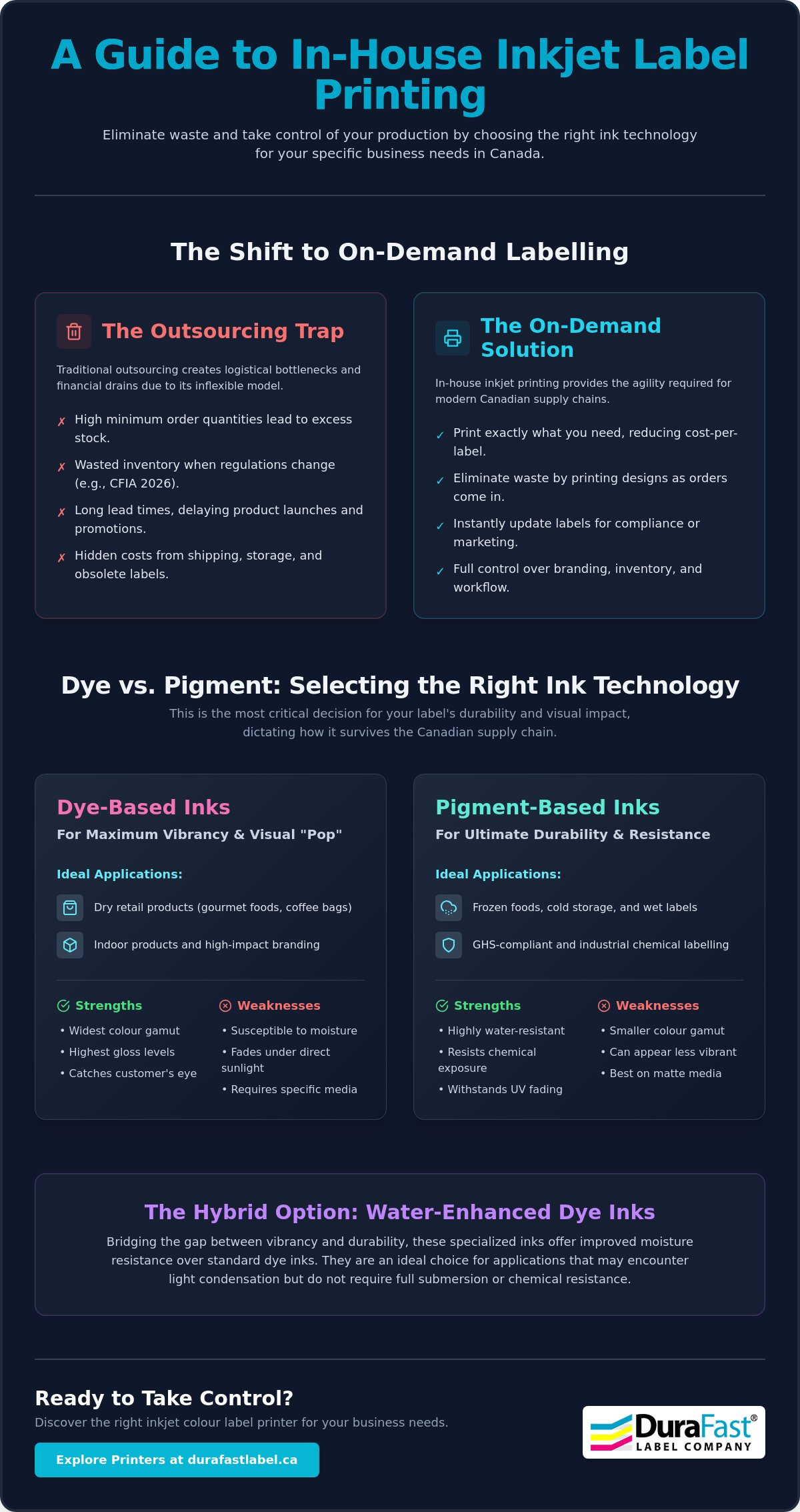
Have you ever calculated the actual cost of a "cheap" outsourced label order once you factor in the 20 percent that ends up in the recycling bin? Traditional outsourcing relies on high minimum order quantities to keep unit costs low. This creates a logistical bottleneck for Canadian businesses that need to adapt to SKU changes or seasonal promotions. On-demand inkjet colour labelling changes this dynamic by allowing you to print exactly what you need, when you need it. By integrating Inkjet printing technology directly into your production line, you gain the agility required for modern supply chains.
The main difference between thermal transfer and inkjet color label printers lies in the visual impact and versatility. While thermal printers are excellent for simple shipping barcodes, they can't produce the high-resolution, full-colour graphics required for prime branding. Digital inkjet systems allow for instant adjustments. You can update a nutritional panel or add a "Limited Edition" badge to your gourmet food packaging without waiting weeks for a commercial printer to deliver a new batch. This level of control ensures your brand remains fresh and responsive to market trends; to maintain this consistency across other marketing channels, you can find out more about Per-unit sales of custom-branded apparel and promotional products to complement your professional labels.
Eliminating the "Pre-Printed Label Trap"
Storing thousands of pre-printed labels isn't just a space issue; it's a financial drain. When Canadian regulations change, such as the 2026 front-of-package nutrition requirements mandated by the CFIA, that stock often becomes a total loss. You can realize significant savings by transitioning to a "print-as-you-go" model. This reduces your lead times from weeks to minutes. Instead of managing a massive inventory of varied SKUs, you simply stock blank labels and print the specific design as orders come in. This approach eliminates the "hidden delta" of shipping costs and storage fees associated with outsourced rolls.
Applications Across Canadian Industries
This flexibility is vital across several sectors. Craft beverage producers use inkjet color label printers to manage small-batch releases with vibrant graphics that survive the fridge. In the industrial sector, GHS-compliant labelling ensures safety data remains legible under the amended Hazardous Products Regulations. Medical and pharmaceutical companies also rely on high-resolution precision to ensure that critical dosage information and barcodes are perfectly clear. Whether you're dealing with condensation on a cold bottle or environmental debris in a warehouse, the right colour label printers ensure your brand stays intact and compliant.
Dye vs. Pigment vs. Memjet: Selecting the Right Ink Technology
Which ink chemistry will keep your brand looking professional under a layer of frost or condensation? Selecting the right technology for inkjet color label printers is the most critical decision you'll make, as it dictates how your packaging survives the Canadian supply chain. The main difference between these technologies isn't just the price; it's the physical bond between the ink and the media. While one system might offer unmatched vibrancy for retail shelves, another is engineered specifically to withstand chemical exposure or sub-zero storage temperatures.
You should also distinguish between standard dye inks and water-enhanced dye inks. Standard dye inks provide the widest colour gamut and highest gloss levels, but they're susceptible to smudging if they get wet. Water-enhanced dye inks, often found in models like the Afinia L502, bridge the gap by offering improved moisture resistance while maintaining that high-impact visual appeal. However, for applications where the label will be submerged or exposed to heavy UV light, moving to a pigment-based system is usually the more pragmatic choice.
Dye-Based Inks for Vibrant Retail Branding
Dye-based systems are the gold standard for dry retail environments. If you're labelling gourmet snacks, coffee bags, or indoor cosmetics, these inks provide the "pop" that catches a customer's eye. The only significant limitation is their sensitivity to moisture and long-term fading under direct sunlight. To maximize results, you must match your printer with compatible inkjet labels designed specifically for dye absorption to prevent bleeding.
Pigment Inks for Harsh Environments
Pigment ink is mandatory if your products face frozen food aisles or industrial shipping conditions. Unlike dye, which dissolves in the media, pigment ink sits on the surface as tiny solid particles. This makes it naturally resistant to water, oils, and chemicals. It's the required choice for GHS BS5609 compliance in chemical labelling. If you're unsure which chemistry fits your environment, you can speak with our specialists to review your specific durability requirements.
Memjet Technology for High-Volume Speed
When your production scales, Memjet technology offers a significant performance delta. By using a stationary "waterfall" printhead that spans the entire width of the label, these printers achieve speeds up to 12 ips. This design eliminates the back-and-forth motion of traditional heads, allowing for rapid, high-volume runs with a lower cost-per-label. It's the ideal solution for businesses that have moved beyond desktop volumes and require industrial-level throughput without sacrificing colour depth.
Technical Specifications That Impact Your Workflow Efficiency
How does the physical design of a printer impact your daily production? Beyond ink chemistry, the mechanical specifications of inkjet color label printers determine whether your workflow is seamless or plagued by constant downtime. You need to look past the marketing brochures and evaluate how features like print speed and ink capacity translate to your specific warehouse environment. A printer that excels in a climate-controlled office might struggle when exposed to the environmental debris of a busy Canadian distribution centre.
Manufacturers often quote speeds in "draft mode," but your real-world ips (inches per second) will depend on the resolution required for your branding. For instance, a high-speed industrial model might reach 12 ips at a standard 600 dpi, but that speed often drops significantly when you increase the resolution to 1200 dpi for premium retail graphics. The delta between these settings is crucial. If your labels require fine text or intricate logos, you must ensure the printer maintains a viable ips at high-quality settings to meet your daily quotas.
Internal vs. External Label Unwinders
The main difference between internal and external label unwinders is environmental protection versus roll capacity. Internal label unwinders house the media roll inside the printer chassis. This is superior for dusty environments because it shields the blank labels from airborne particles that could damage the printheads. Other than this protection, external unwinders are often preferred for high-volume runs. They allow you to use larger roll diameters, such as 8-inch or 12-inch rolls, which means fewer roll changes and longer periods of uninterrupted production.
Ink Cartridge Volume and ml Efficiency
Your total cost of ownership is heavily influenced by cartridge volume, measured in ml. Small desktop printers often use 10 ml to 30 ml cartridges, which are suitable for low-volume seasonal branding but lead to a higher cost-per-label. In contrast, industrial inkjet color label printers utilize high-capacity tanks ranging from 80 ml to over 250 ml. These larger volumes don't just lower your price per label; they also reduce the frequency of operator intervention. When you aren't stopping the line every hour to swap a cartridge, your overall plant efficiency improves. Choosing the right inkjet ink cartridges based on your monthly volume is a simple way to protect your margins.
Evaluating the ROI of In-House Inkjet Label Production
How do you determine if the investment in inkjet color label printers is fiscally responsible for your facility? Calculating the return on investment requires looking beyond the initial purchase price to analyze the total cost of ownership. This calculation must include the price of blank media, the ml consumption of ink per design, and the hardware's expected lifespan. By moving production in-house, you eliminate the "Hidden Delta" of shipping fees and the weeks of lead time that often delay product launches. You gain the ability to react to market changes instantly, which is a strategic advantage that traditional outsourcing simply cannot match.
Scaling your production is a logical progression as your business grows. While a desktop unit is excellent for seasonal branding or small batches, moving to an industrial model with higher ink capacity significantly lowers your long-term expenses. To maximize this efficiency, integrating label rewinders and finishers allows you to manage finished rolls for automatic applicators. This turns a manual labelling process into a streamlined industrial workflow, reducing labour costs and ensuring consistent application quality across every SKU in your inventory.
In-House vs. Outsourced Cost Comparison
For many Canadian SMEs, the break-even point for digital production occurs much sooner than expected. The primary value lies in reducing waste. Instead of being forced into a minimum order of 500 labels for a specific product, you can print exactly 142 labels to fulfill a custom order. This "print-only-what-you-need" model supports lean manufacturing by eliminating the cost of holding obsolete inventory. When you account for the 20 percent of outsourced labels that typically end up in the recycling bin due to regulatory updates or design tweaks, the fiscal argument for in-house production becomes even more compelling.
Software and Automation Integration
The efficiency of your hardware is only as good as the systems driving it. Utilizing professional barcode software like Loftware or Bartender is essential for organizing complex SKU data and ensuring compliance with Canadian labelling standards. These platforms allow you to automate the connection between your product database and the printer, reducing the risk of manual entry errors. By streamlining the workflow from the initial design to the finished roll, you ensure that your production line remains uninterrupted. If you need assistance determining which software package integrates best with your existing ERP, you can contact our technical team for a professional consultation.
Finding the Perfect Fit: Top Inkjet Colour Label Printers in Canada
How do you narrow down the vast field of inkjet color label printers to find the one that fits your production floor? Selecting the right hardware is a matter of matching your daily volume and durability needs to a specific series. While some systems prioritize raw speed for high-volume distribution centres, others focus on the chemical resistance required for GHS compliance or the visual pop needed for premium retail branding. By understanding the "baseline and delta" between these industry leaders, you can make an informed decision that protects your operational efficiency.
VIPColor: Performance and Capacity
The VIPColor VP700 serves as the industrial baseline for high-speed Memjet production. It achieves speeds up to 12 ips, making it the preferred choice for Canadian facilities that need to process thousands of labels per shift. If your application involves moisture, the VP750 is the logical step up. The main difference between these two models is the ink chemistry; the VP750 utilizes enhanced water-resistant technology to ensure labels survive the food and beverage supply chain. Other than this ink variation, both machines offer the same robust build quality and large internal label unwinders.
Epson ColorWorks: The Durable Workhorse
If your primary goal is replacing outdated thermal transfer systems with full colour, the Epson ColorWorks C6000 and C6500 series are the gold standard. These printers utilize PrecisionCore technology to ensure consistent colour matching across every run. The only difference between the C6000 and C6500 is the maximum print width, with the latter handling labels up to 8 inches wide. You should choose Epson ink cartridges when GHS BS5609 compliance is mandatory. The pigment chemistry provides the extreme durability required for chemical labelling and frozen food applications where condensation is a constant factor.
Afinia and Primera: Specialised Solutions
For businesses that require maximum flexibility, the Afinia L502 offers a unique advantage. It features the ability to swap between dye and pigment printheads, allowing you to pivot from vibrant retail graphics to durable industrial labels without buying a second machine. This versatility makes it one of the most adaptable inkjet color label printers for SMEs. If you produce boutique or small-batch items, the Primera LX610 provides an all-in-one solution by combining high-resolution printing with a digital contour cutter. This allows you to create custom shapes on demand. Regardless of the hardware you select, matching it with the correct blank labels is essential for achieving professional results and preventing printhead wear.
Streamline Your Production with On-Demand Colour Labelling
Transitioning your facility to in-house production is a strategic move that addresses the volatility of inventory costs and regulatory shifts. You've seen how matching the right ink chemistry to your specific environment ensures that your branding survives the rigours of the Canadian supply chain. Whether you require the high-speed Memjet performance of a VIPColor system or the pigment durability of an Epson ColorWorks model, the goal remains the same: complete operational control.
As an authorized Canadian reseller for Epson, VIPColor, and Afinia, we maintain an extensive national inventory of ink and media to keep your lines running. Our specialized GHS and BS5609 compliance expertise helps you navigate complex safety standards with confidence. Investing in inkjet color label printers is about more than just hardware; it's about building a responsive, cost-effective production workflow that grows with your business.
Are you ready to optimize your labelling process? Browse our full range of Inkjet Colour Label Printers at DuraFast Label Company Canada to find the ideal solution for your facility. We're here to help you take control of your production today.
Frequently Asked Questions
What is the main difference between dye and pigment ink for colour labels?
The main difference lies in the physical state of the colourant and its resistance to environmental factors. Dye inks are liquid-based and provide high vibrancy for retail shelves, while pigment inks contain solid particles for superior moisture and UV resistance. You should choose pigment if your labels face condensation or chemical exposure, as the ink sits on the surface rather than absorbing into the media.
How much does it cost per label to print in-house with an inkjet printer?
Your cost-per-label is determined by the ml capacity of your ink cartridges and the percentage of ink coverage on your design. Industrial inkjet color label printers with larger tanks typically offer a lower cost-per-label than desktop models. Printing on-demand also eliminates the hidden costs of minimum order quantities and wasted inventory, which improves your overall fiscal responsibility.
Can inkjet colour label printers produce GHS BS5609 compliant labels?
Yes, but you must use a pigment-based printer paired with BS5609-certified media. This combination ensures the label remains legible after saltwater immersion and harsh chemical contact. It's the required standard for hazardous product regulations in the Canadian industrial sector, providing the durability needed for shipping hazardous materials internationally.
What is Memjet technology and how does it affect print speed?
Memjet technology utilizes a stationary "waterfall" printhead that spans the entire width of the media. This allows for print speeds up to 12 ips because the head doesn't need to move back and forth across the page. It's the most efficient choice for high-volume production environments where speed and colour depth are equally important.
Do I need a special type of label material for inkjet printers?
You definitely need media with a specific inkjet-receptive coating to achieve professional results. Standard thermal or flexographic labels won't absorb the ink properly, which leads to smudging and poor colour depth. Matching the right media to your specific ink chemistry is essential for ensuring your branding survives cold storage or damp warehouse conditions.
What is the difference between an internal and external label unwinder?
An internal label unwinder houses the roll inside the machine to protect it from environmental debris and dust. This is the better choice for dusty production floors. An external unwinder sits behind the printer and allows you to use much larger roll diameters, which reduces the frequency of roll changes during long, uninterrupted production runs.
How do I choose between a 4-inch and an 8-inch wide label printer?
You should select the printer width that accommodates your largest label SKU. A 4-inch printer is the standard baseline for most product branding, but an 8-inch model is necessary for large chemical pails or wide shipping labels. Choosing the wider model provides more flexibility if your product line expands to include larger packaging sizes.
Is it difficult to maintain an industrial inkjet colour label printer?
Modern industrial units are designed for operational seamlessness with automated cleaning cycles that manage printhead health. Most maintenance involves simple tasks like wiping down rollers or replacing ink cartridges when they run low. These printers are built for reliability in warehouse conditions, so they don't require the constant manual calibration of older labelling technologies.