RFID Printers: The 2026 Canadian Business Guide to Encoding and Labelling
14th Jul 2026
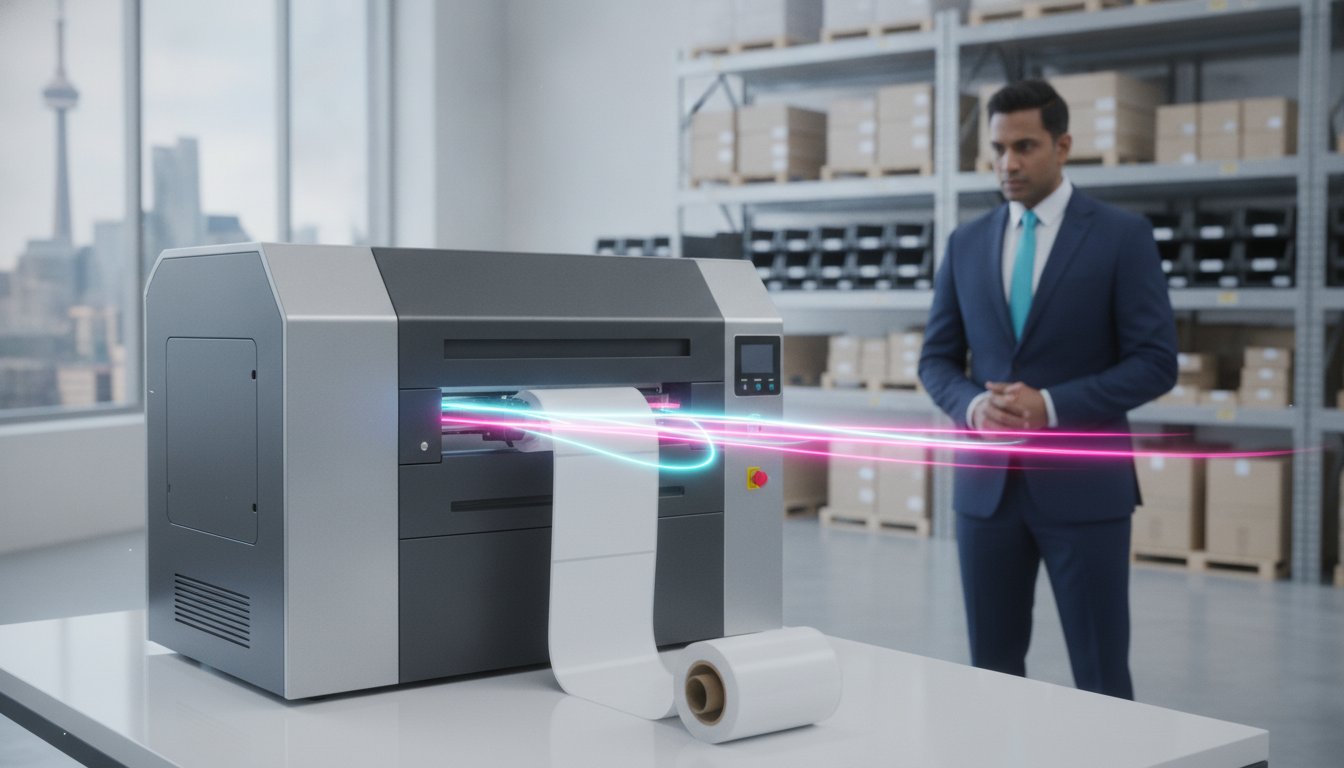
Could a simple change in how you label your products reduce your labour costs by up to 40%? While traditional barcodes typically achieve 85 to 95% accuracy, RFID printers enable a near-perfect 99.9% read rate, effectively eliminating the manual errors that plague modern Canadian supply chains. If you're currently struggling with poor inventory visibility or the complexity of new retailer mandates, you aren't alone. Many business owners realize that manual cycle counts and picking errors are no longer sustainable in a high-speed, 2026 market.
We understand that transitioning from standard thermal printing to RFID encoding can feel like a daunting technical leap. This guide simplifies that process by showing you exactly how these machines work and the strategic advantages they offer for your specific operations. You'll learn the key differences between industrial and desktop models, how to ensure compliance with GS1 Canada standards, and the best way to calculate your ROI. From understanding ISED regulations like RSS-247 to choosing the right hardware, we provide the technical clarity you need to make an informed investment.
Key Takeaways
- Understand how RFID printers combine standard visual printing with digital encoding to transform passive labels into active data assets for your supply chain.
- Learn about the "Verify and Void" process, a critical technical feature that ensures faulty tags are identified and rejected before they enter your logistics stream.
- Identify the specific performance differences between industrial, desktop, and mobile models to select hardware that matches your environment and production volume.
- Discover how implementing RFID technology can achieve near-perfect inventory accuracy and significantly reduce labour costs associated with manual scanning.
- Realize the importance of matching high-quality thermal transfer ribbons with specialized RFID labels to ensure long-term tag durability and compliance with Canadian retail standards.
What is an RFID Printer? Understanding the Shift in Canadian Logistics
How can a business track thousands of assets in seconds without a direct line of sight? Radio-frequency identification (RFID) technology makes this possible. An RFID printer is a sophisticated device that prints human-readable information on a label surface while simultaneously encoding digital data to an internal inlay. This evolution from traditional barcodes to "smart" labels represents a fundamental shift in how Canadian logistics hubs manage inventory in 2026.
The primary difference between a standard thermal printer and an RFID model is the presence of an internal encoder and antenna. While a standard printer only focuses on the visual layer, an RFID-enabled unit validates the digital data during the print pass. If the chip doesn't respond correctly, the printer marks the label as void. This ensures that only functional, accurate tags reach your shipping dock. It's a strategic upgrade that turns a simple sticker into a powerful data asset.
The Core Components of an RFID Label
Every RFID label consists of three primary layers: the chip, the antenna, and the substrate. The chip stores unique data, such as an Electronic Product Code (EPC), while the antenna allows for wireless communication with readers. These are bonded to a substrate and tucked beneath a face stock. The face stock isn't just for aesthetics; it protects the delicate internal technology from environmental debris and physical friction during transit. During the printing process, the printer's encoder "talks" to the inlay, ensuring the digital identity matches the printed text.
Why 2026 is the Year for RFID Adoption
Why is the Canadian market shifting so rapidly this year? As of February 2026, Innovation, Science and Economic Development Canada (ISED) has expanded its scope to include passive RFID tags under new regulatory consultations. Beyond compliance, the fiscal reality is clear. RFID systems offer 99.9% read accuracy compared to the 85% typical of manual barcode scanning. This level of precision is essential for real-time asset tracking across vast Canadian facilities.
Canadian enterprises are realizing that the investment in hardware pays for itself through labour reduction. Recent data indicates that warehouses utilizing RFID can see a 25 to 40% decrease in labour costs associated with manual cycle counts. By 2026, meeting the strict item-level tagging requirements of major national retailers is no longer optional for suppliers who want to maintain their shelf space and operational efficiency.
How RFID Printing and Encoding Works: A Technical Breakdown
The operation of RFID printers is a two stage process that happens almost simultaneously. When you send a print job from your software, the printer doesn't just apply heat to a label. It first engages an internal encoding module to transmit data to the chip embedded within the label. This digital handshake ensures that the information on the chip matches the text or barcode being printed on the surface. If you've ever dealt with "dead" tags in your warehouse, you'll appreciate the precision required during this high speed pass.
One of the most critical features in modern units is the "Verify and Void" process. During the encoding stage, the printer performs a read-after-write check. If the chip fails to respond or returns incorrect data, the printer immediately stops and prints a "VOID" pattern across the label. This prevents faulty tags from entering your logistics chain, saving your team from the frustration of finding unreadable pallets later. While some entry level models lack this feature, industrial grade RFID printers prioritize this verification to maintain 99.9% read accuracy.
The choice between direct thermal and thermal transfer technology remains vital even with RFID. Most Canadian enterprises prefer thermal transfer labels because they offer the longevity required for long term asset tracking. Using high quality thermal transfer ribbons ensures the printed data stays legible even in harsh environments. Direct thermal is often reserved for short term shipping labels where the tag won't face extreme temperatures or friction.
The Encoding Process Explained
The printer writes data to the integrated circuit (IC) using an internal antenna calibrated to the specific inlay position. Because different RFID labels have different antenna designs, the printer must be able to adjust its signal strength and focal point. If the antenna placement is slightly off, the signal might "bleed" into the next label on the roll, causing duplicate encoding. Professional grade hardware uses adaptive encoding technology to isolate the signal to a single tag, ensuring data integrity for every item in your batch.
Frequency Matters: UHF vs. HF/NFC
Understanding Radio-frequency identification (RFID) requires choosing the right frequency for your application. In Canada, Ultra-High Frequency (UHF) is the standard for logistics, operating in the 902 to 928 MHz range. It allows for long range reading of multiple tags at once, which is ideal for dock door portals. High Frequency (HF) or Near Field Communication (NFC) is proximity based, typically used for secure access or consumer engagement where the reader must be within centimetres of the tag. If you aren't sure which frequency fits your workflow, consult with our technical team to find the ideal hardware configuration.
Key Applications: Why Canadian Enterprises are Realizing RFID ROI
Why are so many Canadian logistics managers trading their traditional barcode systems for RFID printers? The answer lies in the tangible return on investment that comes from automated data capture. In a warehouse environment, the shift from manual scanning to RFID can lead to a 25 to 40% reduction in labour costs. This isn't just about speed; it's about the fundamental accuracy of your inventory. While barcodes require a direct line of sight and individual handling, RFID allows you to identify thousands of items simultaneously, even when they're tucked deep inside a shipping container.
Asset tracking is another area where Canadian enterprises see immediate value. Whether you're managing medical equipment in a healthcare facility or high value tools on a construction site, knowing the precise location of your assets prevents costly replacements. Beyond internal tracking, RFID printers are essential for meeting the strict compliance mandates of major retailers. Many big box partners now require item level tagging to ensure their own shelf availability, and failing to meet these standards can result in significant chargebacks or lost contracts.
Streamlining the Warehouse and Distribution Centre
In the modern distribution centre, time is the most expensive resource. By utilizing portal readers at your loading docks, you can automate the receiving process entirely. As pallets move through the bay, the system verifies the contents against the digital manifest in real time. This capability improves dock to stock time by approximately 25%, allowing your team to move products to the floor faster. RFID technology allows for the bulk scanning of entire pallets in seconds, capturing hundreds of individual items without opening a single box. This level of visibility also enables automated replenishment triggers, ensuring you don't face out of stock incidents during peak demand periods.
Enhancing the Customer Experience in Retail
The benefits of RFID extend far beyond the backroom and directly onto the sales floor. Accurate inventory data is the backbone of successful "Buy Online, Pick Up In-Store" (BOPIS) services. If your system shows an item is in stock when it isn't, you risk a frustrated customer and a lost sale. With RFID, retailers can maintain 99.9% inventory accuracy, making omnichannel fulfillment seamless. Additionally, high end brands use these tags for brand protection and anti-counterfeiting, as each unique chip provides a digital birth certificate for the product. From smart fitting rooms that suggest matching accessories to rapid point of sale checkouts, the technology is redefining the Canadian retail landscape.

Choosing the Right RFID Printer: Desktop, Industrial, and Mobile Models
Which hardware format actually fits your daily workflow? Selecting the right RFID printers involves more than just comparing price points; it requires a deep dive into your environment and expected throughput. In the Canadian market, businesses typically categorize their needs into three distinct tiers: desktop, industrial, and mobile. While all these units can encode data to a chip, the main difference between them lies in their durability, media capacity, and daily duty cycle.
When to Invest in an Industrial Powerhouse
Industrial RFID printers are engineered for 24/7 high-volume encoding in rugged environments like manufacturing plants or large distribution centres. You should consider an industrial unit once your daily output exceeds 1,000 labels. These machines feature all-metal frames and high-capacity ribbon spindles that accommodate 450-metre or 600-metre ribbons, which significantly reduces downtime for supply changes. Other than the physical size, the only difference between an industrial powerhouse and a desktop unit is the internal processing speed and thermal management. Leading models from Toshiba and Printronix are built to withstand environmental debris while maintaining print speeds of up to 14 ips (inches per second).
The Versatility of Desktop and Mobile Units
If your operations are confined to a retail desk or a healthcare centre, a compact desktop model is often the ideal solution. These units offer a space-saving footprint while maintaining the ability to encode standard UHF inlays for inventory. For field workers or yard managers, mobile RFID printers empower teams to re-tag items at the shelf or in the yard. When selecting a mobile unit, you must prioritize battery life and robust Wi-Fi or Bluetooth connectivity to ensure seamless encoding away from a central workstation. These portable units are perfect for relabelling "Buy Online, Pick Up In-Store" (BOPIS) orders on the fly.
When comparing the top brands, Zebra is often the baseline for ease of use and software integration across Canadian supply chains. SATO is recognized for its industrial-grade encoding precision and multi-language support, which is useful for international logistics. Honeywell offers a delta in performance with their rugged designs that prioritize longevity in high-heat environments. Each brand brings specific technical advantages depending on whether you need high-resolution 600 dpi printing for jewellery tags or standard 203 dpi for shipping labels.
Selecting the wrong hardware can lead to costly encoding errors and operational delays that hurt your bottom line. If you're ready to modernize your labelling process but aren't sure which model fits your facility, contact our technical experts to find the exact printer configuration for your needs.
Essential Supplies and Software: Completing Your RFID Infrastructure
Hardware alone doesn't guarantee a successful deployment. Your RFID printers require a synchronized ecosystem of software and consumables to function at peak efficiency. Sourcing these components from a Canadian provider ensures that your supply chain remains resilient against international shipping delays and customs hurdles. When you align your hardware with high-quality media, you reduce the risk of printhead wear and encoding failures that can halt production.
The digital side of the operation is just as vital as the physical label. Without professional software, managing unique identifiers across thousands of items becomes a logistical nightmare. By selecting the right combination of RFID labels and management tools, you transform a simple printing task into a robust data management system that supports your long-term business growth.
Matching Labels and Inlays to the Environment
The physical properties of your items dictate the type of label you should select. For instance, standard inlays often struggle with signal interference when applied directly to metal surfaces or containers holding liquids. In these specific scenarios, you need specialized "on-metal" tags that include a physical spacer to allow the antenna to communicate effectively. The main difference between a standard retail tag and an industrial one is the substrate durability and adhesive strength.
You must also choose between paper and synthetic face stocks based on the label's final destination. While paper is sufficient for indoor retail environments, durable industrial labels are necessary for outdoor assets or warehouses with high moisture levels. To ensure the longevity of the printed data, high-quality thermal transfer ribbons are non-negotiable. A resin-based ribbon paired with a synthetic stock provides the highest level of resistance to chemicals and abrasion, ensuring your tags remain readable for years.
The Software Layer: Design and Data Management
Managing the encoding process requires professional software like Bartender or Loftware. These platforms act as the bridge between your ERP or WMS system and your RFID printers. One of the most important functions of this software is automating the serialization of tags. This prevents data duplication, which is a common error in manual systems that can lead to significant inventory discrepancies. Professional software ensures that every chip receives a unique Electronic Product Code (EPC) that complies with GS1 Canada standards.
Connecting your printer to your existing database allows for real-time data validation. This means that as a label is printed, the software verifies the encoding was successful and logs the unique ID into your system. This level of integration is essential for compliance-ready labelling, especially when working with major national retailers who demand 100% accuracy on every pallet. By centralizing your design and encoding logic, you simplify the training process for your staff and minimize the chance of costly operational errors.
Future-Proof Your Canadian Supply Chain with Smart Labelling
Transitioning to an RFID-enabled workflow is a strategic move that transforms your labelling from a cost centre into a high-value data asset. By integrating the right hardware with professional software, you ensure your operations remain compliant with evolving retailer mandates and ISED regulations. The shift to RFID printers isn't just about technical upgrades; it's about gaining the operational visibility required to thrive in a competitive 2026 landscape.
As an authorized Canadian dealer for Zebra, SATO, and Honeywell, DuraFast Label provides more than just equipment. We offer the expert technical support needed to navigate the complexities of implementation, backed by a national shipping network that keeps your facility stocked with essential consumables. Whether you're upgrading a single warehouse or scaling across multiple facilities, we're here to help you realize the full potential of your labelling infrastructure.
Explore our full range of RFID printers and smart labelling solutions. We look forward to acting as your strategic partner in achieving a more efficient and transparent production process.
Frequently Asked Questions
Do I need special software to use an RFID printer?
Yes, specialized software is required to handle the encoding commands for the integrated circuit. While standard print drivers manage the visual layout, professional platforms like Bartender or Loftware NiceLabel are necessary to link your database to the RFID chip. These programs automate the serialization of tags, which prevents the duplication of data across your supply chain.
Can an RFID printer also print standard 1D and 2D barcodes?
An RFID printer can absolutely print standard 1D and 2D barcodes. These machines are built on the same foundation as traditional thermal units, meaning they can function as standard barcode printers when used with non-RFID media. This versatility allows you to use one piece of hardware for both "smart" labels and traditional shipping documents without needing separate devices.
Why are RFID labels more expensive than standard thermal labels?
The higher cost of RFID labels is due to the physical inlay embedded beneath the face stock. Each label contains a microchip and an antenna, which are significantly more complex to manufacture than standard thermal paper. While traditional labels are simple consumables, an RFID tag is a functional electronic component that provides the 99.9% read accuracy required for modern logistics.
What is the maximum read range for labels printed on a UHF RFID printer?
Labels printed on UHF RFID printers typically offer a read range of 3 to 15 metres. The exact distance depends on the power of your reader, the size of the antenna in the tag, and the environment. In a typical Canadian warehouse, handheld readers usually capture data from 3 to 6 metres away, while fixed portal readers can reach much further.
How do I know if my current labels are compatible with an RFID printer?
Standard thermal labels are not compatible with RFID printers if you intend to encode data. To use the encoding features, you must purchase media that specifically includes an internal inlay. You should also verify that the inlay placement on the liner matches the antenna position of your specific printer model to avoid signal bleed during the encoding pass.
What happens if the printer fails to encode an RFID tag?
If the hardware fails to encode a tag, it will automatically engage a "Verify and Void" process. The printer marks the faulty label with a "VOID" pattern and immediately attempts to encode the next tag on the roll. This ensures that unreadable or defective chips never enter your inventory, maintaining the integrity of your automated tracking system and reducing manual errors.
Are there mobile RFID printers for field operations in Canada?
Mobile RFID printers are widely available for field operations across Canada. Units from brands like Zebra and TSC allow workers to encode and relabel items directly at the shelf or in the yard. These portable machines use Bluetooth or Wi-Fi to communicate with your mobile warehouse management system, providing the same encoding precision as a desktop unit in a compact, battery-powered format.