Reliable WinRX Labels for Canadian Pharmacy Software
9th Aug 2026
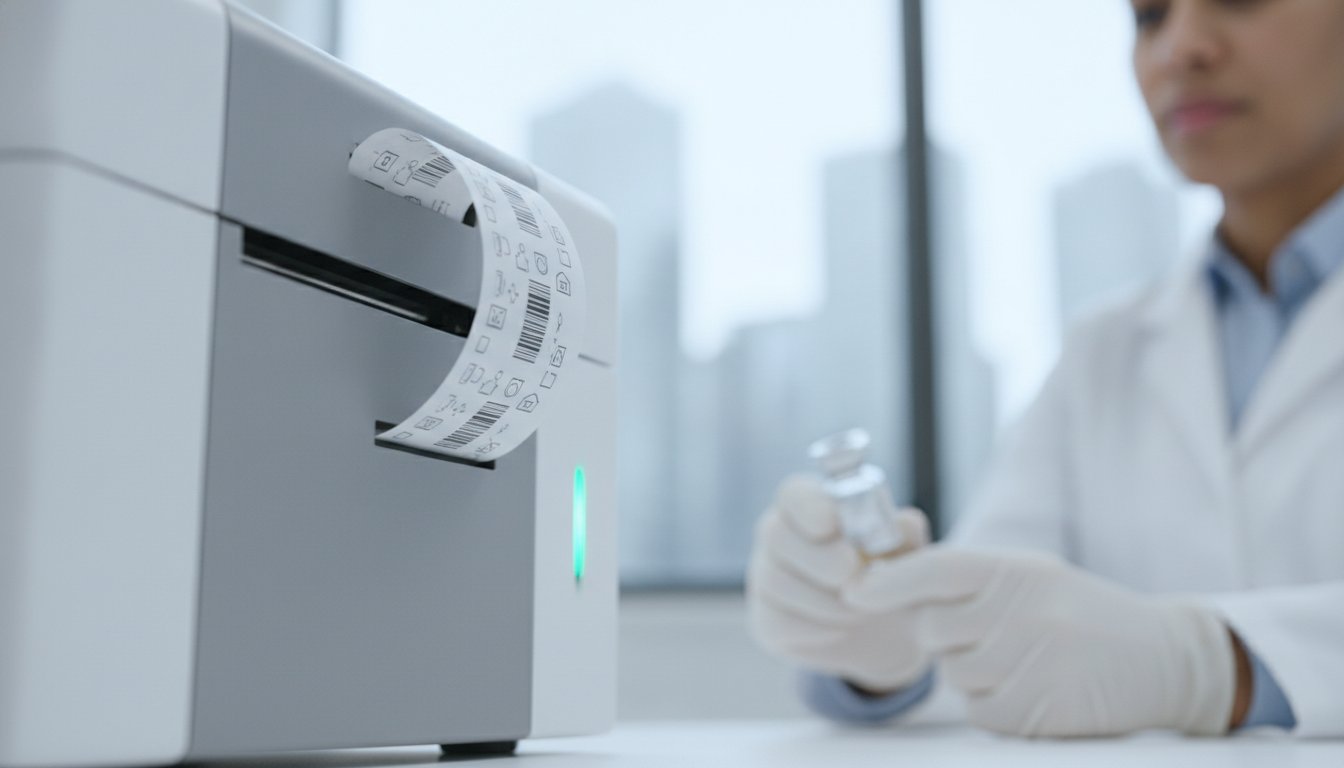
Could a minor adhesive failure on a small vial be the hidden bottleneck stalling your entire pharmacy's workflow? It's a question many Canadian pharmacists face when label jams or poor print quality lead to scanning errors and dispensing delays. Reliable WinRX labels are more than just paper and glue; they're the foundation of your operational efficiency and regulatory compliance. If you've ever dealt with the frustration of high proprietary label costs or the headache of labels peeling off curved surfaces, you aren't alone.
We understand that maintaining a seamless dispensing process requires hardware and consumables that work in perfect harmony. In this guide, you'll learn how to select, optimize, and maintain the ideal labels for your WinRX pharmacy management system. We'll examine the technical requirements for the new label programs in WinRX v10, explore the benefits of sourcing from a reliable Canadian supplier, and provide practical tips to reduce downtime caused by printer maintenance. This structured approach ensures you have a clear roadmap to achieve professional results while keeping your costs in check.
Key Takeaways
- Understand how the latest WinRX v10 updates and Health Canada regulations influence your label templates and compliance card requirements.
- Identify the technical differences between permanent and removable adhesives to ensure your labels remain secure on small-diameter vials without peeling.
- Evaluate the cost-to-durability ratio by comparing thermal transfer ribbons against direct thermal options for your WinRX labels.
- Implement a diagnostic maintenance routine to eliminate common alignment errors and reduce hardware downtime in high-volume dispensing environments.
- Learn the logistical benefits of partnering with a Canadian supplier to secure custom label sizes and a reliable stock of pharmacy-grade consumables.
Understanding WinRX Label Requirements for Canadian Pharmacies
WinRX, developed by Applied Robotics, serves as a high-performance engine for thousands of pharmacies across Canada. While the software manages complex patient profiles and drug interactions, the physical output, specifically WinRX labels, remains the primary touchpoint for patient safety. High-quality labels are essential for pharmacies utilizing automated workflows and OCR (Optical Character Recognition) modules. If a label smudges or the alignment is off by even a few millimetres, these sensitive systems can fail to read barcodes, leading to manual overrides and increased risk.
The recent transition to WinRx v10 has introduced several logistical shifts. With the maximum Sig (directions for use) length increased to 240 characters as of September 2024, and new automated translation features added in June 2024, the amount of text required on a single vial label has grown significantly. This requires a precise balance between font size and label real estate to maintain legibility. Standard prescription labels typically measure 4 inches by 2 inches, but v10's new features, such as the ability to view text message attachments from patients (added July 2027), mean that pharmacies must often print more detailed compliance cards and patient leaflets alongside traditional vial labels.
WinRx v10: New Laser and Thermal Programs
The main difference between the legacy software and the v10 update is the introduction of specialized laser and thermal label programs. The new laser program, added in July 2026, allows for more complex layouts on standard sheets, while the thermal programs are optimized for high-speed dispensing. You can identify your current program within the WinRx system settings under the Label Configuration tab. Preparing your hardware for these updates involves more than just a software patch; it requires ensuring your printers can handle the specific DPI (dots per inch) requirements for the new templates. For high-volume environments, choosing between direct thermal and thermal transfer printing is a critical decision that impacts both the longevity of the print and the total cost of ownership.
Regulatory Compliance and Patient Safety
Canadian provincial pharmacy boards mandate strict standards for label legibility and durability. Across Canada, your labels must remain readable for the entire life of the medication. This is particularly important for managing new requirements like the ISMP incident reporting module added in June 2026, which relies on accurate lot numbers and expiry dates. Using specialized pharmacy labels ensures that the adhesive withstands the tight radii of small vials and the environmental debris common in a busy dispensary. When text is translated automatically for patients, the print quality must be sharp enough to support non-Latin characters, ensuring every patient understands their dosage instructions regardless of their preferred language.
Technical Specifications: Adhesives, Materials, and Durability
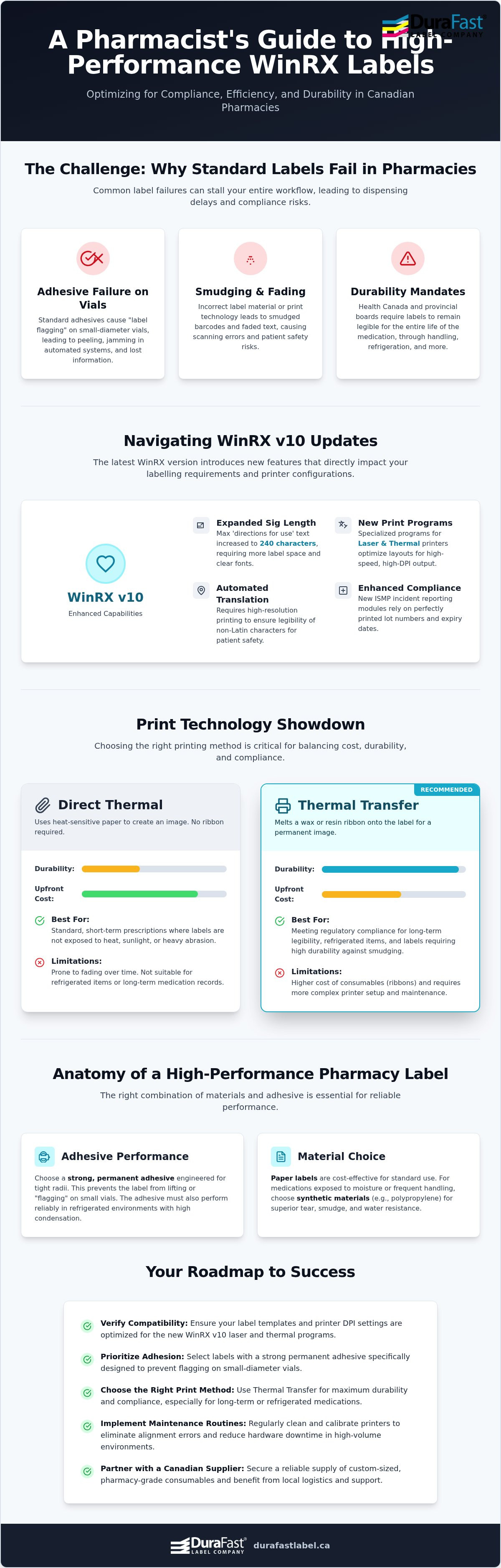
Why do high-quality labels matter in a fast-paced dispensary? The answer lies in the harsh physical reality of the pharmacy environment. Unlike flat shipping boxes, pharmacy vials present a uniquely challenging surface for standard adhesives. When you apply a label to a small 13-dram vial, the material naturally wants to return to its flat state. This tension leads to "label flagging," where the edges lift and catch on other bottles or automated dispensing equipment. Using professional WinRX labels specifically engineered for tight radii eliminates this logistical hurdle and prevents the adhesive from failing prematurely.
Material choices also play a critical role in your workflow. While paper labels are cost-effective for standard prescriptions, synthetic materials are better choices for medications introduced to water or constant handling. These weatherproof labels resist tearing and smudging, ensuring the medication instructions remain legible for the duration of the treatment. Standard paper labels are typically around 3.2 mils thick, but for environments where durability is paramount, choosing a synthetic stock provides the resilience needed to withstand the rigours of patient use.
Adhesive Performance on Small Vials
Pharmacies aren't always dry, room-temperature environments. Many medications require refrigeration or even frozen storage, creating a breeding ground for condensation. Standard adhesives often lose their bond when exposed to moisture, causing the label to slide or fall off entirely. You need a permanent adhesive that forms a fast, aggressive bond. This is particularly vital for specialized pharmacy labels designed for cold-chain compliance. To test your current stock, apply a label to a cold vial and check for edge lift after ten minutes. If it peels, your adhesive isn't meeting the technical demands of your workflow.
Durability Against Handling and Chemicals
Think about how many times a patient handles a prescription bottle over a thirty-day period. Skin oils, moisture, and friction from pockets or bags can quickly degrade poor-quality print. In a busy dispensary, labels also face "environmental debris" like dust or accidental contact with cleaning agents. Maintaining high-quality WinRX labels ensures that your barcode scan success rates remain high over the label's life. Direct thermal labels typically have a lifespan of 6 to 8 months before they start to fade. In contrast, thermal transfer options can last up to two years, maintaining a high contrast for scanning. If you're seeing an increase in scanning errors, it's likely time to re-evaluate your material durability. If you're unsure which adhesive matches your specific storage conditions, you can request a technical consultation with our team.
Direct Thermal vs. Thermal Transfer for WinRX Systems
How do you determine which printing technology is the most fiscally responsible choice for your dispensary? The main difference between direct thermal and thermal transfer printing lies in how the image is created on the WinRX labels. Direct thermal uses heat-sensitive paper that darkens when it passes under the printhead, whereas thermal transfer uses a heated ribbon to melt ink onto the label surface. While some Canadian pharmacies still rely on laser printers for sheet-fed compliance cards, thermal printers offer a smaller hardware footprint and significantly faster output, making them the standard for modern dispensing.
When evaluating operating costs, direct thermal appears simpler because it doesn't require ribbons. However, the specialized heat-sensitive paper used in this process is often more expensive than the standard stock used for thermal transfer. Print speed is another critical metric; many professional thermal printers operate at speeds of 6 to 10 ips (inches per second). This rapid output directly reduces patient wait times during peak hours. For pharmacies with limited counter space, the choice between internal and external label unwinders impacts the overall footprint and how well the equipment resists environmental debris like dust or accidental spills.
Direct Thermal: Efficiency for Short-Term Labelling
Direct thermal is often the most efficient choice for standard prescription vials where the label only needs to remain legible for a few months. By choosing direct thermal labels, you eliminate the need to manage ribbon inventory, which simplifies routine maintenance for your staff. To maximize your workspace, look for printers with internal label unwinders that keep the media roll protected inside the chassis. This setup is ideal for smaller Canadian dispensaries that prioritize a clean, uncluttered workstation and a simplified supply chain.
Thermal Transfer: Longevity for Compliance and Long-Term Care
If your pharmacy provides services for long-term care facilities or utilizes complex multi-dose packaging, thermal transfer is the superior option. The combination of thermal transfer labels and high-quality thermal transfer ribbons creates a crisp, heat-resistant image that won't fade when exposed to light or friction. This longevity is essential for compliance cards that must remain scannable for the duration of a patient's treatment. For the best results, you must match the ribbon type to your specific label material to ensure the ink bonds permanently and resists smudging during frequent handling.
Optimizing Your WinRX Labelling Workflow and Quality
Have you ever noticed a thin white line running vertically through your barcodes? This common defect is often the first sign of a failing printhead, which can lead to unreadable WinRX labels and frustrating manual data entry errors. To maintain a high-speed dispensary, you must adopt a diagnostic approach that prioritizes hardware health alongside software accuracy. For those looking to further enhance their data verification processes, Sociallabel provides specialized data labelling and text comparison services to ensure that the information being printed remains precise and error-free. Calibration is the foundation of this process; ensuring your media is perfectly aligned with your specific WinRX templates prevents adhesive buildup on the platen rollers, which is a leading cause of label jams and mechanical wear.
Managing print speeds is a balancing act between throughput and clarity. While many thermal label printers can reach speeds of 10 ips (inches per second), running at maximum velocity can sometimes reduce the sharpness of fine text, such as complex dosage instructions. We recommend testing your output at various intervals to find the "sweet spot" where your pharmacy remains efficient without sacrificing the legibility required by provincial regulations. Proper media loading is also paramount; always ensure the media guides are snug but not tight to prevent the label stock from skewing during long print runs.
Printhead Maintenance and Longevity
Thermal printheads are precision components that require regular care to avoid "dead pixels." These gaps in the heating elements make barcodes unscannable and can compromise patient safety. You should clean your printhead every time you replace a roll of media using a specialized cleaning pen or 99% isopropyl alcohol. This simple preventative maintenance routine significantly extends the life of your hardware and prevents the high costs associated with emergency repairs. Signs of impending failure include persistent light spots or streaks that don't disappear after a thorough cleaning.
Software Settings for Professional Results
Achieving professional results requires a synergy between your printer hardware and your software configuration. Within your printer driver, you can adjust the darkness and heat settings to match your specific label media. If the print is too light, increasing the heat can improve contrast, but excessive heat can prematurely wear out the printhead. For those utilizing the "New laser label program" in WinRX v10, alignment issues are often solved by adjusting the unprintable margins in the printer properties. Configuring WinRX to handle different media types, such as pharmacy labels for vials versus sheet-fed compliance cards, ensures that every dispense event is documented clearly. If you're experiencing persistent alignment or quality issues that disrupt your workflow, contact our technical support team for a comprehensive workflow audit.
Sourcing High-Quality WinRX Compatible Labels in Canada
Why should a Canadian pharmacy prioritize a local specialist for their labelling needs? Sourcing WinRX labels from a domestic provider isn't just about reducing shipping times; it's about ensuring supply chain reliability in an industry where a single day of downtime can compromise patient care. When you rely on international suppliers, you face potential customs delays and fluctuating currency exchange rates that can disrupt your fiscal planning. A Canadian specialist understands the specific regulatory landscape of Health Canada and the provincial colleges, providing custom label sizing that aligns perfectly with the unique WinRX templates used for prescription vials and compliance cards.
Customization is particularly critical as you finalize your transition to the latest software modules. The new requirements for automated translations and detailed patient instructions often necessitate non-standard label dimensions that off-the-shelf products cannot accommodate. By partnering with a supplier that offers bespoke manufacturing, you can secure labels that fit your specific hardware configurations, whether you're utilizing an internal or external label unwinder. Bulk purchasing also offers a significant advantage for high-volume dispensaries, allowing you to lower your cost-per-label while ensuring you never run out of critical consumables during peak periods like flu season.
Comprehensive Pharmacy Labelling Solutions
Choosing the right media involves more than just picking a size; it requires a deep understanding of material science. Our extensive range of pharmacy labels includes various material grades designed to withstand the environmental challenges discussed earlier, such as moisture and handling. For pharmacies looking to enhance patient safety, we offer colour-coded options that help organize medications and reduce dispensing errors. Successfully integrating thermal label printers into your existing WinRX network requires a hardware partner that understands how to calibrate your Zebra, Honeywell, or SATO units to produce crisp, scannable barcodes every time.
Strategic Partnership for Pharmacy Growth
DuraFast Label Company Canada acts as more than a vendor; we are a strategic partner in your pharmacy's growth. We act as consultants to help you manage logistics, ensuring you have the correct ink volumes or thermal ribbons ready for high-demand cycles. By analyzing your monthly dispense counts, we can recommend a stocking schedule that balances your inventory costs with operational seamlessness. This pragmatic approach allows you to focus on patient outcomes rather than logistical hurdles. If you're ready to optimize your dispensing workflow and secure a reliable supply of high-performance media, we encourage you to contact us for a custom pharmacy label consultation today.
Empowering Your Pharmacy Workflow with Reliable Labelling
Optimizing your dispensary involves more than just a software update; it requires a commitment to high-quality consumables that can keep pace with modern demands. As you adapt to the new features in WinRx v10, the reliability of your WinRX labels becomes a cornerstone of patient safety and operational efficiency. By selecting materials with pharmacy-grade adhesives and implementing a diagnostic maintenance routine, you ensure that every barcode remains scannable and every instruction stays legible. Sourcing these components from a domestic specialist provides the supply chain stability needed to navigate peak periods without disruption.
DuraFast Label Company Canada supports Canadian pharmacies with a specialized inventory of labels and expert technical assistance for all major thermal and laser hardware brands. We provide national shipping across all provinces to ensure your dispensary remains fully stocked regardless of your location. If you're ready to eliminate label jams and improve your print quality, Contact DuraFast Label Company Canada for Expert WinRX Label Solutions. Let's work together to build a more resilient and efficient dispensing process for your team.
Frequently Asked Questions
Are WinRX labels compatible with both laser and thermal printers?
Yes, the software supports both laser and thermal printing technologies to accommodate different dispensary workflows. Laser printers are typically used for sheet-fed compliance cards and patient leaflets, while thermal printers are preferred for high-speed vial labelling. You can configure your specific hardware preferences within the WinRX system settings to ensure the output matches your current media type and printer capabilities.
What is the best label size for a standard Canadian prescription vial?
The industry standard for most Canadian vials is 4 inches by 2 inches. This size provides sufficient real estate for mandatory provincial health warnings and the drug directions. However, with the sig length increasing to 240 characters in WinRx v10, some pharmacies now utilize larger formats to maintain legibility when automatic translations are applied. Choosing a slightly larger label can prevent text crowding and ensure patient safety.
Can I use generic thermal labels with my WinRx v10 system?
While generic rolls may fit your printer, they often lack the aggressive adhesive needed for small-diameter vials. Using non-certified WinRX labels often results in edge lift or "flagging," which can interfere with automated dispensing systems. Professional-grade labels are specifically engineered to bond to tight radii and resist the environmental debris found in a busy pharmacy, providing much higher reliability than budget alternatives.
How do I prevent my pharmacy labels from peeling off in the fridge?
To prevent peeling in cold storage, you must use labels with a permanent adhesive rated for refrigeration. Standard adhesives often fail when condensation forms on the vial surface. By pairing a synthetic label stock with a cold-temp adhesive, you ensure the bond remains secure at temperatures between 2 and 8 degrees Celsius. This technical combination prevents the labels from sliding or falling off while the medication is stored in the fridge.
What is the 'ips' setting and how does it affect my WinRX printing?
The 'ips' setting stands for inches per second and determines the linear speed of the printhead. While high-volume printers can reach 10 ips, a setting between 4 and 6 ips is usually recommended for WinRX labels to ensure maximum clarity. Slower speeds allow the heating elements more time to create a crisp image, which is vital for the small fonts used in dosage instructions and the high-contrast requirements of barcode scanning.
Do I need a specific ribbon for WinRX compliance card labels?
Yes, thermal transfer compliance cards require a resin or wax-resin ribbon to achieve the necessary durability. These ribbons create a smudge-proof image that resists heat and friction, ensuring the medication schedule remains readable for the entire treatment cycle. Using the wrong ribbon can lead to faded text, especially if the cards are handled frequently by patients or long-term care staff during daily medication passes.
How often should I clean the printhead on my pharmacy label printer?
You should clean the printhead every time you load a new roll of labels or ribbons to prevent the buildup of adhesive residue and dust. Regular maintenance using a cleaning pen or 99% isopropyl alcohol protects the precision heating elements from premature failure. This simple habit prevents "dead pixels" from appearing in your barcodes, which would otherwise lead to unreadable labels and frustrating manual entry errors during verification.
Where can I find custom-sized WinRX labels in Canada?
You can find custom-sized labels and specialized pharmacy consumables at DuraFast Label Company Canada. We offer bespoke manufacturing for unique PMS templates and compliance cards, ensuring your media is perfectly calibrated for your specific hardware. By sourcing domestically, you avoid the logistical hurdles of international shipping and gain access to technical support that understands the specific regulatory requirements of the Canadian pharmacy landscape.