Label Applicators: The Complete How-To Guide for Scaling Your Labelling Process
20th Jul 2026
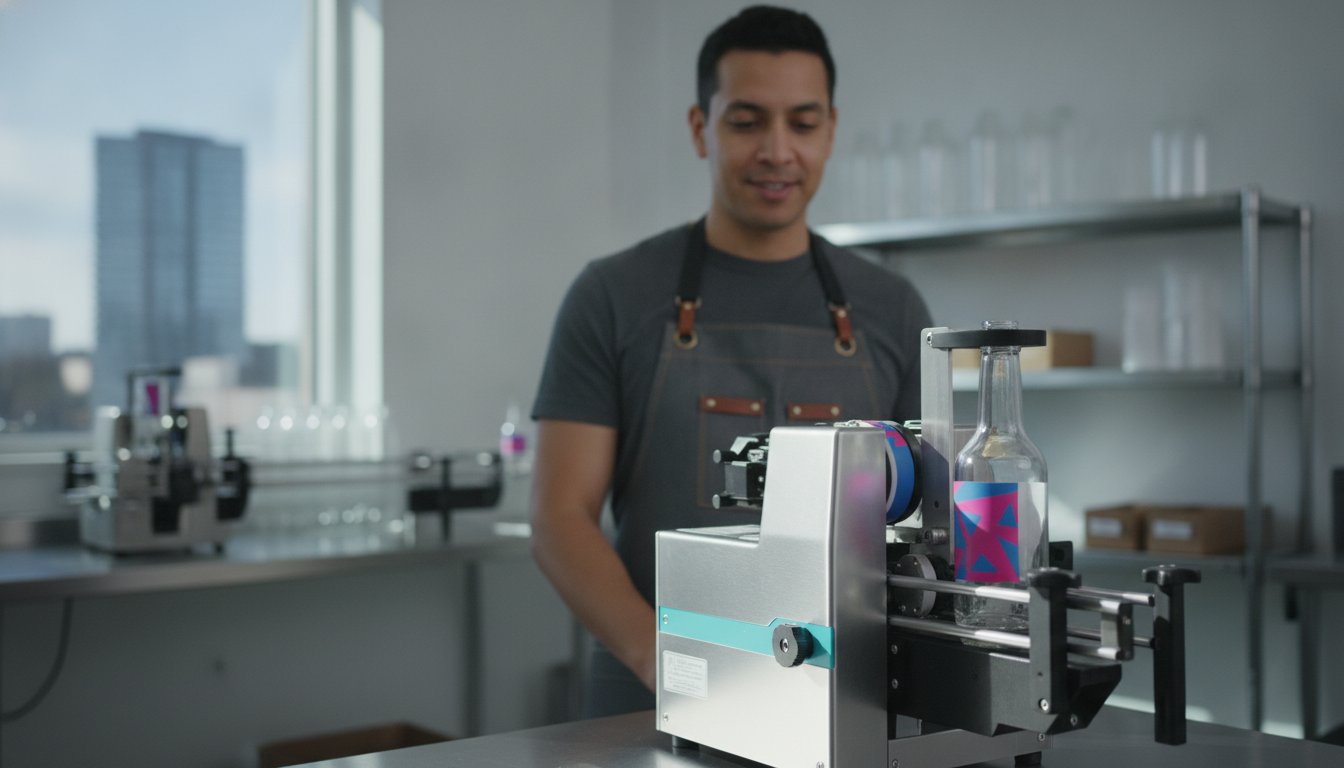
What if the most significant bottleneck in your production line isn't your printer or your staff, but the simple act of peeling and sticking a piece of paper? You aren't alone if you've spent late nights correcting crooked stickers or smoothing out air bubbles on thousands of containers. Relying on manual labour for high-volume tasks often leads to inconsistent placement and physical fatigue. By integrating label applicators into your workflow, you can eliminate these human errors and ensure every product leaving your facility looks sharp and professional.
We understand that scaling a business requires a strategic shift from manual tasks to automated efficiency. As the global market for label applicators is projected to reach US$3.4 billion in 2026, more companies are recognizing that automation is the key to staying competitive. This guide will show you how to transition to systems that drastically increase your units-per-hour throughput. You'll learn how to match specific applicator mechanics to your container geometry to minimize waste and ensure compliance with evolving 2026 ISO standards. We'll walk you through the technical nuances of modern equipment so you can make an informed decision that reduces long-term costs and supports your brand's growth.
Key Takeaways
- Identify the ideal equipment for your production volume by comparing the efficiency of manual crank-operated tools against semi-automatic electric systems.
- Select label applicators based on your specific container geometry to ensure precise "roll-on" application for round bottles or flat surfaces.
- Master the calibration process by learning the correct way to load label rolls onto the unwinder for consistent, wrinkle-free placement.
- Improve your operational workflow by integrating applicators with in-house colour label printers to achieve a seamless, professional finish.
- Understand how technical label material choices, such as synthetic versus paper, impact machine performance and long-term durability in varied environments.
What are Label Applicators and Why Does Your Business Need One?
Are you tired of seeing your premium products undermined by crooked stickers or unsightly air bubbles? A label applicator is a precision mechanical device designed to apply pressure-sensitive labels to containers with exact alignment. While a basic Label dispenser might simply present the label for you to grab, an applicator takes the process further by mechanically pressing the label onto the substrate. This transition from "peel-and-stick" by hand to mechanical assistance is the single most effective way to scale your production. It removes the variability of human touch, ensuring that every bottle, jar, or box looks identical to the last.
Consistency is the hallmark of a professional brand. When labels are applied manually, fatigue inevitably sets in after the first few hundred units, leading to slanted placement or wasted materials. Label applicators eliminate these risks by providing a repeatable, industrial-grade solution. This precision doesn't just save time; it elevates your brand perception. Customers equate a perfectly aligned, wrinkle-free label with product quality and attention to detail, which is vital for high-end retail environments.
The ROI of Moving Beyond Hand-Application
How much time does your team spend fixing labelling errors? Hand-applying 1,000 labels can take a skilled worker several hours, whereas a semi-automatic system can complete the same task in a fraction of the time. By reducing the labour hours required for finishing, you can reallocate your staff to higher-value production roles. Beyond labour, you'll see a decrease in material waste. Applicators prevent "lost" labels caused by initial misalignment or wrinkling on the container surface. If you achieve a 50% increase in application speed through automation, your return on investment is realized through both lower labour costs per unit and higher daily output.
Core Components of an Applicator System
Understanding the anatomy of your machinery helps you maintain peak performance. Every system relies on three primary parts: the supply roll (unwinder) which holds your labels, the peel bar (stripper plate) that separates the label from its backing, and the waste take-up (rewinder) that collects the spent liner. The main difference between a smooth operation and a frustrating one is web tension. Proper tension prevents the label from "wandering" or drifting during application, which is essential for maintaining accuracy. Modern machines also utilize sensor technology to detect the gap between labels. This ensures perfect timing and placement, even when using clear or uniquely shaped labels that might otherwise confuse simpler equipment. Integrating these tools with high-speed colour label printers allows you to create a seamless, in-house production line that grows with your business.
Choosing the Right Style: Manual vs. Semi-Automatic Applicators
At what point does your labelling speed begin to limit your business growth? Identifying the right equipment starts with a clear-eyed look at your daily production volume. If you're processing fewer than 500 units per day, manual label applicators often provide the most cost-effective entry point into mechanical assistance. These units typically use a hand-crank or a trigger-pull mechanism to dispense and apply the label. However, as your throughput requirements increase, the physical labour involved in manual cranking can become a bottleneck. This is where semi-automatic, electric-powered systems become essential for maintaining operational seamlessness.
When evaluating electric models, pay close attention to the "ips" (inches per second) rating. This metric defines how quickly the machine dispenses the label web. To avoid production delays, you should match the ips of your applicator to the output speed of your printer. Precision also plays a role in legal compliance. Ensuring your labels are applied without distortion helps you meet the standards set by the Fair Packaging and Labeling Act, which requires clear and legible product information on all consumer goods.
The main difference between various high-volume setups involves how they integrate with your printer's media handling. If you're using a printer with external label unwinders, you can accommodate much larger roll diameters, though this setup significantly increases the equipment's footprint. In contrast, printers with internal label unwinders are often better choices for dusty or wet label environments because the chassis protects the media from environmental debris. Sometimes, the only difference between an entry-level professional setup and a high-resilience industrial station is this specific hardware configuration and its ability to withstand harsh floor conditions.
Industrial Manual Applicators
Don't mistake industrial manual tools for the flimsy plastic dispensers found on consumer marketplaces. A professional-grade manual applicator features a heavy-duty metal chassis designed for longevity in demanding environments. These are excellent choices for boutique operations or settings where electricity might pose a safety concern. Because these machines rely on mechanical gears rather than motors, they're incredibly reliable and require minimal maintenance. They're also highly versatile. You can easily swap between different blank labels for sale to accommodate various product lines without needing complex recalibration.
Semi-Automatic Electric Solutions
If your team is struggling to keep up with orders, semi-automatic electric solutions offer a significant performance boost. These machines use high-torque servo motors to provide consistent application speed and pressure. This technology ensures that the label doesn't slip or skew, even during long production runs. Most electric models feature adjustable sensors that can detect the gap on transparent or unusually shaped labels, which is often a challenge for manual tools. Integrating these systems with a high-performance thermal label printer creates a robust workflow that handles everything from shipping manifests to product branding. If you're unsure which motor type fits your specific container material, you can reach out to our technical team for a detailed configuration audit.
Matching Equipment to Your Container: Rounds, Flats, and Tapers
Why is container geometry the single most important factor when selecting your equipment? The physical shape of your product dictates the mechanical path the label must take to ensure a bubble-free bond. If you attempt to use a flat-surface machine on a cylindrical wine bottle, the label will crease or fail to adhere entirely. Choosing the right label applicators requires matching the machine's roller configuration to the specific curves or angles of your packaging. This alignment is what separates a professional, retail-ready product from one that looks like a prototype.
Round containers, such as beer cans, cosmetic jars, and chemical bottles, typically require a "roll-on" applicator. These machines use a set of motorized rollers to spin the product while the label is dispensed. This method is highly effective for ensuring that the leading edge of the label meets the trailing edge perfectly. It's the standard approach for everything from small pharmaceutical vials to large 4-litre jugs. The main difference between these setups is the adjustable distance between the rollers, which must be calibrated to the diameter of the container to prevent slipping.
Labelling Round and Cylindrical Products
For cylindrical products, the application process must be steady and controlled. As the product rotates, the applicator applies consistent pressure to "wipe" the label onto the surface. This is particularly critical for high-precision tasks like applying jewellery and ring labels, where even a millimetre of misalignment is visible to the customer. When you're working with larger containers, ensuring the roll diameter of your label supply matches the machine's unwinder capacity is vital to prevent mid-run interruptions. If your container has a slight taper, such as a specialty wine bottle, standard rollers may cause the label to "spiral" upward or downward. In these cases, you'll need an applicator with an adjustable tilt to compensate for the changing circumference.
Flat Surfaces and Pouch Labelling
Flat surface applicators utilize a "wipe-on" or "top-down" method, making them the better choice for rectangular boxes, stand-up pouches, and flat lids. The challenge here is often environmental debris. Dust or moisture on a flat surface can prevent the adhesive from forming a permanent bond, leading to "flagging" where the corners of the label lift. Keeping the application area clean is essential for a professional finish.
One detail often overlooked in the SERP results is how your choice of printing technology affects the application. For instance, labels printed with pigment-based inkjet technology for GHS compliance often have different surface textures than those printed with thermal transfer ribbons. The thickness of the label material and the strength of the liner are also critical. A thin liner might snap under the tension required for high-speed flat applicators, while a thick, synthetic label may require more "wipe" pressure to stay flat on a flexible pouch. Always ensure your label material is compatible with the mechanical tension of your applicator to avoid jams and downtime.

How-To: Setting Up and Calibrating Your Label Applicator
How do you ensure your machine performs as intended from the very first run? Success begins with your workspace. Place your equipment on a level, stable surface in a central location of your production area. A clean environment is non-negotiable; dust and airborne particles can interfere with sensitive optical sensors or contaminate the adhesive on your labels. Once your station is prepared, follow these foundational steps to get your label applicators ready for action:
- Step 1: Load the supply roll. Place your label roll onto the unwinder spindle. Double-check the orientation of the labels to ensure they are facing the correct direction for your container type.
- Step 2: Thread the web. Guide the label liner through the series of tension rollers and across the peel bar. This is the edge where the label will actually separate from its backing.
- Step 3: Secure the waste liner. Attach the leading edge of the spent liner to the waste rewinder. This component keeps your workspace tidy by collecting the backing paper as you work.
- Step 4: Calibrate the sensors. Adjust the gap sensor so the machine recognizes the physical space between each label. This ensures the applicator stops at the perfect position for every cycle.
Threading and Web Tension Best Practices
The "S-curve" threading pattern is essential for maintaining constant tension across the label web. If the liner is too loose, the labels will drift and cause misalignment on your containers. Conversely, excessive tension can lead to the liner snapping or labels peeling prematurely inside the machine. You can test the tension by manually pulling the liner through the system before you engage the motor to ensure there is smooth, consistent resistance. If you notice the web "walking" or moving side-to-side, check that your supply roll is centred and the locking collars are tight.
Calibration and Testing
Calibration is where technical specifications meet practical application. Your gap sensor must be tuned to recognize the opacity difference between the label material and the liner. This is typically straightforward for standard glassine liners, but clear-on-clear labels often require an ultrasonic sensor to detect density changes. Always run several test units to verify both vertical and horizontal alignment before starting a full production shift. If your workflow involves a print-and-apply configuration using thermal transfer ribbons Canada, ensure the printhead alignment is synchronized with the applicator's dispense speed. If you encounter persistent tracking issues or sensor errors during your initial setup, contact our support specialists for a detailed technical walkthrough.
Optimizing Your Workflow for Efficiency and Professionalism
How do you transform a collection of machines into a truly optimized production line? Achieving peak efficiency requires looking at your equipment as a single, integrated ecosystem rather than a series of isolated tools. The main difference between the VP500 series and the VP550 series is found in their resilience to moisture and chemical exposure. While the VP500 series is designed for high-speed, high-vibrancy colour labels using standard dye inks, the VP550 is engineered for applications where labels may be introduced to water or condensation. Both printers rely on Memjet Technology to maintain constant ips speeds, ensuring that your printing and finishing lines remain perfectly synchronized. Sometimes, the only difference between a professional finish and a smudged label is the specific choice of ink chemistry.
The physical environment of your facility also plays a major role in hardware longevity. If you operate in "dusty" or "wet" environments, you must take proactive steps to protect both your machinery and your adhesive integrity. Environmental debris can settle on rollers, causing the label web to slip or skew during application. Similarly, moisture can compromise the bond of the adhesive before it even touches the container. Regular maintenance of the peel bar and rollers is critical for maintaining "up time." Adhesive residue naturally builds up on these components over time; if left uncleaned, it creates friction that leads to label jams and costly production delays.
Material Compatibility and Adhesive Performance
The mechanical stress of the application process requires a careful match between ink type and label media. If your workflow involves frozen foods, condensation can cause standard dye inks to bleed during the "wipe-on" phase. In these scenarios, the VP550 series is a better choice because its water enhanced dye inks are formulated to resist moisture. You must also ensure your labels-inkjet media has the correct release force for your specific machine. If the liner is too thin or the adhesive too aggressive, the applicator may struggle to strip the label from the web, leading to downtime. Protecting your equipment from environmental debris is also essential; even small amounts of dust on the peel bar can cause labels to flag or lose their adhesive bond.
Scaling Your Production Line
When moving from a standalone applicator to a conveyor-based system, the only difference in your day-to-day operation is the sheer volume of units-per-hour you can process. Scaling to front-and-back labelling on a single pass requires a printer capable of massive ink capacity to prevent mid-shift pauses. DuraFast Label Company Canada supports these high-volume operations by providing a reliable national supply of ink, ribbons, and media. By matching your printer's technical capabilities to your applicator's mechanical tension, you create a seamless production line that maintains professional standards as you grow. This methodical approach ensures that your investment in automation results in tangible business value and operational seamlessness.
Take Control of Your Production Future
Transitioning from manual hand-application to mechanical systems is the most effective way to eliminate human error and increase your daily throughput. By selecting label applicators that match your specific container geometry and material needs, you ensure a consistent, professional presentation that builds consumer trust. It's a strategic move that pays off in both speed and accuracy. Whether you're working with round jars or flat pouches, proper calibration and regular maintenance of your rollers and peel bars will keep your operation running without disruption.
As an authorized Canadian dealer for industry leaders like Afinia, Primera, and Epson, DuraFast Label Company Canada provides the expert technical support you need to scale your in-house production. We offer national shipping across Canada to ensure you always have the necessary supplies on hand. Browse our full range of industrial label applicators and accessories to find the perfect fit for your workflow. You've built a great product; now it's time to give it the professional finish it deserves.
Frequently Asked Questions
How do I know if a label applicator will work with my specific bottle shape?
You can determine compatibility by identifying whether your container is cylindrical, flat, or tapered. Round bottles require a roll-on applicator that rotates the unit during application, while rectangular boxes or pouches need a wipe-on system. If your container has a slight taper, you'll require a machine with an adjustable tilt to prevent the label from spiralling as it wraps around the surface.
What is the difference between a label dispenser and a label applicator?
The main difference between these two tools is the final step of the labelling process. A dispenser simply peels the label from its liner and presents it for you to grab and apply by hand. In contrast, label applicators mechanically press the label onto your product. This eliminates the variability of human touch and ensures perfectly aligned placement for every unit in your production run.
Can I use clear labels with a standard semi-automatic applicator?
Yes, you can use clear labels, but you must ensure your machine is equipped with an ultrasonic sensor. Standard optical sensors often fail to detect the gap on transparent media because they rely on light transmission to "see" where one label ends. Upgrading to an ultrasonic sensor allows the machine to recognize the density difference between the label and the liner, ensuring perfect timing for every dispense cycle.
How many labels per minute can I realistically apply with a manual machine?
Most operators realistically process between 10 and 20 units per minute using a manual crank-operated machine. While this is a significant improvement over basic hand-labelling, it remains limited by physical fatigue over long shifts. If you need to maintain a consistent speed of 30 or more units per minute, switching to an electric semi-automatic model is the better choice for your facility.
Do I need special labels to use an applicator machine?
You don't need "special" labels, but your rolls must be configured specifically for machine use rather than hand-application. This includes having the correct core diameter, typically 76 mm or 3 inches, and a specific unwind direction that matches your machine's threading path. Using high-quality blank labels with consistent release force is also essential to prevent label applicators from jamming or tearing the liner during high-speed runs.
How do I prevent my labels from wrinkling during the application process?
Wrinkling is usually caused by improper web tension or misaligned rollers. You should also ensure the application surface is free from environmental debris, dust, or condensation, as these can interfere with the initial adhesive bond. If the container isn't perfectly level during the "roll-on" process, the label will skew and create air bubbles or creases that undermine your professional presentation.
Is it difficult to switch between different product sizes on one machine?
It isn't difficult to switch sizes if your machine features adjustable guides and rollers. Most industrial applicators are designed for versatility, allowing you to move from small cosmetic jars to large jugs in just a few minutes. You'll simply need to adjust the width of the mechanical guides and recalibrate the gap sensor to recognize the new label length for the different product line.
What maintenance does a label applicator require to stay operational?
Regular maintenance involves cleaning adhesive residue from the peel bar and rollers to prevent friction and "walking" of the label web. You should also periodically check the tension rollers for wear and ensure the optical or ultrasonic sensors are free from dust. Keeping these components clean maximizes your "up time" and prevents the labels from wandering or skewing during high-speed production runs.