Jewellery and Ring Labels: The Complete 2026 Guide to Professional In-House Labelling
15th Sep 2026
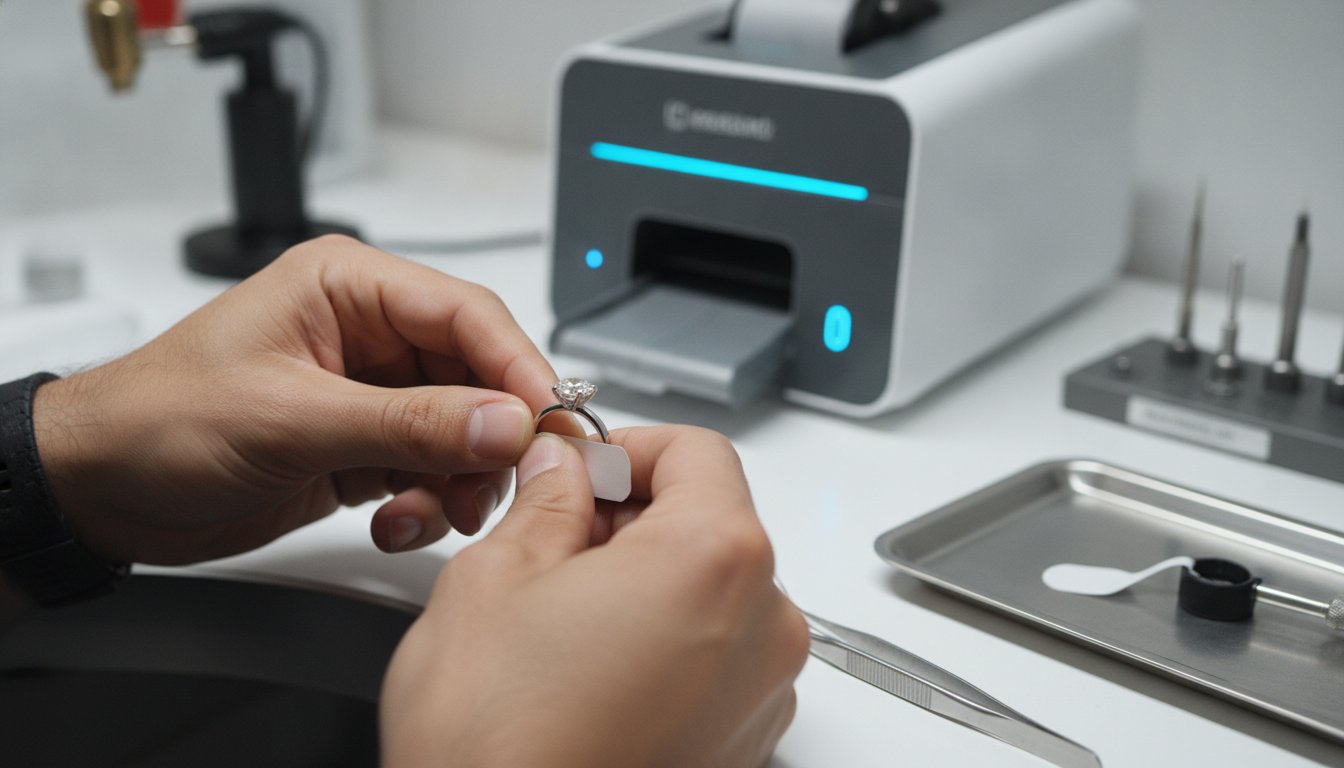
Imagine a customer admiring a C$5,000 diamond engagement ring, only to notice a tag that's yellowed from display lights or, worse, leaving a sticky adhesive residue on the polished platinum. You've likely dealt with the frustration of labels falling off in ultrasonic cleaners or text fading just when a piece is ready for sale. It’s a common logistical hurdle that can undermine even the most exquisite craftsmanship. Finding the right jewellery tag printer isn't just about marking prices; it's about ensuring your brand's professional image remains intact from the workbench to the final sale.
We understand that as a Canadian jeweller, you need a labelling system that balances aesthetic elegance with industrial reliability. This guide provides a comprehensive look at how to transition to in-house production to lower your costs while increasing tag durability. We'll explore the technical differences between standard Memjet models like the VP610 and water enhanced series like the VP750, which are designed to withstand moisture and condensation. By the end of this article, you'll know exactly which hardware and specialized materials, such as TT364 rat-tail tags, will best protect your inventory and streamline your operations.
Key Takeaways
- Learn how adhesive-free centre technology in specialized ring labels protects your inventory from gummy residue and damage to delicate metals.
- Discover how investing in an in-house jewellery tag printer provides the flexibility to update pricing and gemstone details instantly while lowering your long-term cost-per-label.
- Identify the functional differences between standard Memjet printers and water enhanced models like the VP750 to ensure your tags survive steam and ultrasonic cleaning.
- Understand the strategic value of internal label unwinders for protecting your media from environmental debris in busy production or retail settings.
- Master the essential components of a professional labelling station, from high-performance hardware to sophisticated design software like Bartender or NiceLabel.
Understanding Jewellery and Ring Labels: Materials and Styles
Labelling high-value inventory requires a specific technical approach. Unlike standard retail stickers, jewellery tags must be compact enough to avoid distracting from a gemstone's brilliance while remaining durable enough to survive constant handling. A high-quality jewellery tag printer must produce crisp, legible text on these miniature surfaces. One of the most significant innovations in this sector is adhesive-free centre technology. This design ensures that the portion of the tag touching the piece is completely free of glue. It prevents gummy residue from damaging delicate metals or obscuring official hallmark standards etched into the band. By keeping the adhesive restricted to the "tails" or "heads" of the tag, you protect the integrity of your gold and silver pieces while maintaining a clean presentation.
Rat Tail vs. Dumbbell Labels: Which is Better?
Choosing between styles depends on your specific collection. Rat Tail tags, such as the TT364, feature a long, thin tail that loops around thicker bands or bracelet links. They provide a classic look and ample space for detailed inventory data. Dumbbell labels, like the TT306 or TT307, use a narrow bridge to connect two printable heads. These are ideal for delicate rings and earrings because they minimize the visual footprint on the item. In a retail display case, the right choice ensures your pricing looks like an intentional part of the presentation. It's a small detail that reinforces the premium nature of your brand and helps customers focus on the craftsmanship of the jewellery itself.
Why Material Choice Matters for Fine Jewellery
Why avoid standard paper? Paper labels often yellow under intense showroom lighting or degrade in high humidity. For a professional brand image, synthetic materials like polypropylene are the industrial standard. These jewellery and ring labels offer exceptional tear resistance and won't flag or peel during customer fittings. When you use a professional jewellery tag printer with synthetic media, you ensure your tags remain pristine even after months in a display case. This durability is essential for inventory that might be handled dozens of times before a sale. High-performance synthetics protect your operational seamlessness by reducing the need for frequent, time-consuming re-labelling, allowing you to focus on growth and customer service.
In-House Printing vs. Outsourcing: A Strategic Comparison
The Cost-Per-Label Advantage
The financial benefits of taking control of your production are significant over the long term. By purchasing bulk blank labels, you eliminate the heavy premiums charged by print shops for short, customized runs. In-house production also virtually removes the cost of waste. When a specific product line is retired, you aren't left with thousands of obsolete, pre-printed tags that end up in the bin. Instead, you simply print the exact quantity you need. This scalability is vital for growing Canadian brands that require the flexibility to pivot their marketing strategies without incurring heavy logistical penalties. If you're looking to optimize your current workflow, you can speak with our labelling consultants to find a tailored hardware solution.
Inventory Tracking and Barcoding
Beyond branding, a professional jewellery tag printer serves as a critical tool for modern inventory management. Hand-written tags are prone to human error and often lead to confusion during the frantic pace of a holiday sale. In contrast, high-resolution printed barcodes ensure that every transaction is fast and accurate. These tags integrate seamlessly with POS systems, providing real-time stock updates across multiple retail locations. The ability to print crisp, high-DPI text on such a small surface area ensures that even the most complex SKU data remains perfectly legible. This level of precision doesn't just improve efficiency; it projects an image of meticulous care that shoppers expect when purchasing luxury items.
Choosing the Right Jewellery Tag Printer Technology
Are you struggling to decide between the high-speed branding of colour inkjet and the traditional reliability of thermal transfer? Selecting the right jewellery tag printer depends on your daily throughput and your specific aesthetic goals. While thermal transfer is excellent for simple monochrome barcodes, a colour inkjet system allows you to incorporate brand colours and logos directly onto your rat-tail or dumbbell tags. This capability transforms a simple price tag into a professional branding tool that reinforces the value of your pieces. For Canadian businesses, the choice often comes down to balancing the footprint of the device with the required print resolution for tiny, legible text.
Standard Memjet Series for High-Volume Production
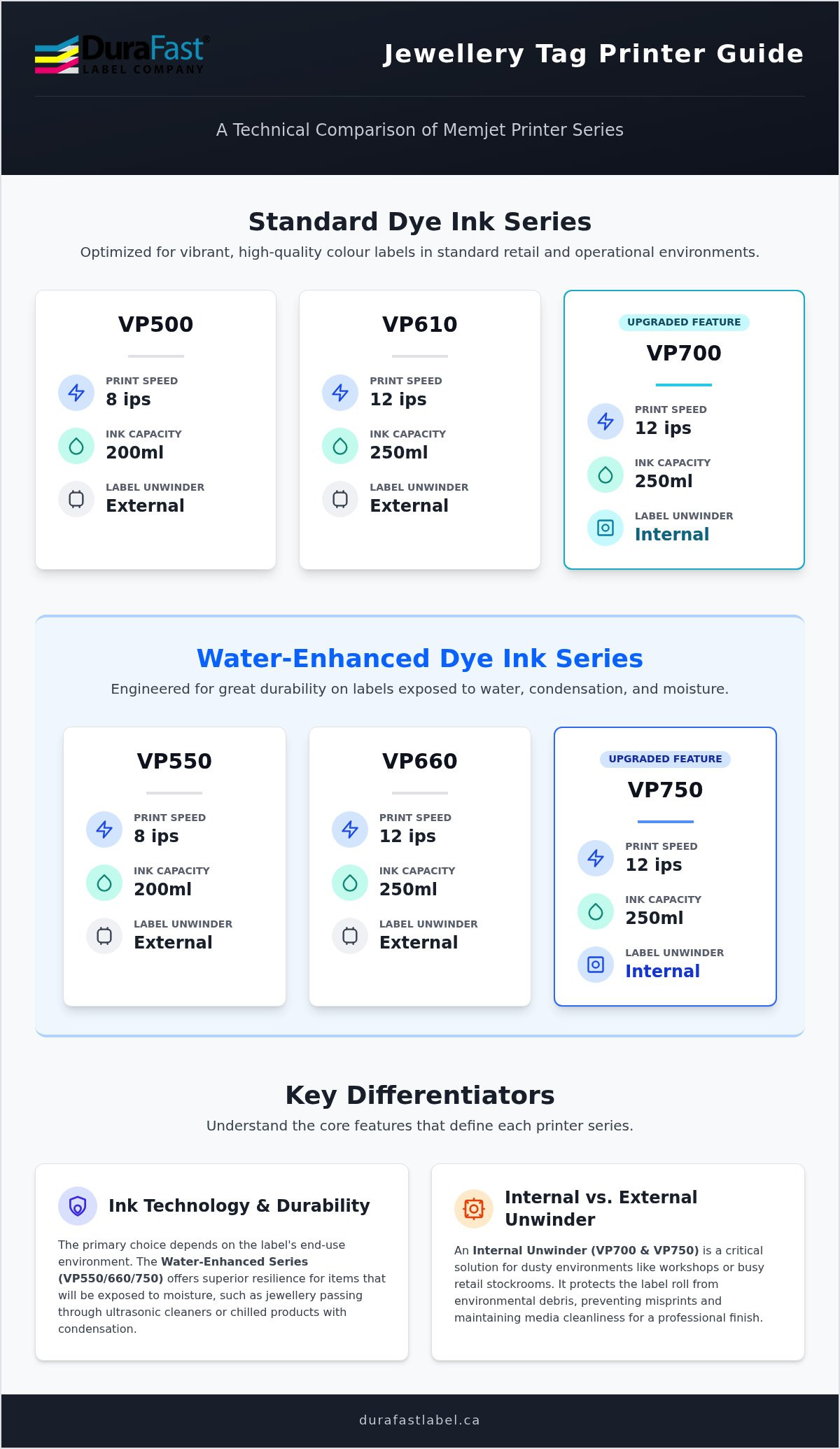
For manufacturers or high-traffic retailers, the VIPColor series provides industrial-grade performance. The VP500 serves as a robust entry point, offering a print speed of 8 ips and using 200ml ink cartridges. It utilizes an external label unwinder, which makes it easy to monitor and swap rolls during busy production cycles. If your workflow requires even faster output to keep up with large inventory shipments, the VP610 increases your capability. This model prints at a speed of 12 ips and features larger 250ml ink cartridges to minimize downtime. Like the entry model, the VP610 also employs an external label unwinder for easy access.
What if your production area is prone to dust or lint? The VP700 offers a strategic solution for these environments. It maintains the same 12 ips print speed and 250ml ink cartridge capacity as the VP610 but features an internal label unwinder built into the chassis. This design choice protects your label rolls from environmental debris that could otherwise compromise print quality or cause premature wear on the printhead. It's a curative solution for businesses operating in less-than-pristine back-office or warehouse settings, ensuring that every tag comes out clean and professional. Maintaining this level of precision is a common challenge for specialized hardware; for instance, the team at 3D Printing Canada notes that similar mechanical care and calibration are essential for achieving high-resolution results in complex printing environments.
Seiko SLP850: The Precision Choice for Small Boutiques
Not every shop requires the capacity to print thousands of tags per hour. For many independent Canadian boutiques, the Seiko SLP850 printers offer a compact and highly precise alternative. These units are specifically designed for 2-inch precision printing, which is ideal for the intricate dimensions of jewellery tags. The 300 DPI resolution is a critical feature here; it ensures that tiny font sizes and complex barcodes remain sharp and scannable. This prevents the legibility issues that often plague lower-resolution desktop printers when handling miniature media.
The SLP850 also provides versatile connectivity options to suit modern retail environments. With USB, Serial, and Bluetooth support, you can integrate this jewellery tag printer into your existing shop setup without the need for complex rewiring. Whether you're printing from a central terminal or a mobile tablet, the SLP850 delivers the high-resolution output your brand deserves in a space-saving footprint. It's an empowering choice for boutique owners who want to take control of their labelling process without investing in industrial-scale hardware.
Durability Requirements: Surviving Cleaners and Handling
Have you ever pulled a ring from an ultrasonic cleaner only to find the tag has turned into a pulpy mess? It's a common frustration for Canadian jewellers who rely on standard retail labels. Professional jewellery care involves high-frequency vibrations, chemical solvents, and intense steam. Standard labels simply aren't built for these environments. A high-durability jewellery tag printer must produce output that stays crisp through these rigorous cleaning processes. Beyond the workshop, labels face constant exposure to intense LED display lighting, which can cause inferior inks to fade within weeks. Your tags must also resist smudging during frequent customer try-ons, as skin oils can quickly blur essential pricing and SKU data.
The Water Enhanced Series for Professional Durability
For businesses that require "great durability" when labels are introduced to water or condensation, the water enhanced series is the strategic choice. This line uses specialized dye inks formulated to resist moisture-induced bleeding. The VP550 serves as an ideal entry point for durable small batches, offering a max print speed of 8 ips and using 200ml ink cartridges. If your volume is higher, the VP660 provides a faster 12 ips print speed and larger 250ml ink cartridges, utilizing an external label unwinder for easy roll access. For the ultimate in protection, the VP750 features an internal label unwinder, distinguishing it from the VP660. This configuration is specifically intended for durability in applications where labels must survive harsh cleaning cycles without losing legibility.
Resisting Environmental Debris and Display Fading
Why is an internal unwinder so important in a jewellery setting? Workshop environments are often filled with "environmental debris" like metal filings, polishing dust, and lint. An internal unwinder acts as a curative shield for your label roll, preventing these particles from entering the print path and damaging the printhead. This protection ensures that high-value inventory items remain professionally tagged throughout their entire shelf life. Long-term legibility is also a matter of brand trust; a faded tag suggests neglected stock. By choosing the right ink technology, you ensure your branding remains as vibrant as the gemstones it describes. For a deeper look at these specifications, you can read our VIPColor VP550 guide. If you're ready to upgrade your shop's durability, you can consult with our experts to find the right water enhanced model for your needs.
Setting Up Your Jewellery Labelling Station
Setting up a dedicated station ensures your production remains consistent and efficient. It isn't just about the hardware; it's about the integration of your jewellery tag printer with high-performance software and the correct consumables. For those using thermal transfer technology, matching high-quality thermal transfer ribbons to your synthetic tag materials is a technical necessity. Using a full-resin ribbon with polypropylene tags provides the highest level of smudge and chemical resistance, ensuring your barcodes remain scannable after years of handling. Precise alignment is the next hurdle. Because jewellery tags are so small, even a millimetre of drift can ruin a batch. Spend time calibrating your sensor settings to recognize the gaps or black marks on your rat-tail and dumbbell media for perfect print registration every time.
Software and Design Best Practices
Professional design software like Bartender or NiceLabel is essential for automating your inventory management. These platforms allow you to link your label templates directly to an Excel sheet or POS database, enabling instant price updates across your entire range. When designing, always identify the "safe zone" on your rat-tail or dumbbell shapes. Avoid placing critical text or barcodes near the edges or on the narrow bridge where the tag folds. This practice ensures that your branding elements, such as a small logo, remain visible without sacrificing the legibility of the SKU or metal purity details. It's an empowering way to maintain a premium look while keeping your logistical data functional.
Maintenance and Printhead Care
Longevity in a high-speed system depends on regular maintenance. If you've opted for a Memjet-powered system, keeping your VIPColor ink cartridges properly seated and the printhead clean is vital for avoiding horizontal lines or clogged nozzles. Standardizing your workflow is also important if you operate multiple retail locations across Canada. Ensure each site uses the same calibrated templates and media types to maintain brand consistency. If you're unsure which configuration fits your specific volume, you can reach out to our team for a custom jewellery labelling consultation. We'll help you diagnose your current hurdles and provide a curative solution that scales with your business growth.
Elevating Your Brand with Professional In-House Labelling
Transitioning to an in-house labelling system is a strategic investment that empowers your business to maintain brand consistency while reducing operational waste. Throughout this guide, we've explored how specialized synthetic materials and adhesive-free zones protect your most delicate pieces from gummy residue and environmental damage. Whether you require the high-speed output of a Memjet-powered system or the precision of a compact desktop unit, selecting the right jewellery tag printer is the final step toward a more professional and efficient retail environment.
As an authorized Canadian retailer for VIPColor and Seiko, we provide the industrial-grade hardware and durable synthetic tags your collection deserves. Our team offers expert technical support and national shipping to ensure your shop's operations never miss a beat. Ready to optimize your workflow and protect your inventory? Contact DuraFast Label Company Canada for Professional Jewellery Labelling Solutions today. We're here to help you achieve a seamless, high-quality presentation that reflects the true value of your craftsmanship.
Frequently Asked Questions
Do jewellery labels leave sticky residue on rings?
High-quality tags from DuraFast Label Company Canada utilize adhesive-free centre technology to prevent gummy residue from contacting your inventory. This specific design ensures that the part of the tag wrapping around the gold or silver is completely clean. By using a professional jewellery tag printer with these specialized materials, you protect your inventory's integrity. This curative approach prevents the need for manual cleaning after a customer try-on, maintaining a premium retail experience.
Can I print my own jewellery tags with a standard office printer?
Standard office printers lack the precision sensors required to register the unique gaps in rat-tail or dumbbell media. They are also unable to handle the durable synthetic materials that prevent tearing during handling. A dedicated jewellery tag printer is necessary to produce sharp, scannable barcodes on such a small surface area. Using the wrong equipment often results in frequent jams and wasted media, which ultimately undermines the cost-efficiency of moving your labelling in-house.
What is the difference between rat-tail and dumbbell jewellery labels?
The primary difference lies in their shape and intended application. Rat-tail tags, such as the TT364, feature a long strand designed to loop through bracelet links or thicker ring bands. Conversely, dumbbell styles like the TT306 or TT307 use a narrow bridge to connect two printable heads, making them ideal for delicate engagement rings. Selecting the right shape ensures your pricing data doesn't distract from the piece's craftsmanship while supporting a balanced presentation in your cases.
Will inkjet-printed jewellery tags smudge if they get wet or go in an ultrasonic cleaner?
Standard inkjet prints may bleed, but tags produced with water enhanced dye inks are specifically intended for durability in wet environments. Models like the VP550 or VP750 use these inks to survive ultrasonic cleaners and steam processing without smudging. For Canadian jewellers, this ensures that pieces can be cleaned and returned to the display case immediately. It's an empowering solution that maintains professional branding through every stage of the jewellery care and maintenance process.
Which jewellery tag printer is best for a small boutique in Canada?
The Seiko SLP850 is often the best fit for boutiques requiring high precision in a compact footprint. It offers 300 DPI resolution, which is vital for maintaining the legibility of tiny fonts on ring tags. With connectivity options like Bluetooth and USB, it integrates easily into modern shop environments. This jewellery tag printer provides the technical capability needed for professional branding without requiring the space or investment of industrial-scale production hardware, making it ideal for independent retailers.
Do I need special software to print barcodes on jewellery tags?
While basic drivers are available, using specialized barcode software like Bartender or NiceLabel is essential for long-term efficiency. These programs allow you to automate data entry by linking your jewellery tag printer to an existing inventory database or POS system. This automation eliminates human error and ensures that every tag is perfectly aligned within the safe zones of your media. It's a pragmatic way to manage high-mix inventory across multiple Canadian retail locations seamlessly.
How do I protect my label rolls from dust in a jewellery workshop?
Protecting your media from environmental debris like polishing dust is best achieved with a printer featuring an internal label unwinder. Hardware such as the VIPColor VP700 or VP750 houses the roll inside the machine's chassis. This protective barrier prevents workshop contaminants from entering the print path, which could otherwise damage the printhead. It's a curative design feature that ensures long-term operational seamlessness and consistent print quality in busy production areas where airborne particles are common.
What is the difference between the VIPColor VP700 and VP750 for jewellery?
The fundamental difference lies in the ink technology and environmental protection. The VP700 uses standard dye inks for vibrant colour, while the VP750 utilizes water enhanced dye inks for "great durability" against moisture and solvents. Both models share a 12 ips print speed and 250ml ink cartridges. However, the VP750 is specifically intended for durability in applications where tags are frequently exposed to cleaning chemicals or heavy handling, distinguishing it as the superior workshop choice.