Guide to Durable Tyvek Thermal Transfer Tags
9th Aug 2026
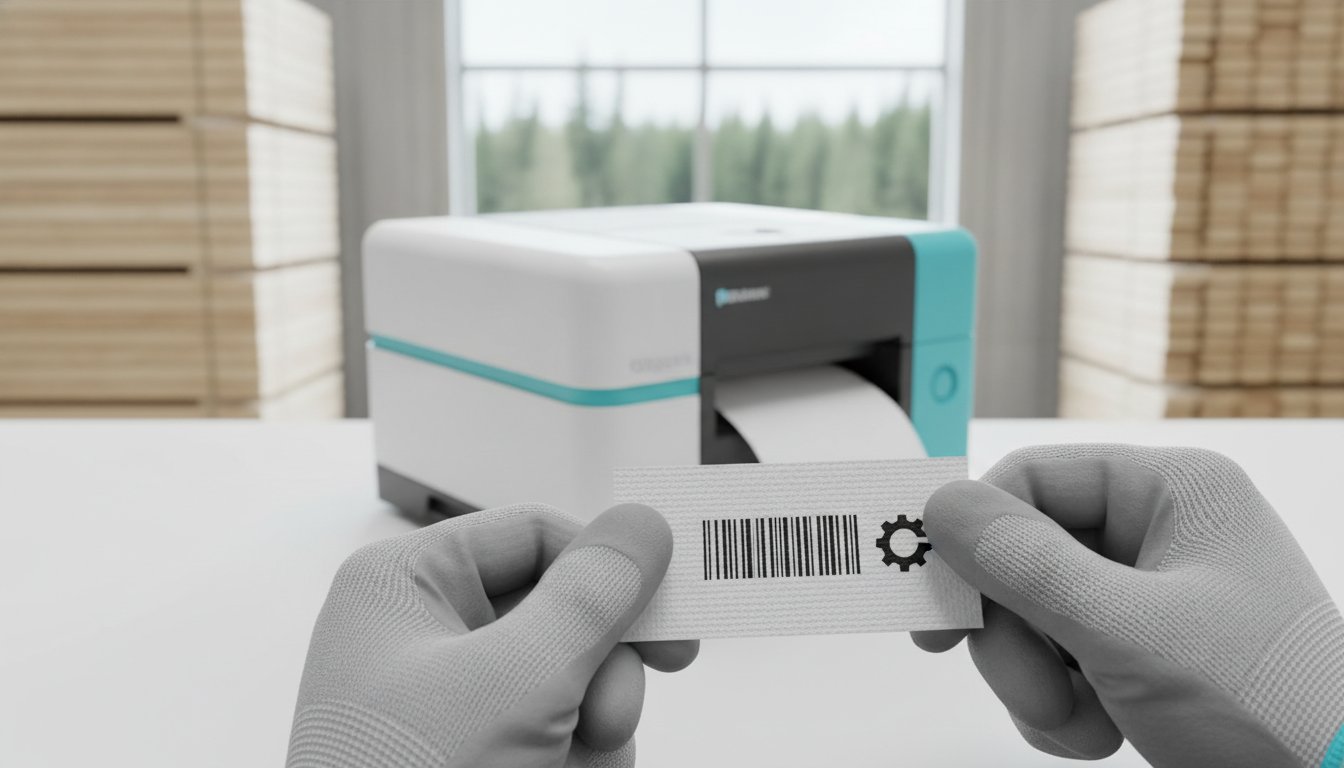
A single lost tag in your supply chain can cost your business far more than the price of the material; it represents a complete break in your asset's history. You've likely dealt with the frustration of tags that tear during transit or print that fades under the harsh glare of the Canadian sun. It's a common logistical hurdle that slows down production and leads to unnecessary waste. We understand that in industrial environments, your marking solutions must be as resilient as the products they identify.
This guide shows you how to implement tyvek thermal transfer tags to create a tagging system that remains legible for years, even in the most demanding outdoor conditions. By choosing tear-resistant and weatherproof materials, you can protect your assets and ensure seamless integration with your existing industrial printers. We'll explore the technical differences between 5-mil thickness and standard materials, the importance of resin-based ribbons for permanence, and the hardware configurations that prevent common jams. You'll gain the clarity needed to make an informed investment in your operational integrity.
Key Takeaways
- Learn why the material science of high-density polyethylene makes Tyvek virtually impossible to tear, ensuring asset identification remains intact throughout the Canadian supply chain.
- Discover how to pair tyvek thermal transfer tags with high-performance resin ribbons to create smudge-proof, scratch-resistant print that survives moisture and UV exposure.
- Understand the hardware configurations and accessories, such as external unwinders, required to integrate heavy-duty 5-mil tag rolls into your existing industrial printer workflow.
- Identify practical applications in horticulture and lumber where weather-resistant tagging prevents the operational disruptions caused by lost or illegible labels.
- Evaluate the long-term ROI of in-house tagging by comparing the cost of lost assets against the reliability of durable, industrial-grade consumables.
Understanding Tyvek Thermal Transfer Tags for Rugged Industrial Use
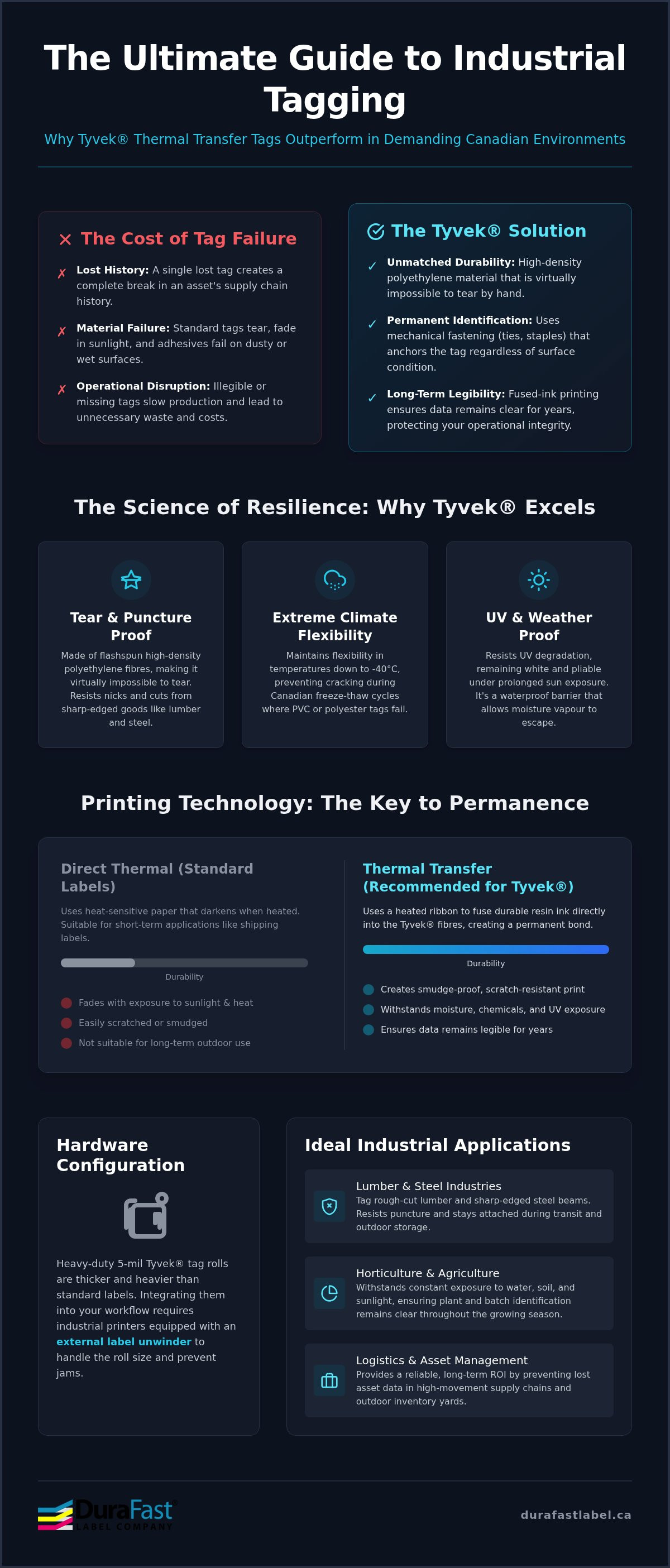
A single lost tag in your supply chain can cost your business far more than the price of the material; it represents a complete break in your asset's history. To prevent these disruptions, DuraFast Label Company Canada provides specialized solutions designed for the rigours of local logistics. Many Canadian enterprises are switching to tyvek thermal transfer tags because they offer a level of resilience that standard paper cannot match. What is Tyvek? It is a high-density polyethylene material that combines the best properties of paper, film, and fabric. Unlike standard synthetics, it is virtually impossible to pull apart by hand, especially when utilizing the 5-mil thickness standard in industrial settings.
The choice of printing technology is equally critical for longevity. While direct thermal labels are suitable for short-term shipping, they rely on heat-sensitive coatings that fade when exposed to sunlight or friction. In contrast, thermal transfer printing uses a ribbon to fuse ink directly into the Tyvek fibres. This heat-fused bond ensures your data remains legible for years, even in the fluctuating temperatures of a Canadian winter. For businesses managing high-value assets, this transition to permanent marking represents a significant step toward operational reliability.
The Problem-Solution Framework of Non-Adhesive Tagging
Why do your current labels fail? Most industrial failures stem from adhesive degradation caused by dust, oil, or moisture. If the surface isn't perfectly clean, the label won't stay. Non-adhesive tags solve this by using mechanical fastening. Whether you use staples, wire ties, or plastic fasteners, the tag stays anchored to the asset regardless of the surface condition. This creates a permanent marking solution that cannot be easily removed or torn away, providing a higher level of security for inventory in dusty or wet environments. In facilities where physical theft is a concern, partnering with Loss Prevention Distributors for specialized security hardware provides an additional layer of protection for your assets.
Tyvek vs. Polylith: Which Durable Tag Wins?
When comparing synthetic options, the main difference between Tyvek and materials like Polylith is tensile strength. Tyvek is the preferred choice for high-movement logistics because it resists puncture better than most film-based tags. It's also exceptionally lightweight. This allows you to maintain extreme durability without adding significant weight to your shipments, which helps manage logistics costs. In side-by-side environmental tests, tyvek thermal transfer tags maintain structural integrity against chemical exposure better than standard synthetic papers, making them the smarter choice for long-term outdoor storage.
The Material Science: Why Tyvek Outperforms Standard Synthetic Tags
Why does Tyvek succeed where other synthetics fail? The answer lies in its flashspun structure. While standard plastic tags often become brittle when the temperature drops, tyvek thermal transfer tags maintain their flexibility. This is vital in Canada, where temperatures can plummet to -40°C. Standard PVC or polyester tags may crack during the freeze-thaw cycle, but Tyvek's unique composition allows it to expand and contract without compromising its structural integrity. It's a pragmatic choice for any business that stores inventory outdoors year-round.
Beyond temperature resilience, UV stability is a major differentiator. You've likely seen tags that turn yellow and crumble after a few months in an outdoor yard. Tyvek resists this degradation, remaining white and pliable even under prolonged exposure to intense sunlight. This material also balances breathability with waterproofing. It acts as a barrier against liquid water while allowing moisture vapour to escape, which prevents the internal condensation that can sometimes rot or corrode the very assets you're trying to track. This dual-action protection ensures your data stays safe while the material remains lightweight.
Industrial Durability in Extreme Canadian Climates
The rugged nature of the Canadian supply chain demands more than just water resistance. Puncture resistance is essential when you're tagging sharp-edged industrial goods like steel beams or rough-cut lumber. A 5-mil Tyvek tag resists the propagation of nicks and cuts, ensuring the tag stays attached even if it gets snagged during transit. This durability ensures your barcodes remain scannable after months of exposure to rain, snow, and road salt. Reliability like this reduces the labour costs associated with re-tagging lost inventory and prevents logistical bottlenecks.
Chemical and Abrasion Resistance for Warehouse Safety
Industrial environments are often messy. Your tags might come into contact with oil, grease, or solvents that would dissolve the print on a standard paper label. By adhering to Canadian industrial labelling standards, you ensure that critical safety data remains visible throughout the product's lifecycle. The specialized top-coating on these tags ensures superior ink anchorage, which prevents smudging during heavy handling or friction. For most industrial applications, 5-mil thickness is the established standard for long-term tag longevity. If you need help determining which material grade fits your specific facility, you can speak with our tagging specialists for a custom recommendation based on your unique environment.
Achieving Print Permanence: Matching Tyvek with the Correct Thermal Ribbons
Why does your print smudge even on a durable tag? It's a common issue when the ribbon isn't precisely matched to the material. Standard wax ribbons, while economical for paper, simply won't adhere to the high-density polyethylene fibres found in tyvek thermal transfer tags. Because Tyvek is a non-porous synthetic, the ink must be heat-fused to create a permanent bond. According to DuPont's official explanation of Tyvek, the material's unique structure requires specific thermal settings to ensure the ink anchors correctly without damaging the substrate. Achieving this synergy is the only way to guarantee that your barcodes and asset data remain scannable after months of outdoor exposure.
The Main Difference Between Wax-Resin and Full Resin Ribbons
The main difference between wax-resin and full resin ribbons is the level of chemical and abrasion resistance they provide. Wax-resin blends are a solid, cost-effective choice for indoor warehouse tracking where the tags won't face extreme moisture. However, if your tags are introduced to water, road salt, or industrial solvents, full resin is the only choice. It creates a scratch-resistant finish that survives the roughest handling. You can find the right match for your specific environment in our selection of thermal transfer ribbons.
Hardware Configurations for High-Volume Tagging
Managing high-volume tagging requires more than just the right consumables. Most desktop printers have a small internal footprint, but industrial-grade tyvek thermal transfer tags often come in large 8-inch outside diameter (OD) rolls. Using an external label unwinder allows you to run these more economical rolls without upgrading to a massive industrial unit. This setup also helps prevent environmental debris from entering the printer's internal mechanisms during long production runs. For help choosing the right hardware, consult our comprehensive guide to thermal label printers.
Finally, you must optimize your printer settings for the best results. Finding the right balance between "darkness" and "ips" (inches per second) is critical. Printing too fast can lead to light, inconsistent transfer. We recommend lowering the print speed while slightly increasing the heat setting. This results in the crisp, high-contrast print required for reliable scanning in the field. It's a simple calibration that prevents waste and ensures long-term legibility.
Maximizing Operational Efficiency with Tyvek Tags in Canadian Environments
How do you maintain 100% visibility when your assets are scattered across a thousand-acre lumber yard or a humid greenhouse? In Canada, operational efficiency often depends on the resilience of your smallest components. If a tag fails, the data link is broken, leading to costly delays and inventory errors. Implementing tyvek thermal transfer tags allows your team to move away from fragile paper solutions and toward a tagging system built for the rigours of the Canadian supply chain. Whether you're managing raw materials in a remote northern facility or shipping heavy machinery from a bustling industrial hub, these tags ensure your identification stays with the product until it reaches the end user.
Industrial manufacturing facilities frequently use these tags for long-term inventory of heavy machinery and parts. When sourcing used assets from marketplaces like EquiptOrg, implementing a robust tagging system ensures your new equipment is integrated seamlessly into your existing tracking database. These tags are especially effective for irregular surfaces where traditional adhesives might peel away, such as 4x6 tire shipping tags. By using mechanical fasteners like wire or industrial staples, you eliminate the risk of adhesive failure caused by environmental debris or surface oils. This transition to a non-adhesive system simplifies your workflow and provides a more reliable bond in outdoor storage yards.
Horticulture Solutions: Beyond the Standard Label
Standard labels often succumb to the "fade factor" when exposed to intense UV light and constant irrigation. Tyvek is the superior choice for horticulture labels and tags because it doesn't degrade or become soggy in moist environments. By using continuous rolls, you can create custom-length tags for everything from small seedlings to mature trees. This flexibility reduces inventory waste and ensures that your botanical data remains legible throughout the entire growing season, regardless of humidity levels or temperature spikes.
Supply Chain Integrity in Heavy Industry
Reliable "Work in Progress" (WIP) tracking is essential in dusty factory environments where standard labels often fall off. Thermal transfer Tyvek tags provide a durable alternative that can be attached directly to steel beams or rough-cut lumber. These solutions also integrate with RFID technology for automated warehouse tracking. Switching from pre-printed tags to in-house thermal production allows you to print on demand, which significantly reduces your cost-per-tag and eliminates the need to store large volumes of obsolete inventory. It's a pragmatic shift that empowers you to take control of your own production processes.
If you're ready to improve your asset tracking and reduce waste from lost tags, contact our Canadian team today for a specialized consultation.
Customizing Your Tyvek Tag Solution for Long-Term Value
How do you determine the most cost-effective format for your specific workflow? Selecting the right tyvek thermal transfer tags involves more than just picking a material; it requires a strategic look at your production volume and asset types. The main difference between continuous and die-cut rolls is the level of customization they afford your team. Continuous rolls allow you to print tags of varying lengths for different products, which significantly reduces material waste if your inventory sizes fluctuate. Conversely, die-cut tags are pre-sized for speed, making them the better choice for high-volume, standardized operations where every second on the production line counts.
When calculating the ROI of your tagging solution, compare the modest cost of a 5-mil Tyvek tag against the substantial expense of a lost or misidentified asset in the field. It is a fiscal decision that prioritizes long-term savings over initial price points. To ensure seamless integration, you must also select the correct core size, typically 3 inches, to maintain compatibility with your Zebra, Toshiba, or TSC industrial printers. This attention to technical detail prevents hardware downtime and ensures your production line remains fluid and efficient.
Consulting with the Experts at DuraFast Label Company Canada
Guesswork often leads to incompatible ribbons and wasted resources. A professional consultation prevents these errors by matching your specific printer model with the ideal resin ribbon and tag thickness. We encourage you to request samples to test in your specific Canadian environmental conditions, whether that involves a humid greenhouse or a freezing outdoor yard. This allows you to verify performance before making a bulk commitment. You can realize a more efficient tagging process by speaking with our team about your unique logistical hurdles.
Future-Proofing Your Labelling Operations
As your business grows, your marking requirements will inevitably evolve. You might eventually explore the transition from 2D barcodes to RFID-enabled Tyvek tags for even faster inventory counts across large facilities. Scaling your production may also require moving from desktop units to high-speed industrial label printers that handle larger rolls with ease. DuraFast Label Company Canada is the strategic partner for Canadian industrial labelling, offering the localized support and technical precision required to master even the most difficult marking challenges.
Securing Your Industrial Supply Chain with Durable Tagging
Transitioning to tyvek thermal transfer tags is a strategic investment in your facility's operational continuity. By combining the puncture resistance of 5-mil Tyvek with the permanent chemical bond of high-performance resin ribbons, you ensure your asset data remains scannable through every stage of the Canadian supply chain. We've explored how matching the right consumables to your Zebra, Toshiba, or TSC hardware eliminates the waste of lost tags and prevents the common frustration of print fading. This approach doesn't just solve a diagnostic logistical hurdle; it provides the curative, long-term reliability required to scale your production with confidence.
Our team is ready to help you calibrate a solution that survives your specific environmental challenges. Contact our Canadian experts for a custom Tyvek tag consultation to discuss our specialized inventory and hardware compatibility. We're here to ensure your marking and labelling processes are as resilient as the products you build. You've got the vision for your business, and we've got the industrial tools to help you protect it.
Frequently Asked Questions
What is Tyvek and why is it used for thermal transfer tags?
Tyvek is a synthetic material made from flashspun high-density polyethylene fibres, combining the lightness of paper with the durability of plastic. It is the preferred choice for industrial tags because it resists tearing, moisture, and chemical exposure. When used for thermal transfer applications, the material's surface allows for a permanent bond with resin-based inks, ensuring that critical asset data remains legible in harsh environments.
Can I print on Tyvek tags using a standard desktop thermal printer?
You can use most standard desktop thermal printers to produce these tags, provided the hardware supports thermal transfer technology. The main challenge is typically the physical roll size, as industrial Tyvek rolls often have a larger outside diameter than desktop printers can house internally. Using an external label unwinder allows you to feed these heavy-duty materials into a smaller printer without hardware modifications.
Which thermal transfer ribbon is best for Tyvek material?
A full resin ribbon is the only choice for achieving maximum durability on Tyvek. While wax-resin blends offer some resistance, they don't provide the same scratch and chemical protection as a pure resin ribbon. This specific combination creates a smudge-proof finish that survives heavy handling and friction. It's the standard pairing for tyvek thermal transfer tags in industrial settings.
Are Tyvek thermal transfer tags waterproof and UV resistant?
These tags are exceptionally waterproof and maintain their structural integrity even when submerged or exposed to heavy rain. Unlike standard plastic tags that may become brittle or yellow under sunlight, Tyvek is naturally UV resistant. This ensures that your identification remains pliable and scannable throughout long-term outdoor storage, regardless of the humidity or solar exposure levels in your facility.
What is the main difference between 5-mil and 7.5-mil Tyvek tags?
The main difference between these two grades is the thickness and resulting stiffness of the material. A 5-mil tag is the industrial standard for most inventory needs, offering excellent tear resistance while remaining flexible. The 7.5-mil version provides even greater tensile strength and a more rigid feel, which is often preferred for heavy machinery tagging where the tag might face extreme physical abrasion.
How do I prevent my thermal printer from jamming when using Tyvek rolls?
Preventing jams requires a combination of correct hardware setup and adjusted print settings. You should lower your print speed to 2 or 3 inches per second (ips) to allow for consistent feeding of the thicker material. Additionally, using an external label unwinder reduces the tension on the printer's motor, which prevents the slipping and misalignment that often lead to hardware jams during long production runs.
Can Tyvek tags be used for outdoor applications in Canadian winters?
Tyvek is specifically engineered to withstand extreme temperature fluctuations, making it ideal for Canadian winters where temperatures can drop to -40°C. While standard films may crack or lose their adhesive bond in the cold, tyvek thermal transfer tags remain flexible and secure. This resilience ensures that your winter inventory tracking remains accurate even during the most severe freeze-thaw cycles.
Do I need an external label unwinder for Tyvek tag rolls?
You will likely need an external label unwinder if you are using a desktop printer with large industrial-sized rolls. Most high-capacity Tyvek rolls have an 8-inch outside diameter, which is too large to fit inside the internal compartment of a standard desktop unit. This accessory allows you to benefit from the lower cost-per-tag of larger rolls without investing in a full-sized industrial printer.