Epson C4000 vs Afinia L502: Which Colour Label Printer Is Right for Your Business?
13th Sep 2026
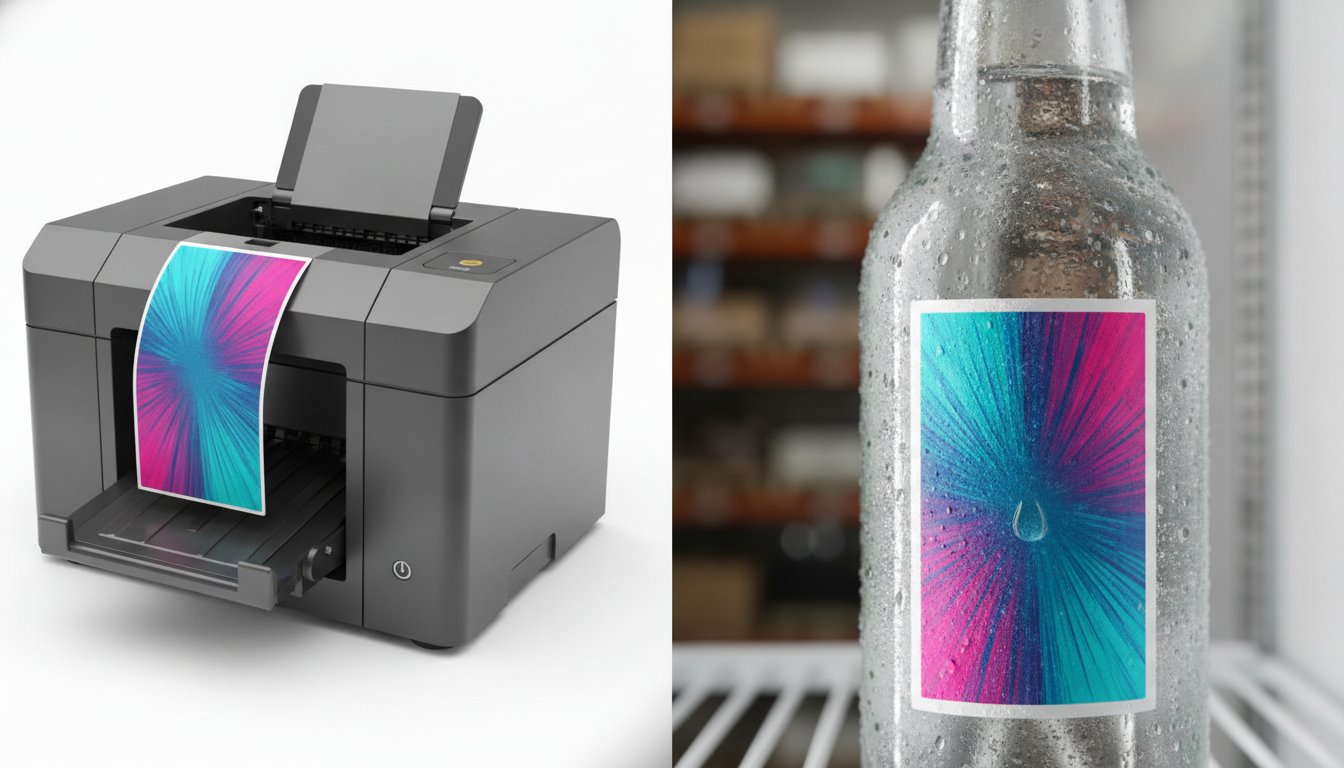
Could a simple choice in ink technology be the difference between a professional brand image and a logistical nightmare in the Canadian supply chain? Many business owners feel overwhelmed when weighing the Epson C4000 vs Afinia L502, especially when trying to balance vibrant colour aesthetics with the rugged durability needed for cold storage or condensation. You likely recognize that your label is the face of your product. Any failure in legibility or adhesion isn't just a minor glitch; it's a costly disruption to your operations that impacts your bottom line.
We understand that choosing between pigment and dye inks often feels like a trade-off between beauty and brawn. This guide clarifies that confusion by examining the critical differences in ink technology, operational costs, and environmental resilience. You'll learn how the Afinia L502’s Duo Ink system compares to the Epson C4000’s dedicated pigment approach. We also preview how these units stack up against industrial alternatives like the water enhanced VIPColor VP750 for those facing dusty environments or high-volume demands. By the end, you'll have the technical confidence to select a solution that scales with your production and protects your brand's integrity.
Key Takeaways
- Evaluate the core differences in the Epson C4000 vs Afinia L502 comparison, specifically how the Afinia’s Duo Ink system offers unique flexibility between vibrant dye and durable pigment inks.
- Learn to identify the ideal ink technology for your specific environmental challenges, ensuring labels maintain their professional appearance despite exposure to water, ice, or heavy condensation.
- Understand the functional importance of hardware features like internal label unwinders, which are essential for protecting your media from environmental debris in high-traffic or dusty Canadian facilities.
- Discover how to scale your production effectively by comparing print speeds, such as the 8 ips and 12 ips capabilities found in the VIPColor series, to meet your specific volume requirements.
- Gain clarity on the total cost of ownership by analyzing ink cartridge volumes and maintenance needs, allowing you to prioritize long-term fiscal responsibility and operational efficiency.
Epson C4000 vs Afinia L502: High-Level Comparison
Are you deciding between a compact desktop unit or a ruggedized production workhorse? Choosing the right equipment involves more than just comparing price points; it's about matching a printer's physical build and output capabilities to your specific operational environment. The Epson C4000 vs Afinia L502 debate often centres on whether you need the streamlined efficiency of a dedicated pigment system or the industrial versatility of a dual-ink hybrid. Both machines offer professional-grade results, but they serve very different roles on the production floor.
The Epson C4000 is a compact, pigment-based powerhouse designed for businesses that need high-quality labels without sacrificing valuable desk space. It's an ideal fit for boutique retail or small-scale manufacturing where space is at a premium. Conversely, the Afinia L502 is built with a heavy-duty, "ruggedized" aluminium construction, making it better suited for the vibrations and dust of a warehouse. A significant technical differentiator is the print width. The C4000 handles media up to 4.25 inches, while the L502 offers a much wider 8.5-inch capacity, allowing for larger format prime labels or chemical drums.
A fundamental distinction between these models is how they handle dye and pigment inks. The Epson C4000 is a dedicated pigment printer, focusing on smudge and fade resistance for long-term durability. The Afinia L502 utilizes a unique "Duo Ink" technology. This system allows you to swap printheads to use either dye inks for high-vibrancy retail packaging or pigment inks for GHS-compliant industrial applications. This flexibility is a major advantage for businesses with diverse product lines.
Design and Build Quality
Epson has focused on a sleek, office-friendly design that fits comfortably into professional administrative environments. It's quiet, enclosed, and easy to maintain. The Afinia L502 prioritizes industrial longevity. Its all-metal housing protects internal components from the environmental debris often found in busy shipping centres. If your printer will be situated in a high-traffic area where it might be bumped or exposed to dust, the ruggedized housing of the L502 provides essential peace of mind.
Primary Use Cases for Each Model
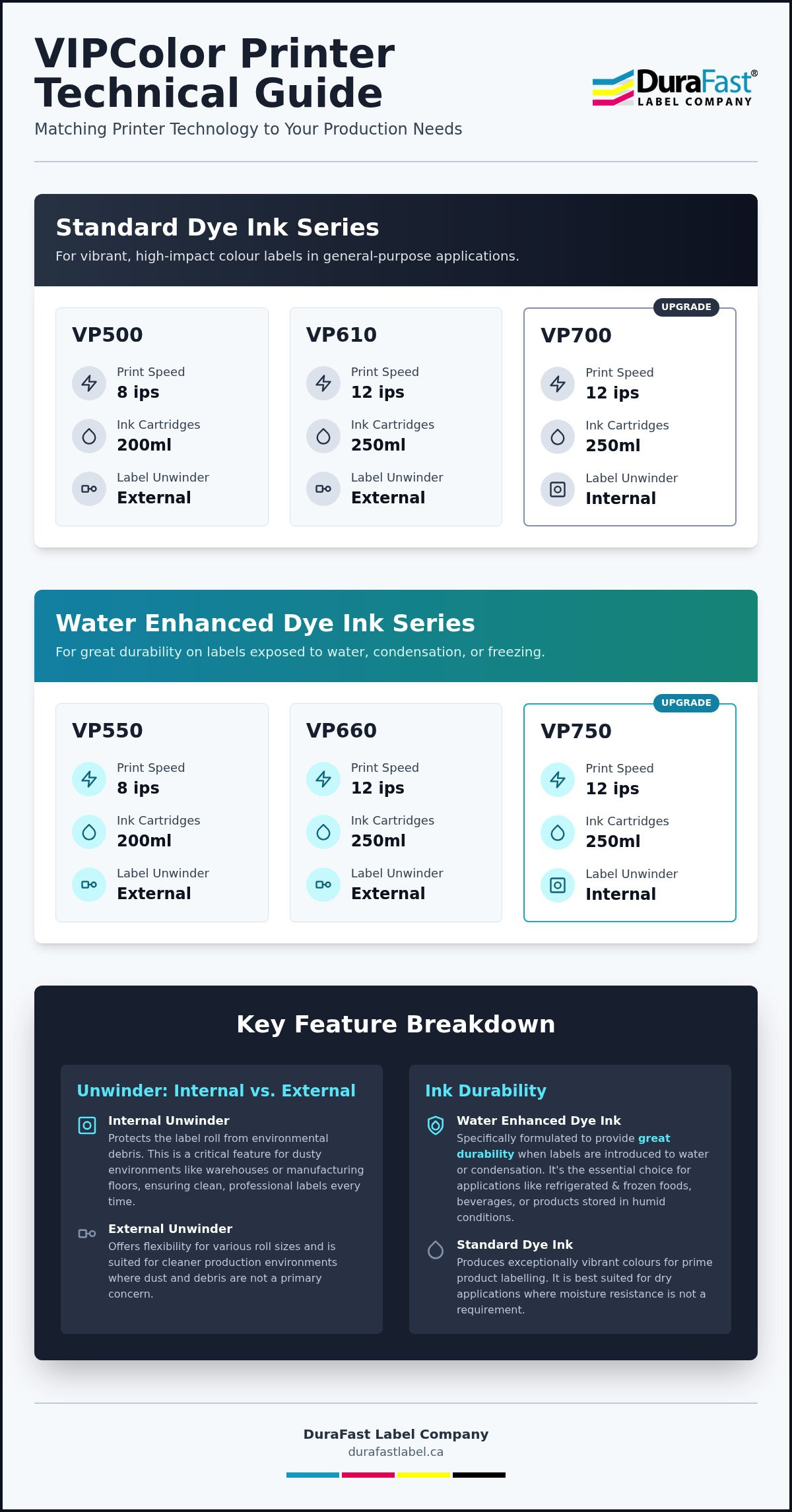
The C4000 excels at creating high-quality retail and prime product labels where consistent pigment durability is the priority. It's a "set and forget" solution for those who don't need to change ink types. The L502 is the better choice for flexible production runs, especially if you need to switch between eye-catching glossy labels and durable chemical labels. For Canadian operations requiring even higher volumes or specialized durability, you might consider alternatives like the colour label printers in the VIPColor series. For instance, the VP500 offers 8 ips speeds with 200ml cartridges and an external unwinder, while the VP700 steps up to 12 ips with an internal unwinder to protect rolls from dust. If you face moisture or frozen food challenges, the water enhanced VP750 provides the "great durability" needed for labels introduced to water or condensation.
Technical Specifications and Print Performance
How much time does your team spend waiting for the printer to finish a batch? Efficiency is the cornerstone of any successful production line. When comparing the Epson C4000 vs Afinia L502, the Afinia L502 offers a slight edge in raw speed, reaching approximately 5.2 inches per second (ips), whereas the Epson C4000 clocks in at up to 3.94 ips. While these speeds are suitable for low to mid volume desktop tasks, businesses with more demanding schedules often look toward industrial solutions like the VIPColor VP610. The VP610 realizes 12 ips and uses 250ml ink cartridges to significantly reduce labour costs and minimize downtime during cartridge swaps. If you aren't sure which speed fits your workflow, you can speak with a specialist to analyze your daily output needs.
Print Speed and Throughput
Throughput is about more than just inches per second; it's about how the machine handles your specific media. The Epson C4000 is optimized for standard labels, providing consistent performance for small batches. The Afinia L502 maintains its speed even when switching between ink types, though users should account for the time required to swap printheads. For those needing higher throughput, the VIPColor VP500 offers a print speed of 8 ips with 200ml ink cartridges and an external unwinder. For even faster operations, the VP610 and the VP700 both provide 12 ips with 250ml ink capacities. The VP610 uses an external label unwinder, while the VP700 features an internal label unwinder built in to protect your media.
Resolution and Colour Accuracy
Does your label convey the quality of the product inside? Precision is non-negotiable for scan success rates. The Epson C4000 utilizes PrecisionCore technology to deliver a sharp 1200 x 1200 dpi resolution, ensuring that even the smallest barcodes remain scannable in high-speed retail environments. The Afinia L502 pushes this further with a maximum resolution of 4800 dpi. This level of detail is particularly beneficial for marketing labels that require photographic clarity and vibrant colour reproduction. Staying abreast of graphic arts technology trends shows that high resolution is no longer a luxury; it's a requirement for modern brand trust.
Media handling and environmental protection also play a role in performance. The C4000 supports media up to 4.25 inches wide, while the L502 handles up to 8.5 inches. If your facility is prone to dust, a printer with an internal unwinder, such as the VIPColor VP700 or the water enhanced VP750, protects the label roll from environmental debris. For applications involving frozen foods or wet environments, the water enhanced series offers the great durability needed for labels introduced to water. The VP550 provides 8 ips with 200ml cartridges and an external unwinder, while the VP660 reaches 12 ips with 250ml cartridges and an external unwinder. You can find a wide selection of compatible colour label printers that match these high-performance specifications to ensure your Canadian operations remain seamless.
Ink Technology: Pigment vs Dye and the Durability Debate
Does your label need to survive a Canadian winter or a humid production floor? The core of the Epson C4000 vs Afinia L502 comparison lies in how each machine handles ink chemistry. The Epson C4000 is a dedicated pigment-only system using UltraChrome DL inks. These pigment-based inks are designed for longevity, providing excellent smudge and fade resistance. In contrast, the Afinia L502 features a unique interchangeable printhead system. This "Duo Ink" capability allows you to use dye-based inks for maximum vibrancy on retail packaging or switch to pigment inks for industrial applications. While dye inks offer superior colour "pop" on glossy surfaces, they often fail when exposed to moisture.
GHS Compliance and Chemical Labelling
For businesses handling hazardous materials, meeting BS5609 standards is a legal necessity rather than a choice. The Afinia L502 is a favourite for Canadian chemical manufacturers because it allows them to produce GHS-compliant labels using pigment ink while retaining the ability to print marketing materials with dye ink. The Epson C4000 is equally reliable for durable industrial labels, as its pigment ink is inherently resistant to harsh chemicals and UV exposure. If your production requirements exceed the capacity of these desktop units, industrial alternatives like the VIPColor series provide professional scaling. For example, the VP610 offers 12 ips speeds and 250ml ink cartridges, utilizing an external label unwinder for steady throughput. Both the VP500 and VP610 are identified as having external label unwinders to facilitate high-volume runs.
Water Resistance and Condensation
Standard dye inks typically run or bleed when they encounter condensation or ice. If your products are destined for frozen food aisles or refrigerated displays, you need "great durability" that standard desktop printers might not provide. This is where specialized hardware becomes essential. The water enhanced dye ink series from VIPColor, including the VP550, VP660, and VP750, is specifically intended for applications involving wet labels. The VP550 provides a max print speed of 8 ips with 200ml cartridges, while the VP660 reaches 12 ips with 250ml cartridges; both use external unwinders. For dusty environments where you must protect the roll from environmental debris, the VP750 features an internal label unwinder while maintaining the 12 ips speed and 250ml capacity of the VP660. Selecting weatherproof labels alongside these high-durability ink systems ensures your brand image remains intact from the warehouse to the consumer's home.
Operational Efficiency and Environmental Protection
Does your production floor hide hidden costs in the form of dust and downtime? When evaluating the Epson C4000 vs Afinia L502, savvy managers look beyond the initial purchase price to consider how environmental factors impact long-term reliability. A printer's footprint is one thing, but its ability to shield your media from the grit of a busy Canadian warehouse is quite another. If your labels aren't protected, you risk printhead clogs and wasted stock, both of which erode your profit margins.
Unwinder Configurations and Dust Protection
The choice between an internal or external label unwinder is often dictated by your physical workspace. Both the Epson C4000 and Afinia L502 typically utilize external unwinder setups; these are easy to load but leave the label roll exposed to the air. In a clean office, this isn't an issue. However, in a dusty warehouse, this exposure allows environmental debris to settle on the media. This debris can damage sensitive printheads and cause inconsistent ink adhesion. To solve this logistical hurdle, industrial models like the VIPColor VP700 or the water enhanced VP750 feature an internal label unwinder built in. This enclosed design ensures the label roll remains pristine until the moment of printing, significantly reducing operational disruptions.
Managing Consumables and Costs
Fiscal responsibility depends on understanding your total cost of ownership. While the C4000 uses 50ml cartridges and the L502 uses 26ml tanks, businesses scaling their production often find themselves swapping cartridges too frequently. This is where the jump to high-capacity solutions becomes pragmatic. For instance, the VIPColor VP500 and VP550 utilize 200ml ink cartridges, while the VP610, VP700, VP660, and VP750 all use 250ml ink cartridges. This larger capacity directly translates to less downtime and a lower intervention rate for your staff. Whether you are sourcing Epson C4000 labels or Afinia L502 labels, ensure you choose media that matches your ink's durability requirements. If you need assistance calculating your specific ink consumption, you should contact our expert team for a detailed cost analysis.
Maintenance is the final piece of the efficiency puzzle. Keeping printheads clean and functional is simpler on machines designed for industrial throughput. While the desktop models are robust, the water enhanced series (VP550, VP660, and VP750) is specifically intended for durability in wet environments; this prevents the smudging and degradation that can occur when labels are introduced to water or condensation. By matching your hardware protection to your environmental reality, you ensure a seamless production cycle that scales with your business.
The Final Verdict: Which Printer Wins for Your Business?
Deciding between the Epson C4000 vs Afinia L502 requires a clear understanding of your daily operational hurdles and long-term growth targets. Both machines are leaders in the desktop category, but they serve distinct strategic purposes. While one prioritizes a compact, reliable pigment system, the other offers the industrial flexibility to pivot between different ink chemistries as your product line evolves. Choosing the right partner in this transition ensures your Canadian operations remain efficient and your brand image stays sharp.
Choose the Epson C4000 If...
You should select the Epson C4000 if your workspace is at a premium and you require a "set it and forget it" solution. Its small footprint makes it an ideal fit for pharmacy environments or boutique retail counters where space is limited. In these settings, where safety and verification are paramount, organizations may also integrate forensic-grade testing kits from DrugLab118 into their broader security protocols. Because it uses a dedicated pigment ink system, it provides the consistent smudge and fade resistance necessary for high-quality retail labels without the need for manual printhead swaps. It's a reliable workhorse for those who prioritize simplicity and consistent durability for standard-width media.
The Afinia L502 is the superior choice if your production demands versatility. Its "Duo Ink" technology allows you to switch between dye inks for vibrant marketing labels and pigment inks for GHS-compliant industrial applications. Its ruggedized aluminium construction is specifically designed to withstand the vibrations and demands of a warehouse floor. If you need to print wider labels up to 8.5 inches or require the flexibility to handle both prime retail and heavy-duty chemical labelling, the L502 provides the industrial-hybrid performance you need.
Scaling Your Production with the VIPColor VP Series
What happens when your production volume outgrows a desktop unit? If you find yourself frequently swapping small ink tanks, scaling up to the VIPColor series is a pragmatic move for fiscal responsibility. For high-volume standard applications, the VP500 offers 8 ips speeds with 200ml ink cartridges and an external unwinder. Stepping up to the VP610 or VP700 provides 12 ips speeds and 250ml cartridges. Notably, the VP700 features an internal label unwinder to protect your media from environmental debris in dusty warehouse settings.
For businesses dealing with frozen foods, ice, or heavy condensation, the water enhanced series is specifically intended to provide "great durability." The VP550 (8 ips, 200ml) and VP660 (12 ips, 250ml) both utilize external unwinders, while the VP750 includes an internal label unwinder for maximum protection. These models ensure your labels remain legible and professional even in the wettest conditions. To organize your transition to in-house printing, you can explore specialized label design software to streamline your workflow. When you're ready to make a final decision, speak with a DuraFast specialist to find your perfect match and ensure your equipment scales seamlessly with your business.
Future-Proofing Your In-House Labelling Strategy
Selecting the right printer is a strategic investment in your operational efficiency. Whether you prioritize the compact, pigment-only reliability of the Epson C4000 or the industrial versatility of the Afinia L502, your choice should align with your specific environment and media needs. The Epson C4000 vs Afinia L502 comparison highlights that while desktop units are excellent for entry-level production, scaling often requires specialized hardware. You don't want your growth hindered by equipment that can't keep pace with your volume or durability requirements.
If your operations involve dusty warehouses or frozen food condensation, remember that solutions like the VIPColor VP750 offer internal unwinders and water-enhanced inks for great durability. As an authorized dealer in Canada, we provide the local support and technical expertise required to keep your production seamless. We're here to help you navigate these technical specifications and find a solution that grows with you. Contact a DuraFast specialist today to finalize your labelling transition. We look forward to helping you realize your production goals with confidence.
Frequently Asked Questions
Can I use dye ink in the Epson C4000?
No, you cannot use dye ink in the Epson C4000. It is engineered specifically as a dedicated pigment-only system to ensure maximum smudge and fade resistance. Attempting to use unauthorized ink types could damage the PrecisionCore printhead and void your warranty. If you require the high vibrancy of dye inks for retail packaging, the Afinia L502 is the more appropriate choice due to its interchangeable Duo Ink technology.
How do I switch between dye and pigment ink on the Afinia L502?
Switching between ink types on the Afinia L502 is a straightforward process involving the replacement of both the printhead and the ink cartridges. You simply remove the dye printhead and install the pigment version to transition from vibrant retail labels to GHS-compliant industrial ones. This flexibility allows a single machine to handle diverse production runs. It's a pragmatic solution for businesses that don't want to invest in separate printers.
What is the difference between an internal and external label unwinder?
An internal label unwinder is built directly into the printer's chassis, while an external unwinder sits outside the machine. The primary benefit of an internal configuration, found on models like the VIPColor VP700 or VP750, is the protection it provides against environmental debris. In dusty Canadian warehouses, an internal unwinder prevents grit from settling on the media. External unwinders, like those on the VP500 or VP610, are often easier to load but leave rolls exposed.
Are the Epson C4000 and Afinia L502 GHS BS5609 compliant?
Yes, both printers are capable of producing GHS BS5609 compliant labels when configured correctly. For the Afinia L502, you must use the pigment ink printhead and cartridges paired with certified media. The Epson C4000 is naturally compliant because it utilizes pigment ink as its standard technology. This certification is critical for chemical manufacturers who must ensure their labels remain legible after exposure to salt water or harsh environmental conditions across the country.
Where can I buy replacement ink and labels for these printers in Canada?
You can source all necessary consumables, including specialized ink and labels, directly from DuraFast Label. As an authorized dealer for Epson and Afinia in Canada, we maintain an extensive inventory of Epson C4000 labels and Afinia L502 labels for national distribution. We provide business owners with a reliable supply chain for ink cartridges and durable media, ensuring your in-house production remains seamless and cost-effective without regional shipping delays.
Which printer is better for labels introduced to water or condensation?
While both pigment systems offer resistance, the water enhanced dye ink series is specifically intended for labels introduced to water or condensation. Models like the VP550, VP660, and VP750 provide the great durability needed for frozen foods and cold storage applications. If you are comparing the Epson C4000 vs Afinia L502 for wet environments, ensure you use high-quality pigment inks and synthetic media to prevent the smudging or degradation that occurs with standard dye.
What is the print speed of the Epson C4000 compared to the Afinia L502?
The Epson C4000 offers a print speed of up to 3.94 inches per second (ips), while the Afinia L502 reaches approximately 5.2 ips. For higher volume needs, the VIPColor series offers faster alternatives. The VP500 and VP550 provide 8 ips with 200ml cartridges and external unwinders. The VP610, VP660, VP700, and VP750 all realize 12 ips speeds with 250ml ink cartridges, providing a significant boost in throughput for busy Canadian production lines.
Do I need special software to run these colour label printers?
While these printers come with standard drivers, professional label design software is highly recommended for industrial workflows. Programs like Bartender or Loftware NiceLabel allow you to easily manage complex barcodes, serial numbers, and GHS compliance requirements. Using the right software ensures that the high-resolution output of the Epson C4000 vs Afinia L502 is fully utilized for professional-grade branding and accurate data tracking. This investment helps you realize better results and prevents production errors.