Direct Thermal Label Printers: The Complete Canadian Business Comparison Guide for 2026
27th Jun 2026
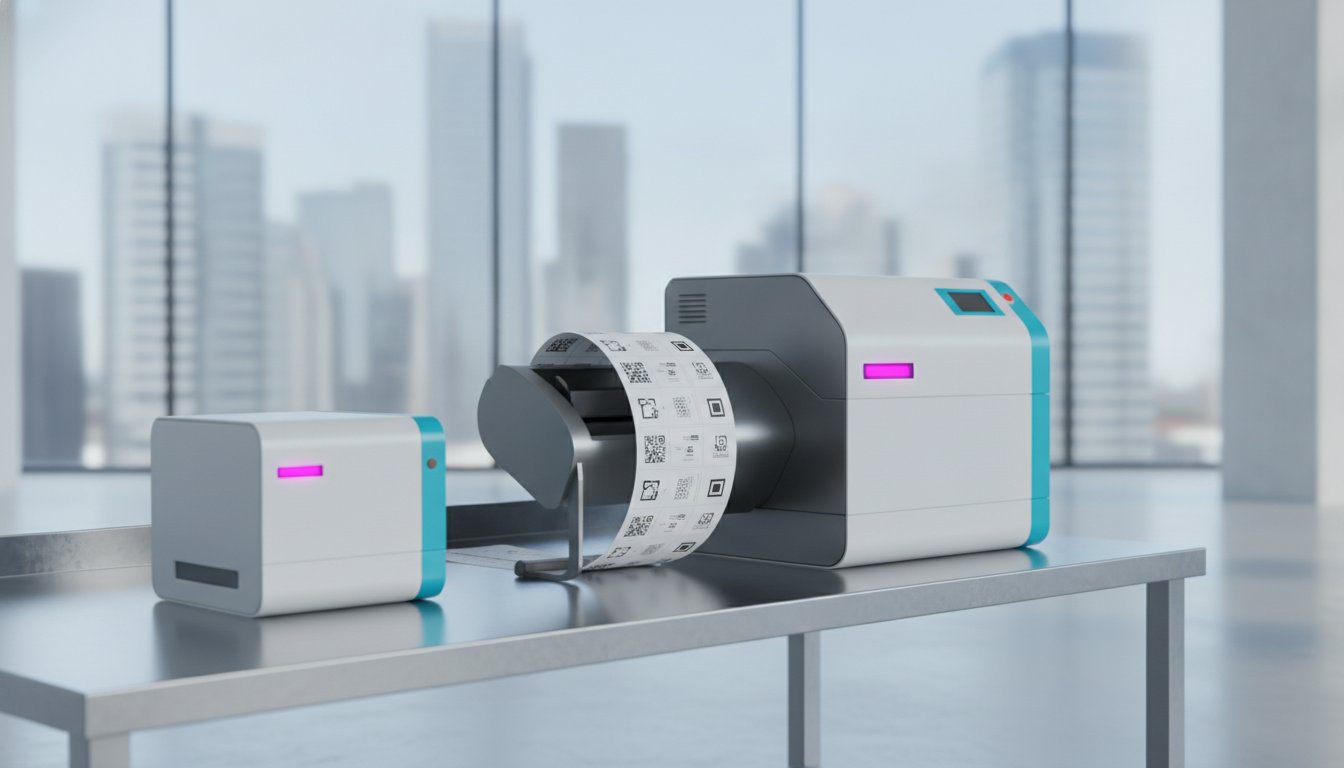
Why would a savvy operations manager intentionally choose a printing technology that skips ink and toner entirely? It sounds like a gamble until you realize that for high-volume Canadian logistics, direct thermal label printers are the primary engine of a lean, profitable warehouse. You've likely dealt with the frustration of labels that fade in cold storage or the headache of deciphering whether 6 ips or 12 ips is the right speed for your specific shipping volume. It's a complex decision when you're trying to minimize maintenance downtime while ensuring every barcode scans perfectly for Canada Post or UPS.
This guide will help you identify the most efficient hardware to lower your operational costs and meet the updated 2026 TDG labelling requirements. We'll break down the technical differences between desktop and industrial models, comparing key metrics like dpi and physical design features such as internal label unwinders. By the end of this comparison, you'll understand how to select a durable solution that integrates seamlessly into your current workflow without overspending on features you don't need.
Key Takeaways
- Learn how heat-sensitive technology eliminates the cost of ink and ribbons, allowing you to simplify your production line and reduce consumable expenses.
- Compare the performance deltas between standard desktop models and industrial units to find the right balance of print speed and hardware durability.
- Discover how selecting the correct direct thermal label printers can help your business meet the latest 2026 Canada Post and TDG shipping regulations.
- Identify the professional software tools needed to automate your workflow and ensure seamless integration with major Canadian shipping carriers.
- Gain practical insights into maximizing printhead longevity and minimizing the total cost of ownership for your labelling operations.
Understanding Direct Thermal Technology: A Simple, Ribbon-Free Solution
How can your warehouse team maintain peak output when the labelling process is bogged down by complex hardware? For many Canadian businesses, the answer lies in direct thermal label printers. This technology serves as the baseline for modern logistics, offering a streamlined approach that bypasses the need for ink, toner, or ribbons. Instead of transferring a substance onto the page, the printer uses heat to activate a chemical reaction within the label itself. This creates a high-contrast image that is perfect for the fast-paced demands of a distribution centre or retail environment.
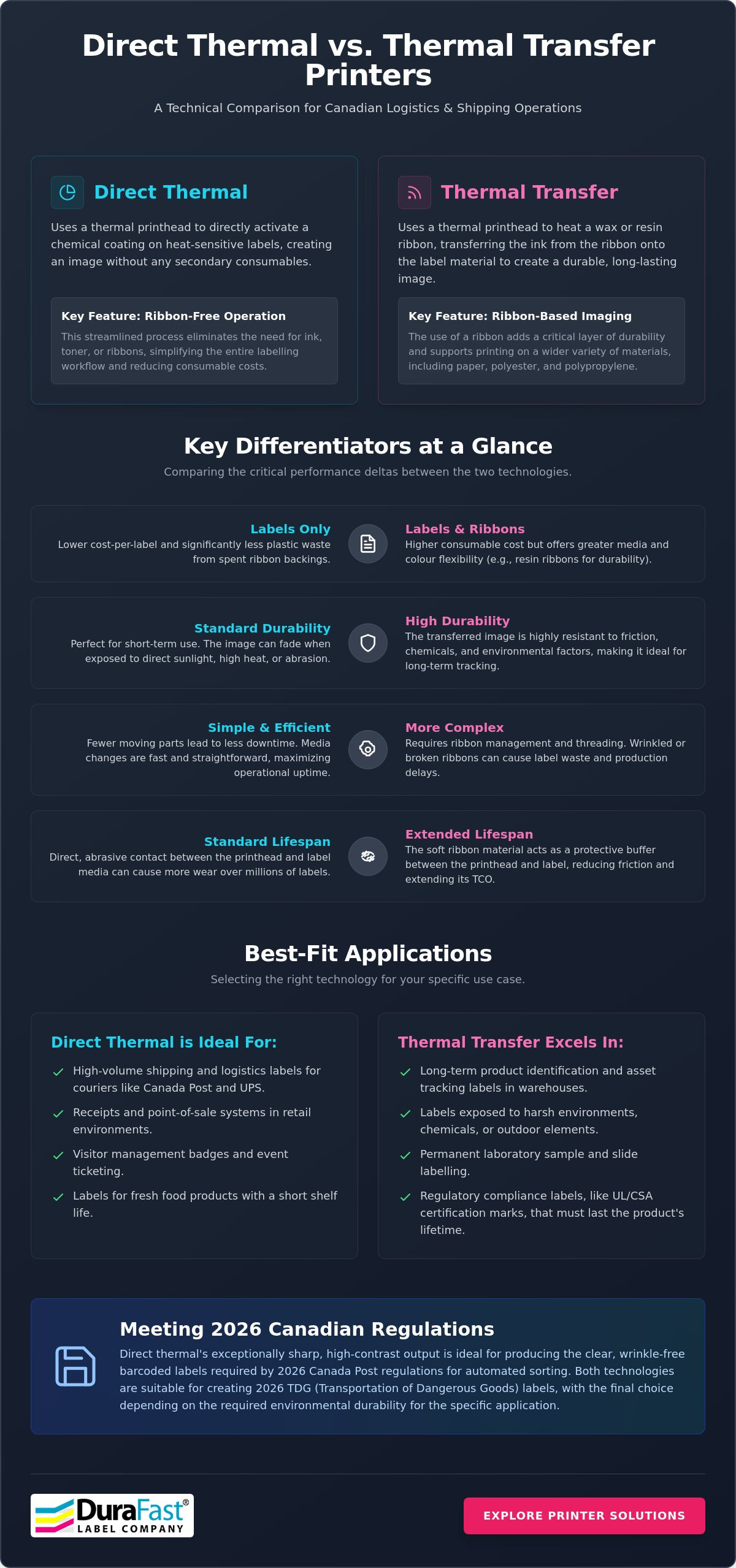
At its core, Thermal printing technology relies on a specialized printhead that makes direct contact with treated media. When the printhead elements energize, they create text or barcodes directly on the surface of direct thermal labels. This lack of secondary consumables means there are fewer moving parts to fail and no ribbons to snag or wrinkle. For high-turnover applications like visitor management, receipt printing, or standard shipping, this simplicity translates directly into fiscal responsibility and operational seamlessness.
The Mechanics of Heat-Sensitive Labelling
The thermal printhead is the most critical component in this hardware setup. It consists of a row of tiny heating elements that fire in precise sequences to generate images. Because these printers don't require space for a ribbon supply or a take-up spindle, they typically have a significantly smaller physical footprint than their thermal transfer counterparts. This compact design makes them ideal for cramped packing stations or mobile carts. You must understand that this technology is primarily designed for high-contrast, black-and-white applications. While you won't be printing vibrant brand colours, the resulting barcodes are exceptionally sharp. This ensures compliance with the strict 2026 Canada Post regulations, which require parcels to have clear, wrinkle-free barcoded labels for automated sorting.
Why Simplicity Drives Operational Efficiency
What happens when a ribbon wrinkles in the middle of a five hundred label print run? In a thermal transfer setup, that often leads to wasted media and significant downtime. With direct thermal technology, these mechanical hurdles vanish. Media changes are remarkably fast; you simply drop in a new roll of labels and continue. This efficiency is a major driver for the North American market, which held a 35.9% revenue share of the global thermal printing industry in 2025. Beyond speed, the ribbon-free approach supports sustainability goals by eliminating the plastic waste of spent ribbon backings. This is a growing priority for Canadian innovators looking to reduce their environmental impact while meeting the 2026 TDG requirements for clear, diamond-shaped dangerous goods labels on small containers.
Direct Thermal vs. Thermal Transfer: Comparing the Two Industry Standards
Is the simplicity of direct thermal technology always the right choice for your facility? While direct thermal label printers offer a streamlined, ribbon-free baseline, the transition to thermal transfer introduces a critical delta: the ribbon. This additional consumable serves as a buffer between the printhead and the label material. By adding this layer, thermal transfer systems achieve higher durability and resistance to friction. However, this comes at the cost of managing a second supply item. When you calculate the cost-per-label, direct thermal is almost always more economical for high-turnover logistics because you aren't paying for the film or the waste disposal of spent ribbons.
The performance metrics also differ between these standards. Print speed, measured in ips (inches per second), varies significantly by model. Many industrial direct thermal label printers reach speeds of 10 to 14 ips, matching their thermal transfer counterparts. The main difference is the physical stress on the machine. At higher speeds, the heat required for direct thermal printing can be more intense. This heat impacts the longevity of internal components compared to the lubricated movement found in a ribbon-based system. If your operation prioritizes speed above all else, you'll need to weigh the lower consumable cost against the frequency of part replacements.
Longevity and Environmental Resistance
The choice between these two technologies often comes down to the label's expected lifespan. Direct thermal is the industry standard for shipping labels that only need to remain legible for the duration of a transit cycle. If your labels face harsh UV light or high heat, they'll prematurely darken or fade. For condensation-prone environments like Canadian cold storage centres, using top-coated or water-enhanced labels is a necessary upgrade. A top-coating is a protective layer that extends label life by up to 24 months, providing a middle ground for businesses that want the simplicity of direct thermal without the risk of immediate fading. If you're unsure which technology fits your specific environmental conditions, our team can help you evaluate your labelling requirements.
Maintenance and Printhead Lifespan
Maintenance requirements represent another significant delta between these two methods. Because direct thermal media makes direct contact with the hardware, it's naturally more abrasive. This friction means that regular cleaning of thermal printheads is non-negotiable for direct thermal users to prevent premature failure. In contrast, thermal transfer ribbons act as a lubricant, often extending the life of the printhead by reducing direct surface wear. If your operation maximizes print speed (ips), you'll need a more rigorous maintenance schedule to manage the increased wear and tear on these sensitive components. Keeping your equipment clean ensures that your barcodes remain crisp enough to pass Canada Post automated scans every time.
Desktop vs. Industrial Models: Selecting the Right Volume Capacity
How do you determine if a compact desktop unit is sufficient or if your facility requires the rugged power of an industrial machine? The baseline for many retail environments and small offices is the desktop printer, typically supporting 2-inch or 4-inch label widths. These models are designed for low-to-mid volume applications where space is at a premium and the daily print count remains manageable. The industrial delta, however, introduces all-metal construction and high-capacity internal label unwinders designed for 24/7 duty cycles. At DuraFast Label Company Canada, we provide a range of direct thermal label printers from industry leaders like Zebra, Toshiba, Godex, and TSC to match these diverse operational demands.
In a high-output distribution centre, the print speed or ips (inches per second) is a critical differentiator. While a desktop model might offer a respectable 4 to 6 ips, industrial machines often push the envelope to 12 or 14 ips. This speed is essential for maintaining a steady flow of parcels through automated sorting systems, especially as the North American print label market is projected to grow through 2031. Choosing the wrong hardware for your volume can lead to premature motor failure or frequent overheating, which disrupts your fiscal responsibility and operational seamlessness.
Desktop Printers for Retail and Office Use
Compact models are favoured for their small footprint and intuitive operation. These machines require minimal staff training, making them perfect for front-of-house retail or medical clinics. The main difference between these and larger units is the media capacity. Desktop users must realize that they will change rolls more frequently. Using high-quality labels for direct thermal desktop rolls ensures that even these smaller machines produce the high-contrast barcodes necessary for reliable scanning.
Industrial Printers for Warehouse and Distribution
Industrial direct thermal label printers offer a significant delta in both durability and connectivity. These machines feature large internal label unwinders that accommodate high-capacity rolls, which reduces the frequency of media changes and associated downtime. Another key difference is the network integration; industrial models typically offer robust Ethernet and Wi-Fi options for seamless warehouse management system (WMS) connectivity. Many Canadian logistics firms are also adopting linerless direct thermal printing. This technology eliminates the silicone-coated backing paper, reducing waste and allowing for more labels per roll, which directly supports corporate sustainability initiatives.
Optimizing Your Workflow: Labels, Software, and Printhead Longevity
How can you ensure that your investment in direct thermal label printers continues to yield high ROI year after year? The answer lies in the synergy between your hardware, your media, and the software layer that manages the print jobs. While basic printer drivers might suffice for simple, one-off tasks, professional barcode software like Bartender or Loftware provides the granular control necessary for complex Canadian compliance requirements. These suites allow you to manage GHS hazardous material labels or standard shipping documents with precision, ensuring that every barcode generated meets the strict 2026 Canada Post and TDG standards. This software-driven approach prevents the common errors that lead to rejected shipments and costly manual re-labelling.
In many Canadian distribution centres, the physical environment presents a constant challenge to equipment longevity. Dusty warehouse conditions can introduce environmental debris that settles on the label surface, causing scratches on the sensitive printhead. Choosing models with internal unwinders provides a critical delta in protection, as these components shield the media from dust before it enters the print path. To realize the full lifespan of your equipment and maintain operational seamlessness, your team should follow a consistent daily maintenance checklist:
- Clean the thermal printhead with an approved cleaning pen or 99.7% isopropyl alcohol after every roll change.
- Inspect the platen roller for adhesive buildup that can cause media slippage.
- Verify that the media sensors are clear of dust to prevent calibration errors.
- Ensure the printer is located in a well-ventilated area to prevent overheating during high-speed (ips) print runs.
Choosing the Correct Media for Your Printer
Selecting the right material is just as important as selecting the printer itself. Standard paper labels are excellent for indoor retail use, but synthetic direct thermal labels are required for environments where moisture or abrasion is a factor. You must match the label’s thermal sensitivity to your printer’s heat settings to avoid "blooming," where the heat spreads and blurs the barcode. For logistics, we provide high-quality 4x6 shipping labels that are fully compatible with major Canadian carriers, ensuring your parcels move through the supply chain without delay.
Software Integration and Barcoding Accuracy
Professional software integration directly impacts your scan success rates by optimizing the balance between heat and print speed. For businesses with multiple Canadian locations, cloud-based labelling platforms allow for centralized template management, ensuring brand and regulatory consistency across the country. DPI (dots per inch) is the resolution metric that determines barcode clarity, and professional software ensures your 203 or 300 dpi printer produces the sharpest possible edges. If you need assistance finding the right software and media combination for your specific workflow, contact our experts for a personalized consultation.
Strategic Implementation: Maximizing Efficiency in Canadian Shipping and Logistics
How do you ensure your shipping department doesn't become the weakest link in your supply chain? For high-turnover Canadian logistics, the ROI of switching to direct thermal label printers is found in the elimination of mechanical complexity. By removing ribbons from the equation, you remove the most common cause of printer-related downtime. This allows your team to focus on moving parcels rather than troubleshooting ribbon tracking issues or wrinkles. When your facility operates at peak capacity, the right printer choice prevents the bottlenecks that often occur during seasonal surges or unexpected volume spikes.
DuraFast Label Company Canada acts as a strategic partner to help you scale your in-house production without the typical growing pains. Our consultative approach ensures that your hardware selection is based on your actual throughput rather than a generic recommendation. We understand that a medical clinic in Halifax has different requirements than a distribution centre in Mississauga. By aligning your hardware capabilities with your specific logistical hurdles, you achieve a level of operational seamlessness that supports long-term growth and fiscal responsibility.
Calculating Your Total Cost of Ownership (TCO)
Does a lower initial purchase price always lead to better value? To determine your true TCO, you must look beyond the hardware cost and analyze the cost per label over a three-year period. This includes factoring in the lifespan of your components. Because direct thermal media is more abrasive than ribbon-backed media, you'll need to budget for more frequent printhead replacement cycles. However, the delta in maintenance costs is almost always lower than the recurring expense of thermal transfer ribbons.
You also have to consider the hidden costs of downtime caused by inferior third-party labels. Low-quality media can leave adhesive residue on the platen roller or cause premature wear on the printhead elements. If your daily volume regularly exceeds 500 labels, it's time to realize the efficiency gains of upgrading from a desktop unit to a high-capacity industrial label printer. These machines are built for the rigours of 24/7 duty cycles and offer a lower TCO for high-volume users.
The DuraFast Label Company Canada Advantage
Strategic implementation requires a supply chain that is as reliable as your hardware. For Canadian innovators, sourcing blank labels locally is a critical step in avoiding cross-border shipping delays and unpredictable customs fees. We maintain a comprehensive national inventory of hardware and consumables, ensuring you have what you need to keep your lines moving. Whether you're integrating Zebra, Toshiba, or Godex equipment, our experts match the specific direct thermal label printers to your unique business application. This professional guidance ensures your labels meet all 2026 compliance standards while minimizing your total cost of ownership. Explore our full range of direct thermal printers and labels today.
Future-Proofing Your Canadian Labelling Strategy
Selecting the ideal hardware is a critical decision that directly impacts your facility's long-term fiscal responsibility. By implementing high-performance direct thermal label printers, you can effectively eliminate the mechanical hurdles of ribbons while achieving the print speeds necessary for high-volume logistics. You now understand how the delta between desktop and industrial models influences your duty cycles and why professional software is non-negotiable for maintaining scan success rates across Canada.
As an authorized dealer for Zebra, Toshiba, and Godex, DuraFast Label Company Canada provides the industrial reliability your operation demands. We offer national Canadian shipping on all labels and hardware along with specialized support for Bartender and Loftware software. This comprehensive approach ensures that your production process remains seamless and compliant with 2026 regulations while avoiding the headaches of cross-border supply chain delays.
If you're ready to minimize maintenance downtime and optimize your total cost of ownership, contact our expert consultants today. We're committed to helping your business scale with confidence and precision.
Frequently Asked Questions
Do direct thermal label printers require ink or ribbons?
Direct thermal label printers don't require any ink, toner, or ribbons to operate. Instead, the hardware uses a specialized thermal printhead to apply heat directly to chemically treated media. This process creates the image by activating the heat-sensitive layer on the label surface. It's an ideal solution for businesses looking to minimize consumable costs and simplify their mechanical maintenance.
How long do direct thermal labels last before fading?
Standard direct thermal labels typically last between six to nine months before they begin to fade under normal office conditions. If the labels are exposed to direct sunlight, high heat, or fluorescent lighting, this lifespan can decrease significantly. For applications requiring more longevity, using top-coated labels can extend the readability of the barcode for up to 24 months.
Can I print shipping labels with a direct thermal printer?
Yes, you can print high-quality shipping labels with a direct thermal printer, and it's the industry standard for Canadian logistics. These machines are perfectly suited for the 4x6 labels required by carriers like Canada Post, UPS, and FedEx. Since shipping labels are short-term items that don't require long-term environmental resistance, direct thermal technology offers the most cost-effective way to manage outbound parcels.
What is the difference between desktop and industrial direct thermal printers?
The main difference between these categories is the duty cycle and physical construction. Desktop models are compact and designed for low-to-mid volume tasks in retail or office settings. Industrial models feature all-metal frames, large internal label unwinders, and higher print speeds to handle continuous 24/7 operations in demanding warehouse environments. Industrial units also offer better network integration for warehouse management systems.
What does "ips" mean in direct thermal printing specifications?
"Ips" stands for inches per second, which is the primary metric used to measure print speed. A printer with a 6 ips rating can produce six inches of label length every second. While desktop printers usually operate at 4 to 6 ips, industrial direct thermal label printers often reach speeds of 10 to 14 ips. Higher speeds are essential for maintaining throughput in high-volume distribution centres.
Can direct thermal printers print in colour?
Direct thermal printers are designed for high-contrast black-and-white printing and cannot produce full-colour images. The chemical reaction triggered by the printhead only turns the media black. If your application requires brand colours or vibrant product imagery, you should consider inkjet colour label printers instead. Direct thermal remains the superior choice for barcodes and text-based shipping documents.
How often do I need to clean the printhead on a direct thermal printer?
You should clean the printhead every time you change a roll of labels to prevent adhesive buildup and debris accumulation. Regular maintenance with a cleaning pen or isopropyl alcohol ensures that the heating elements remain clear of environmental dust. This simple habit prevents "dead spots" in your barcodes and extends the overall life of the sensitive thermal printhead.
Are direct thermal labels waterproof?
Standard paper direct thermal labels aren't waterproof, but synthetic versions are available for more demanding environments. If your labels face condensation, moisture, or "wet" conditions, you'll need to use polypropylene or top-coated synthetic media. These specialized materials ensure that the barcode remains scannable even if the parcel is exposed to the elements during transit across Canada.