Choosing the Right Jewellery Tag Printer: A Professional Guide for Canadian Retailers
28th Jun 2026
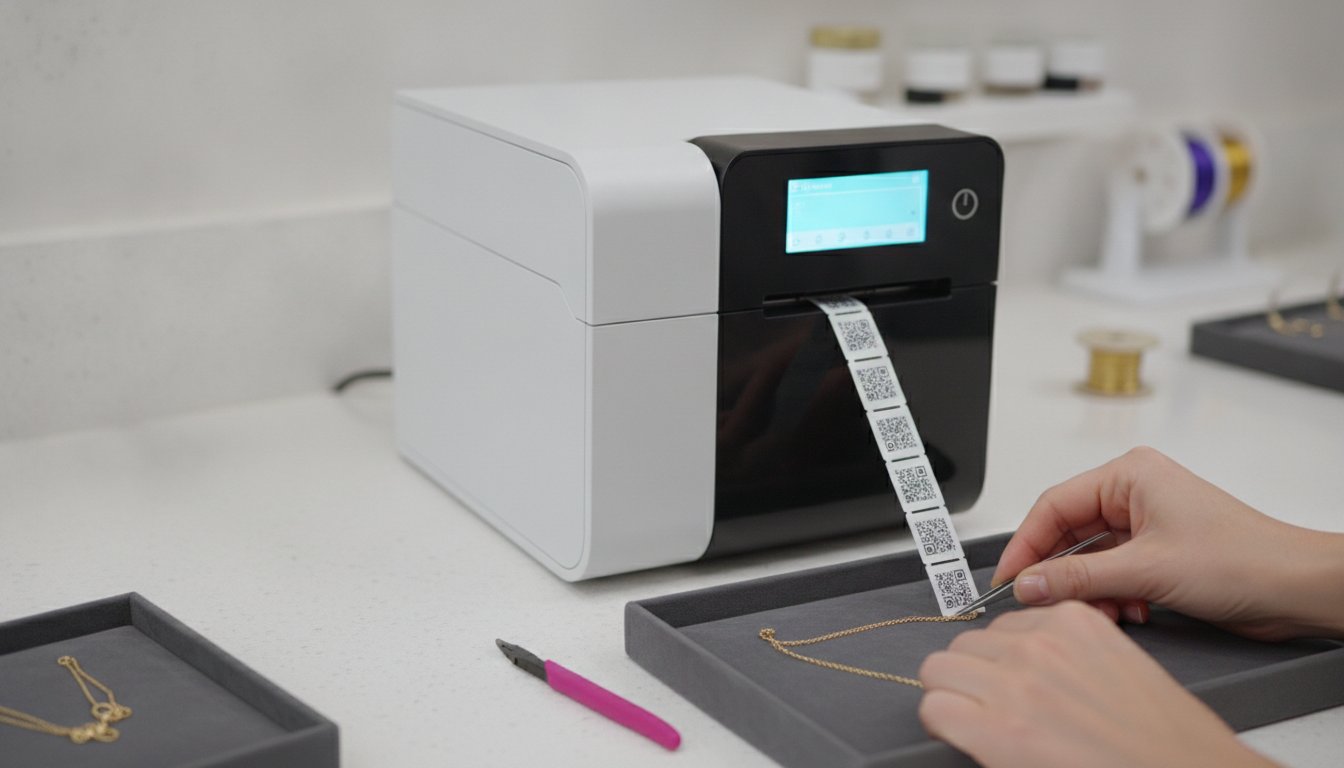
Imagine pulling a delicate 18k gold band out of its final ultrasonic cleaning cycle only to find the barcode smeared into an illegible grey blur. It's a frustrating moment that many Canadian retailers know too well. When your inventory is worth thousands of dollars, a low-quality jewellery tag printer can lead to more than just a logistical headache; it can actually damage your brand's reputation for precision and care.
You likely recognize that professional presentation is non-negotiable in an industry where the Canadian market is projected to reach $3.6 billion by 2026. You need a solution that handles tiny text with sharp clarity and uses adhesives that won't leave a sticky residue on fine metals. This guide will help you discover how to select a jewellery tag printer that offers the durability required for ultrasonic baths and the high resolution needed for microscopic serial numbers. We'll examine the technical differences between desktop and industrial models, ensuring you find a system that integrates seamlessly into your retail or production environment.
Key Takeaways
- Learn why thermal transfer technology is the baseline requirement for durability, preventing tags from turning black or smudging during ultrasonic cleaning cycles.
- Understand why a minimum resolution of 300 DPI is essential for printing legible 5pt fonts and sharp barcodes on tiny ring tags.
- Discover how to select synthetic materials like polypropylene and polyester to ensure your labels withstand chemical exposure without adhesive migration.
- Compare the functional differences between a thermal jewellery tag printer for cost-efficiency and colour inkjet models for high-impact seasonal branding.
- Identify the specific software and hardware combinations, such as BarTender or NiceLabel, required to build a reliable in-house labelling station.
Why Standard Printers Fail: The Unique Requirements of Jewellery Tags
Why does a standard office label printer fail when tasked with inventorying a high-value diamond necklace? The answer lies in the specialized post-processing and display conditions unique to the jewellery industry. Most general-purpose printers are designed for shipping or file folders, where labels remain in climate-controlled, dry environments. In contrast, a jewellery tag printer must produce media that survives aggressive cleaning, high-intensity lighting, and constant handling.
Precision is the primary hurdle. When you are printing on a tag that is only 10mm wide, there is zero margin for error. Standard printers often lack the "black mark" sensors required to detect the start and end of non-standard tag shapes; this leads to misaligned text and wasted stock. While raw speed measured in ips (inches per second) is a factor for high-volume manufacturers, for most retailers, the focus is on the precision of the output. To achieve professional results, you need hardware that can handle high-density barcodes and 5pt fonts with absolute consistency.
Ultrasonic and Steam Cleaning Resistance
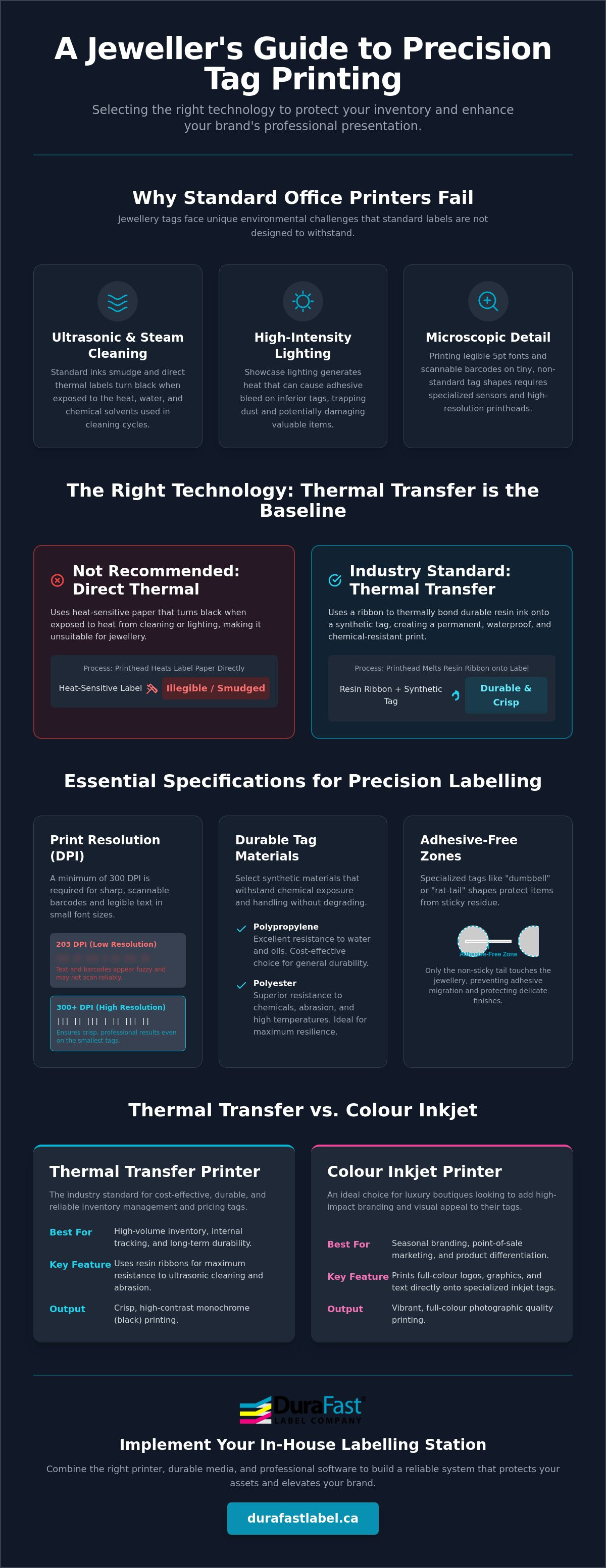
Have you ever seen a direct thermal label turn completely black after a few seconds in a steam cleaner? This happens because direct thermal paper is heat-sensitive by design. For jewellery applications, Thermal Transfer printing is the industry baseline. This technology uses a printhead to melt a resin-based ribbon onto synthetic thermal transfer labels, creating a bond that is impervious to water and chemical solvents.
Maintaining barcode scannability is critical for inventory accuracy. Specialized top-coatings on polyester or polypropylene tags ensure that the ink does not smudge or flake off during a three-minute ultrasonic cycle. Without this level of durability, your staff will spend more time re-tagging items than assisting customers on the showroom floor. Investing in the right technology ensures that your data remains legible from the moment an item is received until it is sold.
Adhesive-Free Zones for Inventory Protection
Is there anything more frustrating than trying to clean sticky adhesive residue off a platinum band? Standard labels use "all-over" adhesive that can migrate over time, especially under the heat of high-intensity showcase lighting. This "adhesive bleed" can trap dust and environmental debris, potentially damaging delicate metal finishes or dulling the lustre of porous gemstones. It is a logistical hurdle that can be easily avoided with the correct supplies.
Professional jewellery tags, such as dumbbell or rat-tail designs, feature specific adhesive-free zones. These zones ensure that only the non-sticky part of the tag touches the jewellery. By pairing a high-quality jewellery tag printer with specialized resin-based ribbons and adhesive-free tags, you protect your inventory while maintaining a clean, professional appearance. This approach ensures your tags remain secure without compromising the integrity of your most valuable pieces.
Thermal Transfer vs. Colour Inkjet: Finding Your Ideal Jewellery Tag Printer
Should you stick with the reliable industry standard or invest in high-impact colour branding? For many Canadian retailers, the choice of a jewellery tag printer depends on whether the priority is operational durability or retail differentiation. Thermal transfer technology serves as the industry baseline, offering unmatched resistance to cleaning chemicals and long-term storage. However, colour inkjet technology represents a significant delta for luxury boutiques wanting to include full-colour logos or seasonal branding directly on the tag.
Thermal transfer remains the standard for high-volume inventory management because of its cost-efficiency and physical resilience. These printers use heat to transfer ink from a ribbon onto the tag surface. To ensure your barcodes comply with global barcode standards, you need a crisp, high-contrast finish that won't fade under intense showcase spotlights. For most retailers, matching high-quality thermal transfer ribbons with synthetic materials is the most reliable way to achieve this result.
In contrast, colour inkjet printers allow you to move beyond basic inventory tracking. If you're managing a boutique where the tag is the first thing a customer sees, colour can elevate the perceived value of the piece. While pigment-based inks offer excellent moisture resistance, Memjet technology provides the high-resolution, photographic quality required for microscopic branding on tiny labels. The cost-per-tag is slightly higher than thermal options, but the marketing value often justifies the investment for premium collections.
The Reliability of Thermal Transfer Printers
Models from brands like Zebra and TSC are the primary workhorses in Canadian jewellery stores. These desktop units are valued for their small footprint and minimal maintenance requirements, making them ideal for busy retail staff. The main difference between these and inkjet models is the reliance on resin ribbons, which provide the highest level of scratch and chemical resistance. They are a "set-and-forget" solution for those prioritizing longevity over aesthetics.
Elevating the Brand with Colour Label Printers
For retailers focused on "prime" branding, colour label printers like the VIPColor VP550 offer a distinct advantage. This model utilizes advanced ink technology that provides the durability of a pigment ink with the vibrant colour of a dye. It's an excellent solution for creating seasonal tags or luxury gift branding that survives constant handling and moisture. If you aren't sure which technology fits your specific inventory volume, you can consult with a specialist to compare model specifications.
Essential Technical Specifications for Precision Labelling
Why is a 300 DPI resolution the non-negotiable baseline for your store? Choosing a jewellery tag printer requires a deep dive into the hardware specifications that dictate whether your barcodes scan on the first try or fail at the checkout counter. While a standard 203 DPI desktop printer is sufficient for a 4x6 shipping label, the physics of a 10mm ring tag demand much higher pixel density. Precision in this context isn't just about aesthetics; it's about operational reliability.
The physical design of the printer also matters. For most Canadian retailers, counter space is at a premium. Selecting a "centre-aligned" printer ensures that narrow jewellery media stays perfectly positioned over the printhead. Unlike side-aligned industrial label printers, which are designed for wide warehouse labels, centre-aligned desktop models prevent the ribbon from wrinkling when printing on very thin tags. This alignment is the key to maintaining consistent print quality across an entire roll of several hundred tags.
DPI and Font Legibility
The main difference between 203 DPI and 300 DPI is the clarity of micro-text. When you are trying to fit a price, a metal hallmark, and a barcode onto a tiny dumbbell tag, 203 DPI often results in "fuzzy" edges that make 5pt fonts unreadable. Upgrading to 300 DPI provides the sharp contrast required to meet GS1 barcode standards, ensuring your inventory system can reliably track every piece. For retailers specializing in luxury timepieces, a 600 DPI printer is the gold standard for high-end watch tagging because it allows for microscopic serial numbers and intricate brand logos without pixelation.
Media Handling and Sensors
How does your printer know exactly where one tag ends and the next begins? This is managed by sensor technology. Most thermal label printers feature transmissive sensors for standard rectangular labels, but jewellery tags often require "black mark" reflective sensors. These sensors detect a printed mark on the back of the liner, which is essential for the irregular shapes of butterfly or dumbbell tags. Without an adjustable sensor, you'll experience "print drift," where the text slowly moves off-centre as the roll progresses.
You should also consider your environment when choosing between internal and external label unwinders. An internal unwinder keeps your blank tags shielded from dust and environmental debris, which is vital for maintaining the life of your printhead. If you're a high-volume manufacturer, an external unwinder allows you to use larger "bulk" rolls to reduce downtime, though it requires more desk real estate. Balancing these physical specs with a modest print speed of 2 to 4 ips (inches per second) will ensure the highest level of registration and accuracy for your jewellery tag printer setup.
Selecting Durable Jewellery and Ring Labels: Materials and Shapes
A high-performance jewellery tag printer is only as effective as the media you feed into it. While the hardware handles the precision of the print, the label material determines whether that print survives the retail environment. For Canadian retailers, selecting the correct synthetic substrate is a balancing act between aesthetic clarity and physical durability. You must choose a material that remains crisp under bright showroom lights and survives the rigours of customer handling.
The main difference between the two primary synthetic options lies in their chemical and heat resistance. Polypropylene is the industry baseline; it is a cost-effective, moisture-resistant material suitable for most retail applications. The only difference when moving to polyester is a significant increase in durability. Polyester is the delta for high-end environments because it offers superior resistance to the high temperatures and solvents found in professional cleaning stations. When you match these materials to the right thermal transfer labels, you ensure your inventory data remains intact for years.
Shape selection is equally critical for inventory protection. Dumbbell tags are the classic choice for rings and earrings, featuring a narrow "bridge" that remains adhesive-free. This design ensures that no sticky residue touches the precious metal or stones. Other than this, rat-tail tags provide a longer, flexible tail that is ideal for necklaces or bracelets where the tag needs to hang further from the piece. For horologists, specialized watch tags are designed with specific dimensions to fit around leather straps and metal buckles without causing obstruction.
Material Science for the Showcase
Showcase lighting is surprisingly harsh on standard adhesives and coatings. Your jewellery and ring labels must be UV-stabilized to prevent yellowing or becoming brittle over time. If you are managing high-value inventory, you might consider tamper-evident "void" materials. These labels leave a physical mark if removed, providing a layer of security against price-switching. Choosing a material with a high-opacity top-coat also improves the contrast of your barcodes, which directly impacts scan rates at the point of sale.
Design Ergonomics for Retail
The ergonomics of a tag affect how a customer perceives the jewellery. A tag tail that is too stiff will stick out awkwardly, while a tail that is too thin might snap. Professional tags are designed with flexible tails that can be tucked away during a viewing. Some designs also include protective "flaps" that fold over the printed area. This feature protects the barcode from direct contact and skin oils, which is a common cause of print degradation in busy boutiques. If you need assistance matching a specific tag shape to your jewellery tag printer, contact our specialists for a material compatibility consultation.
Implementing an In-House Labelling Station with DuraFast Label
How do you transition from selecting hardware to running a fully operational labelling station? It requires a "complete solution" approach where the software, printer, and media work in perfect synchronization. For many Canadian retailers, the goal is to eliminate manual entry and reduce the risk of human error during the inventory process. By implementing a dedicated jewellery tag printer station, you can automate your inventory workflow while maintaining the high standards your customers expect from a professional boutique.
Success in this transition depends on navigating the technical setup without experiencing operational downtime. At DuraFast Label, we provide the consultative support needed to ensure your hardware and media are lab-tested for compatibility. This prevents the common pitfalls of ink smudging or adhesive migration mentioned in earlier sections. Our team helps you build a system that is both reliable for today's needs and scalable for tomorrow's growth.
Software and Template Design
Designing for 10mm tags requires a level of precision that standard office software simply cannot provide. Professional packages like BarTender or NiceLabel are essential for creating precise templates for non-standard shapes like dumbbell or rat-tail tags. These tools allow you to align text and barcodes perfectly within the printable zones, ensuring no data is lost on the edges of the tag.
Beyond simple layout, you can integrate these tools with your existing POS system or industrial label printers to automate pricing and inventory updates. Serialization is another critical benefit; it allows you to track unique gemstones and one-of-a-kind pieces with individual serial numbers. This level of detail ensures that every item in your showcase is accounted for and easily identifiable during audits or sales.
The DuraFast Advantage
We believe in matching the right technology to the specific environment of your shop. We typically recommend Zebra or TSC models for traditional retail shops where durability is the baseline requirement. Other than this, the VIPColor series serves as the delta for those focusing on luxury boutique branding and full-colour precision. Our role is to ensure your chosen jewellery tag printer realizes your specific branding goals while remaining fiscally responsible.
Our support extends to providing specialized thermal ribbons that are specifically formulated to withstand the Canadian retail environment. These ribbons are tested to ensure they won't flake or fade under intense showcase lighting or during chemical cleaning. By choosing a partner that understands the intricate logistical challenges of the jewellery industry, you ensure that your labelling station remains a seamless part of your production and sales process.
Optimizing Your Showroom with Professional Precision
Selecting the right hardware is about more than just print speed; it's about ensuring your inventory remains protected and professional. You now understand why thermal transfer technology is the baseline for surviving ultrasonic cycles and why 300 DPI is the technical requirement for micro-font legibility. By pairing these specifications with specialized synthetic materials, you eliminate the risk of adhesive residue and smudged barcodes.
DuraFast Label acts as your strategic partner in this transition. As an authorized partner for Zebra, VIPColor, and TSC, we provide the hardware and specialized jewellery-grade synthetic labels required for high-performance marking. Our expert Canadian technical support team is available to help you configure a jewellery tag printer system that integrates with your POS software. We look forward to helping your business realize its growth potential through better production control.
Explore our full range of Jewellery Tag Printers and Supplies
Frequently Asked Questions
Can I use a standard office printer for jewellery tags?
No, standard office printers are not designed to handle the precision requirements or the synthetic materials used for jewellery tagging. A standard laser or inkjet printer lacks the "black mark" reflective sensors needed to align text on irregular shapes like dumbbell tags. Additionally, office inks will smudge or flake off when exposed to the chemicals and handling typical in a retail jewellery environment.
What is the difference between dumbbell and rat-tail jewellery labels?
The main difference between these two styles is the shape and length of the non-adhesive bridge. Dumbbell tags have a short, symmetrical centre section that is ideal for rings and small earrings. Other than this, rat-tail tags feature a much longer, flexible tail, which allows the tag to hang further away from necklaces, bracelets, or bulkier items without obstructing the piece.
Will the ink on my jewellery tags disappear in an ultrasonic cleaner?
Ink will only remain legible if you use a thermal transfer jewellery tag printer paired with a high-quality resin ribbon. Standard direct thermal labels will turn completely black when exposed to the heat of a cleaner. By using resin-based ribbons on synthetic polyester or polypropylene tags, you ensure the print survives steam, chemicals, and ultrasonic vibrations without smudging or fading.
Is 203 DPI enough for printing on tiny ring tags?
No, 203 DPI is generally insufficient for the micro-text and high-density barcodes required for jewellery. Because tags are often smaller than 10mm, you need the higher pixel density of a 300 DPI printer to ensure 5pt fonts and serial numbers are legible. Higher resolution significantly improves "first-scan" rates for your inventory barcodes, reducing frustration at the point of sale.
Do I need special software to print jewellery tags?
Yes, professional label design software like BarTender or NiceLabel is essential for managing the unique dimensions of jewellery media. These programs allow you to calibrate your printer's sensors to the specific gaps and black marks on your roll. This ensures that your text stays perfectly centred on every tag, which is difficult to achieve with standard document processing software.
What is the best way to prevent adhesive from getting on my rings?
The only reliable way to protect your inventory is to use tags with "adhesive-free" zones. These labels are specifically designed so that the part of the tag touching the metal or gemstone has no glue. When you use these with a dedicated jewellery tag printer, you eliminate the risk of "adhesive migration," ensuring your rings stay clean even under warm showcase lights.
Are colour jewellery tags as durable as black and white ones?
Colour tags are remarkably durable if they are printed using pigment-based inks or Memjet technology on compatible synthetic substrates. While thermal transfer resin remains the industry baseline for chemical resistance, modern colour inkjet printers produce moisture-resistant tags that survive constant handling. These are excellent for retailers who want to realize a more premium brand aesthetic without sacrificing inventory longevity.
How many jewellery tags can I print per minute with a desktop printer?
Most desktop units can comfortably print between 60 and 120 tags per minute while maintaining high precision. While many printers can reach speeds of 4 ips (inches per second), it is better to operate at a slower speed for jewellery applications. This deliberate pace ensures that the registration remains perfect across the entire roll, preventing the print from drifting off-centre on tiny labels.