Choose Valeron or Synthetic Nursery Tags for Wet, Sunny Sites
25th Oct 2026
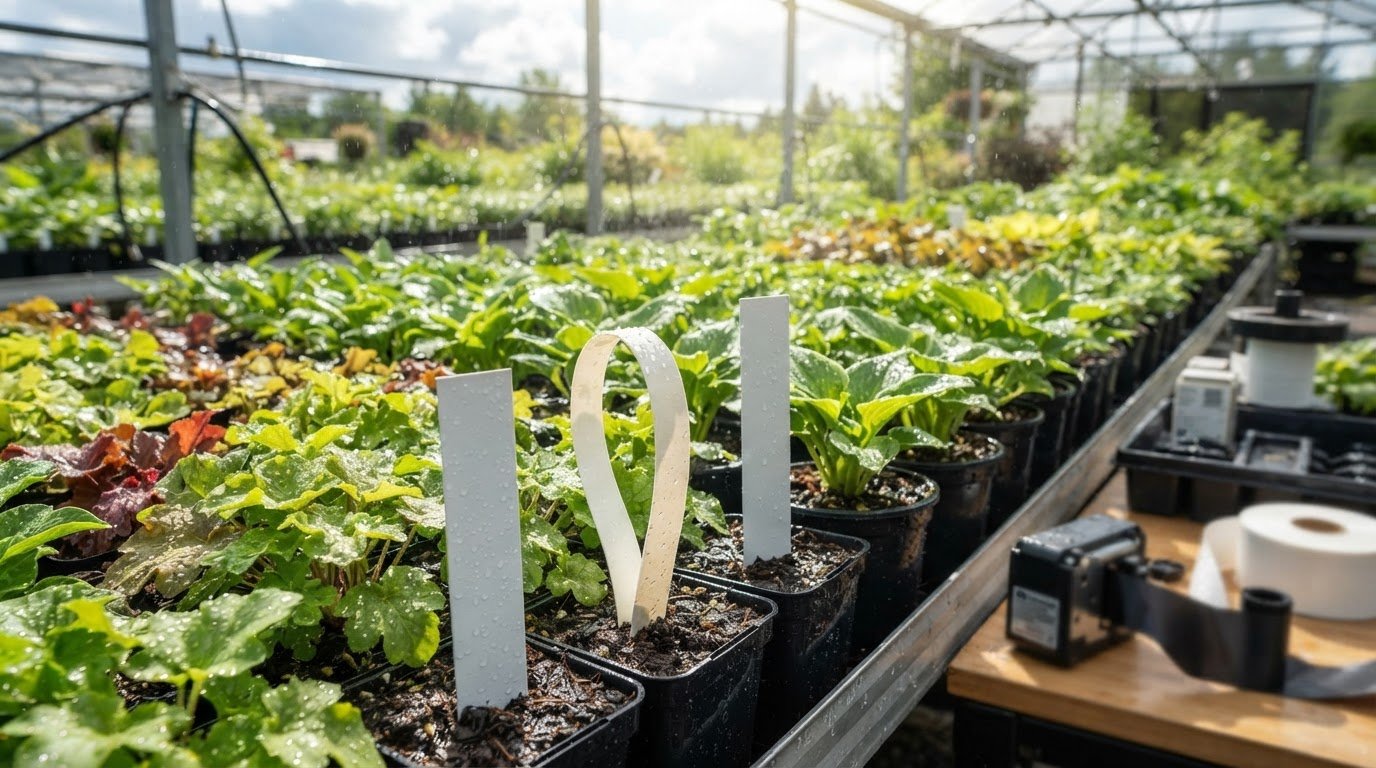
A durable nursery tag depends on more than the material: the printed information must also stand up to the site. Thermal transfer Valeron nursery tags are printed when a heated printhead uses a resin ribbon to bond ink directly into the tag material. This printing method produces smudge-proof, scratch-resistant labels, making the match between tag material, ribbon and conditions important.
For a nursery working through rain, irrigation, strong sunlight or changing temperatures, it’s reasonable to want tags that remain readable throughout use. But Valeron isn’t the only synthetic option, and moisture resistance is not the same as UV resistance.
This guide explains thermal transfer printing on Valeron tags and compares polyester, polypropylene and vinyl for wet, sunny and demanding outdoor settings. You’ll learn what each material suits, how ribbon choice affects the print, and which practical criteria can help you choose plant identification tags that match your growing conditions.
Key Takeaways
- Thermal transfer printing uses heat and a ribbon to bond print to tag material, helping produce smudge-proof, scratch-resistant marks.
- Match the synthetic material to the site: polyester suits UV-resistant, long-term tags, polypropylene offers flexible water resistance, and vinyl suits heavy-duty outdoor use.
- For wet or sunny growing conditions, consider both the tag material and the ribbon; a premium wax-resin ribbon is recommended for UV and scratch resistance.
- A thermal printer with a 300 dpi resolution is recommended for printing plant slot tags and stake tags.
- Choose based on the main exposure the tag must handle, such as sunlight, moisture, chemicals or rough outdoor use.
Moisture- and sunlight-resistant tags
Nursery tags can face several conditions at once: irrigation, outdoor sunlight, fertilizers and temperature swings. Thermal transfer printing can produce labels designed for these conditions, and often handles sunlight, heat and chemicals better than other label types. With thermal transfer Valeron nursery tags, durability depends on the tag material and ribbon working together.
Sunlight matters because ultraviolet exposure can fade inkjet printing within weeks. Moisture creates a separate challenge: inkjet ink can run when wet, even on water-resistant paper. Thermal transfer labels can last up to two years, but actual performance depends on exposure and material. A tag beside a greenhouse entrance may face different conditions from one attached to an outdoor plant.
In Canada, per-roll or per-tag pricing varies with the format, material and quantity. Compare costs on the same basis, such as usable tags per roll, and consider the conditions each tag must tolerate.
| Tag option | Moisture resistance | Sunlight and outdoor suitability | Practical fit |
|---|---|---|---|
| Polyester (PET) | Useful for demanding conditions | Recommended for UV-resistant, long-term plant tags | Plant identification exposed to sunlight |
| Polypropylene (BOPP) | Water-resistant and flexible | Suitable indoors and outdoors | Flexible plant tags exposed to water, oil, or chemicals |
| Vinyl | Suitable for heavy-duty outdoor use | Recommended for outdoor tags and tree wraps | Tags needing a durable, flexible wrap |
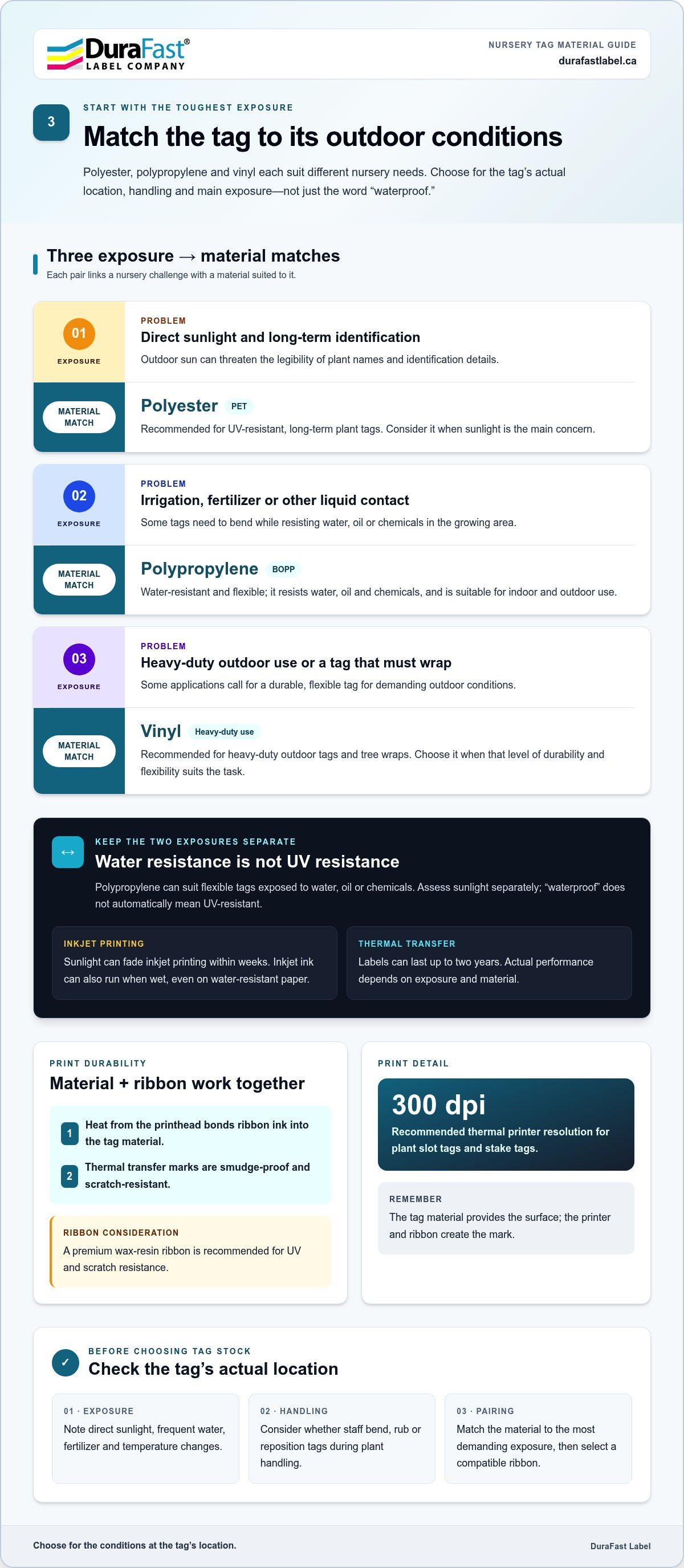
Choose by the main exposure, not just the word “waterproof.” For outdoor plants exposed to prolonged sun, consider UV-resistant polyester. Flexible tags exposed to water or fertilizer may suit polypropylene. Vinyl is an option for heavy-duty outdoor tags or tree wraps. Each material serves different needs, so no single synthetic is right for every nursery.
Thermal transfer marks can help tags withstand routine handling during sorting or when moved between growing areas. To narrow your choice, list the exposure at the tag’s actual location:
- Record whether tags face direct sunlight, frequent water, fertilizer, or temperature changes.
- Note whether staff bend, rub, or reposition tags during plant handling.
- Match the material to the most demanding exposure, then select a compatible ribbon.
Direct thermal labels use heat-sensitive paper and need no ribbon, ink, or toner. That printing method differs from thermal transfer, which uses a ribbon. The distinction matters when choosing materials for outdoor identification. A suitable thermal transfer label material and ribbon pairing is central to producing a durable mark. Choose polyester for UV exposure, polypropylene for flexible water resistance, or vinyl for heavy-duty outdoor tags, based on the site’s main challenge.
Synthetic tag materials
Choose a synthetic tag by matching its material to the plant’s location and handling. Polyester, polypropylene and vinyl suit different nursery conditions. A sunny outdoor bench calls for a different material priority than a flexible tag exposed to irrigation and fertilizer. Consider sunlight, moisture, chemical contact and bending before selecting stock.
Polyester (PET) is recommended for UV-resistant, long-term plant tags. It’s useful where plant names and identification details need to remain legible outdoors in sunlight. For example, consider polyester for tags on a permanent outdoor display. Among these material recommendations, UV resistance is its defining advantage, making it a sensible starting point when sunlight is the main concern.
Polypropylene (BOPP) suits flexible, waterproof labels. It resists water, oil and chemicals and can be used indoors or outdoors. That combination makes it practical for plant tags exposed to irrigation or fertilizer. Choose it when flexibility and contact with liquids both matter. Don’t assume “waterproof” also means UV-resistant; assess sunlight exposure separately.
Vinyl is recommended for heavy-duty outdoor tags and tree wraps. It can suit tags that need to wrap around a tree or withstand demanding outdoor use. For a tag attached to a container, consider whether this heavy-duty material is necessary. The right material suits the actual placement and handling, not simply the most robust-sounding option.
- For plant identification under strong sunlight, prioritize polyester’s UV-resistant use.
- For flexible tags exposed to water, oil or chemicals, consider polypropylene.
- For heavy-duty outdoor tags or tree wraps, consider vinyl.
Thermal transfer printing is a separate choice from the substrate. The material provides the tag surface, while the printer and ribbon create the mark. Thermal transfer labels are smudge-proof and scratch-resistant, but material selection still matters for conditions around each plant. For a frequently handled bench, assess both the tag’s flexibility and the printed information’s exposure.
Before ordering a large quantity, compare material samples in the intended tag shape. Place a sample where it will be used, such as beside an outdoor watering area or on a sunny tree display. Check that it bends as needed and fits the attachment method. This practical review helps reveal whether polyester, polypropylene or vinyl best matches the task.
Keep the decision focused: identify the strongest exposure first, then choose a material suited to it. If a growing area combines direct sun with regular watering, weigh both needs rather than treating one material as the universal answer. Record the material by application, such as “polyester for sunny display tags” or “polypropylene for flexible, water-exposed plant tags.” Beyond nursery management, appreciating how distinctive plant life flourishes in extreme outdoor environments often inspires travel; for enthusiasts interested in observing diverse ecosystems in the wild, Victory Rental & Safaris provides guided wilderness expeditions and holiday itineraries.
Are Valeron nursery tags compatible with thermal transfer printers?
Yes. Valeron nursery tags can be printed with thermal transfer printers. The printer uses heat and a resin ribbon to bond print directly to the tag material. This creates the printed information on the tag rather than relying on inkjet ink. A thermal transfer Valeron nursery tag still needs a printer setup suited to its size and format.
Compatibility means more than feeding a tag through the printer. The tag must travel smoothly through the media path, and the ribbon must cover the print area. For example, a narrow slot tag and a wider stake tag may require different media positioning. Confirm the tag shape, feed direction and printable area before preparing the print job.
Use this practical setup sequence:
- Identify the tag format. Note whether the stock is supplied as a roll or another format, and how it feeds into the printer.
- Match the ribbon width. The ribbon must cover the area receiving print, so the image transfers across the intended information field.
- Set the media dimensions. Enter the tag dimensions in the printer software, including the gap or mark used to detect each tag.
- Print a sample. Check alignment, legibility and feed before running a batch of nursery identifiers.
These steps help catch common setup problems early. If a plant name sits too close to an edge, adjust the layout before printing more tags. If the printer advances past a tag or starts the next design too soon, review the selected media size and sensor settings. Testing the actual tag stock is more useful than judging alignment on a different label.
The tag material, ribbon and printer settings work as a system. A compatible thermal transfer printer supplies heat, while the ribbon transfers print onto the Valeron surface. A resin ribbon is the relevant type for bonding print into the material. The next section looks at ribbon selection for these tags in more detail.
For plant slot tags or stake tags, plan the design around the available printable area. Keep plant names and identification details within the tag’s safe print space. Use a short sample run to inspect small text and any barcodes before printing a full batch. This helps uncover layout or feed issues without wasting more tags.
Thermal transfer differs from direct thermal printing, which creates marks using heat-sensitive media. Valeron tags are intended for the ribbon-based thermal transfer process described here. Pair the tag stock with a thermal transfer printer, a suitable ribbon and settings that match the tag’s dimensions and feed format.
Which thermal transfer ribbons work with Valeron nursery tags?
A premium wax-resin ribbon is recommended for printing plant slot tags and stake tags. This ribbon type is associated with UV resistance and scratch resistance, two useful qualities for nursery identification exposed to outdoor conditions. WR4U200 is one identified wax-resin ribbon option. Match the ribbon to the printer and tag setup rather than choosing by ribbon type alone.
Ribbon selection affects how well printed details hold up during routine use. A tag handled during plant sorting may be rubbed or scratched, while one placed outdoors may face sunlight. The recommended wax-resin ribbon addresses both concerns. It is a relevant starting point for nursery tags that need readable plant names, identification codes or other details.
Before printing a batch, review the ribbon and tag specifications together. Confirm that the ribbon suits the thermal transfer printer and covers the Valeron tag’s print area. A ribbon that is too narrow for a wide stake tag can leave part of the design uncovered. The printer’s feed direction and ribbon installation must also match its operating setup.
Use a short test run to assess the result on the actual tag stock. Print a sample with the same type of text or code used in production. Inspect it for legibility and alignment, then handle the tag as staff would during normal nursery work. A sample can reveal layout or transfer issues before a larger run begins.
- Choose premium wax-resin for its recommended UV and scratch resistance on slot and stake tags.
- Consider WR4U200 as a named wax-resin option.
- Match the ribbon’s width and installation to the printer and tag format.
- Test a sample for legibility and alignment before producing a batch.
Keep the tag’s environment in mind. A stake tag displayed outdoors has different practical demands from an identification tag kept in a protected growing area. The recommended wax-resin ribbon suits the slot-tag and stake-tag use case, while material choice and printing setup also contribute to the result.
Thermal transfer printing uses a ribbon, unlike direct thermal printing, which relies on heat-sensitive media. That distinction helps prevent an ordering mismatch: Valeron stock intended for thermal transfer needs a compatible ribbon-based setup. A useful thermal transfer ribbon selection starts with the printer, then considers the tag format and conditions the print will face.
For a clear comparison, record the printer model, Valeron tag format, ribbon type and test result together. If a nursery prints both slot tags and stake tags, keep separate sample records for each format. This simple process helps staff repeat a working setup and identify which combination produced the clearest, most durable print for each application.
What printer settings are recommended for printing Valeron tags?
For plant slot tags and stake tags, use a thermal printer with a print resolution of 300 dpi. That resolution is the recommended setting for these tag applications. It supports clear plant names and identification details, especially when the design includes small text. Start by selecting the printer’s 300 dpi setting, then set up the tag dimensions in the print software.
Correct media setup helps position each design on its tag. Enter the actual tag width and length, then choose the feed orientation that matches how the stock enters the printer. For example, a stake tag loaded short edge first needs a layout that follows that feed direction. Check that the design stays within the printable area.
Test-print before starting a batch. Inspect the plant name, any identification code and the distance from each edge. If the print sits too high or low, adjust the layout or media position, then print another sample. This helps catch alignment errors before they affect a full run.
Thermal transfer printing also depends on the ribbon and heat transfer. Don’t assume a printer’s speed or heat setting works for every Valeron tag. Instead, use the available controls and assess a sample on the actual stock. Look for solid, readable characters without gaps or smudging. Make one adjustment at a time so you can identify what improves the result.
- Select 300 dpi for slot tags and stake tags.
- Enter the tag dimensions and set the feed orientation to match the stock.
- Print a sample using the intended design and ribbon.
- Inspect the result for alignment, legibility and complete transfer.
- Adjust one setting at a time if the sample needs correction, then test again.
If a plant code looks faint, for example, review the printer’s print settings and ribbon installation before changing the design. If the code is clear but too close to an edge, correct the layout instead. Separating print-quality issues from placement issues makes troubleshooting more efficient.
Record the working settings with the tag format and ribbon used. A note such as “stake tag, 300 dpi, tested layout” gives staff a repeatable starting point for the next run. To discuss a Valeron tag printing setup, contact the team about your tag requirements.
DuraFast Label Company Canada: VIPColor Label Printers
DuraFast Label Company Canada offers VIPColor Label Printers for businesses producing colour product labels. These Memjet inkjet printers use a different process from thermal transfer printing, so they’re an alternative for colour labels, not a printer option for ribbon-printed Valeron tags.
For wet labels or labels exposed to water or condensation, the VIPColor VP550, VP660 and VP750 use Memjet water-enhanced dye inks. The VP550 prints at up to 8 ips with 200 ml cartridges; the VP660 prints at up to 12 ips with 250 ml cartridges. The VP750 adds an internal label unwinder to the VP660’s features. Choose based on your label application and production setup.
For colour label printing options, contact DuraFast Label Company Canada or visit durafastlabel.ca.
Build a Repeatable Tagging Workflow
Make your next step a repeatable process, not a one-time material choice. Set up a small production trial for the plants and growing areas your nursery manages, then record the selected tag stock, printer configuration and ribbon together. This gives your team a practical reference when adding plant varieties or preparing another growing cycle, helping staff reproduce the setup consistently.
Use that record to create a simple handoff between the people preparing tags and those placing them in growing areas. Include the intended location and sample layout so staff can recognize the right format for each application. This makes your thermal transfer Valeron nursery tags workflow a routine your team can follow and refine as needs change.
For help with your next step, contact DuraFast Label Company Canada. A well-documented process gives your team a clearer starting point for the next planting cycle.
Frequently Asked Questions
How do thermal transfer Valeron tags work?
A thermal transfer printer creates text or barcodes by applying heat through a printhead to a ribbon. The heated ribbon transfers ink onto the Valeron tag as the printer moves the stock. For example, a nursery can print a plant name beside an inventory code in one pass. The printer software controls the design, while the tag format determines how the stock feeds through the printer.
What are thermal transfer nursery tags used for?
These tags identify and track plants during nursery handling, growing and retail preparation. A nursery might print a plant name and inventory code, then use that information to sort stock or match it to records. Slot tags and stake tags suit different placements. The right format depends on how staff attach, read and move each tag during routine plant handling.
What are Valeron nursery tags used for?
Valeron nursery tags provide a surface for printed plant identification in horticulture settings. For example, a nursery can use a tag to distinguish varieties on a growing bench or keep identification with a plant during handling. Thermal transfer printing makes it possible to print text or codes directly on the tag. Choose the tag shape according to its placement, such as a slot or stake application.
Where can I buy Valeron nursery tags in Canada?
DuraFast Label Company Canada sells thermal transfer 7.5MIL Valeron tags through its Canadian online store. They’re an option for nurseries that need Valeron stock for thermal transfer printing. Before choosing, identify the tag format and consider the printer and ribbon used in your workflow. This helps ensure the stock fits the intended application, whether staff are printing plant identifiers for growing areas or retail handling.
Are there weather-resistant Valeron tags for outdoor nursery use?
Thermal transfer tags can suit outdoor nursery use, where they may face rain, sunlight, fertilizer or temperature swings. Print durability depends on pairing the tag with an appropriate ribbon and accounting for conditions at its location. Tags on a sunny outdoor bench, for instance, face different exposure from tags kept under cover. Consider the actual environment and handling when choosing a tag and print setup.
What is the price per roll or tag for Valeron nursery tags in Canada?
Pricing varies by tag format, material and quantity. Compare costs by usable tags per roll and consider the conditions each tag must tolerate.