Best UPS Label Printer: 2026 4x8 Optimization Guide
10th Sep 2026
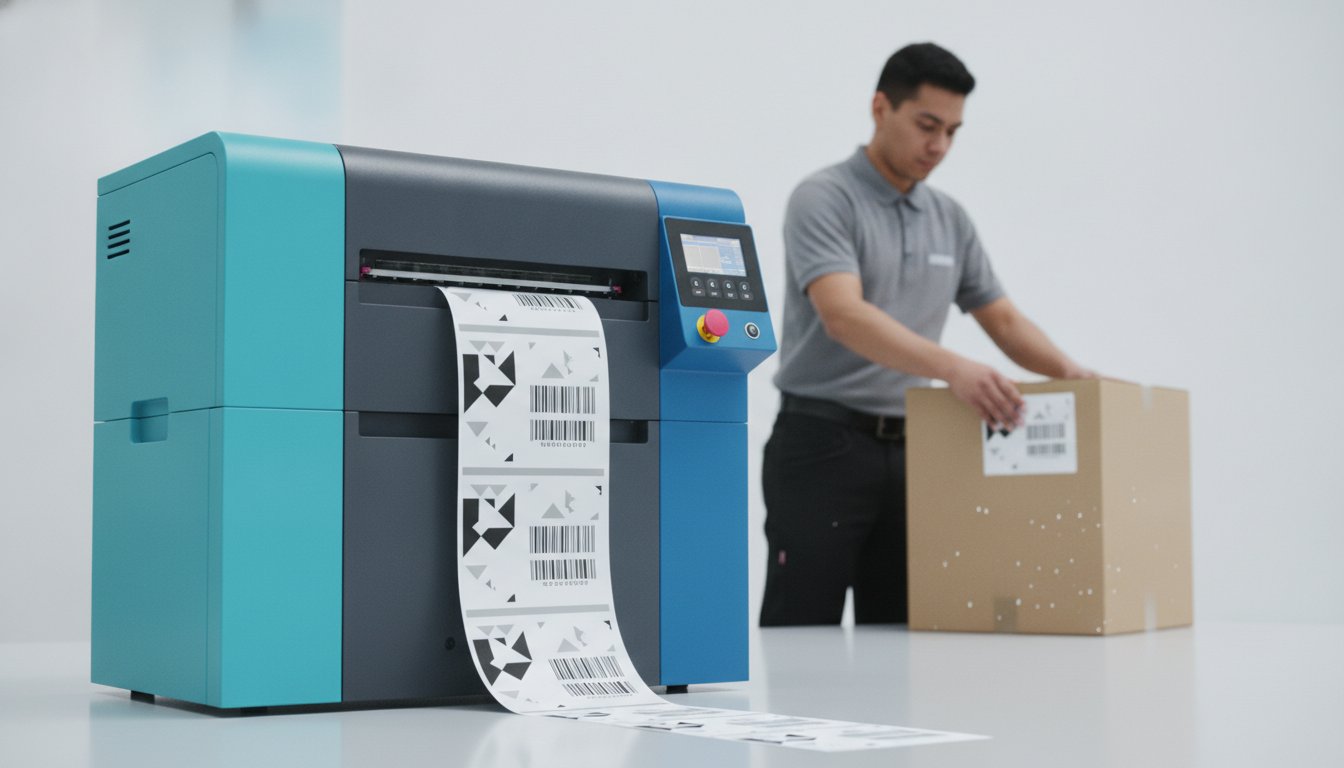
What if your most critical shipping document is the one thing standing between your package and a successful delivery? In the harsh reality of a Canadian winter, a standard label can quickly become a liability when adhesives fail at -20°C or barcodes smudge during long transit routes. You know that operational downtime at the centre of your warehouse isn't just an inconvenience; it's a direct hit to your bottom line. Finding the best printer for UPS shipping labels requires looking beyond basic functionality to ensure every 4x8 label remains legible and intact from your dock to the customer's door.
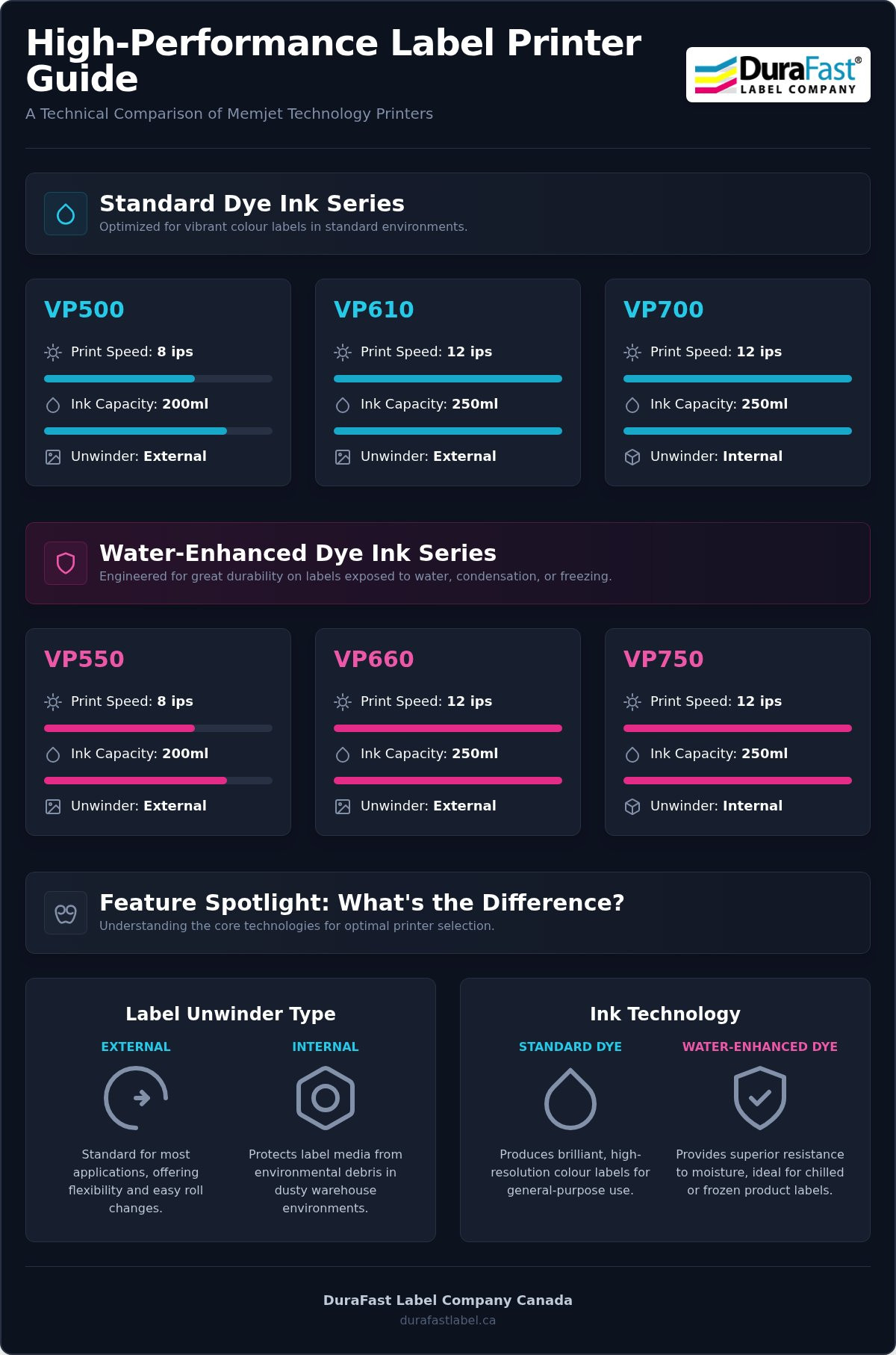
This guide provides a technical deep dive into 2026 optimization strategies for UPS compliance and operational efficiency. We'll examine the functional differences between standard dye ink models like the 12 ips VP610 and water-enhanced series like the VP660, which are specifically intended for durability in applications involving condensation or frozen foods. You'll learn how hardware features, such as the internal label unwinders on the VP700 and VP750, provide essential protection against warehouse debris. By the end of this article, you'll have the precise specifications needed to select a high-performance solution from DuraFast Label Company Canada that secures your logistics chain and supports your business growth in the Canadian market.
Key Takeaways
- Distinguish between standard dye ink and water-enhanced series to ensure your 4x8 labels maintain great durability when exposed to condensation, moisture, or frozen food environments.
- Select the best printer for UPS shipping labels by matching your production volume to specific hardware, such as the 8 ips VP550 with 200ml cartridges or the high-speed 12 ips VP660.
- Protect your printing investments in dusty warehouse environments by choosing models like the VP700 or VP750, which feature internal label unwinders to shield media from environmental debris.
- Maximize operational efficiency for international freight by utilizing the 4x8 label format, providing the necessary space for UPS compliance and Canadian customs declarations.
- Improve fiscal responsibility by comparing the total cost of ownership between direct thermal and thermal transfer technologies, focusing on long-term printhead health and material costs.
Understanding 4x8 UPS Shipping Labels: Standards and Requirements
Why do Canadian logistics managers increasingly pivot toward the 4x8 format? While the 4x6 label remains a global baseline, the 4x8 variant offers an expanded data capacity that is indispensable for international freight. This extra space allows for more comprehensive customs declarations and multi-language fields, which are frequent requirements for businesses shipping across the border. By standardizing on 4x8 blank labels for sale from DuraFast Label Company Canada, enterprise-level operations can streamline their supplies while ensuring every parcel meets the rigorous documentation standards of 2026.
The technical precision of your barcode is the most vital factor for UPS WorldShip compliance. As of June 2026, UPS regulations mandate that labels must be printed on adhesive stock or placed in a pouch; using tape to secure a plain paper label is no longer permitted. This makes finding the best printer for UPS shipping labels a priority for maintaining operational flow. High-resolution output ensures that the complex 2D barcodes used in modern logistics remain scannable throughout the entire journey. To achieve this, Understanding Thermal Printing technology is essential, as it determines how crisp and durable those barcodes will be when subjected to the friction of sorting belts.
When to Choose 4x8 Over Standard 4x6 Labels
Does your business frequently handle international shipments? If so, the 4x8 format is often a necessity rather than an option. The additional two inches of vertical space provide the real estate required for detailed harmonized system (HS) codes and bilingual shipping instructions. This format also allows you to integrate promotional branding or return instructions directly onto the shipping label. This consolidation reduces the need for secondary labels, improving fiscal responsibility. Utilizing high-speed equipment like the VP610 or VP660, both of which print at 12 ips, ensures that these larger labels are produced without bottlenecking your fulfillment centre.
Adhesive and Liner Standards for Canadian Logistics
Canadian winters present a unique challenge for adhesive technology. Standard labels often lose their tack in sub-zero temperatures, leading to lost packages and insurance claims. You should prioritize permanent acrylic adhesives that are specifically formulated to bond with corrugated cardboard in cold environments. Using high-quality direct thermal labels with robust liners is also critical. A sturdy liner prevents the label from curling or tearing during high-speed printing cycles. For businesses operating in dusty warehouse environments, choosing a model with an internal label unwinder, such as the VP700 or the water-enhanced VP750, protects your media from environmental debris that could otherwise cause printer jams or premature printhead wear.
Direct Thermal vs. Thermal Transfer: Selecting the Best Technology
Which printing method ensures your 4x8 barcodes remain readable after a 4,000-kilometre journey? Choosing between direct thermal and thermal transfer isn't just about the initial purchase price; it's about matching technology to your specific shipping environment. While both methods are capable of producing high-quality output, their performance under stress varies significantly. For many Canadian SMEs, the best printer for UPS shipping labels is the one that balances daily operational speed with the environmental resilience required for their specific distribution network.
Deciding on the right technology depends on your monthly shipping volume and the final destination of your goods. If you primarily ship within your province, direct thermal's simplicity is hard to beat. If you are scaling into international markets, the security of thermal transfer is a strategic investment in your brand's reliability. If you're unsure which path fits your 2026 growth plan, you can consult with our logistics experts for a personalized assessment of your production needs.
Direct Thermal: Efficiency for Domestic UPS Parcels
Direct thermal printing uses heat-sensitive media that darkens when it passes under the printhead. This process eliminates the need for ink, toner, or ribbons, which simplifies your inventory management and reduces the time spent on printer maintenance. It's an excellent choice for domestic parcels moving quickly through the UPS network within Canada. However, because the media remains heat-sensitive, these labels can fade or darken if exposed to high temperatures or prolonged sunlight. Using high-quality direct thermal labels is essential to ensure the chemical coating is robust enough to handle standard transit friction without premature scuffing.
Thermal Transfer: Durability for Long-Haul and International
When your shipments face extended transit times or international customs delays, thermal transfer technology offers superior longevity. This method uses thermal transfer ribbons to melt a wax or resin image onto the label surface. The resulting print is incredibly resistant to light, heat, and the physical abrasion of sorting machinery. For high-value goods or freight crossing multiple climate zones, this durability is non-negotiable. While the cost of ribbons adds a small incremental expense per label, the ribbon actually acts as a protective barrier for the printhead. This often results in a lower total cost of ownership because you'll experience less frequent printhead replacements compared to direct thermal setups.
Desktop vs. Industrial Printers: Matching Hardware to Volume
How do you determine if your hardware can survive your shipping schedule? While many entry-level units claim compatibility with 4-inch wide media, the motor stress of pulling 8-inch long labels is a specific engineering challenge. Finding the best printer for UPS shipping labels involves evaluating your daily duty cycle. If you're printing a few dozen labels in a climate-controlled office, a desktop unit is sufficient. If you're running multiple shifts in a busy Canadian logistics hub, you need an industrial solution designed for high-volume output and heavy-duty motor performance.
Printhead resolution is another critical factor for UPS compliance. A 203 dpi (dots per inch) resolution is the industry standard for most shipping barcodes. However, if your 4x8 labels include small font sizes for international customs declarations or complex 2D barcodes, moving to a 300 dpi printhead ensures crisp edges that won't fail at the sorting facility. Clearer barcodes mean fewer manual interventions and faster transit times for your customers.
Warehouse environments are notoriously dusty. This environmental debris can settle on your label rolls, leading to printhead scratches and poor ink adhesion. Choosing a printer with an internal label unwinder, like the 12 ips VP700 or the water-enhanced VP750, provides a sealed environment for your media. This hardware feature is a proactive way to reduce maintenance costs and prevent operational disruption in industrial settings.
Desktop Solutions for Small to Medium Workflows
For office-based logistics teams, space-saving footprints are a priority. These businesses often don't have on-site IT support, so ease of maintenance is vital. Seiko SLP850 printers offer a reliable solution for precision tasks without occupying excessive desk real estate. If your workflow requires colour for branding but remains at a medium volume, the VP500 or the water-enhanced VP550 are excellent choices. Both models feature an 8 ips print speed and use 200ml ink cartridges with external label unwinders, making them accessible for entrepreneurs who are scaling their production.
Industrial Powerhouses for 24/7 Operations
Rugged construction is mandatory for harsh Canadian industrial centres where printers run around the clock. High-speed output and large roll capacities minimize downtime and maximize resource efficiency. Leading brands like Zebra and Toshiba set the standard for these environments, but for those requiring colour and durability, the VP610 and VP660 are formidable contenders. These models print at 12 ips and utilize 250ml ink cartridges to keep up with enterprise-level demands. For maximum protection, sourcing industrial label printers with high-capacity internal unwinders ensures your 4x8 labels remain pristine until they are applied to the carton.
Maximizing Label Longevity with Water-Enhanced Inks and Internal Unwinders
Why do some shipping labels arrive perfectly legible while others become unreadable due to moisture? In the Canadian supply chain, labels often face heavy condensation when moving between sub-zero transport trucks and heated distribution centres. If your shipments involve frozen foods or high-moisture environments, "great durability" isn't a luxury; it's a requirement for operational seamlessness. Finding the best printer for UPS shipping labels means selecting a machine that can handle these environmental stressors without sacrificing print quality or barcode integrity.
Dust is another silent killer of warehouse efficiency. Environmental debris can accumulate on exposed label rolls, leading to printhead damage and inconsistent ink application. By choosing hardware with an internal label unwinder, you create a protective barrier for your media. This feature is particularly valuable in high-traffic logistics hubs where airborne particles are common. Choosing the best printer for UPS shipping labels ultimately depends on balancing these technical specifications with your unique operational challenges. If you need help determining which environmental protection level your facility requires, reach out to our team for a site-specific consultation.
The Water-Enhanced Series for High-Moisture Environments
If your labels are introduced to water or heavy condensation, the water-enhanced dye ink series is the definitive solution. These models are engineered to produce images that remain crisp even when damp. The VP550 offers a max print speed of 8 ips and uses 200ml ink cartridges, making it ideal for smaller batches where durability is paramount. For higher volumes, the VP660 provides a 12 ips speed and uses 250ml ink cartridges. Both utilize external label unwinders. For the most demanding environments, the VP750 combines the 12 ips speed and 250ml capacity with an internal label unwinder, offering the highest level of protection for your 4x8 media.
Standard Dye Ink Solutions for High-Speed Logistics
For warehouses that are dry and climate-controlled, the standard Memjet dye ink series provides an efficient and cost-effective way to produce inkjet shipping labels. The VP500 is a reliable entry point with an 8 ips print speed and 200ml ink cartridges. High-volume operations often prefer the VP610, which increases performance to 12 ips and uses 250ml ink cartridges. Like their entry-level counterparts, both the VP500 and VP610 feature external label unwinders. If you operate in a dusty environment but don't require water resistance, the VP700 is the strategic choice. It maintains the 12 ips speed and 250ml capacity of the VP610 but includes a built-in internal label unwinder to shield your label rolls from debris.
Why Source Your UPS Shipping Supplies from DuraFast Label Company Canada
Logistics efficiency in the Canadian market requires more than just a piece of hardware; it demands a strategic partnership. DuraFast Label Company Canada stands as a national leader by providing high-durability thermal and colour inkjet solutions tailored to our specific climate and regulatory landscape. By choosing a local supplier, you gain access to expert consultation that understands the logistical hurdles of cross-border freight and the environmental stressors of a Canadian warehouse. We aim to reassure you that your operational challenges have accessible, high-quality solutions that support your long-term growth.
Finding the best printer for UPS shipping labels is only the first step in building a resilient logistics chain. DuraFast Label Company Canada acts as your strategic partner to ensure that every component, from the ink to the adhesive, works in harmony. Our national reach across Canada means you receive consistent support and supplies regardless of where your distribution centres are located. This stability allows you to focus on your core business while we handle the technical complexities of your labelling infrastructure.
Comprehensive Inventory for Every UPS Application
Does your workflow require standard paper for domestic parcels or rugged synthetic materials for international freight? DuraFast Label Company Canada maintains an extensive inventory that supports every UPS requirement with a focus on the 4x8 format. This expanded layout is essential for including multi-language data fields and customs declarations. You can find a wide variety of blank labels for sale that are compatible with both the standard dye and water-enhanced ink systems we've discussed.
- Standard paper stock for high-speed, cost-effective domestic shipping.
- Durable synthetic 4x8 labels designed to withstand friction during long-haul transit.
- Customization options that allow you to incorporate promotional branding directly onto your UPS layouts.
- Specialized adhesives that maintain a permanent bond in sub-zero Canadian temperatures.
Expert Consultation for Canadian Logistics Managers
Choosing the best printer for UPS shipping labels is simplified when you work with consultants who understand the functional differences between hardware series. Our team helps you decide between standard dye ink models and the water-enhanced series based on your specific environmental stressors. If you're dealing with the dusty conditions or the condensation issues mentioned earlier, we provide the technical clarity needed to integrate these solutions with UPS WorldShip. Contact our experts to find your ideal 4x8 solution and optimize your labelling workflow today.
Future-Proofing Your UPS Shipping Operations
Optimizing your logistics workflow for 2026 requires a precise alignment between your hardware capabilities and the environmental demands of the Canadian supply chain. Whether you're transitioning to the 4x8 format for international freight or upgrading to the 12 ips speed of the VP750, your choice directly impacts operational seamlessness. By distinguishing between standard dye ink models and the water-enhanced series, you ensure that your barcodes maintain great durability against condensation and frozen food stressors.
Selecting the best printer for UPS shipping labels is an investment in your company's fiscal responsibility and customer trust. As an authorized Canadian dealer for VIPColor, Zebra, and Toshiba, DuraFast Label Company Canada provides the specialized expertise and national shipping support needed to keep your warehouse running at peak efficiency. Protecting your media from environmental debris with internal unwinders is a proactive step toward reducing downtime and printhead wear.
Are you ready to realize better results in your distribution centre? We invite you to request a consultation for your UPS labelling needs to find the ideal solution for your specific volume. Let's work together to build a more resilient and efficient future for your business.
Frequently Asked Questions
Are 4x8 labels mandatory for all UPS international shipments?
While 4x6 labels remain the standard for domestic parcels, 4x8 labels are often essential for international freight because they provide the necessary space for bilingual customs declarations and harmonized system codes. Using the larger format ensures that all required regulatory data is visible without shrinking barcodes to unreadable sizes. This extra real estate is a strategic choice for Canadian businesses shipping globally to prevent customs delays and ensure operational seamlessness.
Can I use a standard 4x6 thermal printer to print 4x8 UPS labels?
Most 4-inch printers can handle 4x8 labels if the sensors are correctly configured, but you must consider the motor stress involved. Pulling an 8-inch label requires more mechanical effort than a standard 4x6, which can lead to premature wear in entry-level units. For high-volume 4x8 production, choosing the best printer for UPS shipping labels involves selecting a motor capable of sustained heavy-duty cycles to prevent jams and maintain speed.
What is the difference between direct thermal and thermal transfer 4x8 labels?
Direct thermal labels use heat-sensitive coatings and require no ink, making them a cost-effective choice for short-transit domestic shipments. Conversely, thermal transfer labels require ribbons to create a durable image resistant to friction and light. If your 4x8 labels face long-haul transit across Canada or potential heat exposure, thermal transfer is the superior technology for ensuring your barcodes remain scannable from the warehouse to the final destination.
How do I prevent my 4x8 labels from smudging during winter transit?
Smudging is typically caused by moisture or friction during transit, especially in harsh Canadian winters. To prevent this, utilize water-enhanced dye ink models like the VP660 or high-quality thermal transfer ribbons. These technologies ensure the ink bonds permanently to the media, providing the resilience needed for long-haul freight. Selecting the best printer for UPS shipping labels with these capabilities protects your barcode integrity against the temperature fluctuations found in distribution centres.
Do I need a special unwinder for large rolls of 4x8 labels?
Large rolls of 4x8 labels require an unwinder to maintain consistent tension and prevent motor strain. Models like the VP500 and VP610 utilize external label unwinders to support their 200ml and 250ml ink capacities. If you operate in a high-volume environment, an unwinder ensures that the 8-inch label length feeds smoothly through the printhead, reducing the risk of misalignment or mechanical failure during high-speed 12 ips printing cycles.
Which VIPColor printer is best for labels exposed to condensation?
For labels introduced to water or condensation, you should choose a model from the water-enhanced series, such as the VP550, VP660, or VP750. These printers are specifically intended for "great durability" in frozen food or high-moisture applications. The VP550 offers 8 ips speed with 200ml cartridges, while the VP660 and VP750 provide 12 ips speed with 250ml cartridges, ensuring your 4x8 shipping labels remain perfectly legible despite environmental stress.
What is environmental debris, and how does an internal unwinder protect my labels?
Environmental debris includes dust and cardboard fibers that accumulate in busy logistics hubs. An internal unwinder, found on the VP700 and VP750, shields the label roll from these particles before they reach the printhead. This protection is a critical situational justification for hardware choice, as it prevents scratches and ensures consistent ink adhesion. By keeping your media clean, you extend the longevity of your hardware and maintain high-speed operational efficiency.
Where can I buy 4x8 UPS labels in Canada with national shipping?
You can purchase a wide variety of 4x8 UPS labels in multiple materials from DuraFast Label Company Canada. We provide national shipping across the country, stocking everything from standard paper to durable synthetics designed for international freight. Our inventory includes consumables for the best printer for UPS shipping labels, helping you realize better results by optimizing your labelling workflow with supplies specifically formulated for the unique demands of the Canadian market.