Best Labels for VIPColor VP750: A Canadian Business Guide to Water-Resistant Printing
30th Jun 2026
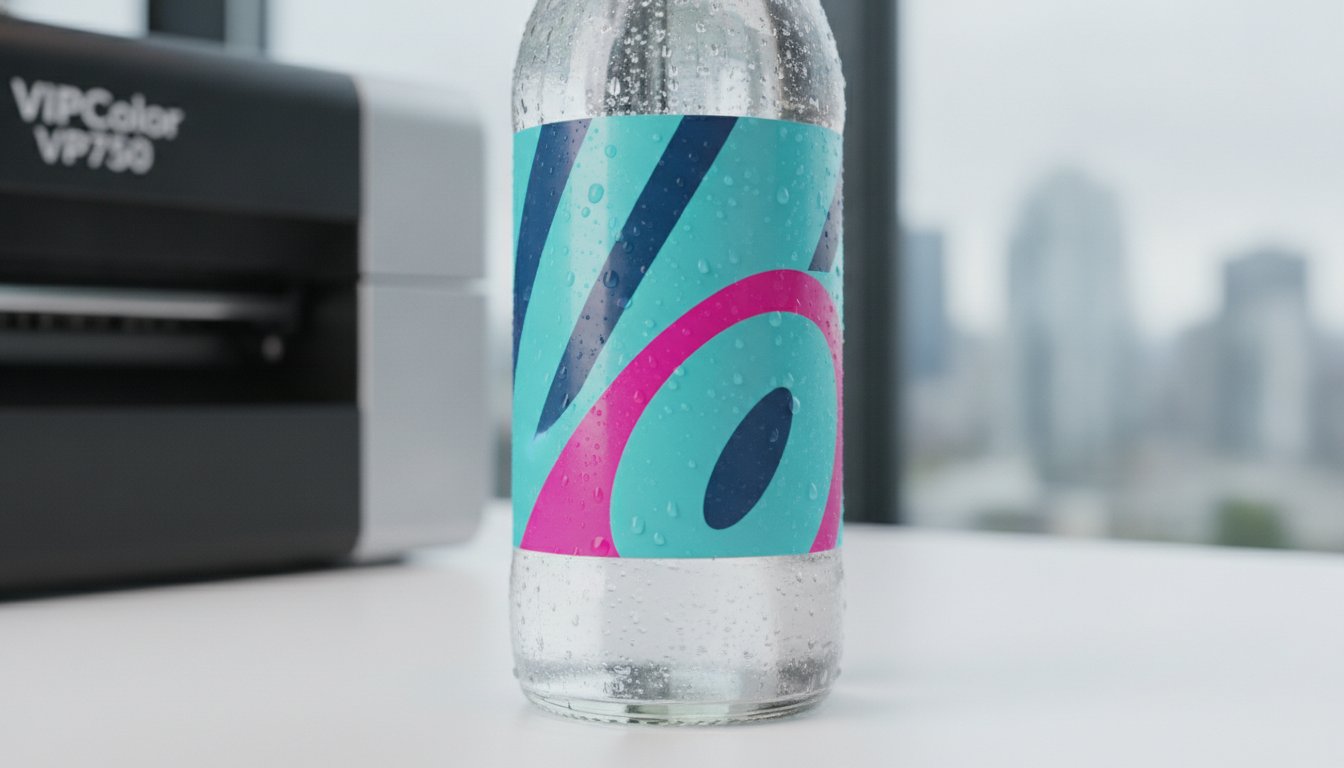
What if the premium branding you've carefully designed ends up as a smudged, illegible mess before it even hits the retail shelf? For many Canadian businesses, the transition from production to a cold refrigerated truck or a humid warehouse is where standard labels often fail. You've likely experienced the frustration of watching vibrant ink bleed when exposed to condensation or oils, particularly when various "inkjet-coated" materials don't live up to their promises. It's a logistical hurdle that can waste resources and damage your brand's professional image.
Finding the best labels for VIPColor VP750 involves more than just selecting a compatible roll; it requires matching the printer’s 1,600 dpi Memjet technology with a substrate designed for durability. We understand that your goal is to achieve professional-grade colour that stays crisp through every stage of distribution. This guide will show you how to select and optimize the perfect label materials for your VIPColor VP750 to ensure water-resistant results for any Canadian industry. We'll explore the functional differences between materials like high-gloss polypropylene and specialized papers, helping you maintain an efficient, zero-waste production line that stands up to the harshest environments.
Key Takeaways
- Understand how the VP750’s water enhanced dye inks interact with specialized coatings to provide superior resistance against moisture and environmental debris.
- Identify the best labels for VIPColor VP750 by analyzing the main difference between synthetic BOPP and paper-based media regarding moisture absorption.
- Solve the logistical hurdle of refrigerated transport by matching specific adhesives to the unique condensation levels of the Canadian food and beverage industry.
- Learn to organize your print profiles to achieve professional-grade colour while minimizing waste during in-house production.
- Realize the operational benefits of sourcing your media from a domestic Canadian provider to ensure compatibility and consistent supply for your specific branding needs.
Understanding the VP750’s Enhanced Water-Resistant Memjet Technology
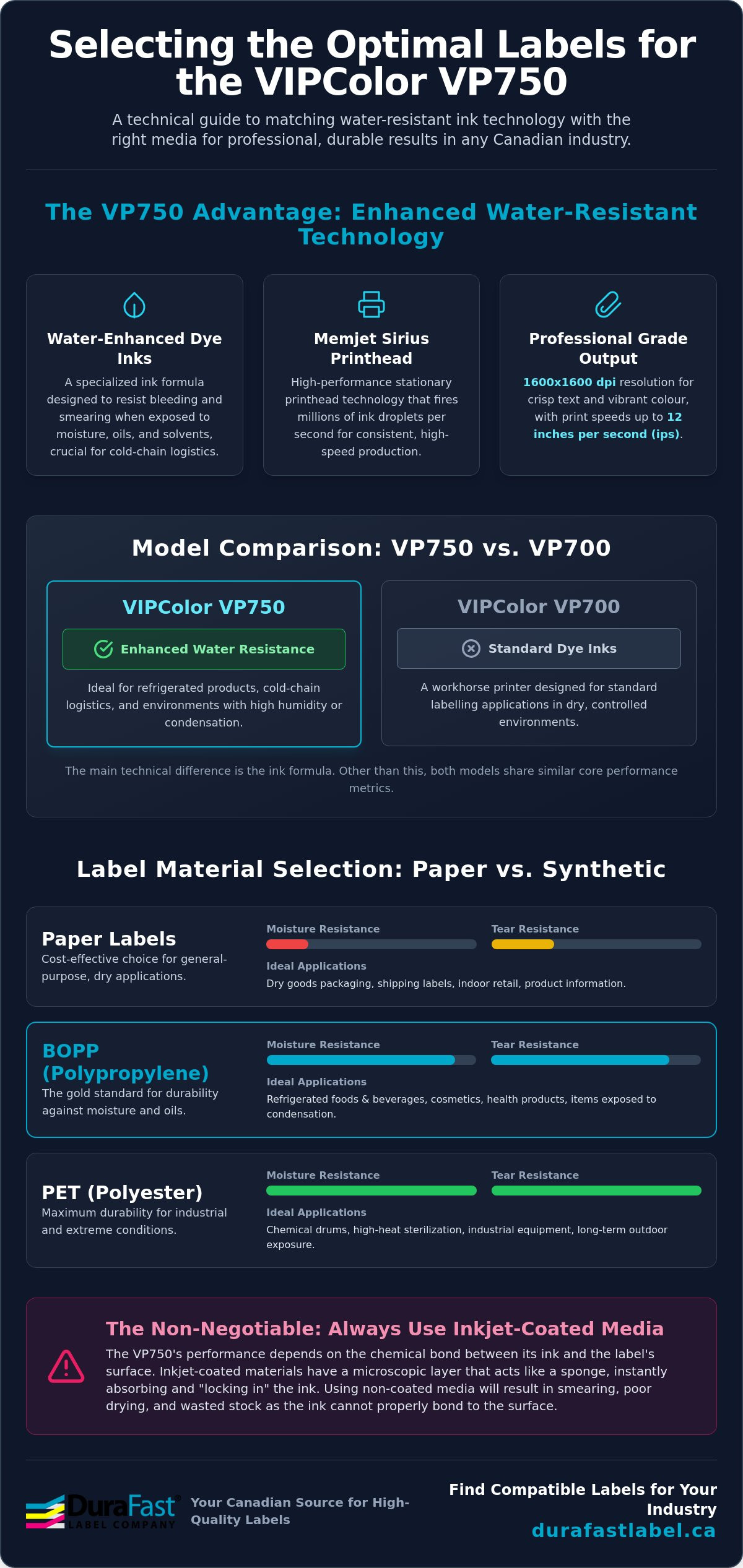
How does a printer maintain high-speed production while ensuring labels don't smudge under the pressure of Canadian humidity? The answer lies in the specific chemistry of the ink and the hardware that delivers it. The VIPColor VP750 is engineered around a specialized "water enhanced dye ink" formula. While standard aqueous dye inks often fail when they encounter moisture, the VP750’s chemistry is designed to resist bleeding and smearing when exposed to water, oils, or solvents. This capability is powered by the Sirius printhead system, a high-performance iteration of Memjet Technology. These printheads achieve a professional 1,600 x 1,600 dpi resolution by firing millions of ink droplets through stationary nozzles.
Businesses should distinguish between "water-resistant" and "waterproof." While these labels survive splashes and condensation, they aren't meant for prolonged submersion. It's vital to recognize that these are still inkjet-based systems. The "enhanced water resistance" isn't a magical property of the ink alone; it's a result of the chemical bond between the ink and the specialized coating on the media. Without the right substrate, even the most advanced ink cannot perform. This is why identifying the best labels for VIPColor VP750 is the most critical step in your production workflow to ensure your branding remains intact from the warehouse to the customer’s home.
VP750 vs. VP700: The Water Resistance Factor
The main difference between the VP750 and the older VP700 model is the ink’s ability to withstand environmental moisture. While the VP700 is a workhorse for dry environments, the VP750 provides the technical delta required for refrigerated storage and "cold-chain" logistics. Other than the ink formula and a few internal component adjustments to handle the new chemistry, the two machines share similar performance metrics. For businesses that need this same durability but have lower daily volume requirements, the VIPColor VP550 serves as a durable entry-level alternative. Choosing the VP750 ensures that your labels survive the condensation common in Canadian transport without sacrificing the vibrant colour quality that colour label printers are known for.
Why Coating Matters for Aqueous Inkjet
Why does the label coating play such a pivotal role in your results? Inkjet-coated materials are treated with a microscopic layer that acts like a sponge, instantly "locking in" the ink as it leaves the printhead. This is especially important when printing at speeds of up to 12 inches per second (ips). At this velocity, the ink must dry almost instantly to prevent tracking or smearing as the media passes through the printer. If you use non-coated, "off-the-shelf" labels, the ink will sit on the surface, where it will never properly dry or bond. To get the most out of your best labels for VIPColor VP750, you must ensure the media is specifically rated for aqueous inkjet systems to avoid bleeding and wasted stock.
Selecting the Right Material: Paper vs. Synthetic Labels for the VP750
Choosing between paper and synthetic media is a strategic decision that balances fiscal responsibility with the physical demands of your supply chain. While paper is cost-effective for dry goods, synthetic materials are often the best labels for VIPColor VP750 when your product faces the moisture levels typical of Canadian winters or refrigerated transport. The main difference between these two categories lies in their structural integrity; paper is susceptible to tearing and saturation, whereas synthetics provide a durable barrier against environmental debris and liquid exposure.
For businesses operating in damp environments, Biaxially Oriented Polypropylene (BOPP) is the gold standard. It offers a superior cost-to-durability ratio, ensuring that your branding remains intact even when subjected to heavy condensation. If your application involves more extreme industrial conditions, such as exposure to harsh chemicals or high-heat sterilization, PET (Polyester) labels provide the necessary technical delta to prevent label failure. Regardless of the material you choose, all consumer goods must adhere to the legibility requirements set out in the Consumer Packaging and Labelling Act, making the choice of substrate a matter of both branding and compliance.
Glossy vs. Matte Paper: When to Choose Each
How do you decide between a matte or glossy finish? High-gloss paper is the preferred choice for premium retail products where shelf impact and vibrant colour "pop" are the primary goals. The glossy coating enhances the 1,600 dpi output of the VP750, creating a professional look for gourmet foods or high-end cosmetics. Conversely, matte paper is often better for pharmaceutical or medical labels. Its non-reflective surface ensures that fine text and barcodes remain readable under various lighting conditions. You can browse a variety of these inkjet labels to find the specific finish that aligns with your brand’s aesthetic and functional needs.
The Power of Synthetic BOPP for Moisture Exposure
BOPP is widely considered the best labels for VIPColor VP750 for any application involving moisture. Unlike paper, BOPP does not absorb liquid, which prevents the "wicking" effect that causes ink to bleed at the edges. This synthetic media also provides excellent stretch and tear resistance, making it ideal for squeeze bottles or products that undergo frequent handling. When selecting BOPP, pay close attention to the adhesive backing. For Canadian cold-chain logistics, you need an adhesive that can bond to surfaces at sub-zero temperatures and remain secure as the product transitions to room temperature. If you aren't sure which adhesive matches your specific moisture profile, reach out to our team for a technical consultation.
Matching Label Types to Your Canadian Industry Applications
How do Canadian producers ensure their branding survives the logistical hurdles of a vast geography and extreme temperature fluctuations? Selecting the best labels for VIPColor VP750 requires a deep understanding of your specific industry’s moisture profile. While the printer’s hardware remains consistent, the technical delta in your production success often comes down to matching the substrate to the environment. Whether you are shipping craft spirits across the Prairies or industrial cleaners through Ontario, the interaction between the Memjet inkjet printing system and your chosen media determines the longevity of your message.
The VP750 is specifically designed to bridge the gap between high-speed output and industrial-grade durability. For businesses that require similar performance but have different environmental needs, the VIPColor VP660 labels provide a useful reference point for comparing durability across the VIPColor lineup. By tailoring your material choice to your sector, you can minimize waste and ensure your products maintain a professional appearance from the moment they leave the applicator until they reach the end consumer.
Chilled Food and Beverage Labelling
Artisanal food and beverage producers in Canada face the unique challenge of the "cold-chain" cycle. When a product moves from a cold storage facility to a room-temperature retail shelf, condensation forms almost immediately. This moisture can cause standard paper labels to wrinkle or lose adhesion. For these applications, we recommend synthetic materials that are engineered to withstand multiple "thaw cycles" without the ink bleeding or the edges lifting. It's also worth noting that the VP750 ink system is designed with food safety in mind, making it an excellent choice for primary packaging. Using the best labels for VIPColor VP750 in this sector means choosing a material that maintains its structural integrity even when damp.
Chemical and Industrial GHS Compliance
For chemical manufacturers, the stakes are even higher. Labels must remain legible even when exposed to common solvents, cleaners, or harsh weather. In Canada, this means adhering to both global GHS standards and domestic WHMIS requirements. Achieving BS5609 certification is often necessary for labels used on chemical drums intended for marine transport or outdoor storage. To meet these rigorous standards, you should utilize weatherproof and UL certified labels that are specifically coated to lock in the VP750’s water-enhanced dye inks. This combination ensures that critical safety information remains discernible under the most custom conditions of use, preventing the logistical hurdle of relabelling due to environmental degradation.
How to Test and Optimize Your VIPColor VP750 Labels
How can you be certain that your labels will remain legible after a week in a high-moisture cooler? While the printer is capable of producing 1,000 labels in under 10 minutes, speed means little if the output doesn't survive its intended environment. To ensure you are using the best labels for VIPColor VP750, you must implement a structured testing protocol that mirrors the real-world conditions of your supply chain. This is especially critical in Canada, where the environmental delta between a dry Alberta winter and a humid summer in the Maritimes can significantly affect ink absorption and drying times.
Hardware configuration also plays a role in label quality, particularly in industrial settings. If your production floor is prone to dust or environmental debris, using an internal label unwinder is preferable to an external one. The internal compartment acts as a protective barrier, keeping the media clean before it reaches the Memjet printheads. This prevents microscopic particles from interfering with the 1,600 dpi ink delivery, which is essential for maintaining professional-grade colour and barcode scannability. If you need help determining the right hardware setup for your facility, contact our technical team for an equipment audit.
The 24-Hour Moisture Resistance Test
To verify the durability of your media, follow this three-step protocol before committing to a full production run:
- Step 1: Print a test batch that includes high-density colour blocks and fine text. This allows you to see how the ink behaves at maximum saturation.
- Step 2: Expose the printed label to your target environment. For food producers, this means placing the labelled container in a refrigerator or freezer for a full 24 hours to induce condensation.
- Step 3: Perform a "rub test" by applying firm pressure with your thumb across the wet surface. If the ink migrates or smudges, the material coating is not properly locking in the water enhanced dye inks.
Fine-Tuning Your Driver Settings
Optimizing your results often requires adjusting the software to match the substrate. Within the VIPColor driver, you must select the media profile that most closely matches your material, whether it's "Glossy Poly" or "Matte Paper." If you notice the ink is taking too long to dry on non-porous synthetics, try reducing the ink saturation settings. Lowering the density slightly can speed up drying times without noticeably sacrificing the vibrancy of the image. Regular maintenance, such as cleaning the service station, is also vital. A clean printer ensures consistent ink delivery and prevents "banding" that can ruin an otherwise perfect batch of the best labels for VIPColor VP750.
Sourcing High-Quality VIPColor VP750 Labels in Canada
Why should a Canadian business look beyond international borders for its media supplies? Sourcing your consumables domestically offers a significant fiscal advantage by avoiding the unpredictability of customs duties and fluctuating exchange rates. When you choose a national provider like DuraFast Label Company Canada, you're securing a supply chain that understands the specific environmental demands of the Canadian market. This strategic partnership ensures that you always have access to the best labels for VIPColor VP750, allowing you to maintain operational seamlessness without the risk of stockouts or long lead times.
Scaling your in-house production requires more than just high-speed hardware. While the VP750 handles the heavy lifting, the quality of your output is capped by the media you feed into it. By utilizing professional-grade colour label printers alongside locally sourced, high-performance substrates, you can achieve a level of consistency that third-party print shops often struggle to match. This approach empowers you to take full control of your distribution cycle, from the initial design to the final application on the production floor.
Custom Die-Cut Labels for Professional Branding
Standard label sizes are a practical starting point, but do they truly align with your unique packaging? Custom die-cut labels offer the technical delta needed to ensure your branding centres perfectly on every bottle, jar, or box. The main difference between standard rolls and custom-engineered media is the precision of the cut and the optimization of the liner for high-speed application. For businesses in niche sectors, such as those requiring specialized horticulture labels, custom shapes can provide the durability and aesthetic appeal necessary to stand out in a crowded market.
National Support for Canadian In-House Printing
DuraFast Label Company Canada is committed to supporting innovators from British Columbia to the Maritimes. We don't just act as a vendor; we function as a knowledgeable consultant that understands the intricate logistical challenges of Canadian distribution. Whether you're dealing with the "cold-chain" requirements discussed earlier or need to optimize ink density for faster drying, having a domestic partner provides a layer of reassurance that international suppliers cannot replicate. This local expertise is essential for businesses that value longevity and resource maximization. Ready to elevate your production standards? Browse our full range of VIPColor VP750 labels today! and secure the best labels for VIPColor VP750 for your next production run.
Optimize Your Production with Professional-Grade Media
Maintaining professional-grade branding in the face of Canadian environmental challenges requires more than just high-performance hardware. It's about the technical delta between standard media and substrates engineered specifically to bond with water enhanced dye inks. You must ensure that your 1,600 dpi graphics maintain vibrant colour and legibility through condensation, thaw cycles, and heavy handling. Whether you're moving craft beverages through refrigerated transport or shipping industrial chemicals, your choice of material is the final step in securing your brand's integrity.
DuraFast Label Company Canada acts as your strategic partner to help you realize the full potential of your in-house printing. We provide Canadian-based inventory for fast national shipping and offer expert technical support for all Memjet-based systems. Our custom label manufacturing capabilities mean you don't have to compromise on size or shape to achieve a professional finish. Shop the best labels for VIPColor VP750 at DuraFast Label Company Canada to scale your production with confidence. We're here to help you turn logistical hurdles into accessible, high-quality solutions.
Frequently Asked Questions
Are the labels for the VIPColor VP750 fully waterproof?
Labels produced on this machine are water-resistant rather than fully waterproof. The water enhanced dye inks are designed to bond with specialized coatings to withstand splashes and condensation. While they remain legible in damp environments, they're not intended for continuous underwater submersion. For applications requiring this level of durability, synthetic BOPP remains the preferred material choice for your production runs.
Can I use standard thermal labels in my VP750?
You can't use standard thermal labels because the technologies are fundamentally different. Thermal labels are designed to react to heat from a printhead; whereas the VP750 uses an inkjet-based Memjet system. Attempting to use non-inkjet-coated thermal media will result in ink sitting on the surface without drying. This leads to significant smudging and potential damage to the stationary Sirius printhead.
What is the difference between dye and pigment ink for the VP750?
The main difference between these two technologies is the balance of vibrancy versus UV resistance. The VP750 uses water enhanced dye inks, which offer professional-grade colour that "pops" on retail shelves while providing moisture resistance. Pigment inks, often found in models like the Afinia L502, provide better fade resistance for outdoor use but typically lack the high-gloss brilliance required for premium consumer packaging.
Do I need a special coating on my labels for Memjet technology?
Yes, identifying the best labels for VIPColor VP750 requires selecting media with a specific inkjet-receptive coating. This coating is engineered to "lock in" the ink droplets instantly as they're fired at speeds up to 12 ips. Without this specialized layer, the ink can't bond with the substrate. This causes the ink to pool on the surface and bleed during the winding process, wasting both ink and media.
How do I prevent my labels from smudging when they get cold?
Preventing smudging in cold environments involves matching your synthetic media to the specific moisture profile of your cold-chain logistics. Condensation often forms during thaw cycles, so using a BOPP material with a high-performance adhesive is essential. Additionally, you should adjust your driver settings to reduce ink saturation. This allows the ink to dry more thoroughly before the product is exposed to moisture.
Can the VP750 print on textured paper for wine labels?
The VP750 can print on textured paper provided the media is specifically inkjet-coated for aqueous systems. Many artisanal wine producers use these materials to achieve a premium feel. However, the technical delta here is the coating; non-coated estate papers will absorb the ink too deeply. This results in blurred text and dull colours that fail to meet professional 1,600 dpi standards.
What is the maximum label width for the VIPColor VP750?
The VIPColor VP750 accommodates a maximum media width of 8.5 inches (215.9 mm). This wide-format capability allows for the production of large-scale primary packaging labels or multiple smaller labels across a single web. Other than this width capacity, the printer maintains a compact footprint. This makes it suitable for industrial environments where space is a valuable resource for your operations.
Where can I find GHS-compliant labels for the VP750 in Canada?
You can source GHS-compliant media specifically designed for the VP750 directly from DuraFast Label Company Canada. We provide specialized synthetic materials that, when paired with the VP750’s water enhanced dye inks, help you meet the durability requirements of the WHMIS and GHS standards. Finding the best labels for VIPColor VP750 through a domestic provider ensures you avoid customs delays while maintaining compliance for chemical distribution.