Best Inkjet Card Grading Labels for Professional Results
5th Jul 2026
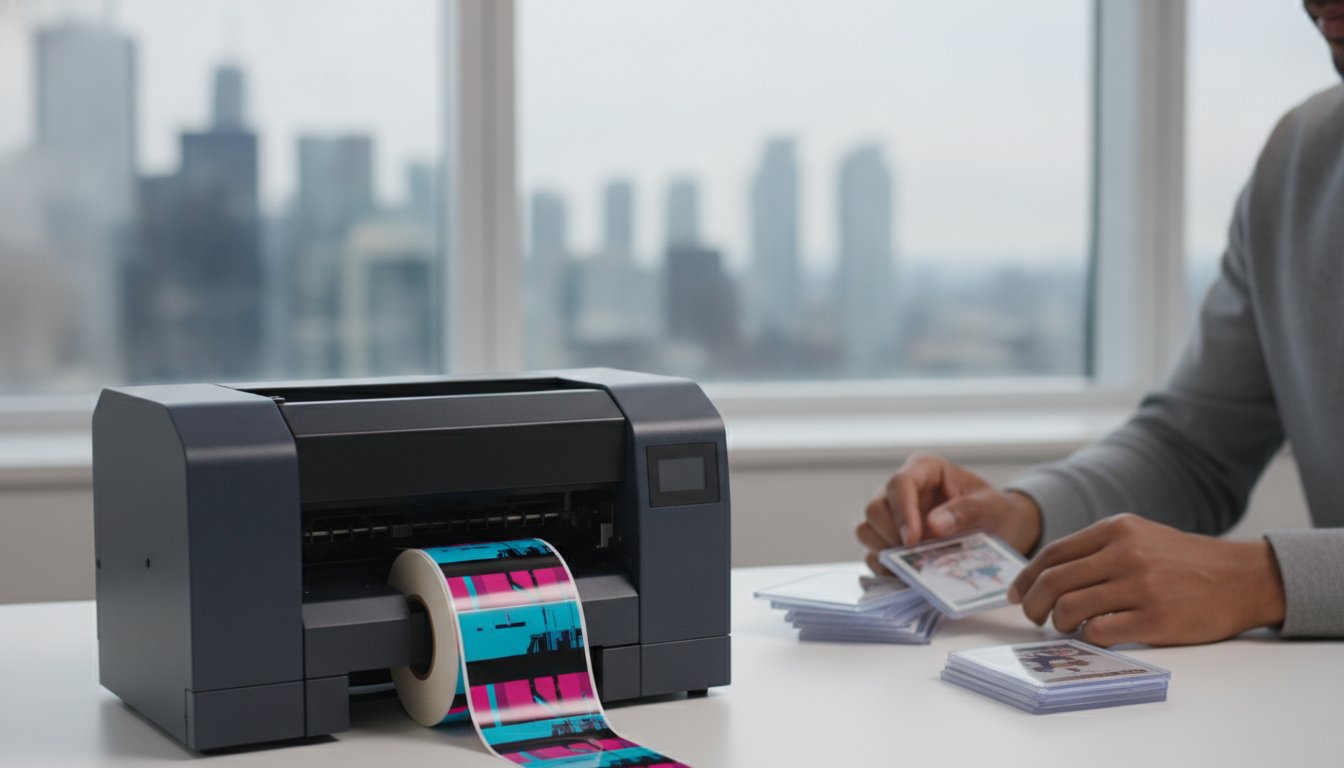
Can your current labelling process survive a decade inside a sealed acrylic slab without fading or off-gassing? Many grading start-ups and high-volume collectors realize that a smudged logo or inconsistent colour matching can immediately undermine the perceived value of a pristine card. If you've struggled with slow production speeds or labels that lose their crispness over time, you aren't alone in seeking a more reliable industrial solution. You need a high-quality Inkjet Card Grading Label that delivers high-resolution results while maintaining archival integrity.
In this article, you'll learn how to produce professional-grade, slab-ready labels in-house using high-resolution inkjet technology. We'll explore the technical specifications required for 1200 DPI text and logos, the importance of choosing BOPP materials that won't damage your assets, and how to streamline your workflow for bulk submissions. We'll also compare different ink types to ensure your branding remains vibrant for years to come. By the end of this guide, you'll understand how to pair the right inkjet hardware with specialized top-coated media to achieve the same premium finish used by the industry's top grading houses.
Key Takeaways
- Discover why archival-safe materials are essential to prevent off-gassing and chemical reactions inside sealed card slabs.
- Learn how to achieve crisp text and vibrant branding by selecting an Inkjet Card Grading Label designed for 1200 DPI resolution and specific ink types.
- Analyse the "baseline and delta" of in-house production versus outsourcing to reduce your per-label costs and eliminate shipping delays.
- Evaluate critical hardware metrics like print speed (ips) and ink capacity to choose the right printer for your specific grading volume.
- Understand the benefits of Canadian-based support and expert adhesive matching to ensure your labels stay securely attached to any slab material.
What is an Inkjet Card Grading Label?
What exactly defines a professional Inkjet Card Grading Label? It isn't a standard piece of paper found in a local stationery shop. It's a high-performance, inkjet-receptive substrate engineered to handle the micro-fine droplets of modern Inkjet printing technology. These labels are designed to display card grades, barcodes, and branding with surgical precision. Because the grading industry relies on trust and visual appeal, the physical label acts as the primary interface between the collector and the grading service.
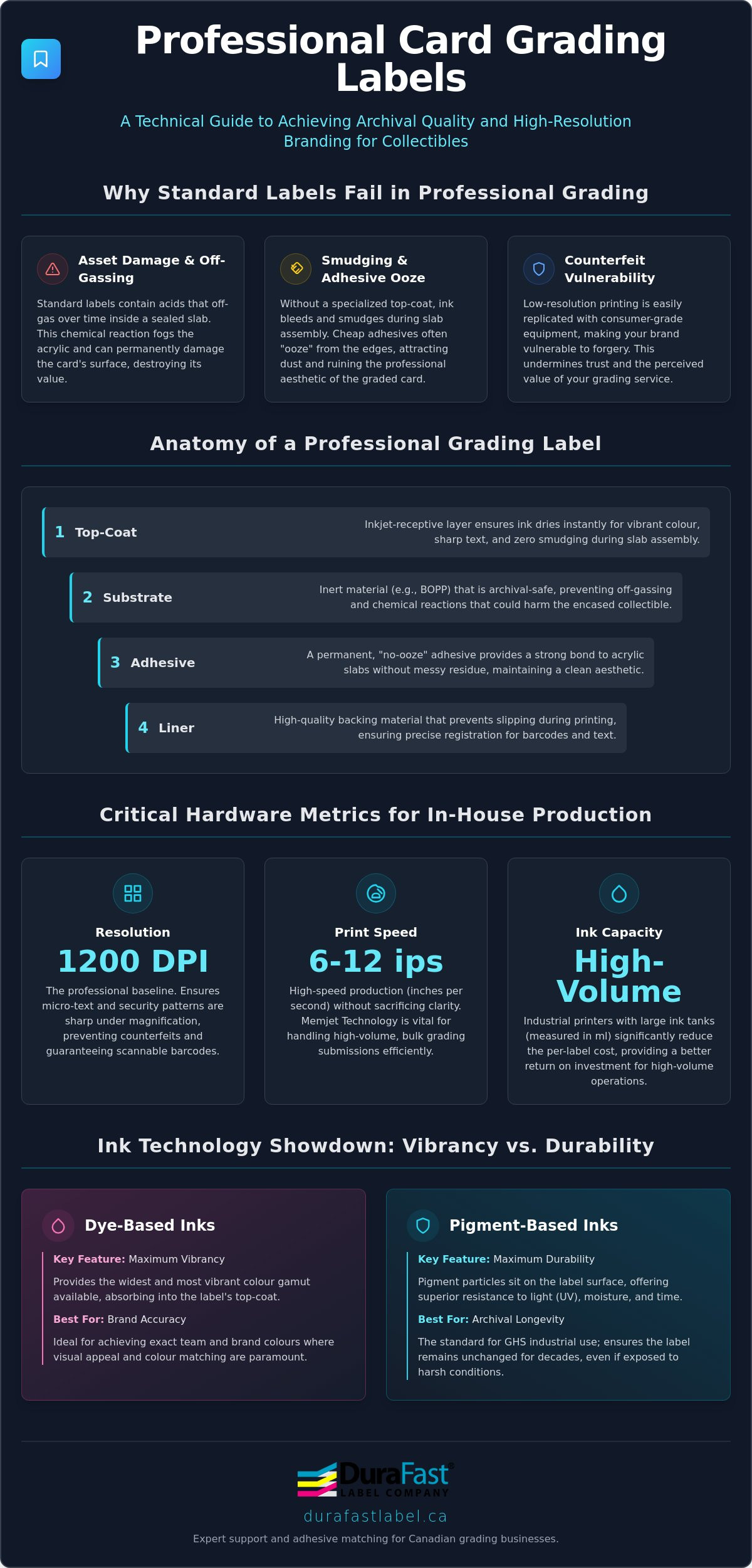
Why do professional graders prioritize archival quality? When a card is sealed inside an acrylic slab, the environment becomes a closed system. Standard labels often contain acids or unstable compounds that can off-gas over time. This off-gassing causes a chemical reaction that fogs the inside of the slab or, in the worst cases, damages the card's surface. Professional grading labels use inert materials to ensure the long-term safety of the asset. This prevents the "clouding" effect that can ruin the value of a high-grade sports or TCG card.
Standard office labels usually fail because they lack a specialized top-coat. Without this layer, the ink sits on the surface, leading to smudges and bleeding text. More importantly, the adhesives on cheap labels often "ooze" from the edges under the pressure of the slab. This creates a sticky residue that attracts dust and ruins the professional aesthetic. High-DPI printing also acts as a primary defence against forgery. When you print at 1200 DPI, the micro-text and intricate logo details become nearly impossible to replicate with consumer-grade equipment.
Anatomy of a Professional Grading Label
The top-coat is the most critical layer. It ensures that ink dries instantly, which is vital when you're moving cards directly into slab assembly. A specialized adhesive provides a permanent bond to the plastic while maintaining a "no-ooze" profile. Finally, the liner must be high-quality to allow for precise registration. If the liner slips during bulk printing, your barcodes will be misaligned, leading to wasted stock and slower production speeds.
The Aesthetic Standard for 2026
Brand consistency is a major differentiator in the current market. Achieving the exact shade for your brand requires a printer and label combination that can handle wide colour gamuts. We're also seeing a shift toward holographic and metallic elements that are compatible with inkjet systems. These features add a premium feel that collectors expect from high-end services. Inkjet technology is the preferred choice for high-detail card grading labels because it offers the highest dots-per-inch (DPI) resolution and the most accurate colour reproduction available for on-demand production.
Technical Specifications: Resolution, Ink Types, and Durability
How do you choose between visual vibrancy and long-term archival safety? In the professional grading industry, the technical profile of your ink and media determines the perceived value of the final product. Dye-based inks are widely recognized for providing the most vibrant colour gamut, making them the preferred choice for sports cards where team colours must be exact. In contrast, pigment-based inks offer superior resistance to light and moisture. While pigment ink is the standard for GHS-level industrial durability, it can sometimes be overkill for a card slab. The main difference between these two chemistries is how they bond with the Inkjet Card Grading Label surface to prevent smudging during the encapsulation process.
Resolution is another non-negotiable metric. Why is 1200 DPI considered the baseline for professional results? High-resolution printing ensures that micro-text and intricate security patterns remain sharp and legible under magnification. This level of detail is essential for preventing counterfeit labels and ensuring that barcodes scan correctly every time. If you need high-speed production without sacrificing this clarity, Memjet Technology offers a significant advantage. It allows printers to maintain high-DPI output at speeds reaching 6 or 12 ips (inches per second), which is vital for businesses handling bulk grading submissions.
When evaluating fiscal responsibility, you must look at the ink cartridge capacity measured in ml. Smaller, entry-level printers often have higher per-label costs because of their limited ink volume. Industrial models with larger tanks provide a better delta in cost-per-print, especially during high-volume runs. Understanding these specifications helps you build a production workflow that is both high-performance and cost-effective.
Ink Chemistry and Slab Safety
Water-enhanced dye inks offer a strategic balance by pairing the vibrancy of traditional dye with improved moisture resistance. This prevents the ink from running if the slab is handled with damp hands. A critical concern for any grader is off-gassing. You must ensure your ink solvents are fully cured before sealing the slab to prevent the plastic holder from fogging over time. If you're unsure which ink set fits your specific slab material, you can always reach out to our technical team for a media compatibility test.
Media Compatibility and Texture
The choice between matte and glossy finishes often comes down to lighting. Glossy labels offer a premium look but can create glare under camera lights during social media reveals. Matte labels provide better legibility in varied lighting conditions. Synthetic BOPP labels are generally superior to paper-based options because they don't tear or yellow, ensuring the grade remains clear for decades. You can explore our specialized inkjet card grading labels to find the exact texture and material that matches your brand's aesthetic.
In-House Printing vs. Outsourcing: A Business Analysis
Should your business continue to rely on third-party print shops, or is it time to bring your production in-house? This is a critical question for grading companies looking to scale. When you analyse the "baseline and delta" of label costs, the financial benefit of in-house production becomes clear. While outsourcing might seem convenient for a small batch of 1,000 labels, the per-unit markup and shipping fees quickly add up. At a volume of 100,000 units, the cost difference between buying pre-printed stock and using your own Inkjet Card Grading Label technology is substantial. By eliminating the middleman, you reclaim your profit margins and gain total control over your inventory levels.
Turnaround time is another area where in-house printing offers a strategic advantage. Relying on an outside vendor often means waiting days or weeks for a shipment to arrive, which stalls your grading queue. If you're handling high-value "1 of 1" cards or limited-edition sports series, you need the flexibility to print a single, customized label on demand. In-house systems allow you to verify every label's alignment and colour accuracy before it's sealed inside the slab. This immediate quality control prevents the frustration of discovering a typo or a smudge only after the encapsulation process is complete.
Calculating Your ROI
To understand the true return on investment, you must look at your technical overhead. This involves factoring in the cost of high-capacity ink cartridges (measured in ml) and bulk label rolls. High-speed printers with faster "ips" (inches per second) ratings significantly reduce the labour hours required for large grading submissions. You can also reduce material waste by using precise digital label cutters that allow you to create custom sizes without ordering expensive new dies for every project. This level of fiscal responsibility ensures your operation remains lean while maintaining a premium output.
Operational Seamlessness
Modern production workflows require the tight integration of hardware and software. You can connect your label printer directly to your card databases to automate the population of grades, player names, and serial numbers. For high-volume environments, the main difference between a bottleneck and a smooth workflow is the use of internal label unwinders. These components protect your Inkjet Card Grading Label stock from environmental debris and ensure continuous, tension-controlled feeding during long print runs. To find the right fit for your facility, you can browse our full range of colour label printers designed for industrial reliability.
Implementation: Selecting the Right Hardware and Software
How do you determine which equipment will best support your specific grading volume? The main difference between entry-level and industrial inkjet printers lies in their throughput and ink capacity. While a desktop model serves as a reliable baseline for boutique operations, industrial units provide the delta needed for high-speed, continuous production. For bulk grading, print speed measured in ips (inches per second) is a critical metric. A printer capable of 12 ips can process thousands of Inkjet Card Grading Label units in a fraction of the time required by a standard office device, ensuring your workflow remains uninterrupted during peak submission periods.
Integrating your hardware with professional software like Loftware or Bartender allows for seamless batch label generation. These platforms pull data directly from your grading database; this ensures that every player name, card grade, and barcode is perfectly synced without manual entry errors. To maintain this level of precision, regular maintenance is essential. Keeping your printheads clean prevents banding, which can obscure fine text or make barcodes unreadable. If you're ready to upgrade your facility, you can consult with our hardware specialists to find a tailored solution.
Recommended Printer Models for Card Grading
The VIPColor VP series is a top choice for massive card collections because it utilizes Memjet technology to achieve high speeds without losing clarity. If your focus is on precision and colour accuracy for boutique grading, the Epson ColorWorks series offers unmatched reliability and vibrant output. For businesses that need to individualise their label sizes and shapes, the Afinia L-series provides the versatility required for varying slab dimensions. You can find more detail on industrial performance in our guide on the VIPColor VP550 Memjet Color Label Printer: The Ultimate Business Guide for 2026.
Essential Accessories
To achieve operational seamlessness, you should consider adding external label unwinders and rewinders to your setup. External unwinders allow you to use large-diameter rolls, reducing the frequency of media changes. Label rewinders are equally important as they neatly organize your printed Inkjet Card Grading Label stock for use with automatic applicators. These accessories help maintain proper tension and protect your labels from environmental debris, which is vital for maintaining a professional, slab-ready finish.
The DuraFast Advantage for Canadian Grading Businesses
What is the primary logistical hurdle for a growing Canadian grading firm? Often, it's the friction of sourcing specialized media from international vendors. Sourcing your inkjet card grading label within Canada reduces hurdles like cross-border shipping delays, unpredictable duties, and currency fluctuations. This local availability ensures that your production line never grinds to a halt due to a missing shipment of media or ink. We prioritize inventory reliability to ensure a consistent supply of consumables, allowing you to focus on your grading accuracy rather than your supply chain.
Expert consultation is the baseline of our supportive approach. We help you match your specific card slab type to the correct adhesive chemistry. Whether you're using standard acrylic holders or specialized UV-resistant plastics, we ensure the bond is permanent without the risk of adhesive "ooze" that can damage high-value assets. We also provide custom media options, tailoring label sizes to unique "one-touch" or toploader dimensions. This flexibility allows you to offer premium labelling for every type of card protection in your inventory.
Strategic Partnership for Growth
Scaling from a hobbyist operation to a professional grading entity requires a strategic partner that understands industrial demands. We assist in this transition by providing hardware that grows with your volume, from entry-level units to high-ips Memjet systems. Beyond standard BOPP, we offer access to specialized textile and RFID labels for premium card storage and automated tracking solutions. If your facility utilizes hybrid technology, you can also find the right thermal transfer ribbons for your operation to maintain consistency across all your marking processes.
Compliance and Quality Assurance
All our materials meet Canadian business standards for durability and archival safety. We realize that grading environments aren't always pristine cleanrooms. Therefore, we test our labels for resistance to environmental debris in warehouse settings to ensure the adhesive remains uncontaminated during the application process. This commitment to quality assurance protects your brand's reputation and the collector's long-term investment. Contact us to realize your in-house card grading production goals and secure a reliable, high-performance supply chain today.
Optimize Your In-House Grading Workflow
Transitioning to in-house production is about more than just cost savings; it's about taking total control over your brand's quality and operational speed. By selecting the right Inkjet Card Grading Label and pairing it with high-resolution hardware, you ensure that every card you slab meets the aesthetic and archival standards collectors expect. You've seen how the delta between entry-level and industrial performance can transform your turnaround times, allowing you to process bulk submissions with confidence.
As an authorized dealer for VIPColor, Epson, and Afinia, DuraFast Label Company provides specialized media that is rigorously tested for card slab compatibility. Our Canadian-based technical support team is ready to help you navigate hardware selection and media matching to prevent common pitfalls like off-gassing or adhesive ooze. Shop Inkjet Card Grading Labels at DuraFast Label Canada and start building a more efficient, professional production line today. Taking charge of your labelling process is a strategic move that pays dividends in both fiscal responsibility and customer trust.
Frequently Asked Questions
Can I use a standard home inkjet printer for card grading labels?
Standard home printers typically lack the specialized hardware and resolution required for archival-grade results. While they might produce a basic image, they don't support the high-DPI micro-text or the top-coated synthetic media necessary for long-term slab integrity. Using a professional Inkjet Card Grading Label system ensures your branding won't smudge or fade, providing the industrial reliability that collectors expect from a premium service.
What is the best ink type for labels that will be stored in plastic slabs?
Pigment-based inks are generally considered the gold standard for long-term durability and moisture resistance. However, water-enhanced dye inks are an excellent alternative when you need to achieve vibrant, precise colour matching for sports card branding. The most critical factor is ensuring the ink solvents are fully cured before encapsulation to prevent chemical off-gassing from fogging the plastic holder over time.
How do I prevent my card grading labels from fading over time?
Longevity is achieved by pairing UV-resistant pigment inks with high-quality synthetic BOPP media. Unlike standard paper labels that yellow and degrade, synthetic materials maintain their crispness and white point for decades. This combination creates a professional Inkjet Card Grading Label that resists light exposure and environmental changes, protecting the perceived value of the graded asset for the long haul.
Do I need a special cutter for custom-shaped card grading labels?
Digital label cutters offer the most flexibility if you frequently change slab dimensions or design custom "1 of 1" labels. These systems allow you to cut any shape on-demand without the expense of ordering physical dies for every new project. This technology streamlines your in-house production and allows you to adapt to new holder styles, such as magnetic one-touch cases, with zero downtime.
What is the average cost-per-label when printing in-house?
Your per-label cost is primarily determined by the ink cartridge capacity, measured in ml, and the volume of your print runs. Industrial printers with larger ink tanks offer a much better delta in cost-per-print than entry-level desktop units. By bringing production in-house, you eliminate the markups and shipping fees associated with outsourcing, which significantly improves your overall profit margins on bulk submissions.
Are there specific labels for magnetic one-touch holders vs. standard slabs?
Different holder materials often require specialized adhesives to ensure a permanent bond without edge ooze. Magnetic one-touch holders have different surface energies than standard sonic-welded slabs, so it's vital to use a "no-ooze" adhesive that won't migrate under pressure. Matching the correct adhesive to your specific slab type is a step we often assist with during technical consultations to ensure operational seamlessness.
How does Memjet technology benefit card grading label production?
Memjet technology provides a massive advantage by delivering high-speed output at 6 or 12 ips without sacrificing micro-text clarity. This allows you to maintain 1200 DPI resolution even during high-volume production cycles. For a grading business, this means you can process thousands of cards per day while ensuring every barcode and grade remains perfectly sharp and legible.
Can I print holographic or metallic elements with an inkjet label printer?
You can achieve premium security effects by using specialized inkjet-receptive metallic or holographic media. When you print over these substrates with a high-resolution inkjet system, the results mimic the sophisticated security features used by the industry's largest grading houses. This capability allows boutique firms to offer a high-end aesthetic that deters counterfeiting and enhances the visual appeal of their slabs.