VIPColor VP550 vs VP660 vs VP750: Choosing the Right Model
5th Jun 2026
Could your reliance on outsourced labels be the single biggest bottleneck in your production line? Many growing businesses struggle with the high costs and logistical delays of pre-printed inventory, often realizing that a significant portion of their stock becomes obsolete before it's ever used. You likely already know that bringing production in-house is the logical next step for better control and lower costs. However, when comparing the VIPColor lineup, the technical nuances can be confusing. What is the difference between VIPColors VP550 and VP660 and VP750 printers, and which one actually fits your daily workflow?
This article provides the clarity you need to make an informed investment. We'll explore the technical specifications, ink durability, and production capacities of the VIPColor VP series to identify the perfect labelling solution for your business. Whether you need the 8 inches per second speed of the entry-level VP550 or the high-volume industrial capacity of the VP750, we'll help you find the right balance. By the end, you'll understand how to achieve professional 1600 dpi quality and water-resistant results for chilled or damp environments without overspending on features you don't require.
Key Takeaways
- Understand how Memjet technology provides consistent 1600 x 1600 dpi resolution, allowing you to achieve professional-grade results regardless of the model you choose.
- Learn why the VP550 serves as a versatile entry point for boutique Canadian brands that require flexible media handling through an external unwinder.
- Identify exactly what is the difference between VIPColors VP550 and VP660 and VP750 printers regarding print speeds, ink capacity, and internal versus external unwinder designs.
- Evaluate how water-enhanced dye inks protect your labelling against condensation and moisture, making these printers suitable for chilled food and beverage applications.
- Gain insights into choosing a model that aligns with your monthly production volume to maximize cost-efficiency and minimize label waste.
Understanding the VIPColor VP Series and Memjet Technology
Are you tired of waiting weeks for label deliveries while your inventory sits idle? Transitioning to in-house production with colour label printers allows you to print exactly what you need, when you need it. This shift eliminates the waste of obsolete pre-printed stock and significantly lowers your cost-per-label. At the heart of this transition for many Canadian enterprises is the VIPColor VP series, a lineup of industrial printers that utilize stationary printhead technology to achieve exceptional output speeds.
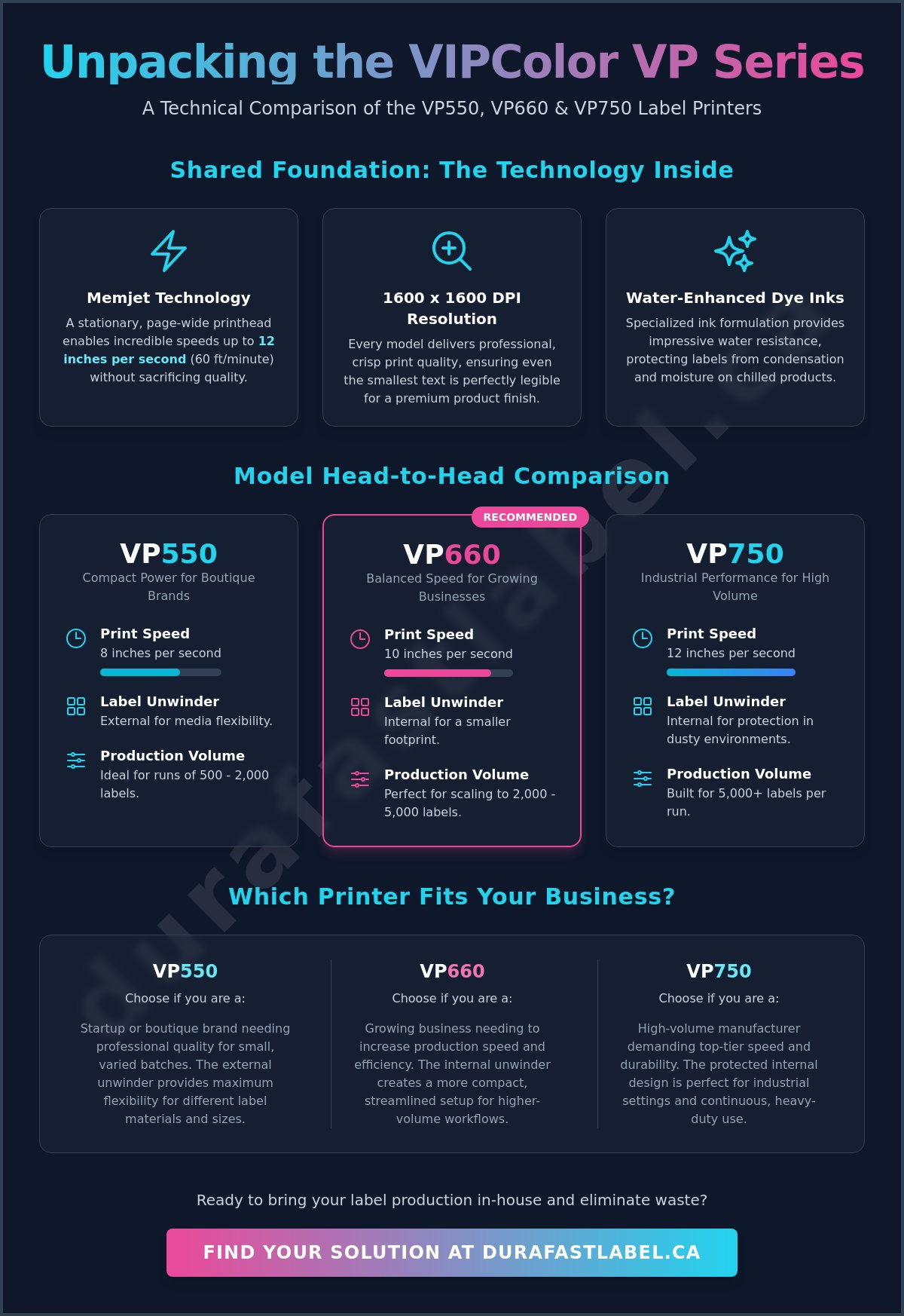
One common question for businesses looking to scale is: what is the difference between VIPColors VP550 and VP660 and VP750 printers? While their physical footprints and speeds vary, they share a core DNA of high-resolution performance. Every model in this series delivers a crisp 1600 x 1600 dpi resolution. This ensures that even the smallest text on a health and beauty label remains perfectly legible, providing a professional finish that rivals traditional flexographic printing.
The Power of Memjet Inkjet in 2026
The series relies on Memjet printing technology, which uses a page-wide stationary printhead. Unlike traditional inkjet printers where the head moves back and forth, these units remain still while the media moves underneath. This allows for speeds up to 12 inches per second, which equates to 60 feet per minute. This mechanism is the gold standard for prime product labelling because it maintains quality even at high velocities. Beyond speed, these printers prioritize fiscal responsibility through individual ink cartridges. You only replace the specific colour that runs out. This prevents the ink waste common in tri-colour systems and ensures your operational costs remain predictable.
Dye vs. Enhanced Dye Ink: What You Need to Know
What sets the VP550, VP660, and VP750 apart from older inkjet generations is the use of water enhanced dye inks. Standard dye inks often smudge or run when exposed to moisture; however, these enhanced formulations provide impressive water resistance without the higher cost of pigment systems. This makes them ideal for Canadian businesses producing chilled food, craft beverages, or personal care products. If your labels face condensation or damp storage, these inks ensure your branding remains professional and intact. Understanding this ink technology is a key part of realizing what is the difference between VIPColors VP550 and VP660 and VP750 printers compared to entry-level desktop models. These models offer the durability required for real-world environmental challenges.
The VIPColor VP550: Compact Power for Small Batch Production
The VIPColor VP550 serves as the baseline model for startups and boutique Canadian brands requiring professional in-house production. This unit utilizes Memjet Technology to deliver high-resolution results on a desktop scale. The main difference between this model and the more advanced units in the series is the physical configuration of the media feed. The VP550 features an external label unwinder, which allows for greater flexibility when handling various roll diameters or specialized materials. When researching inkjet printing technologies, businesses often select this model to maintain a 1600 x 1600 dpi standard while managing a smaller initial equipment footprint.
A primary consideration for product selection is understanding what is the difference between VIPColors VP550 and VP660 and VP750 printers in terms of production volume. The VP550 is engineered for runs of 500 to 2,000 labels, making it appropriate for niche product launches or seasonal SKUs. By moving away from outsourced printing, you avoid the waste associated with obsolete pre-printed stock and maintain the ability to update label data instantly. Other than this specific volume focus, the printer maintains the same print quality standards found in the larger industrial models. The external label unwinder is also beneficial for operators who need to monitor the media roll throughout the print run, as it facilitates easier access to the media path.
VP550 Technical Highlights
Technical specifications for the VP550 include a print speed of up to 8 ips. To support operational longevity, the printer uses individual 200ml ink tanks, which reduce the frequency of cartridge changes compared to standard office inkjet units. This model is compatible with a broad range of inkjet labels, including matte and high-gloss finishes. The use of water enhanced dye inks ensures that labels remain legible and professional even when exposed to moisture or condensation, which is a critical requirement for many Canadian retail environments.
Ideal Use Cases for the VP550
This model is particularly effective for craft breweries that require water-resistant bottle labels for chilled environments. Specialty food producers also utilize the VP550 to manage frequent SKU changes for artisanal batches of sauces or spices. For a detailed technical overview, you can reference our VIPColor VP550 Memjet Color Label Printer: The Ultimate Business Guide for 2026. If you require assistance determining if this baseline model meets your 24-month growth projections, you can speak with our technical team at DuraFast Label Company Canada for a factual assessment of your labelling requirements.
The VIPColor VP660: Balancing Speed and Internal Versatility
When your production requirements exceed the capacity of the baseline VP550, the VIPColor VP660 serves as the logical step-up for growing Canadian enterprises. The main difference between the VP550 and the VP660 is the transition from an external to an internal label unwinder. This physical design change allows the VP660 to maintain a more compact footprint while protecting the media from environmental debris and dust common in light industrial centres. Other than this structural change, the VP660 offers a significant performance delta, reaching print speeds of up to 12 ips. This speed increase ensures that medium-volume runs are completed 50 percent faster than on the entry-level unit, maintaining operational seamlessness as your order volume grows.
For many business owners, understanding what is the difference between VIPColors VP550 and VP660 and VP750 printers is essential for managing fiscal responsibility. While the print quality remains a consistent 1600 x 1600 dpi, the VP660 provides a lower cost-per-label over time due to its larger ink capacity. The unit utilizes 250ml cartridges, whereas the VP550 uses 200ml tanks. This increased volume reduces the frequency of replacements during longer production cycles. The only difference in ink technology is the volume handled; the VP660 continues to use water enhanced dye inks to ensure durability against condensation and moisture.
Why the VP660 is the Workspace Optimizer
In production areas where space is limited, the internal unwinder of the VP660 provides a distinct logistical advantage. By housing the label roll within the chassis, the machine eliminates the need for the additional desk real estate required by external components. This design is particularly beneficial in "dusty" environments, as the enclosed path prevents contaminants from reaching the Memjet Technology printhead. These technical advantages of inkjet printing allow the VP660 to maintain precise registration and high-colour graphics even at its maximum 12 ips velocity.
Enhanced Durability Features
The VP660 is engineered with reinforced internal components to support higher duty cycles than the baseline model. This rugged construction is necessary when printing on specialized media, such as weatherproof and UL-certified labels, which may require more robust handling mechanisms. The advanced media transport system ensures consistent output at 60 feet per minute, preventing the skewing that can occur in smaller desktop units. If your facility requires a reliable, space-conscious solution that bridges the gap between startup and enterprise-level output, the VP660 provides the necessary technical specifications to scale effectively within the Canadian market.
The VIPColor VP750: Industrial-Grade Performance for High-Volume Labelling
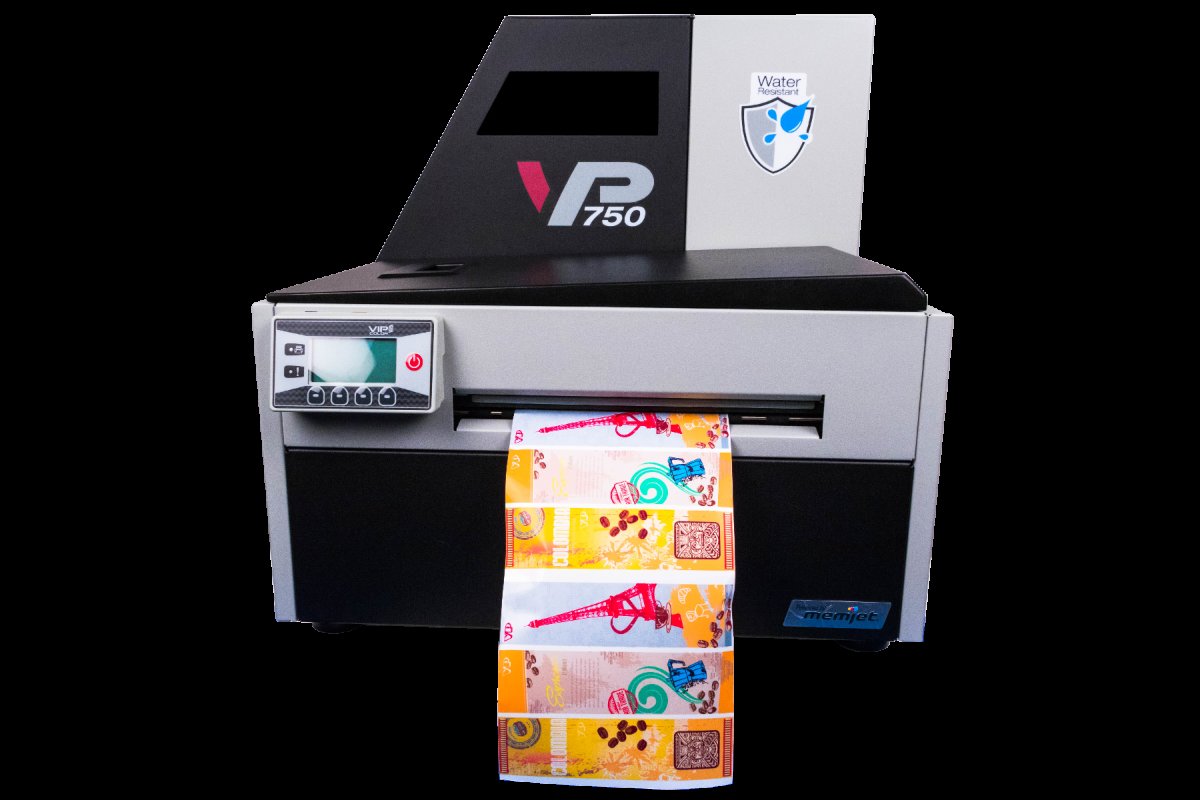
The VIPColor VP750 is the flagship model in the series, designed specifically for 24/7 industrial production environments. While the VP550 and VP660 address small and medium-batch requirements, the VP750 is engineered for continuous, enterprise-level output. The main difference between the VP660 and the VP750 is the physical capacity of the internal label unwinder and the structural material of the chassis. By utilizing a reinforced metallic frame, the VP750 provides the stability required for high-velocity, roll-to-roll workflows that characterize large-scale manufacturing facilities.
When evaluating what is the difference between VIPColors VP550 and VP660 and VP750 printers, high-volume users must prioritize the total cost of ownership (TCO) and daily throughput. The VP750 excels in these metrics by maximizing uptime through advanced printhead maintenance systems and larger media roll support. This model transitions the labelling process from a periodic task to a primary production component, allowing Canadian businesses to achieve a lower cost-per-label through increased efficiency and reduced manual intervention.
Technical Specifications for 12 ips Throughput
The VP750 achieves a maximum print speed of 12 ips, or 60 feet per minute. While this matches the velocity of the VP660, the only difference in media handling is the VP750's support for rolls with an 8-inch outside diameter (OD). Other than this increase in roll size, which significantly extends the time between media changes, the printer maintains the same 250ml ink capacity found in the mid-tier model. This 8-inch OD capacity is essential for companies printing 10,000 or more labels daily, as it ensures the machine can operate for longer durations without operator assistance.
Industrial Scalability and Hardware Reliability
To ensure operational longevity in factory settings, the VP750 features a built-in metallic chassis that protects sensitive Memjet Technology components from vibrations and environmental debris. This rugged construction makes the unit a preferred choice for industrial label printers applications where plastic-housed units may not sustain the required duty cycles. Beyond physical durability, the VP750 offers enhanced connectivity for enterprise-level networks, facilitating seamless integration with ERP systems for automated marking and distribution. If your production targets require maximum throughput and industrial reliability, contact DuraFast Label Company Canada for a technical assessment and a custom quote for the VP750 system.
Direct Comparison: Choosing the Right VIPColor Printer for Your Business
Selecting the ideal hardware for your production line is a strategic decision that impacts your operational seamlessness for years to come. While all three models share the same Memjet DNA and 1600 dpi resolution, the practical differences in their physical architecture and throughput dictate which one will provide the best return on investment. What is the difference between VIPColors VP550 and VP660 and VP750 printers when you look at the daily grind of a Canadian warehouse? It's the difference between managing a flexible startup and maintaining a high-velocity industrial facility with thousands of units moving through the supply chain.
VP Series Comparison Matrix
The following table outlines the key hardware deltas to help you distinguish between these similar units. While the print quality remains the gold standard across the range, the performance metrics vary to suit different scales of operation. All three models utilize high-capacity VIPColor ink cartridges, ensuring that your brand colours remain vibrant and consistent regardless of which machine you use for your specific labelling tasks.
| Specification | VP550 | VP660 | VP750 |
|---|---|---|---|
| Max Print Speed | 8 ips | 12 ips | 12 ips |
| Unwinder Design | External | Internal | Internal |
| Ink Tank Capacity | 200 ml | 250 ml | 250 ml |
| Max Roll OD | Flexible | 6-inch | 8-inch |
Which Unit Fits Your Workflow?
The VP550 is the logical choice for startups or boutique brands focusing on runs between 500 and 2,000 labels. Its external unwinder allows for quick media swaps, providing the flexibility needed for niche product launches. If you have limited desk real estate and your production is scaling, the VP660 offers a space-saving internal unwinder and a 50 percent increase in print speed. This model protects your media from environmental debris in busy production centres, making it a rugged workspace optimizer. Identifying what is the difference between VIPColors VP550 and VP660 and VP750 printers helps you avoid over-investing early or under-equipping for your growth.
For high-volume enterprises printing over 10,000 labels daily, the VP750 pays for itself through maximum throughput and industrial-grade reliability. Its ability to handle large 8-inch rolls means fewer interruptions and lower labour costs over time. We recommend assessing your projected growth over the next 24 months before making a final selection. If you're ready to see these machines in action or need a tailored cost-per-label analysis, contact DuraFast Label for a custom quote or sample kit today.
Empowering Your Production with the Right VIPColor Solution
Choosing between these models depends on your current volume and your growth projections for the next few years. Whether you start with the flexible VP550 for small batches or scale to the high-throughput VP750, you're investing in a system that eliminates the waste of obsolete inventory. Understanding what is the difference between VIPColors VP550 and VP660 and VP750 printers allows you to select a machine that balances fiscal responsibility with professional 1600 dpi output. You'll achieve water-resistant results that withstand damp environments without the complexities of traditional outsourced printing. The right choice is within reach.
As an Authorized VIPColor Canadian Partner, DuraFast Label provides expert technical support for all VP models and maintains a comprehensive inventory of VIPColor inks and labels to keep your lines moving. If you're ready to lower your cost-per-label and take full control of your packaging process, Request a Professional Labelling Consultation today. We're here to help you find the most efficient path forward for your business as you grow.
Frequently Asked Questions
Do the VP550, VP660, and VP750 use the same ink?
Yes, all three models utilize the same water-enhanced dye ink technology to achieve impressive moisture resistance. However, the physical cartridge sizes differ between the units. The VP550 uses 200ml ink tanks, while the VP660 and VP750 utilize larger 250ml cartridges. Using these genuine individual ink cartridges ensures you only replace the specific colour you've used, supporting your goals for fiscal responsibility and operational seamlessness.
Can I print GHS-compliant labels with these VIPColor printers?
These specific VIPColor models are not recommended for GHS BS5609 chemical labelling because they use dye-based inks. GHS compliance for maritime environments typically requires pigment-based inks that can pass rigorous seawater immersion tests. If your business requires GHS-compliant solutions, you should explore pigment-ink models like the Afinia L502. These dye-based units are better suited for prime product labelling in the food, beverage, and cosmetic industries.
What is the difference between an internal and external unwinder?
Understanding what is the difference between VIPColors VP550 and VP660 and VP750 printers often starts with the unwinder location. An external unwinder sits outside the printer chassis, offering more flexibility for various roll sizes. In contrast, an internal unwinder houses the label roll inside the machine. This internal setup is preferred for dusty environments or centres with limited space because it protects the media from environmental debris and reduces the physical footprint.
How often do I need to replace the Memjet printhead on these models?
The Memjet printhead is a consumable component, and its lifespan depends on your specific ink throughput and maintenance habits. Most users realize a lifespan of several litres of ink per head before a replacement is necessary. Regular automated cleaning cycles and using high-quality media will help maximize the longevity of the head. It's a good practice to keep a spare printhead in your inventory to prevent any disruption to your production schedule.
Are the labels printed on the VP750 fully waterproof?
Labels printed on the VP750 are highly water-resistant but not fully waterproof in the same way as thermal transfer or pigment-based labels. The water-enhanced dye ink is specifically designed to handle condensation and dampness, making it ideal for chilled beverages or frozen foods. If your application involves total submersion or exposure to harsh chemicals, you may need to apply a laminate or consider a pigment-based printer to ensure your branding remains intact.
Can these printers handle different label shapes and sizes?
Yes, these printers are designed to handle a wide variety of label shapes and sizes, including die-cut, continuous, and fanfolded media. This versatility is a key factor when considering what is the difference between VIPColors VP550 and VP660 and VP750 printers for your specific production needs. You can easily adjust the sensors to recognize different gaps or black marks, ensuring your branding remains consistent and professional across all your different product lines.
Is there a specific software required to run VIPColor printers in Canada?
These printers operate using standard Windows drivers, which means you can print from almost any design application you currently use. Most Canadian businesses prefer professional labelling software like Bartender or Loftware NiceLabel to manage barcodes and variable data effectively. These programs offer the best control over the 1600 dpi output and help you organize your production workflow more efficiently. You don't need proprietary software to achieve high-quality results.