How to Optimize Your Label Workflow for Faster Production
3rd Dec 2025
In today’s fast-paced manufacturing and packaging environments, speed is everything. The quicker your labels are designed, printed, and applied, the more competitive and profitable your operation becomes. Bottlenecks in labeling — whether in design approval, printer setup, or manual application — can slow entire production lines, increase waste, and drain valuable time.
At DuraFast Label Company, we’ve worked with countless businesses that struggled with these same issues. The good news is that with the right tools, systems, and label automation strategies, you can transform your workflow into a streamlined, precise, and scalable process. From optimizing label design software to integrating label applicators, every small improvement adds up to measurable gains in speed and accuracy.
Efficient labeling isn’t just about working faster — it’s about creating a workflow that works smarter. Let’s explore how you can refine every stage of your labeling process to save time, reduce waste, and deliver professional results at scale.
Understanding the Label Workflow: Where Bottlenecks Begin
Every label production line follows the same basic steps: design, printing, application, and inspection. The problems arise when one of these stages isn’t aligned with the others.
Many businesses print labels separately from packaging or rely on manual handling for application, which can lead to misalignment, downtime, or rework. If you’re printing on demand, even a small printer calibration error can result in hundreds of wasted labels.
A truly optimized label workflow synchronizes your design software, printers, and label applicators into one continuous system. This approach removes unnecessary steps, standardizes data, and ensures every label is printed and applied exactly when and where it’s needed.
Step 1: Simplify Label Design and Data Input
The first step toward faster labeling is reducing complexity at the design stage. If your team creates new templates for every product or label type, it’s a signal your system needs streamlining.
Centralize Your Label Templates
Using professional design software like NiceLabel or BarTender helps standardize templates across your entire organization. Templates can include pre-set fields for product names, barcodes, dates, and lot numbers, ensuring uniformity and reducing rework.
Automate Data Integration
Manually entering data is one of the most common time wasters in labeling operations. By connecting your label design software to your ERP, POS, or inventory management system, label information can populate automatically. This automation ensures consistent data and eliminates errors caused by manual typing.
Version Control
Centralized templates also mean design changes can be rolled out instantly. If your compliance team updates a safety label, for instance, it automatically syncs across every workstation — ensuring consistency and avoiding downtime caused by outdated versions.
Step 2: Optimize Printer Setup and Calibration
A perfectly designed label is worthless if your printer isn’t calibrated correctly. Misaligned labels, faded text, or slow print speeds can cost hours of rework.
Regular Calibration
Each printer model, such as the GoDEX or Epson series, has specific calibration requirements. Regularly calibrating ensures the printhead applies heat and ink correctly for crisp images and accurate label placement.
Use Quality Supplies
High-quality labels and ribbons prevent printhead wear and keep your system running smoothly. Inferior materials cause jams, residue buildup, and inconsistent results. At DuraFast, we stock a wide range of label rolls designed for reliability under continuous production.
Printer Maintenance
Schedule printhead cleaning and roller replacement at regular intervals. Clean equipment runs faster, produces better results, and experiences fewer breakdowns.
Step 3: Introduce Automation with Label Applicators
This is where the biggest leap in efficiency happens. Automated label applicators eliminate manual handling and bring consistency to every label placement.
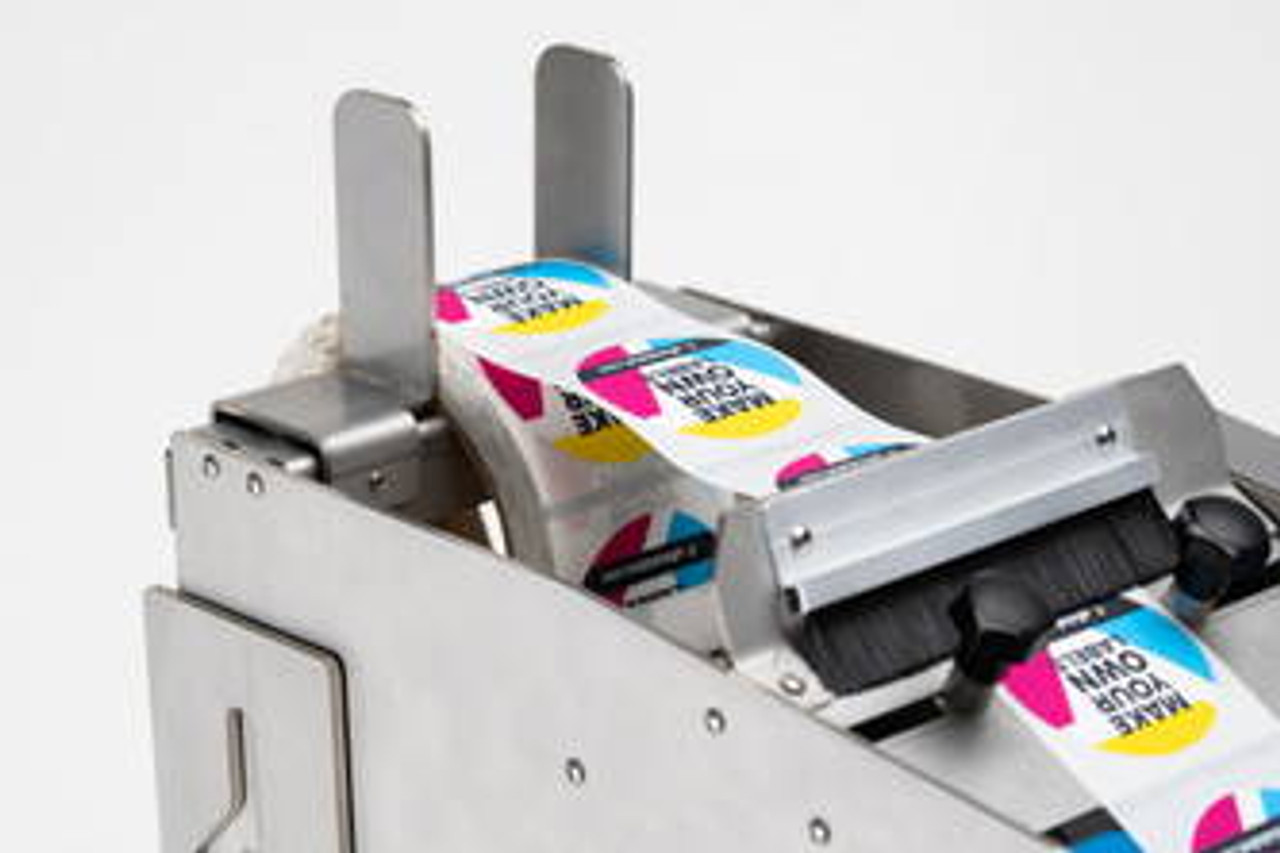
Instead of having operators manually align and stick labels, applicators position and apply them automatically, at precise angles and speeds that match your production line.
How Label Applicators Improve Speed
Automated applicators apply hundreds or even thousands of labels per hour with pinpoint accuracy. By integrating directly into your packaging conveyor or product feed, they ensure labels are applied consistently and efficiently.
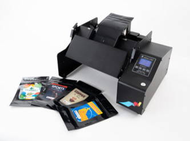
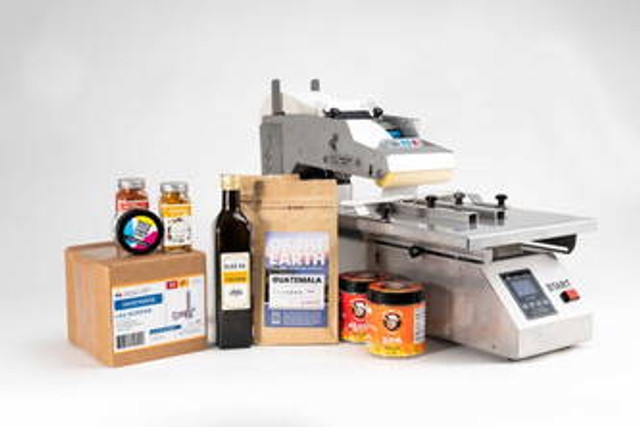
A leading model like the Afinia AP200 Pouch Label Applicator is perfect for flexible packaging, while the Afinia AF200 Flat Package Label Applicator handles flat products and boxes with professional precision.
Semi-automatic bottle applicators are among the most popular labeling solutions because they offer an ideal balance of speed, control, and versatility. Models like the Afinia A200 Semi-Automatic Bottle Label Applicator allow operators to apply perfectly aligned labels to cylindrical containers with minimal effort, making them a favorite for beverage, cosmetic, and specialty product manufacturers. Engineered for efficiency, these systems handle a wide range of label sizes, reduce operator error, and integrate easily with barcode printers for faster, more consistent production. Learn more about the Afinia A200 Semi-Automatic Bottle Label Applicator
Both systems are engineered to minimize downtime, handle multiple label sizes, and sync with printers for fully automated operation.
Integration with Printers
Pairing a printer directly with your applicator creates a seamless print-and-apply system. As products move through the line, labels print in real time and are applied instantly — eliminating the lag between printing and labeling. A great example of this is the Godex ZX1000 Bottle Applicator with the ZX1200i Industrial Thermal Transfer Label Printer, where the barcode printer and applicator are fully integrated to print and apply labels to bottles in one smooth, automated step. Learn more about the Godex ZX1000 Bottle Applicator with ZX1200i Printer
ROI from Automation
While the upfront cost of an applicator can seem significant, the return on investment is fast. Reducing labor, reprints, and mislabeling pays off within months. Plus, faster throughput means you can take on larger orders with the same staffing levels.
Step 4: Streamline Label Storage and Inventory
Optimizing label workflow isn’t just about machines — it’s about organization. Disorganized label storage can slow down even the most automated system.
Keep labels sorted by SKU, size, and printer compatibility. Clearly mark each roll and avoid mixing label types in the same storage area. Using barcoded bins or racks helps track stock levels and prevent downtime due to missing supplies.
Proper storage also prevents material degradation. Labels should be kept in a clean, dry environment to maintain adhesive strength and print quality.
Step 5: Implement a Preventive Maintenance Schedule
Downtime kills efficiency. Preventive maintenance across your printers and applicators ensures your line runs without interruption.
Routine Inspections
Check for signs of ribbon residue, adhesive buildup, or worn rollers weekly. These small checks prevent major stoppages later.
Software Updates
Keep printer and applicator firmware up-to-date. Manufacturers often release performance enhancements or compatibility improvements that can speed up operation and improve print accuracy.
Backup Equipment
For production-critical environments, having a backup printer or spare applicator ensures an uninterrupted workflow. Redundancy may seem like an added cost, but it’s an insurance policy against lost production time.
Advanced Optimization: Real-Time Monitoring and Analytics
The future of labeling lies in data-driven insights. Modern label management systems allow you to monitor printer activity, label usage, and throughput in real time.
For instance, DuraFast helps businesses in Canada implement systems that track every label printed — who printed it, when, and on which machine. This data not only improves accountability but also identifies inefficiencies that might otherwise go unnoticed.
When combined with predictive maintenance alerts, analytics tools can notify you before an issue disrupts production. This level of transparency allows managers to make informed, proactive decisions.
Safety, Compliance, and Quality Control
Speed is only valuable when it doesn’t compromise quality. Labels are critical to compliance in industries such as food production, chemicals, and healthcare.
An optimized label workflow ensures that each label is legible, placed correctly, and contains the right information — from batch codes to expiry dates. Automated verification systems can use scanners or cameras to inspect labels on the fly, ensuring each product leaving your facility is compliant and professional.
For example, pairing automated verification with label applicators like the Afinia AF200 eliminates human error and guarantees every product is ready for shipment.
The Cost of Inefficiency
Consider the cumulative loss of just five seconds per labeling operation across 10,000 units — that’s nearly 14 hours of wasted time. Over a month, it becomes hundreds of hours lost to inefficiency.
Label waste compounds the problem. Misaligned or unreadable labels force reprints, consume materials, and create rework that halts production lines. Optimizing your label workflow eliminates these invisible costs, turning labeling from a bottleneck into a competitive advantage.
Case Study: How Automation Transformed a Packaging Line
A food manufacturer partnered with DuraFast Label Company to overhaul its labeling process. Previously, workers manually applied labels to each pouch, achieving about 400 packages per hour with frequent misalignment issues.
By installing an Afinia AP200 Pouch Label Applicator and integrating it with their existing thermal printer, production jumped to over 1,200 perfectly labeled pouches per hour. The company also reduced labor costs by 30% and cut rework to nearly zero. Within four months, the automation investment had fully paid for itself.
This transformation wasn’t just about machines — it was about designing a workflow built for speed, precision, and scalability.
Future-Proofing Your Labeling Operations
Labeling systems will continue evolving toward full automation and intelligent integration. The next frontier involves AI-powered systems that predict maintenance needs, auto-calibrate printers, and self-adjust applicator pressure for different product surfaces.
At DuraFast, we already see forward-thinking companies embracing this future. They’re implementing modular systems that allow upgrades without total replacement, ensuring long-term flexibility and cost savings.
By adopting these tools now, your business positions itself ahead of the curve — ready for the next generation of digital manufacturing.
Fast Labels, Faster Business
A smooth labeling workflow doesn’t just accelerate production; it enhances brand consistency, reduces waste, and frees up your staff for higher-value tasks.
By investing in the right equipment, such as label applicators, optimizing your design and data workflows, and maintaining your hardware, you build a process that scales effortlessly with demand.
At DuraFast Label Company, we specialize in delivering complete labeling solutions that merge efficiency with reliability. Whether you need a print-and-apply setup or want to integrate automation into your packaging line, our experts will guide you every step of the way.
Explore our top solutions:
- Afinia AP200 Pouch Label Applicator
- Afinia AF200 Flat Package Label Applicator
- Afinia A200 BottleLabel Applicator
If you’re ready to streamline your production and accelerate your labeling process, contact DuraFast Label Company today — and let’s build a workflow that keeps up with your business ambitions.